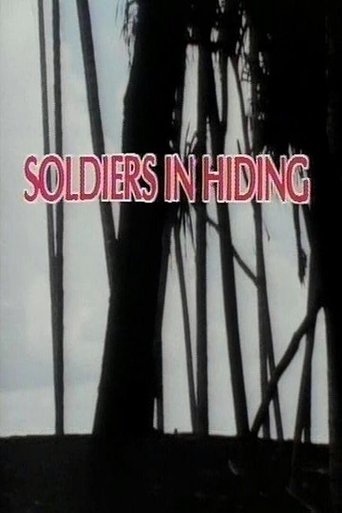
Soldiers in Hiding
1984-11-11 · 53 min · ★ 6.0
A portrait of several Vietnam War veterans living "off the grid." Upon returning home from the war, these men found themselves unable to exist in normal society due to the lasting psychological scars from Vietnam, and, subsequently, chose to live a life of solitude and survival in the American wilderness.
Trailers are previews, not full movies.
No authorized playback source configured. Use the legal watch options below.
Production details
- Directors
- Malcolm Clarke
- Production companies
- HBO
- Countries
- United States of America
- Status
- Released
Top Cast
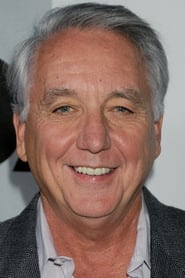 Bob GuntonNarrator
Title information and images are supplied by TMDb. Explore our discovery guide for advice on comparing metadata and legal viewing options.
Where to watch
Availability provided by JustWatch via TMDb. Offers can change. Provider links are listed on TMDb; full playback requires a separately authorized source.
Availability not listed for this country.
Seasons & episodes
Recommendations
During the chaotic final weeks of the Vietnam War, the North Vietnamese Army closes in on Saigon as the panicked South Vietnamese people desperately attempt to escape. On the ground, American soldiers and diplomats confront a moral quandary: whether to obey White House orders to evacuate only U.S. citizens.
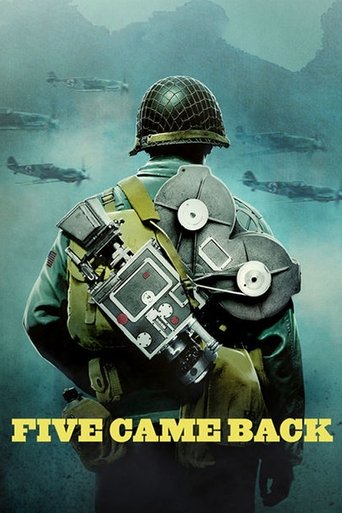
The extraordinary story of how Hollywood changed World War II – and how World War II changed Hollywood, through the interwoven experiences of five legendary filmmakers who went to war to serve their country and bring the truth to the American people: John Ford, William Wyler, John Huston, Frank Capra, and George Stevens. Based on Mark Harris’ best-selling book, “Five Came Back: A Story of Hollywood and the Second World War.”
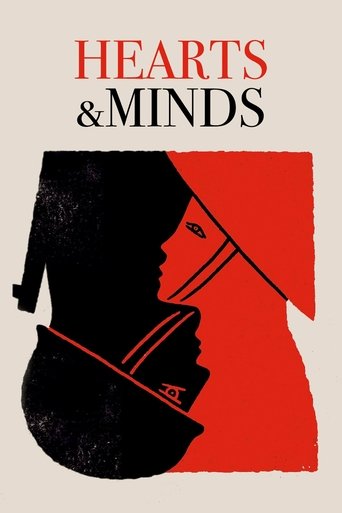
Many times during his presidency, Lyndon B. Johnson said that ultimate victory in the Vietnam War depended upon the U.S. military winning the "hearts and minds" of the Vietnamese people. Filmmaker Peter Davis uses Johnson's phrase in an ironic context in this anti-war documentary, filmed and released while the Vietnam War was still under way, juxtaposing interviews with military figures like U.S. Army Chief of Staff William C. Westmoreland with shocking scenes of violence and brutality.
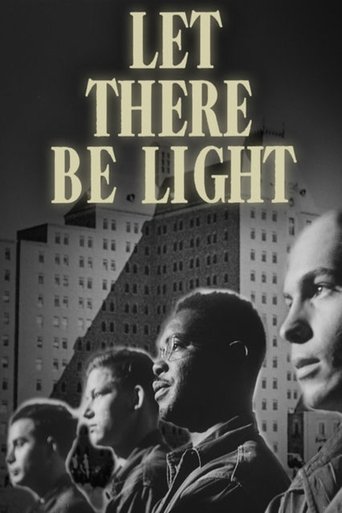
The final entry in a trilogy of films produced for the U.S. government by John Huston. Some returning combat veterans suffer scars that are more psychological than physical. This film follows patients and staff during their treatment. It deals with what would now be called PTSD, but at the time was categorised as psychoneurosis or shell-shock. Government officials deemed this 1946 film counterproductive to postwar efforts; it was not shown publicly until 1981.
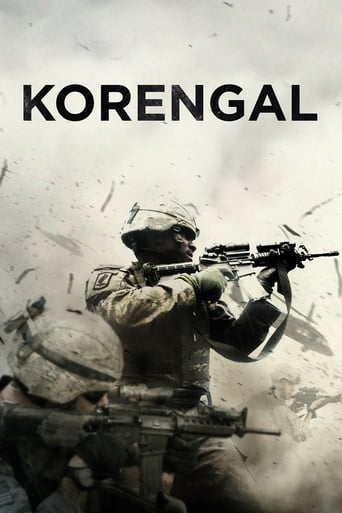
Korengal picks up where Restrepo left off; the same men, the same valley, the same commanders, but a very different look at the experience of war.

Amid the failing counteroffensive, a journalist follows a Ukrainian platoon on their mission to traverse one mile of heavily fortified forest and liberate a strategic village from Russian occupation. But the farther they advance through their destroyed homeland, the more they realize that this war may never end.

Prelude to War was the first film of Frank Capra's Why We Fight propaganda film series, commissioned by the Pentagon and George C. Marshall. It was made to convince American troops of the necessity of combating the Axis Powers during World War II. This film examines the differences between democratic and fascist states.

When Sgt. First Class Brian Eisch is critically wounded in Afghanistan, it sets him and his sons on a journey of love, loss, redemption and legacy.
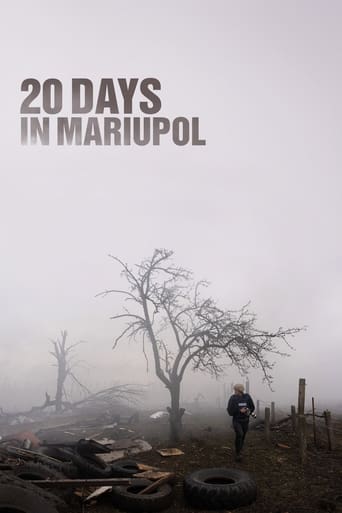
As the Russian invasion begins, a team of Ukrainian journalists trapped in the besieged city of Mariupol struggle to continue their work documenting the war's atrocities.
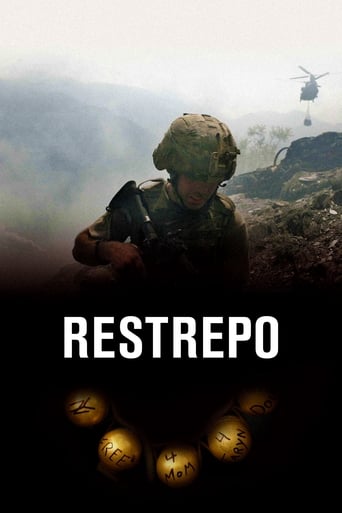
Directors Hetherington and Junger spend a year with the 2nd Battalion of the United States Army located in one of Afghanistan's most dangerous valleys. The documentary provides insight and empathy on how to win the battle through hard work, deadly gunfights and mutual friendships while the unit must push back the Taliban.

Director Michael Apted revisits the same group of British-born adults after a 7 year wait. The subjects are interviewed as to the changes that have occurred in their lives during the last seven years.

This documentary movie is about the battle of San Pietro, a small village in Italy. Over 1,100 US soldiers were killed while trying to take this location, that blocked the way for the Allied forces from the Germans. Preserved by the Academy Film Archive in 2005.
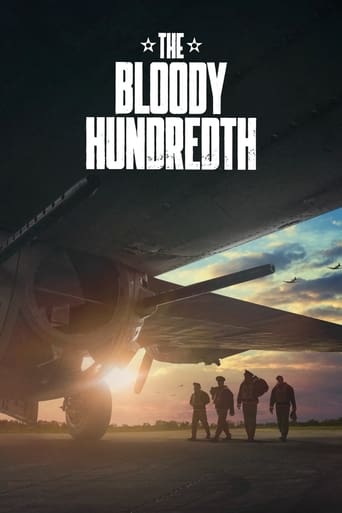
Meet the real-life airmen who inspired Masters of the Air as they share the harrowing and transformative events of the 100th Bomb Group.

A love letter from a young mother to her daughter, the film tells the story of Waad al-Kateab’s life through five years of the uprising in Aleppo, Syria as she falls in love, gets married and gives birth to Sama, all while cataclysmic conflict rises around her. Her camera captures incredible stories of loss, laughter and survival as Waad wrestles with an impossible choice– whether or not to flee the city to protect her daughter’s life, when leaving means abandoning the struggle for freedom for which she has already sacrificed so much.
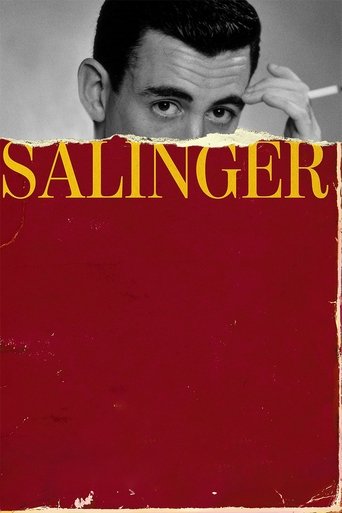
An in-depth investigation into the private world of the American writer J. D. Salinger (1919-2010), who lived most of his life behind the impenetrable wall of a self-imposed seclusion: how his dramatic experiences during World War II influenced his life and work, his relationships with very young women, his obsessive writing methods, his many literary secrets.

A documentary about World War I with never-before-seen footage to commemorate the centennial of Armistice Day, and the end of the war.

“The Soviet Story” is a story of an Allied power, which helped the Nazis to fight Jews and which slaughtered its own people on an industrial scale. Assisted by the West, this power triumphed on May 9th, 1945. Its crimes were made taboo, and the complete story of Europe’s most murderous regime has never been told. Until now...
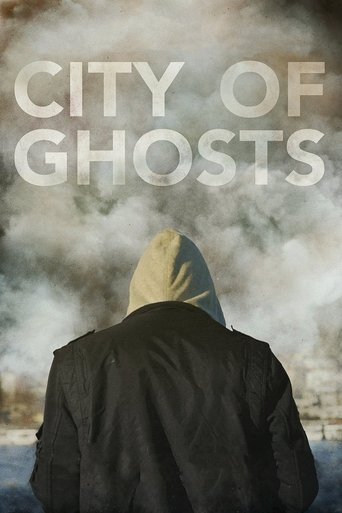
With unprecedented access, this documentary follows the extraordinary journey of “Raqqa is Being Slaughtered Silently”—a group of anonymous citizen journalists who banded together after their homeland was overtaken by ISIS—as they risk their lives to stand up against one of the greatest evils in the world today.

When Allied forces liberated the Nazi concentration camps in 1944-45, their terrible discoveries were recorded by army and newsreel cameramen, revealing for the first time the full horror of what had happened. Making use of British, Soviet and American footage, the Ministry of Information’s Sidney Bernstein (later founder of Granada Television) aimed to create a documentary that would provide lasting, undeniable evidence of the Nazis’ unspeakable crimes. He commissioned a wealth of British talent, including editor Stewart McAllister, writer and future cabinet minister Richard Crossman – and, as treatment advisor, his friend Alfred Hitchcock. Yet, despite initial support from the British and US Governments, the film was shelved, and only now, 70 years on, has it been restored and completed by Imperial War Museums under its original title "German Concentration Camps Factual Survey".
Over a period of two years, Mark Cowen and his crew travelled to thirty U.S. states and ten European cities, to interview the veterans of Easy Company. The stories told by the veterans themselves, create a history of the Second World War from the point of view of this heroic company of men, made famous in the mini-series Band of Brothers.
Similar titles
Shocking documentary centering on victims of violent crime who seek to get revenge on their assailants.
The lastest neuroscience discoveries show surprising results: false memories, distortion, modification, déjà vus. Our memory is affected in many ways, and deceives us every day. The very fact of recalling souvenirs modifies them. The everyday consequences are manyfold. To what extent can we rely on our souvenirs? How much credit can we give them during trials? Even more shocking, scientists have proved to be able to manipulate our memory: creating artificial souvenirs, deleting, emphasizing or restoring them on demand.
Prequel to the first Missing In Action, set in the early 1980s it shows the capture of Colonel Braddock during the Vietnam war in the 1970s, and his captivity with other American POWs in a brutal prison camp, and his plans to escape.
A glimpse into the life-changing freedom and love provided by Holly, a specially trained PTSD service dog who became a lifeline and soulmate for her veteran with PTSD, who had previously been housebound and suicidal.

During the Vietnam War, the US bombed Laos more heavily than any other country had been bombed before. Today, the Lao people live among, and risk their lives to clear, over 80 million unexploded bombs on their doorsteps. With great beauty and empathy, this documentary reveals the unbelievable stories of the men and women at the forefront of this monumental task.
In April 1975 -- despite a ceasefire agreement -- the North Vietnamese communists took Saigon and the world by surprise, mounting an offensive that ousted the South Vietnamese government. This enlightening documentary recounts the last two years of America's military engagement in the country and the U.S. role in Saigon's fall. Interviews with former National Security Adviser Henry Kissinger and North Vietnamese officers provide context.
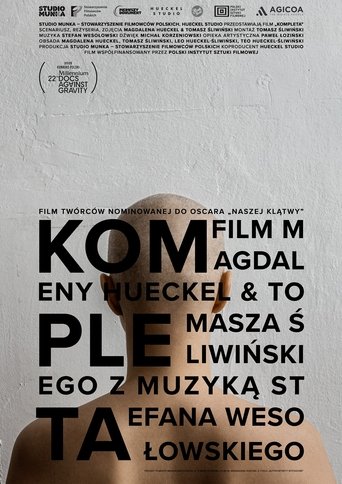
The film is an intimate record of a difficult period in the life of the creators. The main character, eight months pregnant, was diagnosed with aggressive breast cancer. The dramatic event disrupted the joy associated with the birth of her child.

A record-instructional film showing a few of the many ways in which the behaviour of hungry rats can be modified according to the nature of the prevailing social situation.

A group of Australian SAS regiment soldiers are deployed to Vietnam around 1967/8 and encounter the realities of war, from the numbing boredom of camp life and long range patrols, raids and ambushes where nothing happens, to the the terror of enduring mortar barrages from an unseen enemy. Men die and are crippled in combat by firefights and booby traps, soldiers kill and capture the enemy, gather intelligence and retake ground only to cede it again whilst battling against the bureaucracy and obstinacy of the conventional military hierarchy. In the end they return to civilization, forever changed by their experiences but glad to return to the life they once knew.
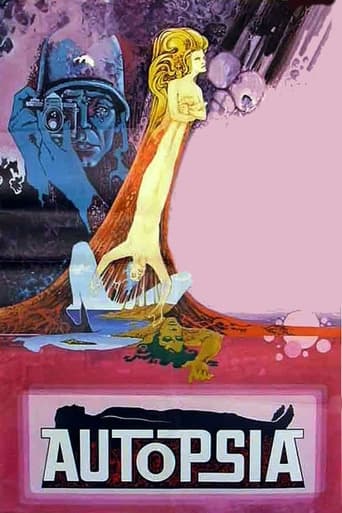
Mondo-style docudrama about a war correspondent who comes back home and has a spiritual crisis about his own mortality. Surreal fantasy sequences are mixed with graphic real autopsy footage.
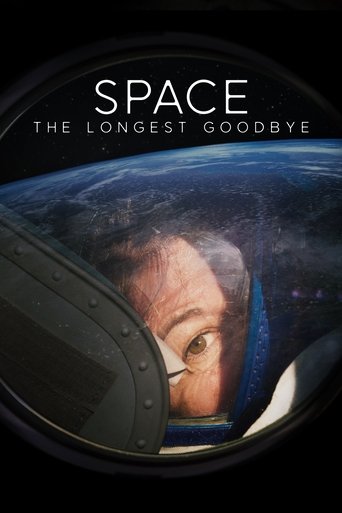
Social isolation affects millions of people, even Mars-bound astronauts. A savvy NASA psychologist is tasked with protecting these daring explorers.
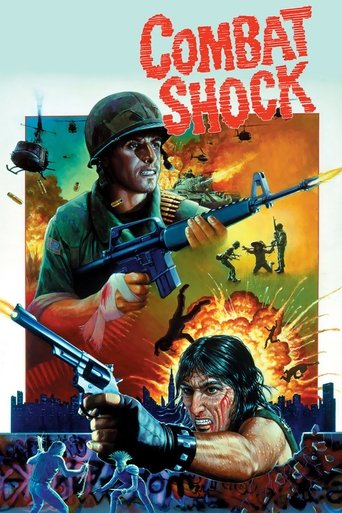
A dangerously disturbed Vietnam veteran struggles with life 15 years after his return home, and slowly falls into insanity from his gritty urban lifestyle.
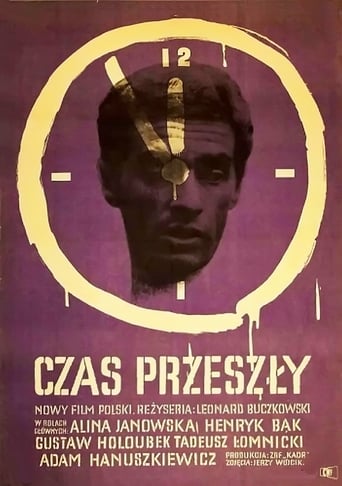
Fram is in a German POW camp where brutal, cold-hearted Gestapo officers like Weber or Von Steinhagen terrorize and execute their Polish prisoners. One day Fram sees a way to escape the camp and he takes it, heading out to find his fellow resistance fighters.
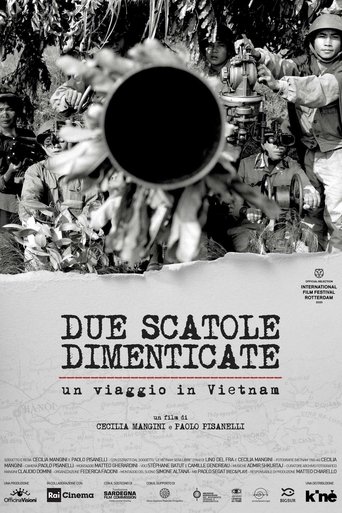
Before becoming a film critic, then a maker mainly of sharply engaged documentaries, usually in tandem with her late husband Lino Del Fra, Cécilia Mangini was a photographer. Taking pictures was something she did all her life, alongside whatever else she was working on. In 1965 Mangini and Del Fra went to war-torn Vietnam to make a film they never finished. More than half a century later, she returned to these images, moving and still, some of which she found again by accident.

Disheartened by futile combat, appalled by the corruption of their South Vietnamese ally, and constantly endangered by the incompetence of their own company commander, the young men find a possible way out of the war. They are told that if they purposely lose a soccer game against a South Vietnamese team, they can spend the rest of their tour playing exhibition games behind the lines.
‘Voices from the Shadows’ shows the brave and sometimes heartrending stories of five ME patients and their carers, along with input from Dr Nigel Speight, Prof Leonard Jason and Prof Malcolm Hooper. These were filmed and edited between 2009 and 2011, by the brother and mother of an ME patient in the UK. It shows the devastating consequences that occur when patients are disbelieved and the illness is misunderstood. Severe and lasting relapse occurs when patients are given inappropriate psychological or behavioural management: management that ignores the severe amplification of symptoms that can be caused by increased physical or mental activity or exposure to stimuli, and by further infections. A belief in behavioural and psychological causes, particularly when ME becomes very severe and chronic, following mismanagement, is still taught to medical students and healthcare professionals in the UK. As a consequence, situations similar to those shown in the film continue to occur.

In Laos, 1954, eight days before the french defeat in the Indochina war, the 317th platoon – four french soldiers and 41 laotian combatants – has been ordered to leave its outpost and to retreat for the plains of Diên Biên Phu, where the french army is getting stucked. Led by the inexperienced and idealistic sous-lieutenant Torrens, fresh out of the military academy, and by adjutant Willsdorf, a WWII veteran of the Werhmacht, the group must cross 150 kilometers of jungle. But dripping rainwater, hostile nature, and the Viêt-minh ambushes expose them to constant danger.
THEY HEARD VOICES is a documentary film exploring the Hearing Voices Movement, chronic psychosis, and the schizophrenia label. The film is a series of wide-ranging interviews with voice hearers, medical historians, anthropologists and psychiatrists from Britain and America, presenting different people’s views. Is schizophrenia hard science or an arbitrary, catch-all term with no real meaning? What does it mean for those experiencing psychosis?
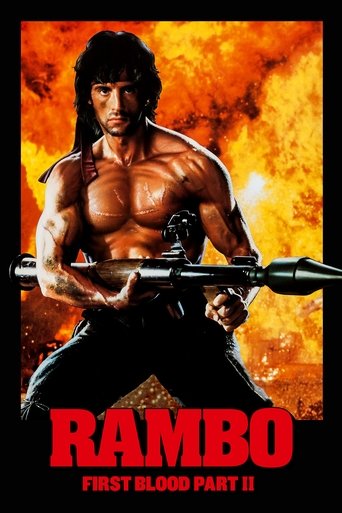
John Rambo is released from prison by the government for a top-secret covert mission to the last place on Earth he'd want to return - the jungles of Vietnam.
Produced in 1967, this black and white film is an inmate's view of Daytop, a drug treatment centre on Staten Island, New York, where addicts learn to get along without drugs. Uncompromising, often brutal group therapy sessions are designed to shake loose the excuses a victim makes for himself. The people and situations shown are authentic; only one actor was employed. The results obtained at Daytop are regarded by some psychiatrists as a breakthrough.