
The Art of Un-War
2022-04-01 · 64 min · ★ 9.0
Renowned artist Krzysztof Wodiczko creates powerful responses to the inequities and horrors of war. This in-depth investigation into the artist focuses on the recurring themes of war, trauma, and displacement in his work. An instigator for social change, Wodiczko’s powerful art interventions disrupt the valorization of state-sanctioned aggression.
Trailers are previews, not full movies.
No authorized playback source configured. Use the legal watch options below.
Production details
- Directors
- Mira Niro
- Production companies
- Crossing Waters
- Countries
- United States of America
- Status
- Released
- Budget
- USD 225,000
Top Cast
Title information and images are supplied by TMDb. Explore our discovery guide for advice on comparing metadata and legal viewing options.
Where to watch
Availability provided by JustWatch via TMDb. Offers can change. Provider links are listed on TMDb; full playback requires a separately authorized source.
Availability not listed for this country.
Seasons & episodes
Recommendations
Artists in LA discover the work of forgotten Polish sculptor Stanislav Szukalski, a mad genius whose true story unfolds chapter by astounding chapter.

A documentary on the life of John Lennon, with a focus on the time in his life when he transformed from a musician into an antiwar activist.
In 1975, Ryszard Kapuściński, a veteran Polish journalist, embarked on a seemingly suicidal road trip into the heart of the Angola's civil war. There, he witnessed once again the dirty reality of war and discovered a sense of helplessness previously unknown to him. Angola changed him forever: it was a reporter who left Poland, but it was a writer who returned…
An interview with film director Roman Polanski conducted during his period of house arrest, discussing his life and work.

A 1993 documentary film about Bruce Lee. The film includes interviews from some of his fellow students and opponents who worked alongside him in his movies.

A backstage and on-stage look at Justin Bieber during his rise to super stardom.
An exploration of the heavy metal scene in Los Angeles, with particular emphasis on glam metal. It features concert footage and interviews of legendary heavy metal and hard rock bands and artists such as Aerosmith, Alice Cooper, Kiss, Megadeth, Motörhead, Ozzy Osbourne and W.A.S.P..

A documentary on the expletive's origin, why it offends some people so deeply, and what can be gained from its use.

In an intimate and joyful story of love in the face of loss, celebrated poets Andrea Gibson and Megan Falley find strength—and unexpected hilarity—in what might be their final year together.

A visual montage portrait of our contemporary world dominated by globalized technology and violence.

Al Pacino's deeply-felt rumination on Shakespeare's significance and relevance to the modern world through interviews and an in-depth analysis of "Richard III."

When Allied forces liberated the Nazi concentration camps in 1944-45, their terrible discoveries were recorded by army and newsreel cameramen, revealing for the first time the full horror of what had happened. Making use of British, Soviet and American footage, the Ministry of Information’s Sidney Bernstein (later founder of Granada Television) aimed to create a documentary that would provide lasting, undeniable evidence of the Nazis’ unspeakable crimes. He commissioned a wealth of British talent, including editor Stewart McAllister, writer and future cabinet minister Richard Crossman – and, as treatment advisor, his friend Alfred Hitchcock. Yet, despite initial support from the British and US Governments, the film was shelved, and only now, 70 years on, has it been restored and completed by Imperial War Museums under its original title "German Concentration Camps Factual Survey".

With a first-person look at the notorious Crips and Bloods, this film examines the conditions that have lead to decades of devastating gang violence among young African Americans growing up in South Los Angeles.
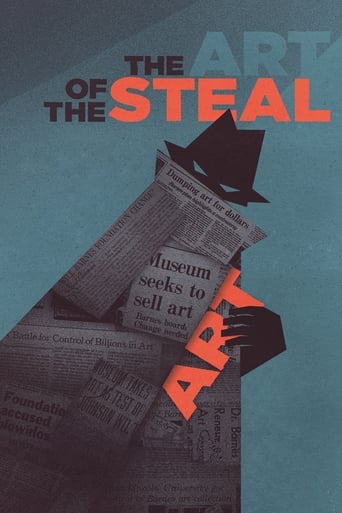
A gripping tale of intrigue and mystery in the art world, this film traces the history of a collection of Post-Impressionist paintings - worth billions - which became the subject of a power struggle after the death of its owner. Dr. Albert Barnes.

In the Realms of the Unreal is a documentary about the reclusive Chicago-based artist Henry Darger. Henry Darger was so reclusive that when he died his neighbors were surprised to find a 15,145-page manuscript along with hundreds of paintings depicting The Story of the Vivian Girls, in What is Known as the Realms of the Unreal, of the Glodeco-Angelinnian War Storm, Cased by the Child Slave Rebellion.

When Sgt. First Class Brian Eisch is critically wounded in Afghanistan, it sets him and his sons on a journey of love, loss, redemption and legacy.
Musician and performance artist Laurie Anderson reflects on the deaths of her husband Lou Reed, her mother and her beloved dog.
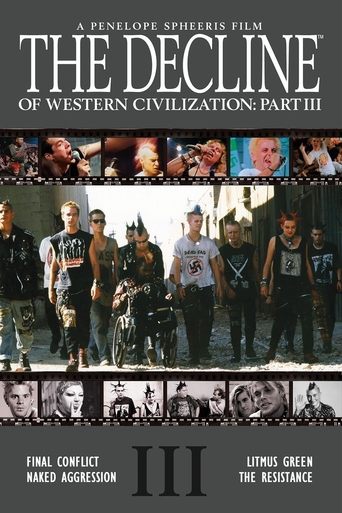
A musical study of Los Angeles in the late 90s, where homeless teens roam the streets and profess to live a punk lifestyle of music, drugs, and flouting authority.

Amid the failing counteroffensive, a journalist follows a Ukrainian platoon on their mission to traverse one mile of heavily fortified forest and liberate a strategic village from Russian occupation. But the farther they advance through their destroyed homeland, the more they realize that this war may never end.
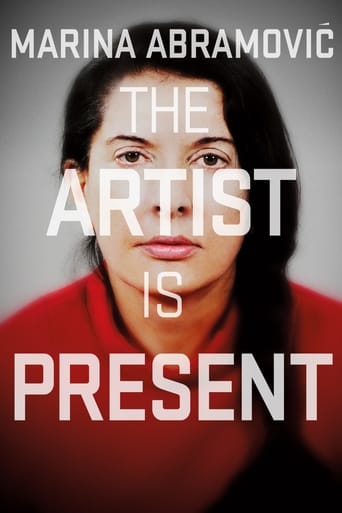
Performance artist Marina Abramovic prepares for a major retrospective of her work at the Museum of Modern Art in New York.
Similar titles
"This film explores how freedom of speech — including dissent — is afforded to all Americans, and shows freedom of expression in art, music, dance, architecture, and science. The film also emphasizes the importance of the individual’s contribution to the whole of society and demonstrates how a productive and creative society is formed by the open and respectful exchange of ideas. The film was written, produced, and directed by William Greaves" (National Archives).
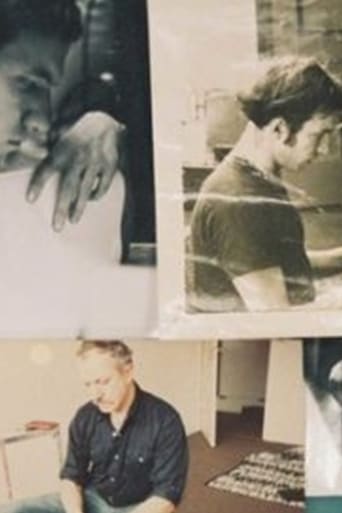
Electro-Pythagorus is an intimate and subjective portrait of the late Martin Bartlett, the Canadian electronic music pioneer who studied with Pauline Oliveros, David Tudor, John Cage, and Pandit Pran Nath. His contribution as an interdisciplinary composer, educator, and founding member of Western Front, though undoubtedly extensive, is in danger of being erased from cultural memory since his death from AIDS in 1993. Navigating an array of archival materials including letters, correspondences, notebooks, personal photos, and a huge body of unreleased music and field recordings held at the archives of Simon Fraser University, Electro-Pythagoras is a journey through the evolution of Bartlett’s musical time and space, softly guided by Luke Fowler’s insightful camera and montage—creating an experimental portrait that defies one-dimensionality.
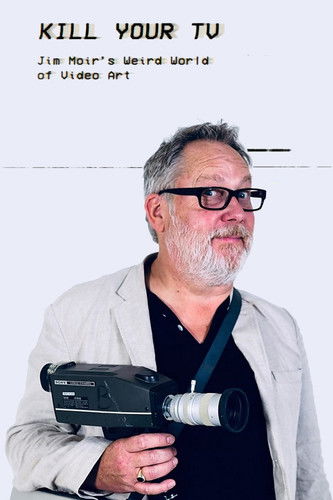
Jim Moir (aka Vic Reeves) explores Video Art, revealing how different generations ‘hacked’ the tools of television to pioneer new ways of creating art that can be beautiful, bewildering and wildly experimental.
Hauntology of the Retrodromomania is an essayistic motion picture, a locomotory legwork, a deambulatory non-rural land survey, a casual journeying in a punctual dissertation around the phenomenon of the nostalgic feeling, discoursing on a late capitalistic landscape of social emotions, which are of yore, yet coloured of the postmodern tint of pixelated neo-noir, a socio-philosophical flâneur’s trip in critical theory escorted by the spirits of French post-structuralists. For a Sociology of Nostalgia revisited.
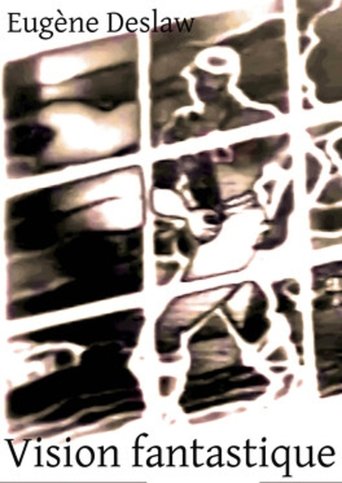
Footage filmed in Spain, subjected a new visual effects process. Deslaw devoted himself to the discovery of a new machine that enabled film to be developed while using a new method called solarisation.
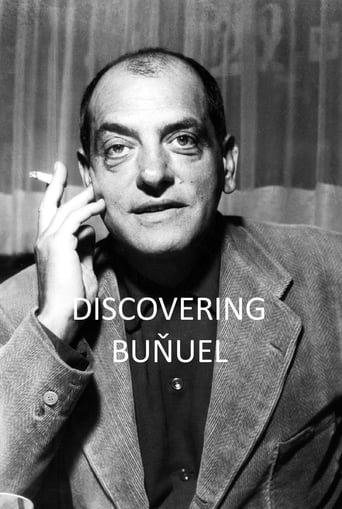
Luis Bunuel, the father of cinematic Surrealism, made his film debut with 'Un Chien Andalou' in 1929 working closely with Salvador Dali. Considered one of the finest and controversial filmmakers with, 'L’Age d’Or' (1930), attacking the church and the middle classes. He won many awards including Best Director at Cannes for 'Los Olvidados' (1950), and the coveted Palme d’Or for 'Viridiana' (1961), which had been banned in his native Spain. His career moved to France with 'The Diary of a Chambermaid' with major stars such as Jeanne Moreau and Catherine Deneuve.

A depiction of a girl’s uneasy state of mind as it wavers between life and death.


"Like a Dream That Vanishes" continues Sternberg’s work in film both thematically and formally: the ephemerality of life echoed in the temporal nature of film, as the stuff of life echoed on the energy, life-force in rhythmic light pulses (Your life is like a candle burning). Imageless emulsion is inter-cut with brief shots of natural elements and mise-en-scene of the stages of human life: a little boy runs and falls; teens hang out together at night smoking; sun shines through tree branches; men pace, waiting; flashes of lightning; an elderly man speaks philosophically about miracles.
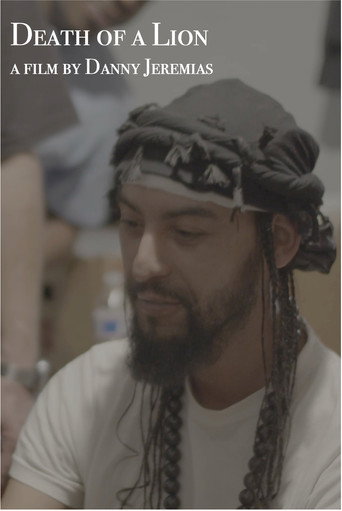
A former leader in the Black Lion Party for International Solidarity shares his story of found family, loss, and transcendence. Shot over the course of two months, this short documentary provides a glimpse into the dynamics of modern American revolutionary movements. Jeremias' film captures a very brief, but important period of transition for the Black Panther Party in the 2020s.
"Ryuta is 5 years old. Even though he is my son, I sometimes wonder what this small person is to me. Even though I see his joys and sadnesses and know the feel of his warmth on my skin when I hold him, there are moments when my feelings for him become vague and blank." - Takashi Ito

“Geometric animation made entirely by sculptural methods: cutting, punching, welding colored leader. HETERODYNE is related to some of my other work as RNA to a protein or polypeptide. It was made in abject (if blissful) ignorance of Paul Sharits’ early work.” –Hollis Frampton

Working completely outside the mainstream, the wildly prolific, visionary Stan Brakhage made more than 350 films over a half century. Challenging all taboos in his exploration of “birth, sex, death, and the search for God,” he has turned his camera on explicit lovemaking, childbirth, even autopsy. Many of his most famous works pursue the nature of vision itself and transcend the act of filming. Some, including the legendary Mothlight, were made without using a camera at all, as he pioneered the art of making images directly on film, by drawing, painting, and scratching.

A girl reads during a bus ride

An experience of a camera swinging in different gestures facing the optical distortion of the Sun. The last appearance of the smudge.

A film in which the one 60-story skyscraper that soars in the spaces between roofs spins with incredible speed. I centered the circumference with its 400 or 500 meter radius on the skyscraper and divided it into 48 sections, then took photographs from those spots and shot the photographs frame by frame.

The inner world of the great painter Max Ernst is the subject of this film. One of the principal founders of Surrealism, Max Ernst explores the nature of materials and the emotional significance of shapes to combine with his collages and netherworld canvases. The director and Ernst together use the film creatively as a medium to explain the artist's own development.
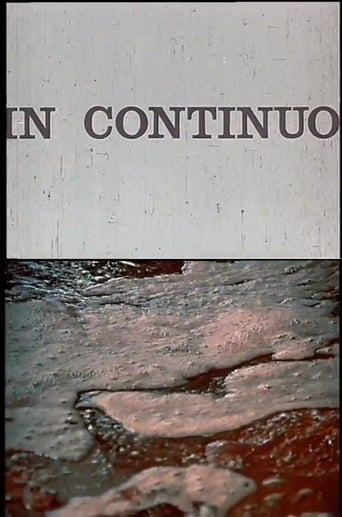
"In continuo" uses slaughterhouse imagery to present the warlike nature of man, first depicting the cleaning and mechanical preparations for the slaughterhouse and then the killing, however, the animal slaughter itself isn’t shown.
An anthology of one-minute films created by 51 international filmmakers on the theme of the death of cinema. Intended as an ode to 35mm, the film was screened one time only on a purpose-built 20x12 meter public cinema screen in the Port of Tallinn, Estonia, on 22 December 2011. A special projector was constructed for the event which allowed the actual filmstrip to be burnt at the same time as the film was shown.
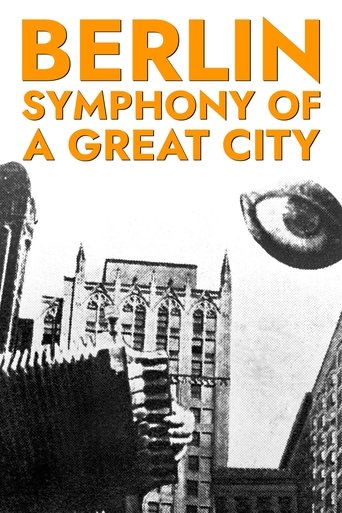
A day in the city of Berlin, which experienced an industrial boom in the 1920s, and still provides an insight into the living and working conditions at that time. Germany had just recovered a little from the worst consequences of the First World War, the great economic crisis was still a few years away and Hitler was not yet an issue at the time.