
Kunst aus dem Todeslager
2021-01-01 · Runtime unavailable · Not rated
The Nazi concentration and extermination camps were places of incomprehensible cruelty, misery and death. But even here, creation took place. Creation as a means of survival against destruction. Art against dehumanization. On behalf of the SS, but also secretly at the risk of their lives, people drew and painted, sculptors and model makers worked, concerts were performed and theater was played. Prisoners created paintings and other works of art, which the SS henchmen sold or sent home to their families. In the Austrian Mauthausen concentration camp, inmates made sketches of the crime scenes where fellow prisoners had allegedly died while trying to escape. In the Buchenwald concentration camp, prisoners had to rehearse a camp song in the freezing cold until it sounded perfect to the ears of their tormentors. In addition to this forced art, however, there were also illegal drawings that could give the outside world an insight into actual camp life.
Trailers are previews, not full movies.
No authorized playback source configured. Use the legal watch options below.
Production details
- Directors
- Manfred van Eijk
- Production companies
- ARTE, ORF, MDR, Sarphati Media Producties
- Countries
- Germany
- Status
- Released
Top Cast
Cast unavailable.
Title information and images are supplied by TMDb. Explore our discovery guide for advice on comparing metadata and legal viewing options.
Where to watch
Availability provided by JustWatch via TMDb. Offers can change. Provider links are listed on TMDb; full playback requires a separately authorized source.
Availability not listed for this country.
Seasons & episodes
Recommendations
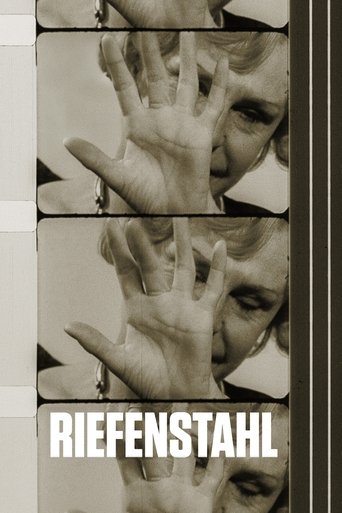
Explores Leni Riefenstahl's artistic legacy and her complex ties to the Nazi regime, juxtaposing her self-portrayal with evidence suggesting awareness of the regime's atrocities.
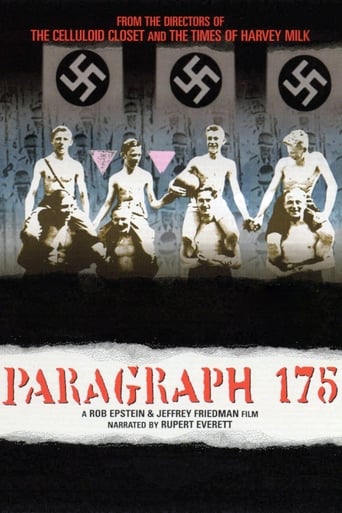
During the Nazi regime, there was widespread persecution of homosexual men, which started in 1871 with the Paragraph 175 of the German Penal Code. Thousands were murdered in concentration camps. This powerful and disturbing documentary, narrated by Rupert Everett, presents for the first time the largely untold testimonies of some of those who survived.

When Allied forces liberated the Nazi concentration camps in 1944-45, their terrible discoveries were recorded by army and newsreel cameramen, revealing for the first time the full horror of what had happened. Making use of British, Soviet and American footage, the Ministry of Information’s Sidney Bernstein (later founder of Granada Television) aimed to create a documentary that would provide lasting, undeniable evidence of the Nazis’ unspeakable crimes. He commissioned a wealth of British talent, including editor Stewart McAllister, writer and future cabinet minister Richard Crossman – and, as treatment advisor, his friend Alfred Hitchcock. Yet, despite initial support from the British and US Governments, the film was shelved, and only now, 70 years on, has it been restored and completed by Imperial War Museums under its original title "German Concentration Camps Factual Survey".
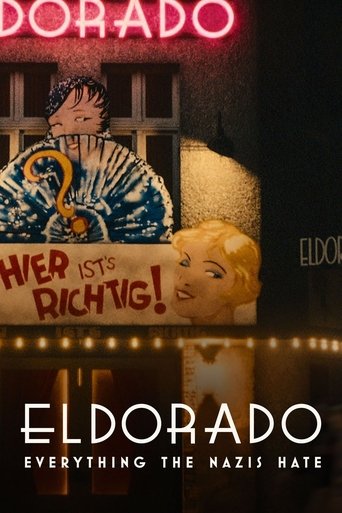
A glittery nightclub in 1920s Berlin becomes a haven for the queer community in this documentary exploring the freedoms lost amid Hitler’s rise to power.
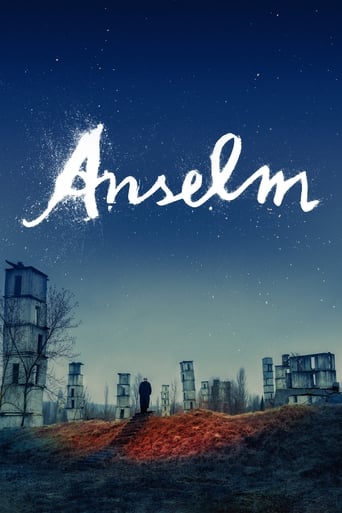
This unique cinematic experience dives deep into an artist’s work and reveals his life path, inspiration, and creative process. It explores his fascination with myth and history. Past and present are interwoven to diffuse the line between film and painting, allowing the audience to be completely immersed in the remarkable world of one of the greatest contemporary artists, Anselm Kiefer. Wim Wenders shot this unique portrait over the course of two years in stunning 3D.
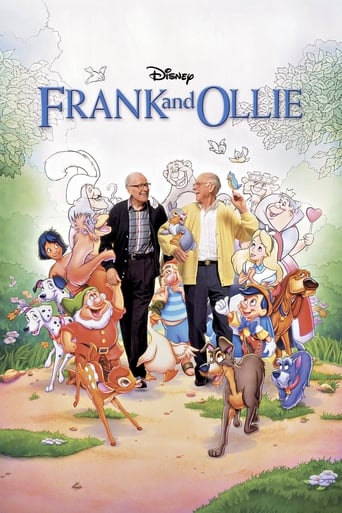
Before computer graphics, special effects wizardry, and out-of-this world technology, the magic of animation flowed from the pencils of two of the greatest animators The Walt Disney Company ever produced -- Frank Thomas and Ollie Johnston. Frank and Ollie, the talent behind BAMBI, PINOCCHIO, LADY AND THE TRAMP, THE JUNGLE BOOK, and others, set the standard for such modern-day hits as THE LION KING. It was their creative genius that helped make Disney synonymous with brilliant animation, magnificent music, and emotional storytelling. Take a journey with these extraordinary artists as they share secrets, insights, and the inspiration behind some of the greatest animated movies the world has ever known!
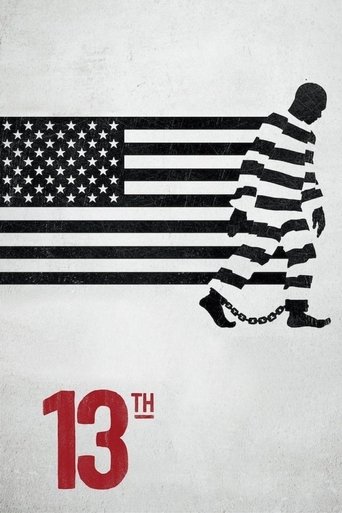
An in-depth look at the prison system in the United States and how it reveals the nation's history of racial inequality.

“The Soviet Story” is a story of an Allied power, which helped the Nazis to fight Jews and which slaughtered its own people on an industrial scale. Assisted by the West, this power triumphed on May 9th, 1945. Its crimes were made taboo, and the complete story of Europe’s most murderous regime has never been told. Until now...
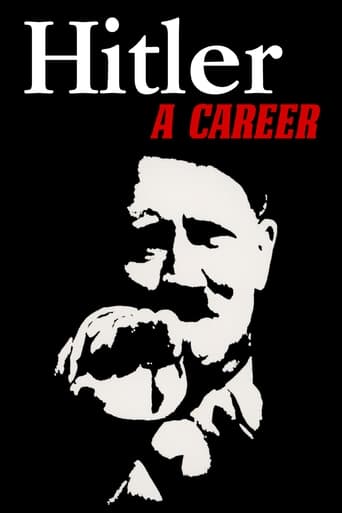
A keen chronicle of the unlikely rise to power of Adolf Hitler (1889-1945) and a dissection of the Third Reich (1933-1945), but also an analysis of mass psychology and how the desperate crowd can be deceived and shepherded to the slaughterhouse.
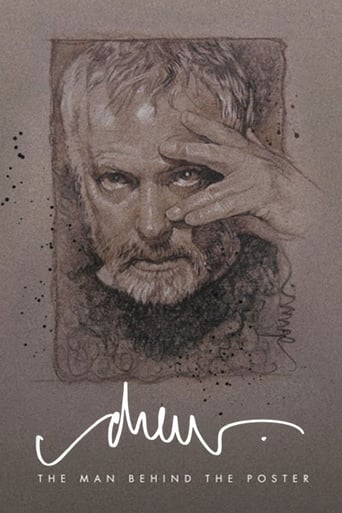
A documentary on legendary movie-poster artist Drew Struzan.
A showcase of German chancellor and Nazi Party leader Adolf Hitler at the 1934 Nuremberg Rally.

In an intimate and joyful story of love in the face of loss, celebrated poets Andrea Gibson and Megan Falley find strength—and unexpected hilarity—in what might be their final year together.

Alexander McQueen's rags-to-riches story is a modern-day fairy tale, laced with the gothic. Mirroring the savage beauty, boldness and vivacity of his design, this documentary is an intimate revelation of McQueen's own world, both tortured and inspired, which celebrates a radical and mesmerizing genius of profound influence.
Derek and Nancy Haysom were brutally murdered in their house in Lynchburg, Virginia, on March 30, 1985. Suspicion fell on their daughter Elizabeth and her boyfriend Jens Söring. They flee to Europe, but are caught and extradited to the U.S. Elizabeth is sentenced to 90 years in jail for incitement to murder, Jens Söring to two life sentences. Karin Steinberger, Marcus Vetter and their team spent over three years researching this case, which achieved world-wide notoriety. They uncovered new evidence, including the fact none of the blood samples found at the scene of the crime belonged to Jens Söring.
Documentary filmmaker Errol Morris investigates the case of a man who became an authority on capital punishment, but was discredited when he got involved on the wrong side of a court case. Leuchter, a meek man whose appearance belies his grim expertise, develops what he says is a more effective electric chair. Before long, he's in demand from officials who want his opinions on other execution methods. But when called to aid the case of an accused Holocaust denier, Leuchter's problems begin.
An unprecedented and intimate look at the life, work and enduring legacy of British actress Audrey Hepburn (1929-1993).

This revealing documentary honors the legendary Sidney Poitier—iconic actor, filmmaker, and civil rights activist. Featuring interviews with Denzel Washington, Spike Lee, Halle Berry, and more.
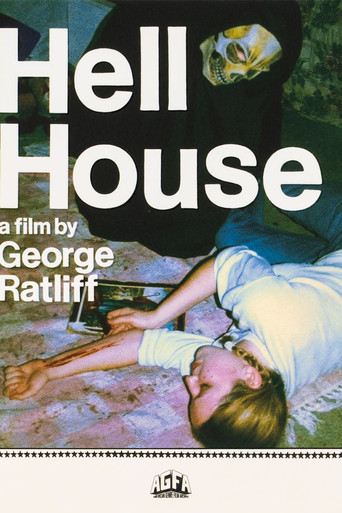
A look at the "Hell House" performed annually in October by the youth members of Trinity Church (Assemblies of God) in Cedar Hill, Texas (a Dallas suburb) — seen by over 10,000 visitors each year.
The wild West Berlin of the 1980s became the creative melting pot of pop subcultures: music, art and chaos. Before the Iron Curtain fell, anything and everything seemed possible.

Over 35 years after Bob Lazar's revelations, this documentary exposes secrets of a facility the government still denies. Featuring Lazar's testimony, recreations, and new evidence, it reopens a case that continues to spark global curiosity
Similar titles
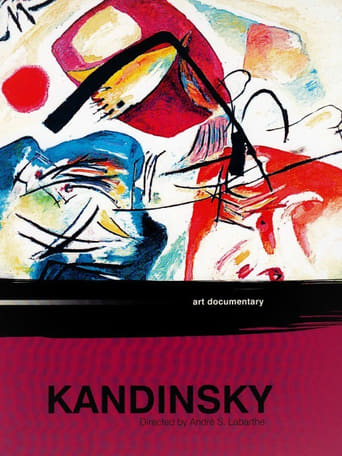
Colour, form, area - this is the formula of the greatest pioneer of abstract painting. Kandinsky came to art late in life, but his impact through Der Blaue Reiter (The Blue Rider) and Bauhaus paved the way for modern art. In 1913, he created one of the first abstract pictures, the theoretical basis of which was inspired by his essay Uber das Geistige in der Kunst (On the Spiritual in Art). Accompanied by Mussorgsky's Pictures From An Exhibition Labarthe goes on a sensual journey which makes the soul resound with colours and forms. "A picture has to resound and must be bathed in an inner glow." Kandinsky
Poème Électronique is an 8-minute piece of electronic music by composer Edgard Varèse, written for the Philips Pavilion at the 1958 Brussels World’s Fair. The Philips corporation commissioned Le Corbusier to design the pavilion, which was intended as a showcase of their engineering progress. The pavilion was shaped like a stomach, with a narrow entrance and exit on either side of a large central space. As the audience entered and exited the pavilion, the electronic composition Concret PH by Iannis Xenakis (who also acted as Le Corbusier's architectural assistant for the pavilion's design) was heard. Poème électronique was synchronized to a film of black and white photographs selected by Le Corbusier which touched on vague themes of human existence.
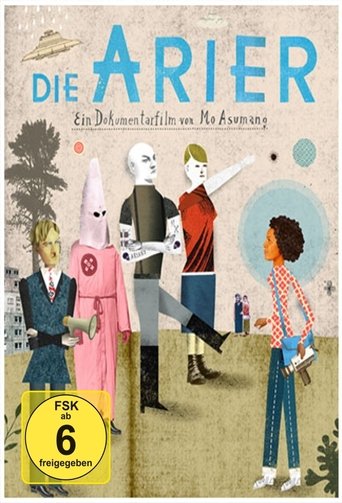
THE ARYANS is Mo Asumang's personal journey into the madness of racism during which she meets German neo-Nazis, the US leading racist, the notorious Tom Metzger and Ku Klux Klan members in the alarming twilight of the Midwest. In The ARYANS Mo questions the completely wrong interpretation of "Aryanism" - a phenomenon of the tall, blond and blue-eyed master race.
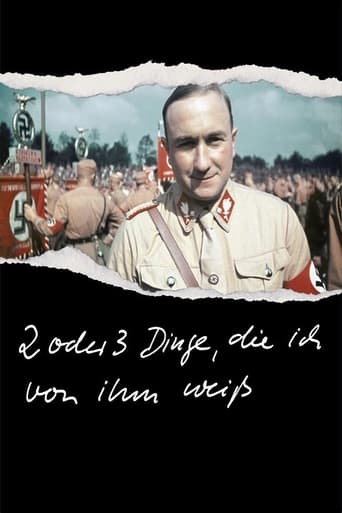
What would your family reminiscences about dad sound like if he had been an early supporter of Hitler’s, a leader of the notorious SA and the Third Reich’s minister in charge of Slovakia, including its Final Solution? Executed as a war criminal in 1947, Hanns Ludin left behind a grieving widow and six young children, the youngest of whom became a filmmaker. It's a fascinating, maddening, sometimes even humorous look at what the director calls "a typical German story." (Film Forum)

A short video documentary on Larry Janiak's time as an instructor at the Institute of Design in Chicago, where he taught undergraduate and graduate students for 12 years. Aaron Siskind hired Larry in 1968 to start an experimental live action and animated film area at the school. A narrator introduces Larry's career and achievements at the school and guides viewers through the animation filmmaking area. The film primarily features footage of a beginning animation course taught by Larry.
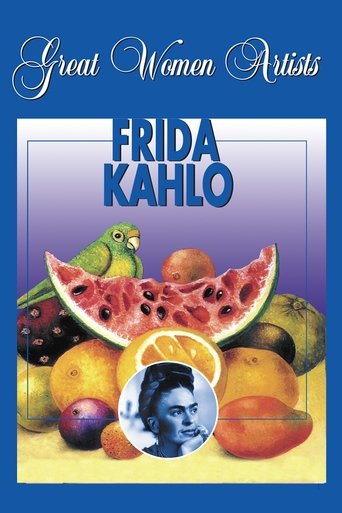
Frida Kahlo began to paint in 1925 while recovering from a streetcar accident that left her permanently disabled. Many of her 200 paintings directly relate to her experiences with physical pain. They also chronicle her turbulent relationship with artist Diego Rivera. Today Kahlo's work is critically and monetarily as prized as that of her male peers, sometimes more so.
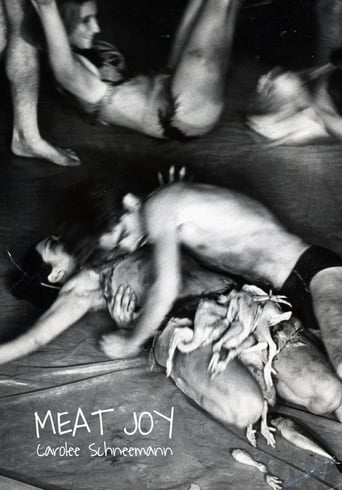
"Meat Joy is an erotic rite — excessive, indulgent, a celebration of flesh as material: raw fish, chicken, sausages, wet paint, transparent plastic, ropes, brushes, paper scrap. Its propulsion is towards the ecstatic — shifting and turning among tenderness, wildness, precision, abandon; qualities that could at any moment be sensual, comic, joyous, repellent. Physical equivalences are enacted as a psychic imagistic stream, in which the layered elements mesh and gain intensity by the energy complement of the audience. The original performances became notorious and introduced a vision of the 'sacred erotic.' This video was converted from original film footage of three 1964 performances of Meat Joy at its first staged performance at the Festival de la Libre Expression, Paris, Dennison Hall, London, and Judson Church, New York City."
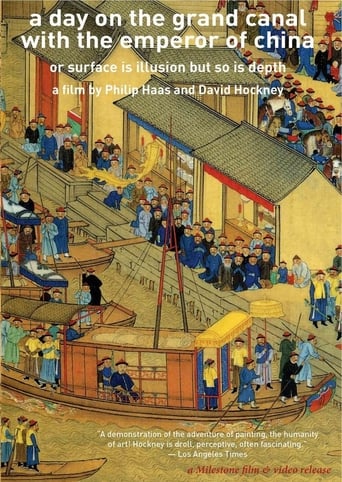
Director Philip Haas and artist David Hockney invite you to join them on a magical journey through China via a marvelous 72-foot long 17th-century Chinese scroll entitled The Kangxi Emperor's Southern Inspection Tour (1691-1698), scroll seven . As Hockney unrolls the beautiful and minutely detailed work of art, he traces the Emperor Kangxi’s second tour of his southern empire in 1689.
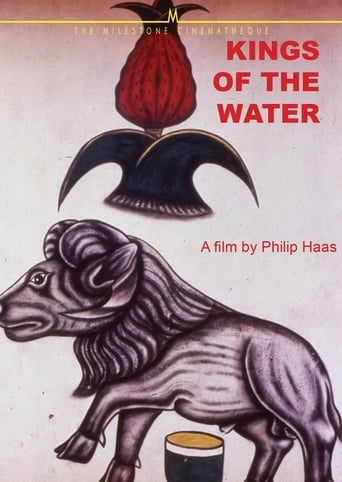
Cyprien Tokoudagba is from the city of Abomey in the Benin Republic of West Africa, where he paints the religious houses of the vodun. Haas and his film crew follow Cyprien as he first paints and then takes part in the ceremony to open a new temple. The paintings include three vodun figures and several emblems, including a pipe and a duck. Cyprien explains his work in the context of the religion and takes the crew to film two other local ceremonies, one where the dead are believed to come back to instruct the living through wild dancing and, another, where women warriors perform their war dances.
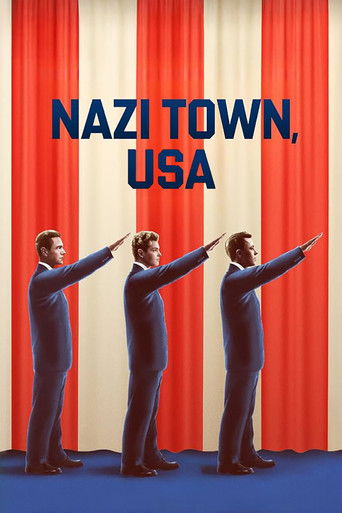
In February 1939, more than 20,000 Americans filled Madison Square Garden for an event billed as a “Pro-American Rally.” Images of George Washington hung next to swastikas and speakers railed against the “Jewish controlled media” and called for a return to a racially “pure” America. The keynote speaker was Fritz Kuhn, head of the German American Bund. Nazi Town, USA tells the largely unknown story of the Bund, which had scores of chapters in suburbs and big cities across the country and represented what many believe was a real threat of fascist subversion in the United States. The Bund held joint rallies with the Ku Klux Klan and ran dozens of summer camps for children centered around Nazi ideology and imagery. Its melding of patriotic values with virulent anti-Semitism raised thorny issues that we continue to wrestle with today.

A look at how form, color, smell, consistency, the sounds made during eating, manufacturing technique, history and stories influence food design.
Jo; or The Act of Riding a Bike is Zefier's third film.
Documentary about the creation of the artwork Fryske Motor.
Outtakes, commentary from Zefier's third film: Jo; or The Act of Riding a Bike.


Presents Alex Ross demonstrating how he creates arresting patterns of vivid color and how he uses acrylic paint on a textured media board.

One public housing flat in Moscow stood out above all others: the home of George Costakis, the foremost collector of early 20th century Russian avant-garde art. Its walls were crowded with banned and forgotten works by artists such as Malevich, Tatlin, Kandinsky, Chagall, Lissitzky, Rodchenko, and Kliun; public figures such as Edward Kennedy, Stravinsky, and Alfred Barr visited. Barrie Gavin met the collector in 1982 at his home in Athens. Costakis, a Greek born in Russia, passionately shares his story and those of the great Russian avant-garde artists. Their works are his legacy – without him, they would not have survived the political upheavals in Russia.
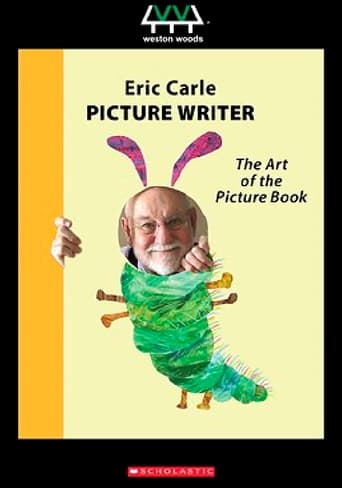
An intimate portrait of Eric Carle, creator of more than 70 books for children including the best-selling "The Very Hungry Caterpillar". At 82, Eric is still at work in his studio making books and creating art. As he methodically layers a tissue paper collage of the caterpillar, he describes the feeling he achieves working in his studio, the sense of being at peace, all alone, when everything grows quiet and it is just himself and his work. The film taps into that deep creative need in each of us, a spirit that started in Eric as a very young child and is unceasing today.