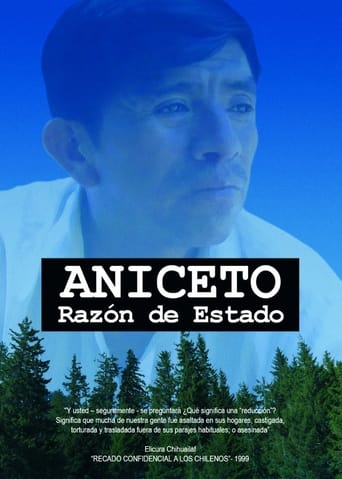
Aniceto, razón de Estado
2009-06-11 · 55 min · Not rated
In the Araucanía Region, an area marked by historical relations between Mapuche and non-Mapuche people, the shooting of a police officer results in the death of a young Mapuche man. On the other hand, a community member who has been sentenced to 10 years in prison has been on a hunger strike for over one hundred days. In the background, we have the experience of Aniceto Norin, a Longko who has spent five years in prison for the crime of "Terrorist Threat," whose account allows us to understand his thoughts and the impact of assuming his role and his Mapuche identity.
Trailers are previews, not full movies.
No authorized playback source configured. Use the legal watch options below.
Production details
- Directors
- Guido Brevis
- Production companies
- Unavailable
- Countries
- Unavailable
- Status
- Released
Top Cast
Cast unavailable.
Title information and images are supplied by TMDb. Explore our discovery guide for advice on comparing metadata and legal viewing options.
Where to watch
Availability provided by JustWatch via TMDb. Offers can change. Provider links are listed on TMDb; full playback requires a separately authorized source.
Availability not listed for this country.
Seasons & episodes
Recommendations

In the Realms of the Unreal is a documentary about the reclusive Chicago-based artist Henry Darger. Henry Darger was so reclusive that when he died his neighbors were surprised to find a 15,145-page manuscript along with hundreds of paintings depicting The Story of the Vivian Girls, in What is Known as the Realms of the Unreal, of the Glodeco-Angelinnian War Storm, Cased by the Child Slave Rebellion.

A string of threatening emails escalates into a revenge plot involving a newly married US marshal and his ex-girlfriend.

In an intimate and joyful story of love in the face of loss, celebrated poets Andrea Gibson and Megan Falley find strength—and unexpected hilarity—in what might be their final year together.

A documentary about how a dominant cultural and demographic institution both sustains their traditional activities and adapts to the digital revolution.
Unravel the case of Utah therapist Jodi Hildebrandt, whose child abuse arrest with parenting YouTuber Ruby Franke exposed a twisted tale of manipulation.
A paralysingly beautiful documentary with a global vision—an odyssey through landscape and time—that attempts to capture the essence of life.
Featuring never-before-seen footage, this documentary delivers a startling new look at the Peoples Temple, headed by preacher Jim Jones who, in 1978, led more than 900 members to Guyana, where he orchestrated a mass suicide via tainted punch.
Police pull over a woman who claims she just gave birth. But the baby — and the blood — aren't hers. Twisted lies unravel in this true-crime documentary.

Through deeply personal interviews with her siblings and an examination of the photographs, letters, and belongings left behind, Mariska assembles a new portrait of her mother Jayne Mansfield, an extraordinary and complex woman.

A documentary on the expletive's origin, why it offends some people so deeply, and what can be gained from its use.
The ocean contains the history of all humanity. The sea holds all the voices of the earth and those that come from outer space. Water receives impetus from the stars and transmits it to living creatures. Water, the longest border in Chile, also holds the secret of two mysterious buttons which were found on its ocean floor. Chile, with its 2,670 miles of coastline and the largest archipelago in the world, presents a supernatural landscape. In it are volcanoes, mountains and glaciers. In it are the voices of the Patagonian Indigenous people, the first English sailors and also those of its political prisoners. Some say that water has memory. This film shows that it also has a voice.
Fourteen years after his first visit, Louis Theroux meets some of the growing community of religious-nationalist Israelis who have settled in the occupied West Bank.

An inside look at one of the most anticipated movie sequels ever with James Cameron and cast.

The film follows adventurer Jeff Johnson as he retraces the epic 1968 journey of his heroes Yvon Chouinard and Doug Tompkins to Patagonia.
The incomparable Bruce Springsteen performs his critically acclaimed latest album and muses on life, rock, and the American dream, in this intimate and personal concert film co-directed by Thom Zimny and Springsteen himself.
Takes us to locations all around the US and shows us the heavy toll that modern technology is having on humans and the earth. The visual tone poem contains neither dialogue nor a vocalized narration: its tone is set by the juxtaposition of images and the exceptional music by Philip Glass.

A compilation of over 30 years of private home movie footage shot by Lithuanian-American avant-garde director Jonas Mekas, assembled by Mekas "purely by chance", without concern for chronological order.
A real-life undercover thriller about two ordinary men who embark on an outrageously dangerous ten-year mission to penetrate the world's most secretive and brutal dictatorship: North Korea.

A documentary about the making of season five of the acclaimed AMC series Breaking Bad.
Legendary journalist Gay Talese unmasks a motel owner who spied on his guests for decades. But his bombshell story soon becomes a scandal of its own.
Similar titles
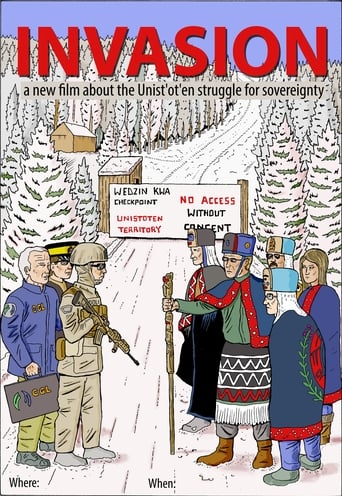
In this era of "reconciliation", Indigenous land is still being taken at gunpoint. INVASION is a new film about the Unist'ot'en Camp, Gidimt'en checkpoint, and the Wet'suwet'en Nation standing up to the Canadian government and corporations who continue colonial violence against indigenous people.

In less than 150 years, 97.3% of British Columbia's old growth forests have been logged. These ancient trees and their ecosystems have been lost forever. Fairy Creek (Ada'itsx), one of BC's last untouched old growth watersheds, lies on Southern Vancouver Island on the unceded territories of the Pacheedaht, Ditidaht and the Huu-ay-aht Nations. Despite Premier John Horgan's 2020 election promise to protect the remaining 2.7% of old growth forest, logging of Fairy Creek continues unabated. In August 2020, forest and land defenders began setting up blockades to prevent the destruction of this beautiful and fragile ecosystem. One year later, after mass civil action, over 500 arrests and intense public pressure, the conflict continues. This comprehensive and compelling documentary film sheds light on the issues around the logging and blockades, through conversations with Indigenous Elders, politicians, police, lawyers, front line activists, and many others.
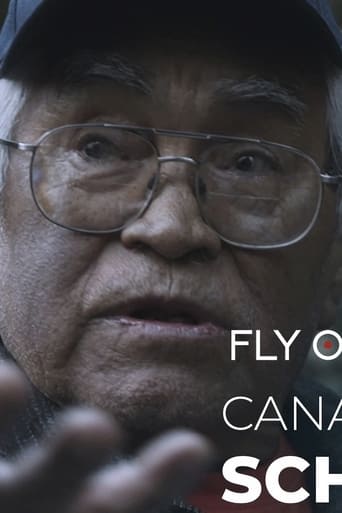
For more than 100 years, thousands of Indigenous children died while in Canada’s residential school system. Pacheedaht Elder Bill Jones survived, but he, like many others, experienced years of beatings and sexual abuse. The scandal has finally brought the Indigenous rights struggle into focus, none more so than at Fairy Creek, an area of forest on First Nations land that protesters are desperately trying to prevent from falling into the hands of logging companies.
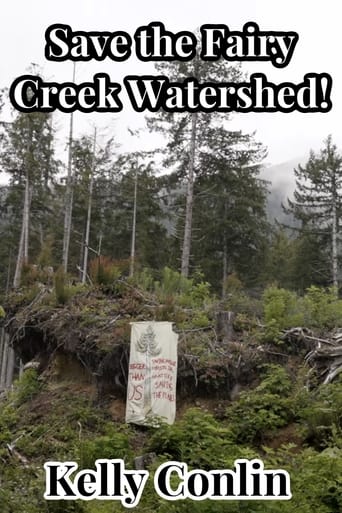
"A short documentary amplifying what I witnessed this past long weekend. I hope this film helps spread the word about the importance of the Fairy Creek Watershed. Ancient old growth trees, a watershed connecting waterways and endangered species are all on the chopping block at the Fairy Creek Blockade as RCMP have moved in to arrest peaceful protestors so Teal-Jones can log the watershed."
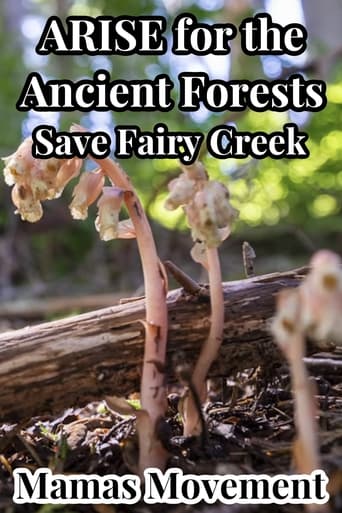
A film initially was released alongside an injunction granted from the BC court to Teal Jones, enabling them to forcibly remove forest protectors who have been sacrificing their worlds at home to stand and defend some of the last of the 2.7% remaining old-growth on Vancouver Island. In collaboration with filmmaker, Ian MacKenzie, the short-film depicts how much we truly depend on these Ancient Forests for our survival as well.
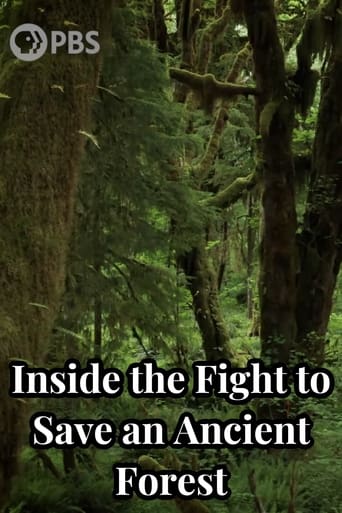
The ancient forests of the Pacific Northwest are home to giant trees and many secrets, which science is just beginning to understand. But these forests are at risk of disappearing. In British Columbia on First Nation territory, a small band of forest defenders are risking life and liberty to protect some of the last remaining ancient forests.
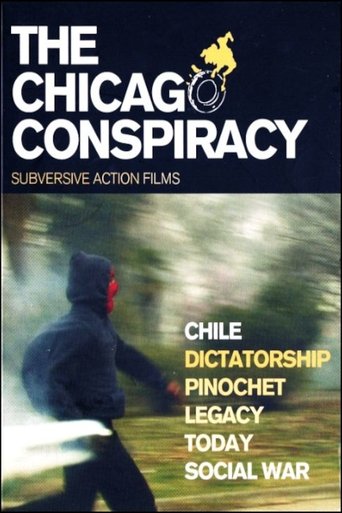
This documentary addresses the legacy of the military dictatorship in Chile by sharing the story of young fighters killed by the Pinochet regime as a backdrop to the history of the military dictatorship and the ongoing social conflict in that area. The larger story unfolds in three shorter parts, which explore the student movement, the history of the towns that became centers of armed resistance against the dictatorship, and the indigenous Mapuche conflict.
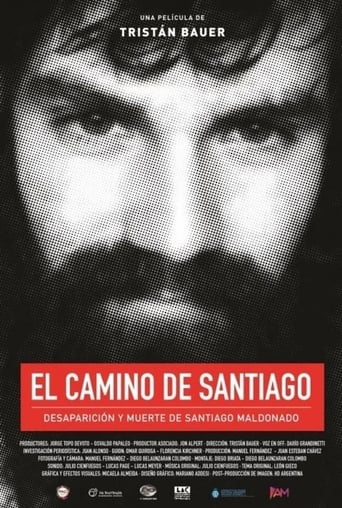
Santiago Maldonado disappeared in the midst of repression against a Mapuche community that claimed to Luciano Benetton for his land. His body was found 78 days later. The need for truth and justice continues

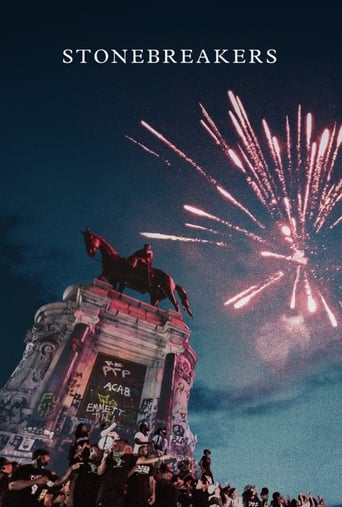
In a year of uprisings and political unrest, Stonebreakers documents the fights around monuments in the United States and explores the shifting landscapes of the nation's historical memory.
October 2013 the Royal Canadian Mounted Police descended on a peaceful anti-fracking protest led by the Mi'kmaq of Elsipogtog and their allies. In this film the voices of some of the people involved in the anti-fracking movement talk about what happened and why they took the stand against hydraulic fracturing and how the heavy handed police response has affected their people.
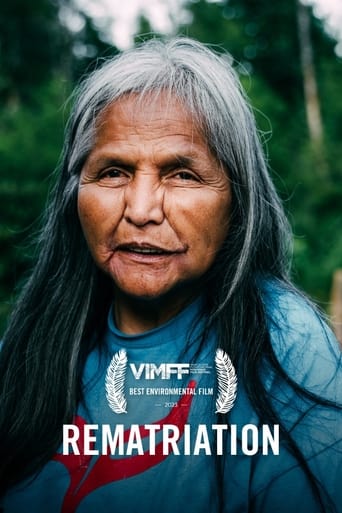
Rematriation explores scientific, cultural, economic and sociopolitical perspectives, as citizens fight to protect the last big trees in British Columbia from being felled. The lessons we take away permeate the fabric of Canadian identity.
On the border, the line as principle of property and belonging reaches an extreme dimension where it physically defines the sphere of its relations. Those who transgress it reconstruct these imaginary lines on a daily basis, redefining the traditional geography and occupying the non-spaces where others live in a temporary form of existence. These others, the non-citizens, are phantasmtic, exchangeable parts of a flexible market. Made invisible, they are permanently controlled persons. Under the pretext of a greater civilian security, they are kept clear from the public spaces reserved for the citizens with rights and pushed into non-public spaces, which are run by state and military surveillance, multinational operations servicing a European market and non-governmental organisations.
‘Tuire Kayapó’ (First Contact) is a moving portrait of the most important female chief of the Kayapó people, known for her environmental activism in the Brazilian Amazon since the late 1980s. In her first interview ever, which took place on January 13th, 2017 in her village in Kaprankrere, Tuire speaks about the issues of the Kayapó people such as deforestation, expansion of the cities towards the Indigenous territories, demarcation, discrimination, national agricultural policies, public administration, corruption and infectious diseases as a result of all this.
In Nevada’s remote Thacker Pass, a fight for our future is playing out between local Indigenous tribes and powerful state and corporate entities hellbent on mining the lithium beneath their land. Vancouver-based Lithium Americas is developing a massive lithium mine at Thacker Pass, but for more than two years several local tribes and environmental organizations have tried to block or delay the mine in the courts and through direct action.
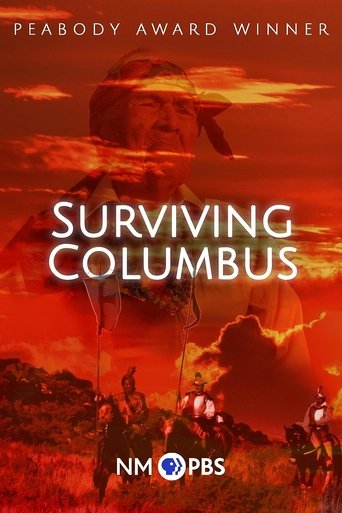
This Peabody Award-winning documentary from New Mexico PBS looks at the European arrival in the Americas from the perspective of the Pueblo Peoples.
RESIST; The Unist'oten's Call to the Land is a short documentary that was filmed in the summer of 2013 on unceded Wet'suwet'en territory, 1000 km north of Vancouver in northern BC (western Canada) over the duration of the fourth annual Environmental Action Camp, hosted by the Unist’ot’en (C'ihlts'ehkhyu/Big Frog) Clan. The focus of the film is on the Camp as a year-round resistance to exploitative industry, and what it represents in relation to indigenous sovereignty and the environmental, legal, and social issues surrounding pipeline projects in British Columbia. The film documents one of the most important resistance camps in North America at the time.

This short documentary revisits Mi’kmaq territory, where an iconic moment was captured in 2013—igniting into a symbol of Indigenous resistance and halting fracking exploration on unceded lands.

Mainland reporter hears about protest on Vancouver Island and decides to visit and see it for himself. He spends time to meet people there from both sides, revealing what it is really all about.

A photograph of an unknown Mapuche great-grandmother is the starting point of this documentary essay. Through the analysis of said picture, conversations with family members, a trip to southern Chile cities, and an actress who re-enacts the photo, we see the existing prejudice against indigenous people.