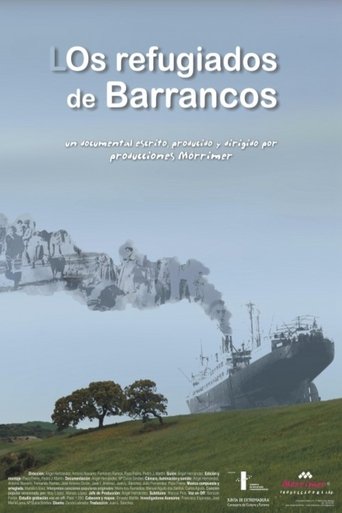
Los refugiados de Barrancos
2009-01-01 · 68 min · Not rated
September 1936. The last republican towns located next to Portugal are conquered by General Franco's troops. As in Badajoz and other towns, the repression they unleash is brutal. The support of the Portuguese dictator Salazar for the coup plotters does not make it advisable to flee to Portugal, but for many it is the only way out. In this way, hundreds of people decide to cross the border, closely pursued by the rebels. The usual procedure of the Portuguese authorities is to hand them over to their Francoist allies. However, thanks to the humanitarian intervention of the Portuguese lieutenant António Augusto de Seixas, two refugee camps were created next to the town of Barrancos to house and protect this group of Spaniards.
Trailers are previews, not full movies.
No authorized playback source configured. Use the legal watch options below.
Production details
- Directors
- Paco Freire Magariños, Ángel Hernández García, Pedro Martín Millán, Fernando Ramos Mena, Antonio Navarro Millán
- Production companies
- Unavailable
- Countries
- Unavailable
- Status
- Released
Top Cast
Cast unavailable.
Title information and images are supplied by TMDb. Explore our discovery guide for advice on comparing metadata and legal viewing options.
Where to watch
Availability provided by JustWatch via TMDb. Offers can change. Provider links are listed on TMDb; full playback requires a separately authorized source.
Availability not listed for this country.
Seasons & episodes
Recommendations
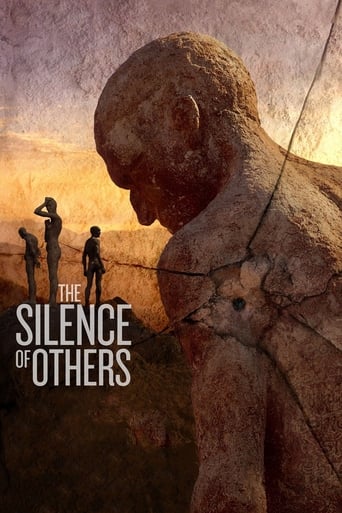
The story of the tortuous struggle against the silence of the victims of the dictatorship imposed by General Franco after the victory of the rebel side in the Spanish Civil War (1936-1975). In a democratic country, but still ideologically divided, the survivors seek justice as they organize the so-called “Argentinian lawsuit” and denounce the legally sanctioned pact of oblivion that intends to hide the crimes they were subjects of.

Ranjit, a farmer in India, takes on the fight of his life when he demands justice for his 13-year-old daughter, the victim of a brutal gang rape. His decision to support his daughter is virtually unheard of, and his journey unprecedented.

A string of threatening emails escalates into a revenge plot involving a newly married US marshal and his ex-girlfriend.

A detailing of the rise to prominence and global sporting superstardom of six supremely talented young Manchester United football players (David Beckham, Nicky Butt, Ryan Giggs, Paul Scholes, Phil and Gary Neville). The film covers the period 1992-1999, culminating in Manchester United's European Cup triumph.
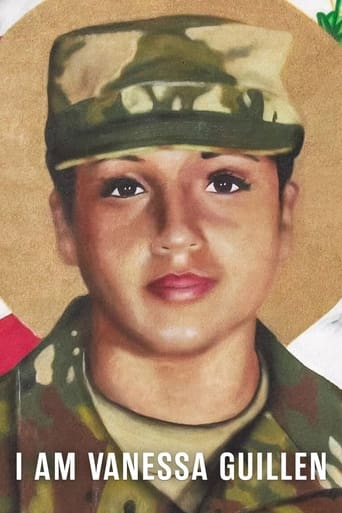
Vanessa Guillen was 20 years old when she was found murdered at a US Army base. Rather than submit to silence, her family fought for justice and change.

Director Michael Apted revisits the same group of British-born adults after a 7 year wait. The subjects are interviewed as to the changes that have occurred in their lives during the last seven years.
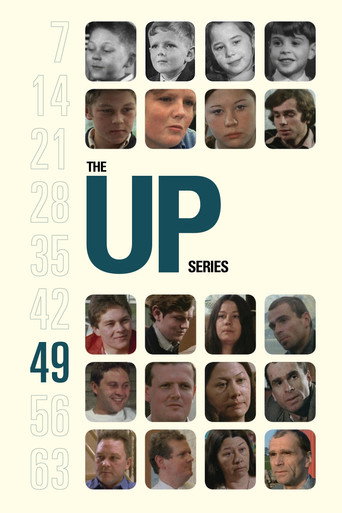
49 Up is the seventh film in a series of landmark documentaries that began 42 years ago when UK-based Granada's World in Action team, inspired by the Jesuit maxim "Give me the child until he is seven and I will give you the man," interviewed a diverse group of seven-year-old children from all over England, asking them about their lives and their dreams for the future. Michael Apted, a researcher for the original film, has returned to interview the "children" every seven years since, at ages 14, 21, 28, 35, 42 and now again at age 49.In this latest chapter, more life-changing decisions are revealed, more shocking announcements made and more of the original group take part than ever before, speaking out on a variety of subjects including love, marriage, career, class and prejudice.

In an intimate and joyful story of love in the face of loss, celebrated poets Andrea Gibson and Megan Falley find strength—and unexpected hilarity—in what might be their final year together.
A road trip across five countries to explore the social and political movements as well as the mainstream media's misperception of South America while interviewing seven of its elected presidents.
Unravel the case of Utah therapist Jodi Hildebrandt, whose child abuse arrest with parenting YouTuber Ruby Franke exposed a twisted tale of manipulation.

When Allied forces liberated the Nazi concentration camps in 1944-45, their terrible discoveries were recorded by army and newsreel cameramen, revealing for the first time the full horror of what had happened. Making use of British, Soviet and American footage, the Ministry of Information’s Sidney Bernstein (later founder of Granada Television) aimed to create a documentary that would provide lasting, undeniable evidence of the Nazis’ unspeakable crimes. He commissioned a wealth of British talent, including editor Stewart McAllister, writer and future cabinet minister Richard Crossman – and, as treatment advisor, his friend Alfred Hitchcock. Yet, despite initial support from the British and US Governments, the film was shelved, and only now, 70 years on, has it been restored and completed by Imperial War Museums under its original title "German Concentration Camps Factual Survey".
Hollywood veteran Bing Russell creates the only independent baseball team in the country—alarming the baseball establishment and sparking the meteoric rise of the 1970s Portland Mavericks.

Guzmán’s final installment shifts from covering the actions of Allende’s opponents to those who battled to revive & promote their toppled leader’s vision for a new Chile.
A documentary on why 'Money Heist' sparked a wave of enthusiasm around the world for a lovable group of thieves and their professor.

Over 35 years after Bob Lazar's revelations, this documentary exposes secrets of a facility the government still denies. Featuring Lazar's testimony, recreations, and new evidence, it reopens a case that continues to spark global curiosity
Embark on an epic journey through time and faith with 'The Apocalypse of Saint John.' Join the Apostle John in a stunning visual narrative that unravels the visions of the End Times. Experience each vision like never before, with striking visual effects and epic scenes that immerse you in the apocalyptic narrative.

A documentary about ten very different lives connected by having appeared onscreen wearing masks or helmets in Star Wars.
The film follows adventurer Jeff Johnson as he retraces the epic 1968 journey of his heroes Yvon Chouinard and Doug Tompkins to Patagonia.

A documentary about how a dominant cultural and demographic institution both sustains their traditional activities and adapts to the digital revolution.
A documentary on legendary movie-poster artist Drew Struzan.
Similar titles

Contracampos is the attempt to (re)build a landscape. A recreational area and a shooting range in the west of Asturies, which, between 1937 and 1943, housed a Francoist concentration camp through which thousands of Republicans passed – firstly militiamen, later guerrillas and their relatives. Sharing a leisurely observation with the viewer, the film intends to resignify that space, giving it back its political meaning. But it is not a question of showing –of filming– the invisible, but rather of showing what is missing in what exists today. What was and is no longer, not even in people's memories.

Truncated Utopia tells the story of Luisa Rendón Martell, a republican activist who was retaliated against in the province of Cádiz during the civil war and Franco's regime.
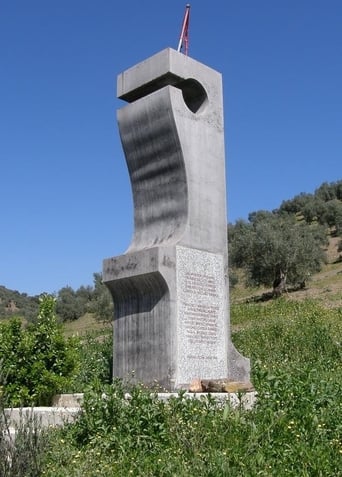

Goazen gudari danok is a documentary that recounts the battle of San Miguel and its importance for the creation of the Basque Government.

Documentary about the participation of the International Brigades in February 1937 in containing the advance of the rebel troops after the fall of Malaga.

Documentary about the battle of Guadalajara which took place in March 1937 during the Spanish Civil War and was the last major victory of the Republican Army.

The Asturian Valentín Vega is considered one of the most relevant photographers of the last century. He knew how to portray all the essential elements of daily life like no one else and at the same time exercise a devastating display of social criticism. After spending three years in prison for his political affiliation and managing to establish himself as a street photographer, he would continue to offer an unusual image of reality and daily life from the 1940s onwards.

The documentary is about the destruction of the republican educational model. It narrates the cleansing that Spanish teachers underwent during and after the Civil War.

A documentary about the recovery of the historical memory of the Malaga town of Archidona, a journey through the history of Archidona from the Second Republic to the last years of the post-war period. A work that speaks, above all, about people, experiences, emotions and feelings.

The story of the concentration camp on San Simón Island (Ría de Pontevedra) during the years of the Spanish Civil War (1936-39), told by its protagonists. Hours and hours of video recording resulted in this documentary which tries to reflect the emotion and tragedy of those years. A research project based on an oral history methodology.

We had to wait until the Spanish “Movida” of the 1980s to see films that did not emanate from Francoist propaganda. But Spain had already experienced a period of cinematic splendor, during the civil war, when the film studios were under the control of the Republicans. By describing the "competition" between Republican and Francoist cinemas of the time, Richard Prost provides a unique vision of the Spanish Civil War.

A story about the memory of the memory, which starts from the revenge perpetrated on October 15, 1936, when nine men were killed in Bayonne as a result of events that happened two days before, and which involved the death of a resident of that town and more than one Falangist .

A documentary, of incalculable power, that reflects the abrupt interruption of childhood through thirteen survivors who at the time of 1936 were between six and twenty-two years old. The film narrates his experiences during the conflict, his fears, his hunger, which became more acute after 1937 when Madrid was isolated by Franco's troops. The memories of the protagonists are interwoven with archival images and with the testimony of Eduardo Haro Tecglen and several other people, respecting the silences and pauses in which the interviewees relax the emotions that these memories stir up in them. A cinematic beast's blow where life becomes death: the story of a childhood lost in the midst of embers, hunger and blood.
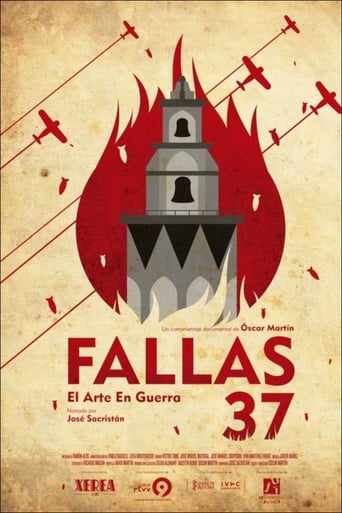
In November 1936, a few months since the beginning of the Spanish Civil War, the government of the Second Republic moves to Valencia. In this situation, several Valencian artists and intellectuals decide to build four fallas — satirical plasterboard sculptures created to be burnt — to mock fascism.

The story is set in six key scenarios of the conflict in the region: Bielsa, Barbastro, Belchite, Caspe, Teruel and Alcañiz. On this tour we find abundant remains of the war in the landscape and numerous testimonies that narrate this journey through our history.

Between 1939 and 1956, the Franco regime shot more than 2,000 republicans in Paterna. They were years of terror, of silence, of arbitrariness, of planned and systematic elimination of any progressive vestige. The documentary portrays the collective effort of the people of Paterna to recover the memory and dignity of those who died defending democracy. Shown through the point of view of those protagonists who were silenced and those voices condemned to oblivion.
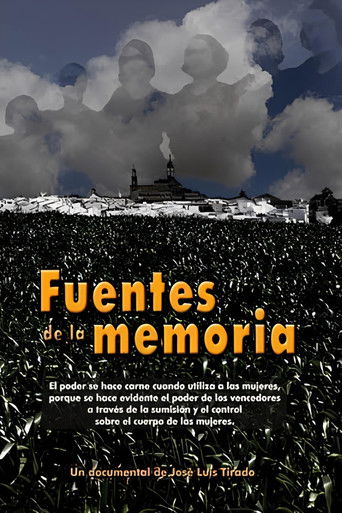
t narrates the repression suffered by the local population of Fuentes de Andalucía after the military coup of 1936.

Between 1937 and 1938, during the Spanish Civil War, thousands of minors were evacuated by their own families from the Republican zone to the Soviet Union to prevent them from perishing in the indiscriminate bombings that the rebel army directed against the civilian population. Taking advantage of the 80th anniversary of this epic, a team went to Russia to record the testimonies of some of those “childrens of war.”

Documentary that narrates a key moment in our history: the Franco coup d'état, the cruel repression that was carried out and the attempts at resistance in the Charra province. Many people are convinced that Salamanca surrendered with open arms to the coup plotters; However, nothing could be further from the truth. In Salamanca there was repression and there were attempts at resistance; There were arrests and there were tortures, there were shootings and there were disappearances. In Salamanca there was also harsh repression that manifested itself in all its forms.