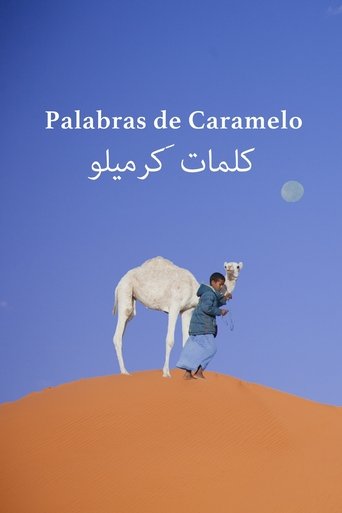
Words of caramel
2016-01-01 · 20 min · Not rated
In a refugee camp in the Sahara desert lives a deaf boy who wants to learn to write. Welcome to the silent world of Kori and his best friend the camel Caramelo.
Trailers are previews, not full movies.
No authorized playback source configured. Use the legal watch options below.
Production details
- Directors
- Juan Antonio Moreno Amador
- Production companies
- Making DOC Producciones
- Countries
- Spain
- Status
- Released
Top Cast
Cast unavailable.
Title information and images are supplied by TMDb. Explore our discovery guide for advice on comparing metadata and legal viewing options.
Where to watch
Availability provided by JustWatch via TMDb. Offers can change. Provider links are listed on TMDb; full playback requires a separately authorized source.
Availability not listed for this country.
Seasons & episodes
Recommendations

When Allied forces liberated the Nazi concentration camps in 1944-45, their terrible discoveries were recorded by army and newsreel cameramen, revealing for the first time the full horror of what had happened. Making use of British, Soviet and American footage, the Ministry of Information’s Sidney Bernstein (later founder of Granada Television) aimed to create a documentary that would provide lasting, undeniable evidence of the Nazis’ unspeakable crimes. He commissioned a wealth of British talent, including editor Stewart McAllister, writer and future cabinet minister Richard Crossman – and, as treatment advisor, his friend Alfred Hitchcock. Yet, despite initial support from the British and US Governments, the film was shelved, and only now, 70 years on, has it been restored and completed by Imperial War Museums under its original title "German Concentration Camps Factual Survey".
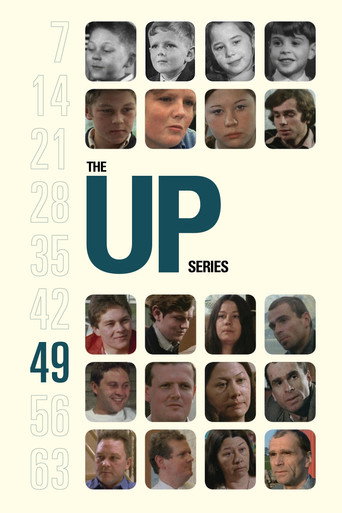
49 Up is the seventh film in a series of landmark documentaries that began 42 years ago when UK-based Granada's World in Action team, inspired by the Jesuit maxim "Give me the child until he is seven and I will give you the man," interviewed a diverse group of seven-year-old children from all over England, asking them about their lives and their dreams for the future. Michael Apted, a researcher for the original film, has returned to interview the "children" every seven years since, at ages 14, 21, 28, 35, 42 and now again at age 49.In this latest chapter, more life-changing decisions are revealed, more shocking announcements made and more of the original group take part than ever before, speaking out on a variety of subjects including love, marriage, career, class and prejudice.

A string of threatening emails escalates into a revenge plot involving a newly married US marshal and his ex-girlfriend.

In an intimate and joyful story of love in the face of loss, celebrated poets Andrea Gibson and Megan Falley find strength—and unexpected hilarity—in what might be their final year together.

Through deeply personal interviews with her siblings and an examination of the photographs, letters, and belongings left behind, Mariska assembles a new portrait of her mother Jayne Mansfield, an extraordinary and complex woman.
Filmmaker Christopher Quinn observes the ordeal of three Sudanese refugees -- Jon Bul Dau, Daniel Abul Pach and Panther Bior -- as they try to come to terms with the horrors they experienced in their homeland, while adjusting to their new lives in the United States.

Ranjit, a farmer in India, takes on the fight of his life when he demands justice for his 13-year-old daughter, the victim of a brutal gang rape. His decision to support his daughter is virtually unheard of, and his journey unprecedented.

A detailing of the rise to prominence and global sporting superstardom of six supremely talented young Manchester United football players (David Beckham, Nicky Butt, Ryan Giggs, Paul Scholes, Phil and Gary Neville). The film covers the period 1992-1999, culminating in Manchester United's European Cup triumph.

Using the book 'Fragments', which collects Marilyn Monroe's poems, notes and letters, and with participation from the Arthur Miller and Truman Capote estates who have contributed more material, each of the actresses will embody the legend at various stages in her life.
More than 65 million people around the world have been forced from their homes to escape famine, climate change and war, the greatest displacement since World War II. Filmmaker Ai Weiwei examines the staggering scale of the refugee crisis and its profoundly personal human impact. Over the course of one year in 23 countries, Weiwei follows a chain of urgent human stories that stretch across the globe, including Afghanistan, France, Greece, Germany and Iraq.
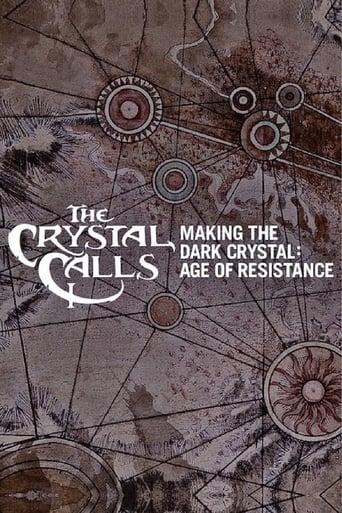
Go behind the scenes with stars, puppeteers and creators as they bring Jim Henson's magical world of Thra back to life in a sweeping fantasy series.

The film follows adventurer Jeff Johnson as he retraces the epic 1968 journey of his heroes Yvon Chouinard and Doug Tompkins to Patagonia.
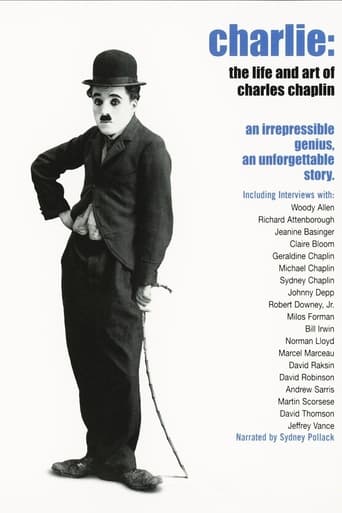
Brilliant, long in-the-works story of the life and art of the world's greatest comedian and the cinema's first genius, Charlie Chaplin. Produced, written and directed by renowned film critic Richard Schickel.

Al Pacino's deeply-felt rumination on Shakespeare's significance and relevance to the modern world through interviews and an in-depth analysis of "Richard III."

An inside look at one of the most anticipated movie sequels ever with James Cameron and cast.
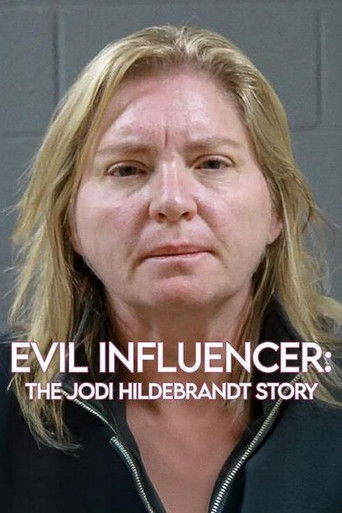
Unravel the case of Utah therapist Jodi Hildebrandt, whose child abuse arrest with parenting YouTuber Ruby Franke exposed a twisted tale of manipulation.

A real-life undercover thriller about two ordinary men who embark on an outrageously dangerous ten-year mission to penetrate the world's most secretive and brutal dictatorship: North Korea.
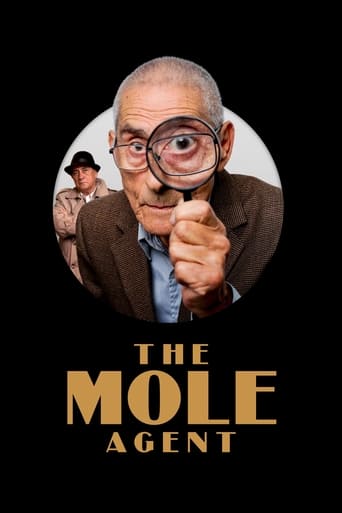
When a daughter becomes concerned about her mother's well-being in a retirement home, private investigator Romulo hires Sergio, an 83-year-old man who becomes a new resident—and a mole inside the home, who struggles to balance his assignment with becoming increasingly involved in the lives of several residents.

Alexander McQueen's rags-to-riches story is a modern-day fairy tale, laced with the gothic. Mirroring the savage beauty, boldness and vivacity of his design, this documentary is an intimate revelation of McQueen's own world, both tortured and inspired, which celebrates a radical and mesmerizing genius of profound influence.

A 1993 documentary film about Bruce Lee. The film includes interviews from some of his fellow students and opponents who worked alongside him in his movies.
Similar titles
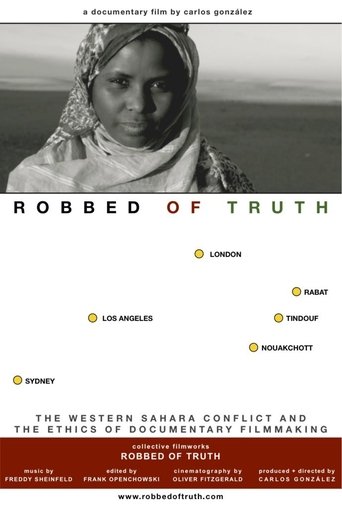
This is the true story of Fetim Salam, a Saharawi refugee falsely portrayed as a slave in the Australian documentary 'Stolen'. Australian filmmakers, Violeta Ayala and Daniel Fallshaw, travel to the Saharawi refugee camps in Tindouf, Algeria in 2007 and claim to discover 20,000 slaves in the camps run by the independence movement Polisario Front. Refugees are outraged for being portrayed as slaves, and humanitarian aid workers are incredulous about these allegations as they know the camps intimately. Filmmaker Carlos Gonzalez retraces their steps in search of the truth and finds a web of lies, misinformation and Moroccan operatives reshaping the truth.
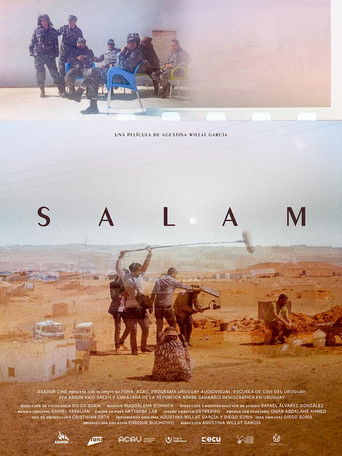
The Sahrawi people have lived in exile for almost half a century in the driest desert of the African continent. There, where basic resources such as water are scarce, there is a film school. As the world looks the other way, a group of young filmmakers carries out a battle against oblivion.
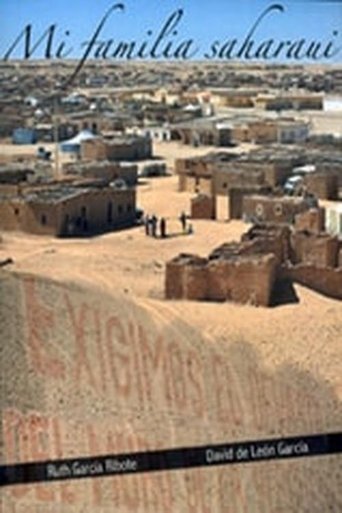
My Sahrawi family' is a report - documentary that reflects the bonds of unity between Sahrawi families and Spanish families who every summer welcome minors from refugee camps into their homes.

The Algerian region of Tindouf is home to more than 170,000 Sahrawis, who have been living in refugee camps since 1976, when Morocco occupied the Western Sahara region. In a place of inhospitable conditions and scarcity, the Sahrawi population lives on dwindling humanitarian aid. Six percent of them face the added difficulty of coeliac disease.
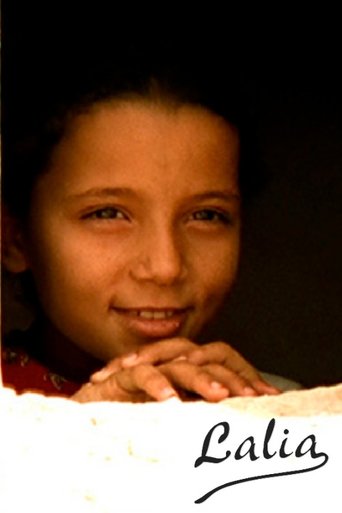
Lalia is a Saharaui girl who lives in a refugee camp in Algiers. She has only heard her grandmother and grandfather talk about her country, about the Sahara, that was taken away by Morroco. She dreams of one day seeing the ocean, seeing her real country. The reality she lives in is different... the uncertainty of the refugee camps, the political unbalance... but she is strong... and she knows that there can be change... she won't stop dreaming, and she won't stop longing..
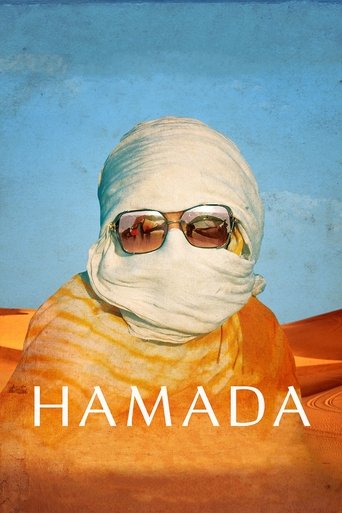
Filled with vitality, humor and unexpected situations, Hamada paints an unusual portrait of a group of young friends living in a refugee camp in the middle of nowhere. Western Sahara is known as “the last colony in Africa” and this conflict is the longest and one of the least known ongoing disputes in the continent, but the Sahrawi people refuse to become invisible.

Education Center for disabled children located in the Sahrawi refugee camps in Algeria. Despite the precarious conditions in which this population lives since 40 years ago, the Polisario Front as the representative of the Sahrawi people has promoted inclusion as a way to avoid marginalization and discrimination of one of the most vulnerable populations within these territories: children with special needs. "Castro" is the man who devotes his life to this beautiful project fighting all odds: physical, psychic, social, economic, and even the incomprehensions of his own society. The Sahrawis are living (resisting) in one of the harshest deserts on Earth but Castro has the magic formula to achieve the inclusion of these wonderful beings in his society and in the rest of the world: MUSAWAT, EQUALITY.

In the stunning and starkly beautiful landscape of Western Sahara, Walter Bencini recounts his journey to meet the Saharawi people, uprooted from their lands for decades and confined to desert tent camps named after the Moroccan cities where they once lived. It's the solidarity journey of a group of people from Valdarno, delivering the money and medicines raised through various initiatives directly into the hands of the beneficiaries.
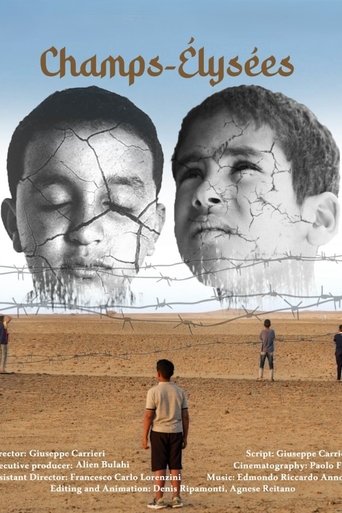
A boy has a dream of traveling to the world, especially to Paris where his uncle lives, but a wall built on his land divides his country and does not allow him to travel or cross to the other side of his land.
Taleb, who came to a refugee camp at the age of five in 1975 and returned there after his studies abroad, tells of his life as a displaced person, his gratitude for the reception and support in Algeria, and his hope that the Sahrawis may one day return to their homeland. For Taleb, this hope drives him to actively prepare for better times: as a graduate in agricultural sciences, he conceived a successful small-scale closed-loop economy in a desert under the most difficult conditions, producing enough food for self-sufficiency.
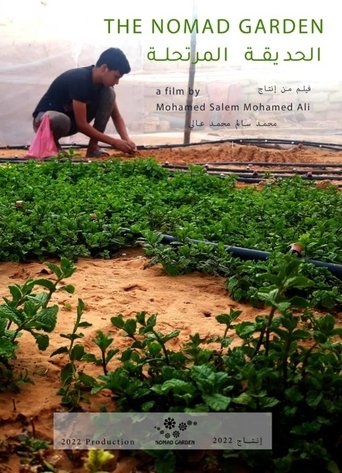
The Nomad Garden is an ode to the impossible. A young Sahrawi refugee shows how he grows organic vegetables and herbs in one of the most inhospitable places on Earth, overcoming challenges like the lack of water, extreme temperatures and a barren soil.

Documentary that denounces the damages caused by the use of land mines in Western Sahara and shows the lives of those affected.

Ahmed lost a leg because of a landmine. Fatimetu works as a deminer. Mohamed tells the story of the wall that divides his country, Western Sahara. Kadija would like to come back to her occupied city, but she no longer hope it.
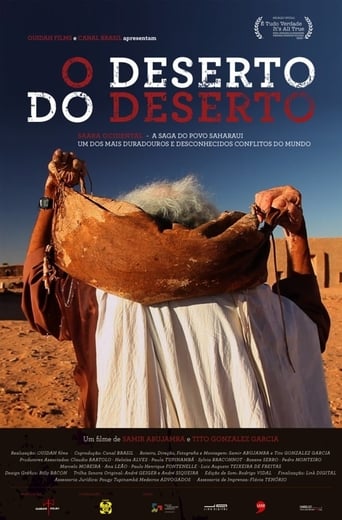
'The Desert of the Desert' is a feature documentary about one of the longest-running and least- known colonial conflicts and the plight of the Sahrawi desert nomads of Western Sahara since Morocco's 1975 invasion. Shot in Jan./Feb. 2014 in the Saharawi Liberated Territories of Western Sahara, and in the Saharawi Refugee Camps in Tindouf, Algeria, the film shows the saga of the Sahrawis, their struggle to regain their homeland and the sad paradox of a nomadic people forced to live in confinement. During production, the crew made a rare treck through 3,000 kilometers of bleak and dangerous desert, becoming unwitting participants in the conflict when their jeep was blown up by an anti-tank mine less than a kilometer from their destination on Western Sahara's Atlantic coast.
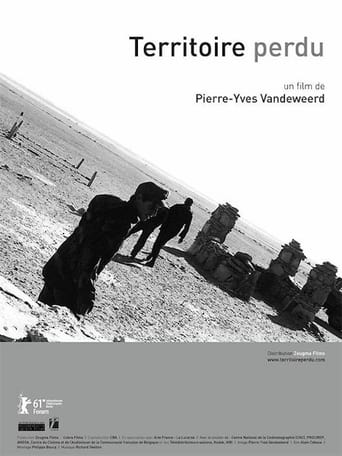
Straddling a 2,400-kilometer-long wall constructed by the Moroccan army, the Western Sahara is today divided into two sections — one occupied by Morocco, the other under the control of the Sahrawi National Liberation Movement’s Polisario Front. Drawing from stories of flight, exile, interminable waiting and the arrested, persecuted lives on both sides of that wall, this film bears witness to the Sahrawi people, their land, their entrapment in other people’s dreams. In an esthetic that sublimates the real, Lost Land resonates like a score that juxtaposes sonorous landscapes, black-and-white portraits and nomadic poetics.
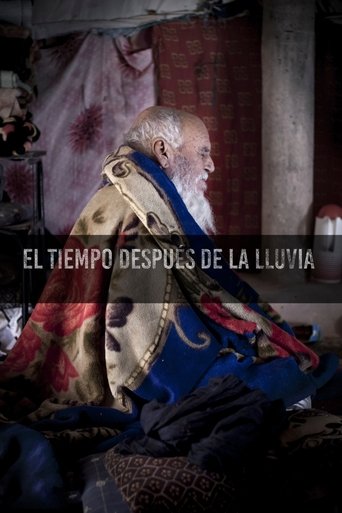
Young Mohamed Dih, who in Seville, returns to his birthplace – a refugee camp in Western Sahara. Time flows differently here: the times of the day are marked by calls to prayer and the seasons – by the rainfall. When a torrential downpour destroys his family’s home, the protagonist stays in the camp for longer to help to rebuild it.
The strength and will of a girl with physical difficulties in Sahrawi society.
Sahrawi artist and visual poet Mohamed Sleiman Labat follows the story of the emerging phenomenon of small scale family gardens in his local community in the Hamada Desert. The film features the story of four families in Samara Camp with small scale gardens, their practices and the knowledge they develop as part of their practices in the garden. The camps are located in a very harsh environment with extreme climate conditions, and the Sahrawi are still dependent on international food aid.

The political upheaval in North Africa is responsibility of the Western powers —especially of the United States and France— due to the exercise of a foreign policy based on practical and economic interests instead of ethical and theoretical principles, essential for their international politic strategies, which have generated a great instability that causes chaos and violence, as occurs in Western Sahara, the last African colony according to the UN, a region on the brink of war.
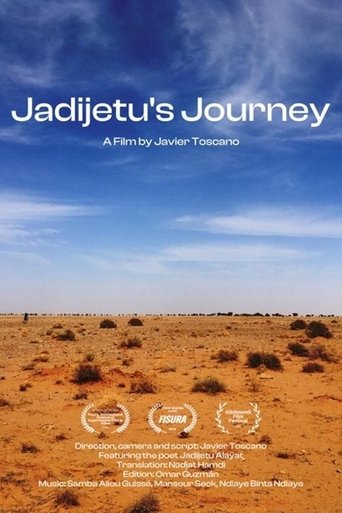
The narrative of resistance of Sahrawi poet Jadijetu Alaÿat flows against the background of raveling images from an unknown land.