
Sam's Army
1999-03-01 · 90 min · ★ 9.0
Canada was led to war by a bigoted, ignorant, self-obsessed Minister of Militia, who may well have been clinically insane, but the importance of Canada's contribution in that war owes a great deal to him. The man of course, was Colonel - later made Lieutenant General by his own hand - Sam Hughes. Sam's Army is a compelling portrait of a complex man and the formidable military he built. Sam Hughes was not your standard-issue military leader. Canada's World War I Minister of Militia and Defence concentrated power in his own hands, insisted that the Canadian military use the ill-conceived Ross rifle and liberally promoted his cronies. But there was no denying Hughes was a visionary. He assembled the world's largest-ever volunteer army and bucked superiors to keep his ferocious fighting force together in one Canadian Corps.
Trailers are previews, not full movies.
No authorized playback source configured. Use the legal watch options below.
Production details
- Directors
- Alan Erlich
- Production companies
- Chum Television, CBC, ONF | NFB, Norflicks Productions, CTF | FCT
- Countries
- Unavailable
- Status
- Released
Top Cast
 Paul GrossNarrator
 David Calderisi
 Benedict Campbell
 Patrick Garrow
 Linda Goranson
 David Hemblen
 Ray Landry
Title information and images are supplied by TMDb. Explore our discovery guide for advice on comparing metadata and legal viewing options.
Where to watch
Availability provided by JustWatch via TMDb. Offers can change. Provider links are listed on TMDb; full playback requires a separately authorized source.
Availability not listed for this country.
Seasons & episodes
Recommendations
A documentary about World War I with never-before-seen footage to commemorate the centennial of Armistice Day, and the end of the war.

When Sgt. First Class Brian Eisch is critically wounded in Afghanistan, it sets him and his sons on a journey of love, loss, redemption and legacy.

Prelude to War was the first film of Frank Capra's Why We Fight propaganda film series, commissioned by the Pentagon and George C. Marshall. It was made to convince American troops of the necessity of combating the Axis Powers during World War II. This film examines the differences between democratic and fascist states.
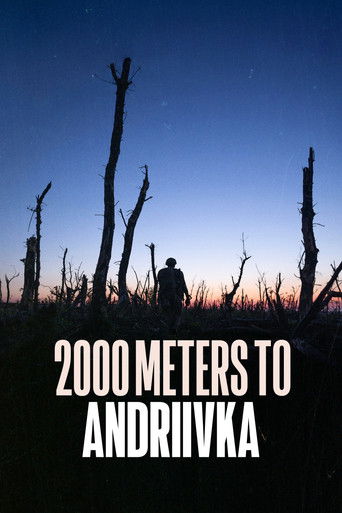
Amid the failing counteroffensive, a journalist follows a Ukrainian platoon on their mission to traverse one mile of heavily fortified forest and liberate a strategic village from Russian occupation. But the farther they advance through their destroyed homeland, the more they realize that this war may never end.
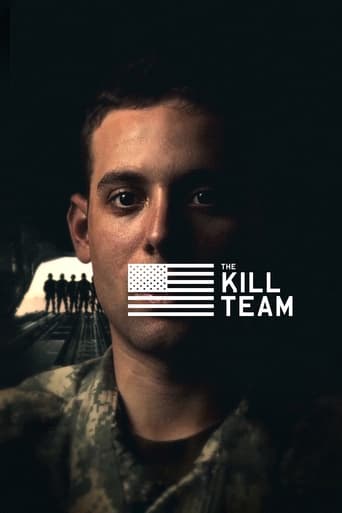
In 2010, the media branded a platoon of U.S. Army infantry soldiers “The Kill Team” following reports of its killing for sport in Afghanistan. Now, one of the accused must fight the government he defended on the battlefield, while grappling with his own role in the alleged murders. Dan Krauss’s absorbing documentary examines the stories of four men implicated in heinous war crimes in a stark reminder that, in war, innocence may be relative to the insanity around you.
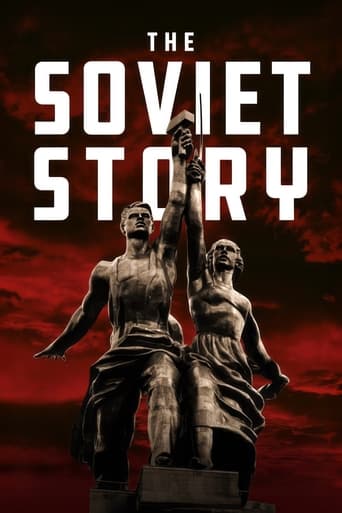
“The Soviet Story” is a story of an Allied power, which helped the Nazis to fight Jews and which slaughtered its own people on an industrial scale. Assisted by the West, this power triumphed on May 9th, 1945. Its crimes were made taboo, and the complete story of Europe’s most murderous regime has never been told. Until now...
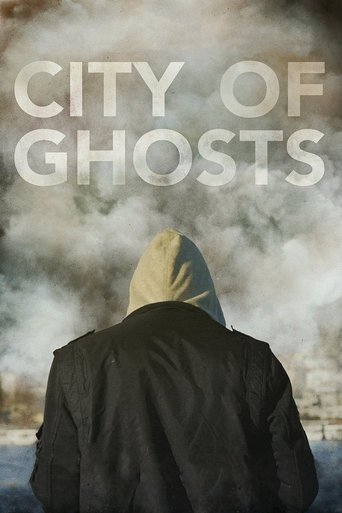
With unprecedented access, this documentary follows the extraordinary journey of “Raqqa is Being Slaughtered Silently”—a group of anonymous citizen journalists who banded together after their homeland was overtaken by ISIS—as they risk their lives to stand up against one of the greatest evils in the world today.
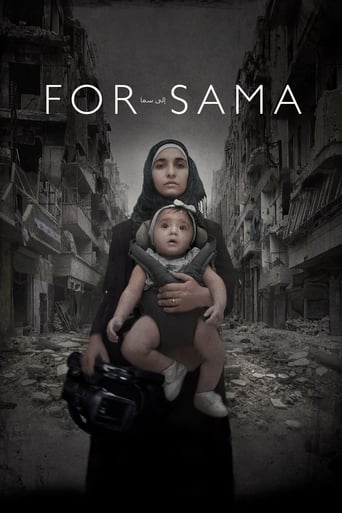
A love letter from a young mother to her daughter, the film tells the story of Waad al-Kateab’s life through five years of the uprising in Aleppo, Syria as she falls in love, gets married and gives birth to Sama, all while cataclysmic conflict rises around her. Her camera captures incredible stories of loss, laughter and survival as Waad wrestles with an impossible choice– whether or not to flee the city to protect her daughter’s life, when leaving means abandoning the struggle for freedom for which she has already sacrificed so much.
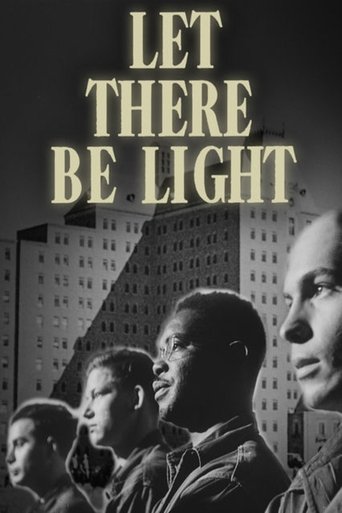
The final entry in a trilogy of films produced for the U.S. government by John Huston. Some returning combat veterans suffer scars that are more psychological than physical. This film follows patients and staff during their treatment. It deals with what would now be called PTSD, but at the time was categorised as psychoneurosis or shell-shock. Government officials deemed this 1946 film counterproductive to postwar efforts; it was not shown publicly until 1981.
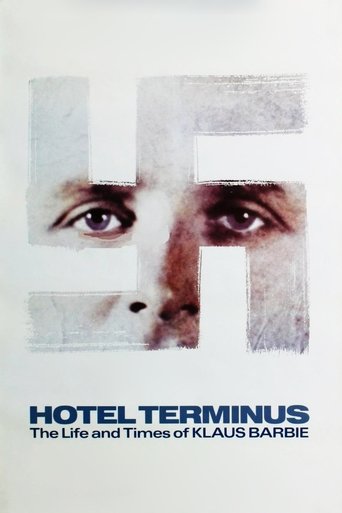
Marcel Ophuls' riveting film details the heinous legacy of the Gestapo head dubbed "The Butcher of Lyon." Responsible for over 4,000 deaths in occupied France during World War II, Barbie would escape—with U.S. help—to South America in 1951, where he lived until a global manhunt led to his 1983 arrest and subsequent trial.

This revealing documentary honors the legendary Sidney Poitier—iconic actor, filmmaker, and civil rights activist. Featuring interviews with Denzel Washington, Spike Lee, Halle Berry, and more.
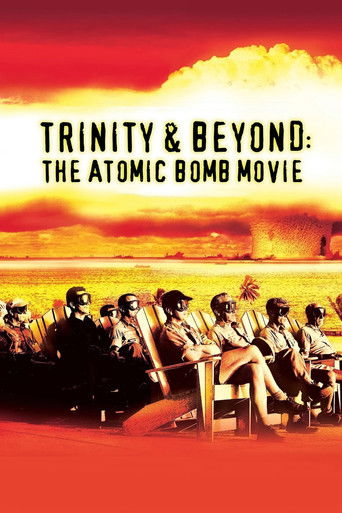
"Trinity and Beyond" is an unsettling yet visually fascinating documentary presenting the history of nuclear weapons development and testing between 1945-1963. Narrated by William Shatner and featuring an original score performed by the Moscow Symphony Orchestra, this award-winning documentary reveals previously unreleased and classified government footage from several countries.
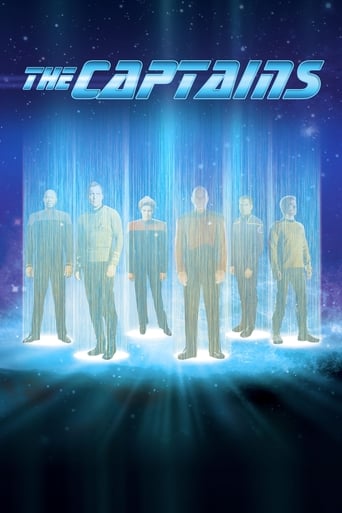
The Captains is a feature-length documentary film written and directed by William Shatner. The film follows Shatner as he interviews the other actors who have portrayed starship captains in the Star Trek franchise.

Through deeply personal interviews with her siblings and an examination of the photographs, letters, and belongings left behind, Mariska assembles a new portrait of her mother Jayne Mansfield, an extraordinary and complex woman.

Set both in Latin America and the United States, the film explores the historic and current relationship of Washington with countries such as Venezuela, Bolivia and Chile. Pilger says that the film "...tells a universal story... analysing and revealing, through vivid testimony, the story of great power behind its venerable myths. It allows us to understand the true nature of the so-called "war on terror". According to Pilger, the film’s message is that the greed and power of empire is not invincible and that people power is always the "seed beneath the snow".
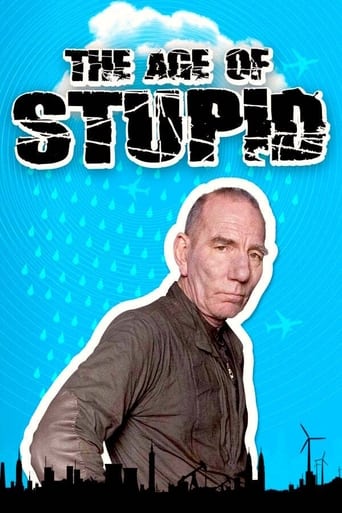
Pete Postlethwaite stars as a man living alone in the devastated future world of 2055, looking at old footage from 2008 and asking: why didn’t we stop climate change when we had the chance?
When Allied forces liberated the Nazi concentration camps in 1944-45, their terrible discoveries were recorded by army and newsreel cameramen, revealing for the first time the full horror of what had happened. Making use of British, Soviet and American footage, the Ministry of Information’s Sidney Bernstein (later founder of Granada Television) aimed to create a documentary that would provide lasting, undeniable evidence of the Nazis’ unspeakable crimes. He commissioned a wealth of British talent, including editor Stewart McAllister, writer and future cabinet minister Richard Crossman – and, as treatment advisor, his friend Alfred Hitchcock. Yet, despite initial support from the British and US Governments, the film was shelved, and only now, 70 years on, has it been restored and completed by Imperial War Museums under its original title "German Concentration Camps Factual Survey".

This documentary movie is about the battle of San Pietro, a small village in Italy. Over 1,100 US soldiers were killed while trying to take this location, that blocked the way for the Allied forces from the Germans. Preserved by the Academy Film Archive in 2005.
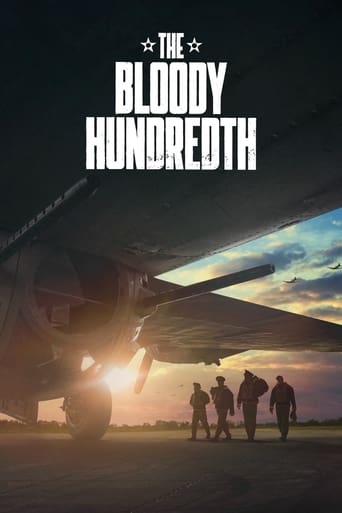
Meet the real-life airmen who inspired Masters of the Air as they share the harrowing and transformative events of the 100th Bomb Group.

Vanessa Guillen was 20 years old when she was found murdered at a US Army base. Rather than submit to silence, her family fought for justice and change.
Similar titles
Stompin' Tom performs live at the Horseshoe Tavern on Queen St. in Toronto.
This feature documentary offers a behind-the-scenes look at political decision-making in Ontario, the most populated Canadian province. A candid study of Ontario Premier Bill Davis and his Cabinet profiles the political process—a daily round of committee meetings, budget tabling, and media relations initiatives. Born into a political dynasty, Davis has the power and resources of the “big blue machine” behind him as he initiates political manoeuvres that tackle everything from unemployment to provincial-federal relations. The film reveals key aspects of Davis's political philosophy, one that kept the Conservatives in power in Ontario for 36 consecutive years.

Filmed in 1987, this documentary chronicles the journey of Via Rail's The Canadian as it makes its way across Canada.
The story of the sinking of the Lusitania in 1915 after she was torpedoed off the Irish coast. The story is told from the perspective of Prof. Holbourn (a passenger), the German U-boat and its captain and crew, and other passengers, crew and Admiralty staff
Lonely young Lord Billy, who misses his dear departed mother, has nothing to do but lounge about the castle all day while his father, the Earl, attends to important affairs of state – until the noble lad joins the Army Cadets. Rising through the ranks to become the Lance Corporal of his squad, patrolling undefended points along the English coast, he's soon on the trail of German marauders.
The story of two men, one married, the other the lover of the other's wife, who meet in the trenches of the First World War, and how their tale becomes a microcosm for the horrors of war.
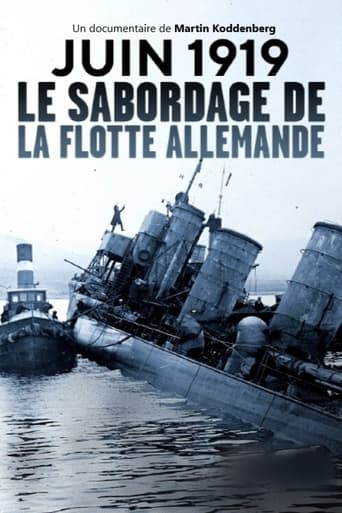
The sinking of the German fleet interned at Scapa-Flow (Orkney Islands), June 21, 1919. We know that one of the stipulations of the armistice signed with Germany on November 11, 1918 was that that power's surface warships were to be "immediately decommissioned and interned in neutral or Allied ports, and remain there under the supervision of the Allies and the United States, guard detachments only being maintained on board". In fact, all the ships designated by the Allies - 11 battleships, 5 battlecruisers, 7 light cruisers and 50 destroyers - had, a few days after the armistice, been assembled in Scapa-Flow Bay, in the center of the Orkney archipelago, i.e. north of Scotland, and had remained there ever since, under the supervision of the English naval authorities, but under the effective authority of German Admiral von Reuter.
Lii Michif Niiyanaan: We Are Métis is a documentary that addresses the invisibility of the Metis by shining a new light on the historical and contemporary experience of Métis people in Canada and providing a space for Métis people to share their diverse perspectives on what it means to be Métis today.
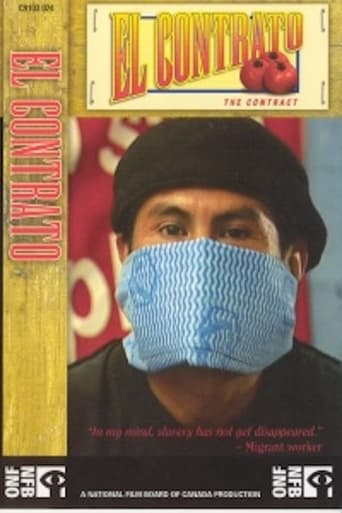
This documentary from Min Sook Lee follows a poverty-stricken father from Central Mexico, along with several of his countrymen, as they make their annual migration to southern Ontario to pick tomatoes. For 8 months a year, the town's population absorbs 4,000 migrant workers who toil under conditions, and for wages, that no local would accept. Yet despite a fear of repercussions, the workers voice their desire for dignity and respect.

The film features the wonderful poet of the early 20th century, Count Vasily Komarovsky. The poets Nikolai Gumilyov, Anna Akhmatova and Osip Mandelstam, among other celebrities, were not only his acquaintances but he had a considerable influence on their work. The poet’s extraordinary life gave birth to legends, whose plausibility will also be dwelt upon. Komarovsky’s niece will share her recollections with the viewer. The film is based on unique documents previously unknown to Russian and foreign scholars.
Polar Life’s novelty was its theatre, with the audience seated on a central rotating turntable in the middle of eleven fixed screens. Viewers have described the intricate juxtaposition of screen images and narration and the complex relationship created between moving spectators and multiple screens. Documentation images and scripts of the bilingual narration by Lise Payette and Patrick Watson show elaborate temporal and spatial representations of the Arctic and Antarctic regions: the Inuit in daily activities in the Canadian North; other northern peoples of Alaska, Lapland, and Siberia; and settlers from the South, scientists, explorers, and other inhabitants of the landscape, including reindeer, bears, and birds. Archival film footage of early northern explorers, combined with newly shot documentary footage, was edited across the various screens to create spatial relationships that are sometimes coherent, sometimes fragmented.

In present-day Bosnia and Herzegovina, economically depressed towns turn themselves into tourist destinations in order to survive—deliberately forming their own cultural narratives. Centering on four different locations, The Stone Speakers interrogates a nation’s contradictory memories. Made with subtlety and tactful distance, director Igor Drljaca’s film reveals the traumatic consequences of being a country that is stuck in a postwar identity crisis.

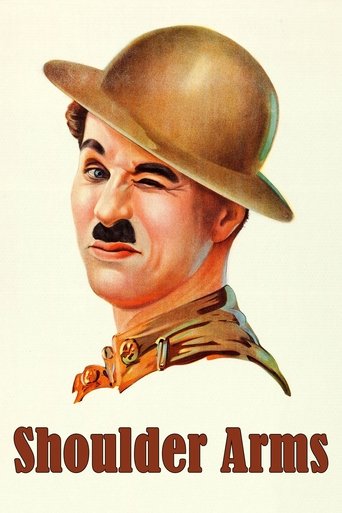
An American doughboy, stationed in France during the Great War, goes on a daring mission behind enemy lines and becomes a hero.
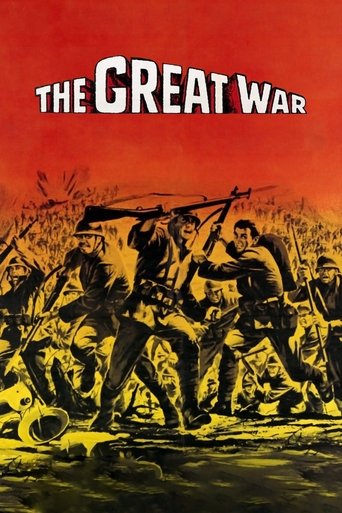
Italy, 1916. Oreste Jacovacci and Giovanni Busacca are called, as all the Italian youths, to serve the army in the WWI. They both try in every way to avoid serving the army.
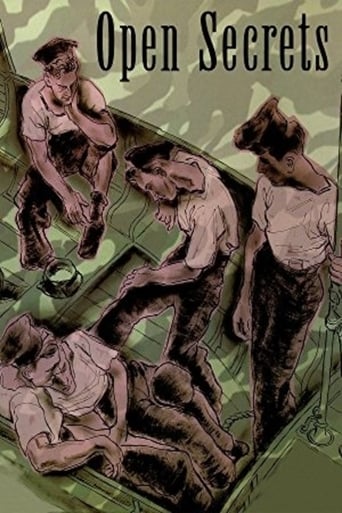
This provocative documentary uncovers a lost chapter in Canadian military history: how the Armed Forces dealt with homosexual behaviour among soldiers, during and after World War II. More than 60 years later, a group of five veterans, barely adults when they enlisted, break the silence to talk about how homosexual behaviour "was even more unmentionable than cancer." Yet amidst the brutality of war, instances of sexual awakening among soldiers and officers were occuring. Initially, the Army overlooked it, but as the war advanced, they began to crack down: military tribunals, threats of imprisonment, discharge and public exposure. After the war, officers accused of homosexuality were discharged. Back home in Canada, reputations and careers were ruined. For the young men who had served their country with valour, this final chapter was often too much to bear. Based on the book Courting Homosexuals in the Military by Paul Jackson.
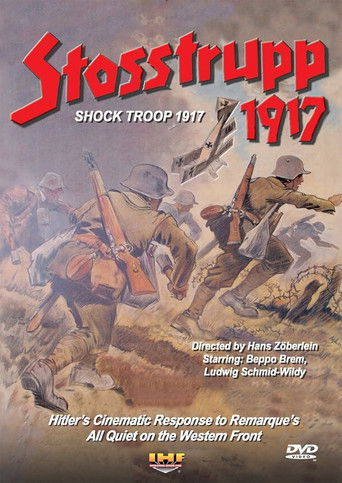
This powerful anti-war film statement focuses on the plight of a German unit in World War I that finds itself surrounded by British and French forces.

At her family’s cabin on Wakaw Lake, Saskatchewan, renowned Fransaskois singer-songwriter Alexis Normand invites audiences into a series of candid exchanges about belonging and bilingualism on the Prairies.
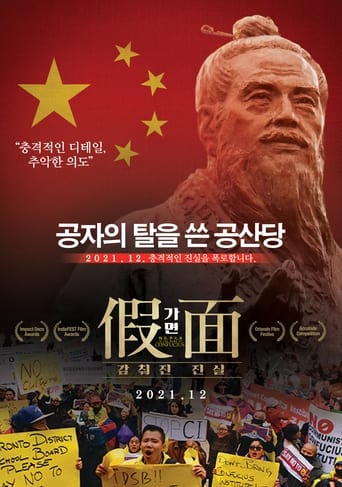
One of Canada's top 10 universities and its largest school board found themselves embroiled in a growing global controversy as scholars, parents, and officials question the Confucius Institute program's true purpose.