

Justice Redefined: Ukraine's Frontline Journalists
2024-05-04 · 49 min · Not rated
How do you cover a war in your own country? We spent two years with journalists from Ukraine's public broadcaster and saw how Russia's invasion transformed their profession and changed their beliefs. Broadcast on 5/4/2024
Trailers are previews, not full movies.
No authorized playback source configured. Use the legal watch options below.
Production details
- Directors
- Kazuki Fujiwara
- Production companies
- NHK
- Countries
- Japan
- Status
- Released
Top Cast
 Jack MerluzziSelf - Narrator (voice)
Title information and images are supplied by TMDb. Explore our discovery guide for advice on comparing metadata and legal viewing options.
Where to watch
Availability provided by JustWatch via TMDb. Offers can change. Provider links are listed on TMDb; full playback requires a separately authorized source.
Availability not listed for this country.
Seasons & episodes
Recommendations
As the Russian invasion begins, a team of Ukrainian journalists trapped in the besieged city of Mariupol struggle to continue their work documenting the war's atrocities.

Amid the failing counteroffensive, a journalist follows a Ukrainian platoon on their mission to traverse one mile of heavily fortified forest and liberate a strategic village from Russian occupation. But the farther they advance through their destroyed homeland, the more they realize that this war may never end.

This documentary movie is about the battle of San Pietro, a small village in Italy. Over 1,100 US soldiers were killed while trying to take this location, that blocked the way for the Allied forces from the Germans. Preserved by the Academy Film Archive in 2005.
With unprecedented access, this documentary follows the extraordinary journey of “Raqqa is Being Slaughtered Silently”—a group of anonymous citizen journalists who banded together after their homeland was overtaken by ISIS—as they risk their lives to stand up against one of the greatest evils in the world today.

When Sgt. First Class Brian Eisch is critically wounded in Afghanistan, it sets him and his sons on a journey of love, loss, redemption and legacy.

Prelude to War was the first film of Frank Capra's Why We Fight propaganda film series, commissioned by the Pentagon and George C. Marshall. It was made to convince American troops of the necessity of combating the Axis Powers during World War II. This film examines the differences between democratic and fascist states.

Through deeply personal interviews with her siblings and an examination of the photographs, letters, and belongings left behind, Mariska assembles a new portrait of her mother Jayne Mansfield, an extraordinary and complex woman.
Korengal picks up where Restrepo left off; the same men, the same valley, the same commanders, but a very different look at the experience of war.
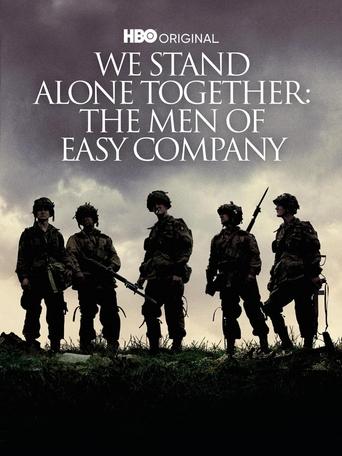
Over a period of two years, Mark Cowen and his crew travelled to thirty U.S. states and ten European cities, to interview the veterans of Easy Company. The stories told by the veterans themselves, create a history of the Second World War from the point of view of this heroic company of men, made famous in the mini-series Band of Brothers.
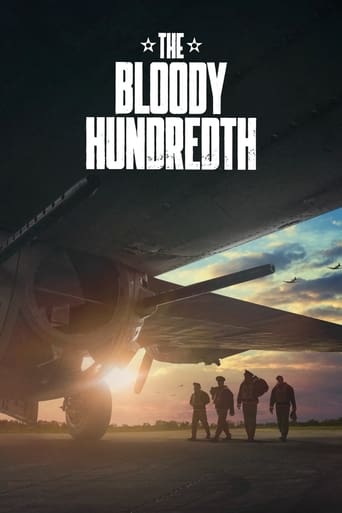
Meet the real-life airmen who inspired Masters of the Air as they share the harrowing and transformative events of the 100th Bomb Group.
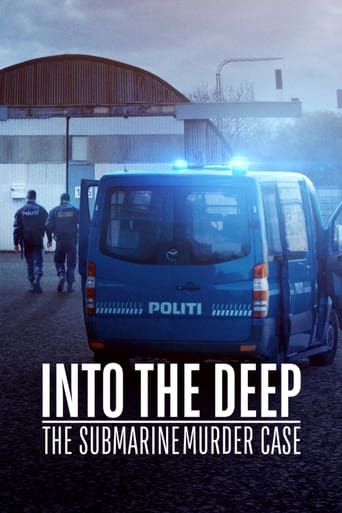
When journalist Kim Wall disappears after boarding inventor Peter Madsen's submarine, his changing story about her fate masks a terrifying truth.
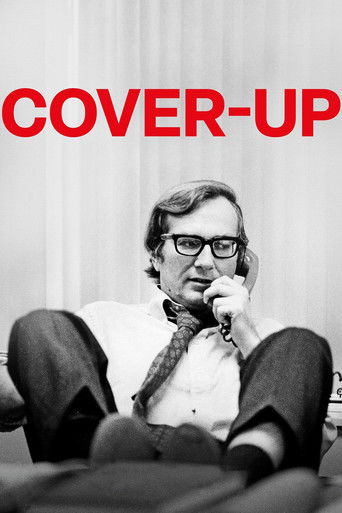
He's devoted his career to uncovering stories the powerful want buried. From My Lai to Abu Ghraib, dig into the life's work of journalist Seymour Hersh.
Directors Hetherington and Junger spend a year with the 2nd Battalion of the United States Army located in one of Afghanistan's most dangerous valleys. The documentary provides insight and empathy on how to win the battle through hard work, deadly gunfights and mutual friendships while the unit must push back the Taliban.
A real-life undercover thriller about two ordinary men who embark on an outrageously dangerous ten-year mission to penetrate the world's most secretive and brutal dictatorship: North Korea.

A love letter from a young mother to her daughter, the film tells the story of Waad al-Kateab’s life through five years of the uprising in Aleppo, Syria as she falls in love, gets married and gives birth to Sama, all while cataclysmic conflict rises around her. Her camera captures incredible stories of loss, laughter and survival as Waad wrestles with an impossible choice– whether or not to flee the city to protect her daughter’s life, when leaving means abandoning the struggle for freedom for which she has already sacrificed so much.
Going beyond the occasional news clip from Burma, the acclaimed filmmaker, Anders Østergaard, brings us close to the video journalists who deliver the footage. Though risking torture and life in jail, courageous young citizens of Burma live the essence of journalism as they insist on keeping up the flow of news from their closed country.
The final entry in a trilogy of films produced for the U.S. government by John Huston. Some returning combat veterans suffer scars that are more psychological than physical. This film follows patients and staff during their treatment. It deals with what would now be called PTSD, but at the time was categorised as psychoneurosis or shell-shock. Government officials deemed this 1946 film counterproductive to postwar efforts; it was not shown publicly until 1981.
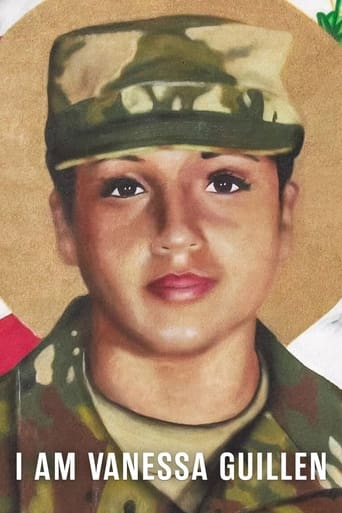
Vanessa Guillen was 20 years old when she was found murdered at a US Army base. Rather than submit to silence, her family fought for justice and change.

A documentary about World War I with never-before-seen footage to commemorate the centennial of Armistice Day, and the end of the war.
A courageous pastor uses his underground network to rescue and aid North Korean families as they risk their lives to embrace freedom.
Similar titles
The murder of Dutch filmmaker Theo van Gogh by an Islamic extremist in 2004, followed by the publishing of twelve satirical cartoons depicting the prophet Mohammed that was commissioned for the Danish newspaper Jyllands-Posten, provides the incendiary framework for Daniel Leconte's provocative documentary, It's Hard Being Loved by Jerks.
The film takes place on the eighth day of Russia's war campaign in Ukraine. Eight Ukrainians residing in the Czech Republic – a businesswoman, cleaning ladies, construction workers, and bus drivers – make their own diary-like observations of the events in their homeland. They continue to bury themselves in their work, unable to afford to withdraw themselves from their current lives. In their minds, however, they've transported themselves hundreds of kilometers away, helping their fellow countrymen and women by any means necessary. They provide accommodation for refugees, scout for bulletproof vests, and call their loved ones who’ve taken shelter from falling bombs. They have a hectic and emotionally overwhelming 24 hours ahead of them. But it’s not the first 24 hours and it won’t be the last.

Rich Peppiatt delivers a satirical dissection of the newspaper trade by turning the tables on unscrupulous editors. Through a series of mischievous stunts and interviews with heavyweights of journalism, comedy & politics, Peppiatt hilariously exposes the hypocrisy at the heart of modern journalism.
This lesson in political revelation focuses on the shooting down of the Malaysian passenger jet MH17 over eastern Ukraine in 2014. A meticulous, investigative exposé that lays bare the mechanisms of Russian warfare.
The movie explores the origin of the Ukrainian language and persecution of those who defended its authenticity. Using examples of other countries, creators of the film prove that a nation cannot exist without a language.
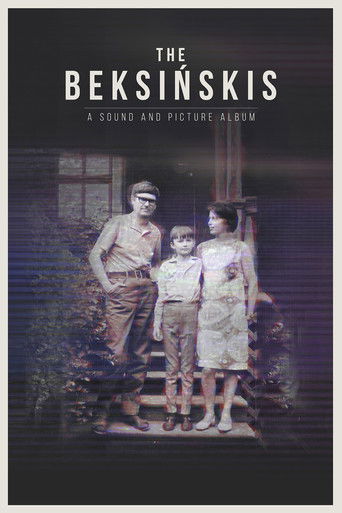
Painter Zdzisław Beksiński, his wife Zofia and their son Tomasz, a well-known radio journalist and translator, were a typical and unconventional family, both at the same time. One of the father’s obsessions was filming himself and his family members. Using archival footage only, shot primarily by Zdzisław, as well many other materials, which have not been presented anywhere so far, the film tells a tragic story of the Beksińskis that has never ceased to fascinate Polish filmmakers.

When on February 24, 2022, Russian troops attacked Ukraine, the world stopped. The first shock, however, quickly turned into action. It was a natural impulse of the heart, Poles could not leave their neighbors, their friends from Ukraine completely alone. Almost everyone, residents of small and large cities, young and old, rich and poor, became involved in helping Ukrainians, opened their homes for those fleeing the war, and began to organize humanitarian aid. Did they pass the humanity test?
Four journalists talk about their experiences and share their testimonies of the Russian invasion of Ukraine.

Between February and April 2025, filmmakers Bernard-Henri Lévy and Marc Roussel filmed the Pokrovsk and Soumy fronts in eastern Ukraine, following the fighters of the Anne de Kyiv Brigade, armed by France. They filmed the daily lives of the inhabitants, bombarded by Russian forces terrorizing civilians on the eve of possible negotiations. They interview President Zelenskyy, who is reluctant to travel to Washington, and then watch the rebroadcast of the meeting with Ukrainian soldiers in a bunker. For the real heroes are the anonymous fighters and civilians who hold their heads high in the face of adversity and suffering, and who are filmed on a daily basis. The final part of Lévy’s “Ukrainian Quartet”, Our War is a diary, peppered with flashbacks in which the author recalls the high points of this war that began in 2014.

A documentary film-project by Dmytro Komarov. He was the first journalist to witness and film the horrors of the just-liberated towns of Bucha, Irpin and Hostomel. He saw the first emotions of people immediately after the de-occupation of Kyiv region, Kharkiv region, and Kherson region. The documentary is the author's view of the war from angles that you won't see in the news. Unique, rare, exclusive comments from those whose hands and minds are shaping our future victory. The main heroes of documentary are both ordinary Ukrainians who heroically show their strength and power every day for a year and high-ranking officials such as Minister of Defense of Ukraine Oleksiy Reznikov, Chief of the General Staff of the Armed Forces of Ukraine Kyrylo Budanov, Major General Oleksandr Syrskyi, Commander of the Air Force of the Armed Forces of Ukraine Lieutenant General Mykola Oleshchuk. Initially, "Year" was a series of journalistic reports, later they were edited into a two-part film.

"Stronger than Arms", is the history that heats our hearts up with the memory of events and people, who from the time of Euromaidan to the war in the East were building a new Ukraine.
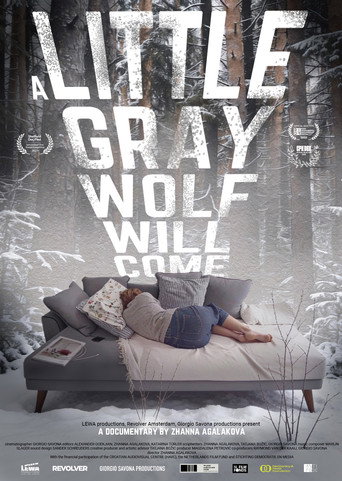
On the eve of the war in Ukraine, a Russian journalist from pro-Kremlin TV channel brings her rebellious and Westernized teenage daughter on a journey through Putin’s Russia.

The duel between Pierre Péan and Edwy Plenel revisits some of the great moments of French political life and tells the story of more than 30 years of journalism in France. From distrust to attack, from revenge to caricature, the two icons of French journalism, Pierre Péan and Edwy Plenel, have always been at war. Everything opposes them: their working methods, their vision of the profession and even their way of being. Pierre Péan has always worked alone, in secret, while Edwy Plenel was looking for his place in the collective, heading for the upper echelons of the media... In the 1980s, both men became stars of journalism. In the 1990s, with his best-selling investigations, Péan invented his own independent business model, while Plenel became editor of Le Monde. Their exceptional careers have changed the way news is reported in France
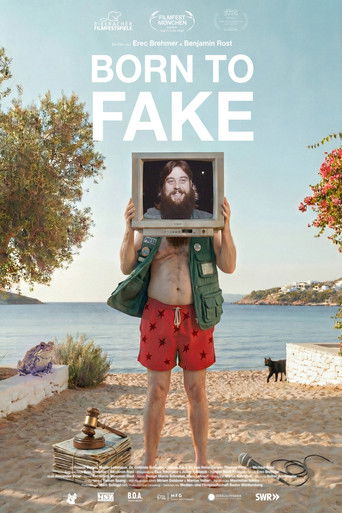
In 1996, one of the biggest media scandals in German history shook the public: Michael Born, a self-made journalist, had faked over twenty reports for the newly established private television station between 1990 and 1996. Some seemed amateurish, others dealt with absurd topics: child labor for IKEA in India, drug addicts licking toads to get high, and the Ku Klux Klan in the Eifel region were just some of his numerous fabrications. How did it come to this? Was Michael Born an enlightened figure who subversively exposed the tabloid system, a victim of the system, or simply a bumbling fraud? Film traces Michael Born's footsteps. Put together from hundreds of hours of raw material and the memories of former companions, an incredible story of forgery emerges. A media-theoretical film about levels of reality, fake news, and the question: Why do we actually believe what we see?

Due to the full-scale Russian invasion of Ukraine, tens of thousands of Ukrainians, fleeing the war, found refuge in Uzhhorod in western Ukraine. The local director decides to attract non-professional actors -displaced people - in bringing his dream into life - to stage the King Lear play. The theatrical performance helps them find themselves and their purpose in a new world where there is war, and the director finds an answer to the eternal question of what love is and why this world should not perish.
Journalists Johan Persson and Martin Schibbye talk about the horrendous days in the desert, rail executions and false terror charges. They were arrested before they could report on the violence in the closed state of Ogaden. But the Ethiopian regime failed to silence them. With the help of never-before-seen video material and testimonies smuggled out of the country by a high ranking official, the whole story can finally be told. About Johan and Martin. About the violence in Ogaden. And about the prisoners of dictatorship.
As an unwavering natural force, Maj Wechselmann produces at least one film a year, which is guaranteed to show troublesome connections between established power structures and maladjustments for people further down the hierarchy of society; this time through the Swedish Television photographer Claes-Göran Bjernér's fascinating fate of life. Bjernér, who reported from 23 wars in 83 countries, had his lungs injured for life in the poison gas disaster in Bhopal, India in 1984. The film begins with him almost dying several times, but miraculously returning to life. In interviews and archival photos, he shares his unique first-hand experiences of war, violence and corruption. A glowing agitation to never stop demanding responsibility for the world's tragedies.

What to take, what to leave? How important are material possessions when you’re trying to save your life? Packages from Ukraine – filled with everything and nothing – wait patiently under a bridge to be found, while a voice stirs memories of frivolous and treasured personal effects, in an apparent heart-breaking farewell letter to Kyiv.

In 2014, the war begins. Immediately, a system of evacuation of the wounded and killed is being built, the outpost of which is the Dnieper - it is here that the first will be delivered, it is here that they are still received. Tatiana Guba has been coordinating the evacuation for 5 years. She is called "Mom Tanya". Thousands of people are grateful to her for her life. Serhiy Kryvorotchenko, director of the Dnipro Airport, has deployed a helicopter evacuation system since the beginning of the war. Eugene Titarenko, the film's director, in 2014-2015 was part of a volunteer medical battalion, communicates with the heroes of the film about the evacuation system. The viewer will see the whole way of saving lives, will be directly in the vortex of events and will understand how many people are involved in the process of saving one person.
