La placa, una familia
· Runtime unavailable · Not rated
Trailers are previews, not full movies.
No authorized playback source configured. Use the legal watch options below.
Production details
- Directors
- José Antonio Quirós
- Production companies
- El Nacedón Films
- Countries
- Spain
- Status
- In Production
Top Cast
Title information and images are supplied by TMDb. Explore our discovery guide for advice on comparing metadata and legal viewing options.
Where to watch
Availability provided by JustWatch via TMDb. Offers can change. Provider links are listed on TMDb; full playback requires a separately authorized source.
Availability not listed for this country.
Seasons & episodes
Recommendations

Through deeply personal interviews with her siblings and an examination of the photographs, letters, and belongings left behind, Mariska assembles a new portrait of her mother Jayne Mansfield, an extraordinary and complex woman.

When Allied forces liberated the Nazi concentration camps in 1944-45, their terrible discoveries were recorded by army and newsreel cameramen, revealing for the first time the full horror of what had happened. Making use of British, Soviet and American footage, the Ministry of Information’s Sidney Bernstein (later founder of Granada Television) aimed to create a documentary that would provide lasting, undeniable evidence of the Nazis’ unspeakable crimes. He commissioned a wealth of British talent, including editor Stewart McAllister, writer and future cabinet minister Richard Crossman – and, as treatment advisor, his friend Alfred Hitchcock. Yet, despite initial support from the British and US Governments, the film was shelved, and only now, 70 years on, has it been restored and completed by Imperial War Museums under its original title "German Concentration Camps Factual Survey".

Marcel Ophuls' riveting film details the heinous legacy of the Gestapo head dubbed "The Butcher of Lyon." Responsible for over 4,000 deaths in occupied France during World War II, Barbie would escape—with U.S. help—to South America in 1951, where he lived until a global manhunt led to his 1983 arrest and subsequent trial.

In an intimate and joyful story of love in the face of loss, celebrated poets Andrea Gibson and Megan Falley find strength—and unexpected hilarity—in what might be their final year together.

This revealing documentary honors the legendary Sidney Poitier—iconic actor, filmmaker, and civil rights activist. Featuring interviews with Denzel Washington, Spike Lee, Halle Berry, and more.

A compilation of over 30 years of private home movie footage shot by Lithuanian-American avant-garde director Jonas Mekas, assembled by Mekas "purely by chance", without concern for chronological order.

A detailing of the rise to prominence and global sporting superstardom of six supremely talented young Manchester United football players (David Beckham, Nicky Butt, Ryan Giggs, Paul Scholes, Phil and Gary Neville). The film covers the period 1992-1999, culminating in Manchester United's European Cup triumph.

A documentary on the expletive's origin, why it offends some people so deeply, and what can be gained from its use.
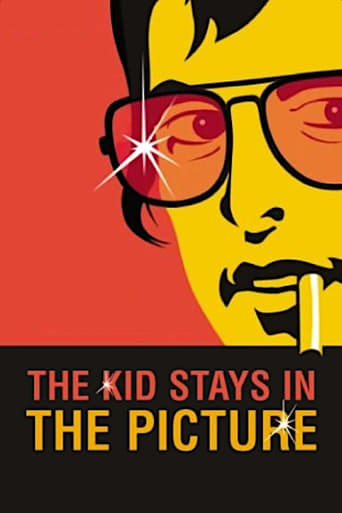
Documentary about legendary Paramount producer Robert Evans, based on his famous 1994 autobiography.
Canadian actress and filmmaker Sarah Polley investigates certain secrets related to her mother, interviewing a group of family members and friends whose reliability varies depending on their implication in the events, which are remembered in different ways; so a trail of questions remains to be answered, because memory is always changing and the discovery of truth often depends on who is telling the tale.

A documentary about the life and films of director John Ford.

A documentary about how a dominant cultural and demographic institution both sustains their traditional activities and adapts to the digital revolution.

Over 35 years after Bob Lazar's revelations, this documentary exposes secrets of a facility the government still denies. Featuring Lazar's testimony, recreations, and new evidence, it reopens a case that continues to spark global curiosity

An inside look at one of the most anticipated movie sequels ever with James Cameron and cast.
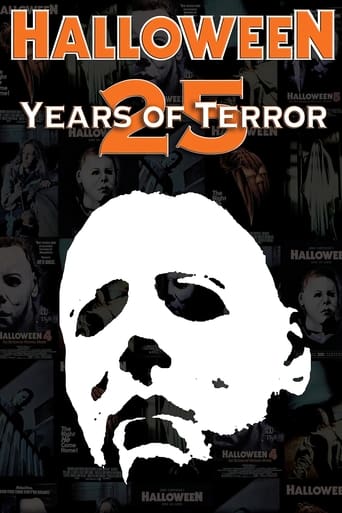
Follow the evolution of the 'Halloween' movies over the past twenty-five years. It examines why the films are so popular and revisits many of the original locations used in the films - seeing the effects on the local community. For the first time, cast, crew, critics and fans join together in the ultimate 'Halloween' retrospective.
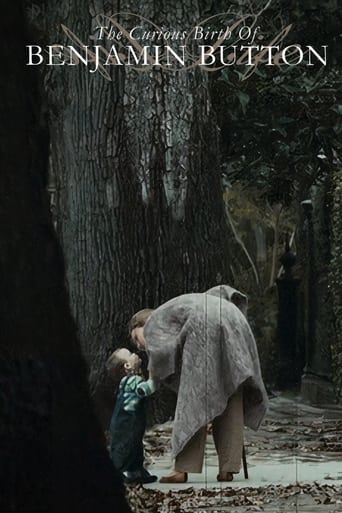
A documentary about the making of David Fincher's 2008 film THE CURIOUS CASE OF BENJAMIN BUTTON. Virtually every element in the evolution of the Fincher's film is documented here, from the project's attachment to numerous other directors during the 1990s, to its shoot in 2006 and 2007 in New Orleans, to its complex, CGI-intensive postproduction process.
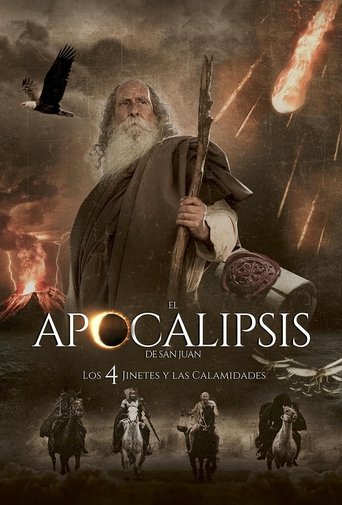
Embark on an epic journey through time and faith with 'The Apocalypse of Saint John.' Join the Apostle John in a stunning visual narrative that unravels the visions of the End Times. Experience each vision like never before, with striking visual effects and epic scenes that immerse you in the apocalyptic narrative.
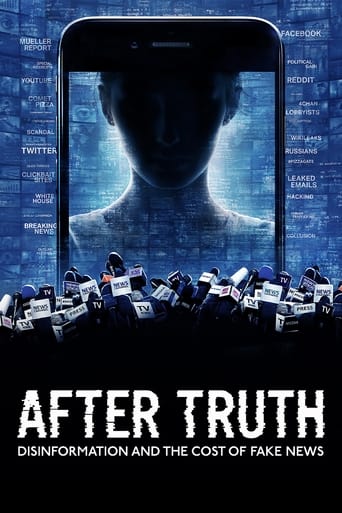
An investigation into the ongoing threat caused by the phenomenon of “fake news” in the U.S., focusing on the real-life consequences that disinformation, conspiracy theories and false news stories have on the average citizen.

Retrospective documentary about the making of the horror cult classic "The Return of the Living Dead."

A string of threatening emails escalates into a revenge plot involving a newly married US marshal and his ex-girlfriend.
Similar titles
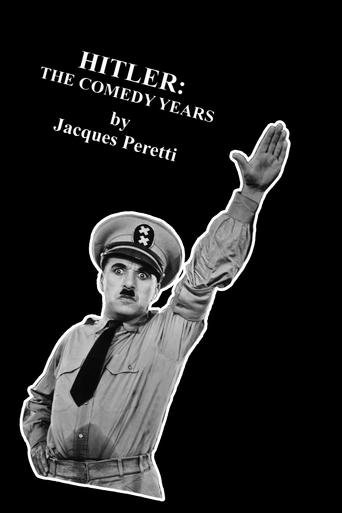
A documentary about the portrayal of Adolf Hitler in popular culture.
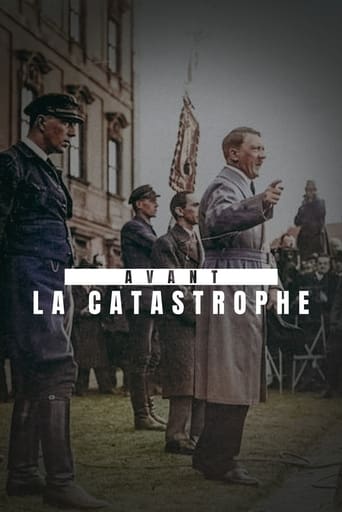

After the World War I, Mussolini's perspective on life is severely altered; once a willful socialist reformer, now obsessed with the idea of power, he founds the National Fascist Party in 1921 and assumes political power in 1922, becoming the Duce, dictator of Italy. His success encourages Hitler to take power in Germany in 1933, opening the dark road to World War II. (Originally released as a two-part miniseries. Includes colorized archival footage.)
Hitler's biography told like never before. Besides brief historical localizations by a narrator, only contemporaries and Hitler himself speak: no interviews, no reenactment, no illustrative graphics and no technical gadgets. The testimonies from diaries, letters, speeches and autobiographies are assembled with new, often unpublished archive material. Hitler's life and work are thus reflected in a unique way in interaction with the image of the society in the years 1889 to 1945.
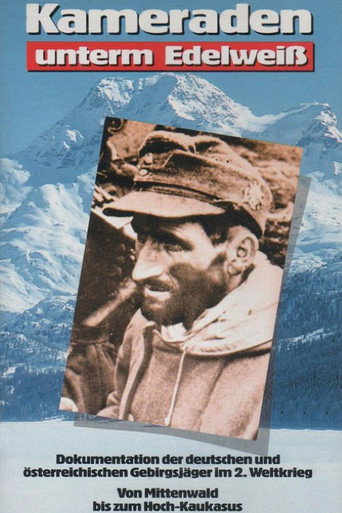
This rare documentary was filmed with the participation and personal camera of Wolfgang Gorther, a German military cinematographer of the 1st mining division, who participated in the legendary ascent of Elbrus on the night of August 21, 1942. From the beginning of the Second World War and the last international winter sports week in Garmisch-Partenkirchen follows the invasion of the German troops into the Soviet Union: Dnieper, Zaporozhy, Kharkov, Rostov-on-Don, Nogaean Steppe, Caucasus – fighting at 50 degrees below zero, military expedition into the world of ice and snow; – ascent of mountain arrows and subsequent hoisting of flags on the Elbrus at an altitude of 5,633 meters.
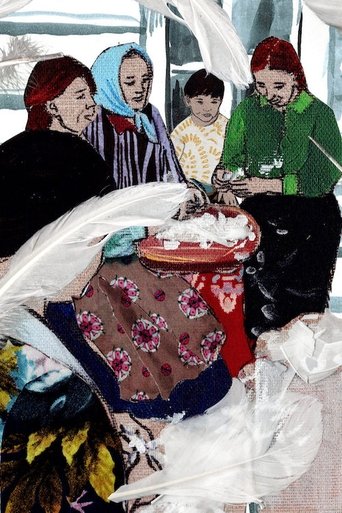
The animated short film tells the moving story of the resistance and bravery of Alfreda Noncia Markowska, a young Roma woman from Poland who saved the lives of around fifty children and young adults during the Second World War.
The nephew of a Republican exiled during the Spanish Civil War is pushed to discover the fate of his uncle by a forgotten letter. Meanwhile, a researcher tries to discover what happened to another deportee after reading the novel "El impostor" by Javier Cercas. When the two coincide, they discover that the lives of their two ancestors are intertwined and end up unearthing the story of František Suchý and his son, who risked their lives and defied the Nazi regime from the Prague crematorium to save the ashes of more than 2,000 victims.
With her slap of the Federal Chancellor Kurt Georg Kiesinger in 1968, Beate Klarsfeld abruptly got known worldwide. The film highlights the significance of this act and its background. Beate Klarsfeld, born in Berlin in 1939 as Beate Künzel, is primarily known to people as "the woman with the slap" and as the Nazi hunter. In 1960 she went to Paris and met her future husband Serge Klarsfeld, whose father was deported to Auschwitz and murdered there. She was confronted with the darkest part of German history, about which she had learned nothing at school. Serge gave her books to read and made her actively deal with them. Since then, she has not let go of dealing with the crimes of the Nazi era. For them, it was always about "responsibility, not guilt".
Between 1933 and 1945 roughly 1200 films were made in Germany, of which 300 were banned by the Allied forces. Today, around 40 films, called "Vorbehaltsfilme", are locked away from the public with an uncertain future. Should they be re-released, destroyed, or continue to be neglected? Verbotene Filme takes a closer look at some of these forbidden films.
In Third Reich, the abuse of drugs made commanders and soldiers feel invincible. The Führer himself took them on daily basis. This is the unbelievable story of the D-IX project and of methamphetamines, which, abundantly furnished to soldiers, changed the course of history.
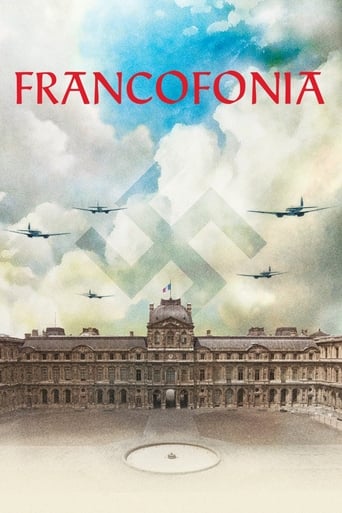
Master filmmaker Alexander Sokurov (Russian Ark) transforms a portrait of the world-renowned museum into a magisterial, centuries-spanning reflection on the relation between art, culture and power.
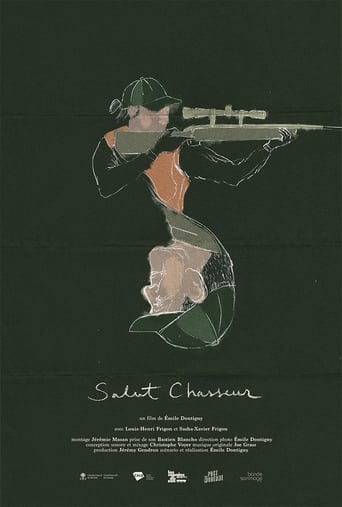
For the Frigons, hunting is a family affair that forges and solidifies the bonds between generations. For many autumns, Louis-Henri has been tracking moose alongside Sasha, his grandson. On the other hand, at the dawn of his 81st birthday, old age reminds him that his career as a hunter is behind him. This year, Louis-Henri will not go hunting and Sasha will go without him for the first time. Goodbye, Hunter offers an intimate look at the moment of the passing of a long family tradition.
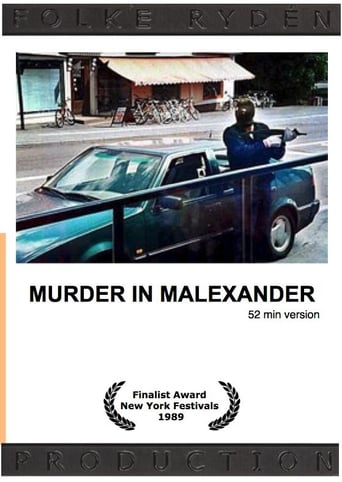
Depicts the controversial double police murder, involving neo-nazism and a theatre project by one of Scandinavia's most celebrated playwrights. The film traces a complex and fascinating chain of events leading up to the fatal climax in the picturesque small town of Malexander, Sweden.
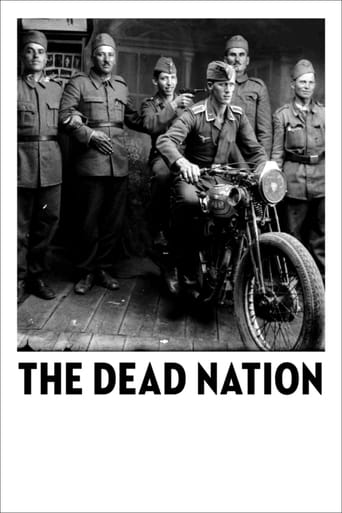
A documentary-essay which shows Costică Axinte's stunning collection of pictures depicting a Romanian small town in the thirties and forties. The narration, composed mostly from excerpts taken from the diary of a Jewish doctor from the same era, tells the rising of the antisemitism and eventually a harrowing depiction of the Romanian Holocaust.
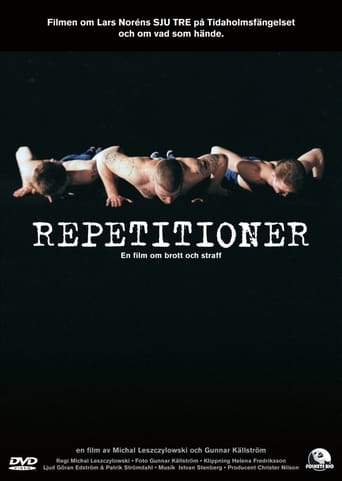
The theatre 7:3 project was conducted at the Tidaholm prison 1998-1999. What started as an artistic experiment, ended up in police killings at Malexander. The process in the prison were filmed during 6 months.
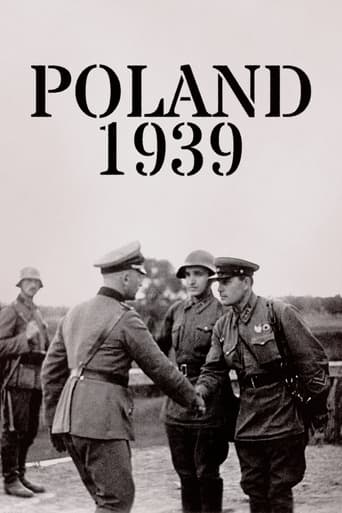
September 1st, 1939. Nazi Germany invades Poland. The campaign is fast, cruel and ruthless. In these circumstances, how is it that ordinary German soldiers suddenly became vicious killers, terrorizing the local population? Did everyone turn into something worse than wild animals? The true story of the first World War II offensive that marks in the history of infamy the beginning of a carnage and a historical tragedy.

It was a foundational myth of the GDR that it was anti-fascist and free of Nazis. But was that really the case? The film takes a critical look on the actual way the brown heritage was dealt with in the GDR.