

Like an abortion, for the very first time
2018-10-26 · 102 min · Not rated
The Umbrella Movement was a wave of street protests that took place in Hong Kong from September to December 2014 as a reaction to oppressive practices of the Chinese government against the citizens of Hong Kong dissatisfied with planned changes in the electoral system. In her feature film debut, To Liu captured the citizens of the western part of Kowloon, Mong Kok, whose protests might not have been as visible as those of the leading activists, but were no less important. The documentary rhythmized by opening entries and darkening of the scene, much like the director’s first film, follows two characters, a master and an apprentice.
Trailers are previews, not full movies.
No authorized playback source configured. Use the legal watch options below.
Production details
- Directors
- Liu To
- Production companies
- Unavailable
- Countries
- Hong Kong
- Status
- Released
Top Cast
Cast unavailable.
Title information and images are supplied by TMDb. Explore our discovery guide for advice on comparing metadata and legal viewing options.
Where to watch
Availability provided by JustWatch via TMDb. Offers can change. Provider links are listed on TMDb; full playback requires a separately authorized source.
Availability not listed for this country.
Seasons & episodes
Recommendations
When the Chinese Communist Party backtracks on its promise of autonomy to Hong Kong, teenager Joshua Wong decides to save his city. Rallying thousands of kids to skip school and occupy the streets, Joshua becomes an unlikely leader in Hong Kong and one of China’s most notorious dissidents.
A road trip across five countries to explore the social and political movements as well as the mainstream media's misperception of South America while interviewing seven of its elected presidents.

Ranjit, a farmer in India, takes on the fight of his life when he demands justice for his 13-year-old daughter, the victim of a brutal gang rape. His decision to support his daughter is virtually unheard of, and his journey unprecedented.
The remarkable story of The Weather Underground, radical activists of the 1970s, and of radical politics at its best and most disastrous.
The story of the insane scandals related to the remake of “Island of Dr. Moreau” —originally a novel by H. G. Wells—, which was brought to the big screen in 1996. How director Richard Stanley spent four years developing the project just to find an abrupt end to his work while leading actor Marlon Brando pulled the strings in the shadows. Now for the first time, the living key players recount what really happened and why it all went so spectacularly wrong.

In the Realms of the Unreal is a documentary about the reclusive Chicago-based artist Henry Darger. Henry Darger was so reclusive that when he died his neighbors were surprised to find a 15,145-page manuscript along with hundreds of paintings depicting The Story of the Vivian Girls, in What is Known as the Realms of the Unreal, of the Glodeco-Angelinnian War Storm, Cased by the Child Slave Rebellion.

A documentary that explores the downloading revolution; the kids that created it, the bands and the businesses that were affected by it, and its impact on the world at large.
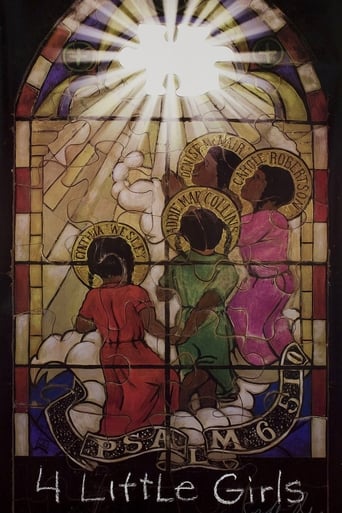
On September 15, 1963, a bomb destroyed a black church in Birmingham, Alabama, killing four young girls who were there for Sunday school. It was a crime that shocked the nation--and a defining moment in the history of the civil-rights movement. Spike Lee re-examines the full story of the bombing, including a revealing interview with former Alabama Governor George Wallace.

Director Michael Apted revisits the same group of British-born adults after a 7 year wait. The subjects are interviewed as to the changes that have occurred in their lives during the last seven years.

This documentary focuses on the actors and their journey over two summers to create the remake to the original IT, by Stephen King. The documentary originally released as bonus material, bundled with IT: Chapter Two.

When Allied forces liberated the Nazi concentration camps in 1944-45, their terrible discoveries were recorded by army and newsreel cameramen, revealing for the first time the full horror of what had happened. Making use of British, Soviet and American footage, the Ministry of Information’s Sidney Bernstein (later founder of Granada Television) aimed to create a documentary that would provide lasting, undeniable evidence of the Nazis’ unspeakable crimes. He commissioned a wealth of British talent, including editor Stewart McAllister, writer and future cabinet minister Richard Crossman – and, as treatment advisor, his friend Alfred Hitchcock. Yet, despite initial support from the British and US Governments, the film was shelved, and only now, 70 years on, has it been restored and completed by Imperial War Museums under its original title "German Concentration Camps Factual Survey".

In an intimate and joyful story of love in the face of loss, celebrated poets Andrea Gibson and Megan Falley find strength—and unexpected hilarity—in what might be their final year together.

Examines the evolution of the Black Power Movement in US society from 1967 to 1975. It features footage of the movement shot by Swedish journalists in the United States during that period and includes the appearances of Angela Davis, Bobby Seale, Huey P. Newton, Eldridge Cleaver, and other activists, artists, and leaders central to the movement.
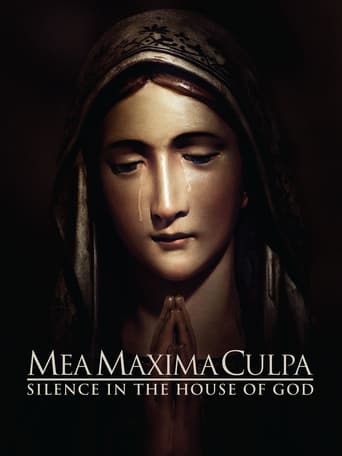
Alex Gibney explores the charged issue of pedophilia in the Catholic Church, following a trail from the first known protest against clerical sexual abuse in the United States and all way to the Vatican.
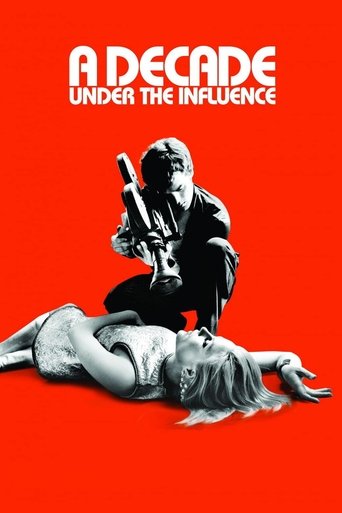
A documentary examining the decade of the 1970s as a turning point in American cinema. Some of today's best filmmakers interview the influential directors of that time.

Director Michael Apted revisits the same group of British-born adults after a 7 year wait. The subjects are interviewed as to the changes that have occurred in their lives during the last seven years.
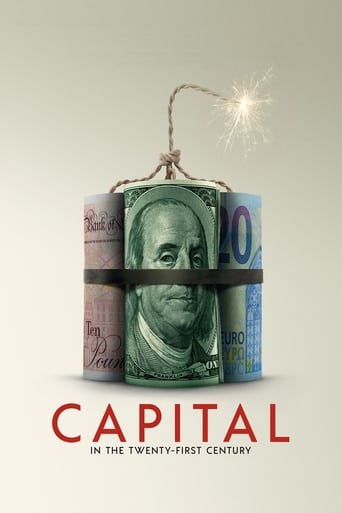
Film adaptation of French economist Thomas Piketty's ground-breaking global bestseller of the same name: an eye-opening journey through wealth and power.

An inside look at one of the most anticipated movie sequels ever with James Cameron and cast.
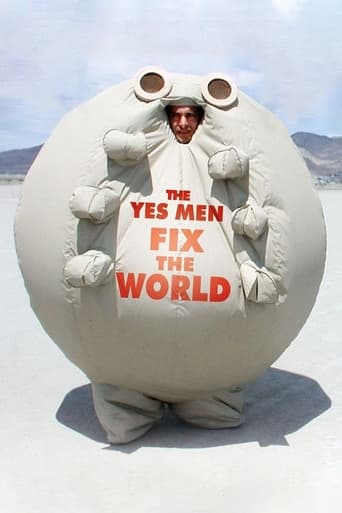
THE YES MEN FIX THE WORLD is a screwball true story about two gonzo political activists who, posing as top executives of giant corporations, lie their way into big business conferences and pull off the world's most outrageous pranks.

A documentary about how a dominant cultural and demographic institution both sustains their traditional activities and adapts to the digital revolution.
Similar titles
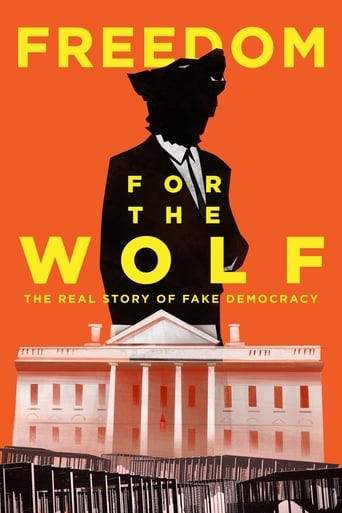
The Real Story of Fake Democracy. Filmed over three years in five countries, FREEDOM FOR THE WOLF is an epic investigation into the new regime of illiberal democracy. From the young students of Hong Kong, to a rapper in post-Arab Spring Tunisia and the viral comedians of Bollywood, we discover how people from every corner of the globe are fighting the same struggle. They are fighting against elected leaders who trample on human rights, minorities, and their political opponents.
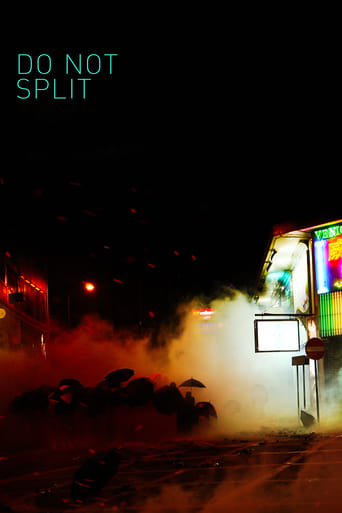
The story of the 2019 Hong Kong protests, told through a series of demonstrations by local protestors that escalate into conflict when highly armed police appear on the scene.
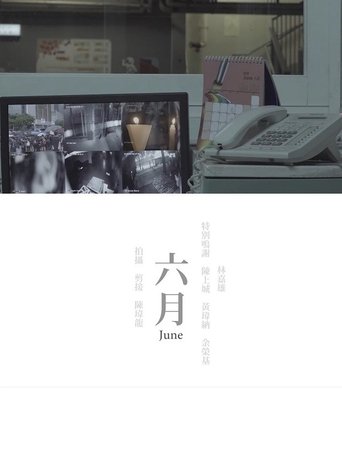
I made June when I didn’t have any inspiration to create a feature film. The documentary is about the rarely known stories in the social movement in June. At first the clips of videos were kept for sorting out my feelings, but after being edited, they were made into a documentary and became a record of history. Six scenes and voices were used to tell what happened during that month.

Choi Yuen Village faced demolition by the express rail project. In 2009, villagers protested and petitioned, sparking the anti-express rail movement. Despite their efforts, the railway plan was approved in early 2010. Forced to choose between leaving or rebuilding, they opted for the government’s land rehabilitation scheme to create a new village together. With volunteers, they searched for land in Pat Heung and fought to prove their status as farmers. Many outsiders misunderstood, believing the villagers received generous compensation and government help. Yet, it was the villagers’ shared determination and love for their land and way of life that carried them through, even as the once-barren longan trees bloomed again in 2010.
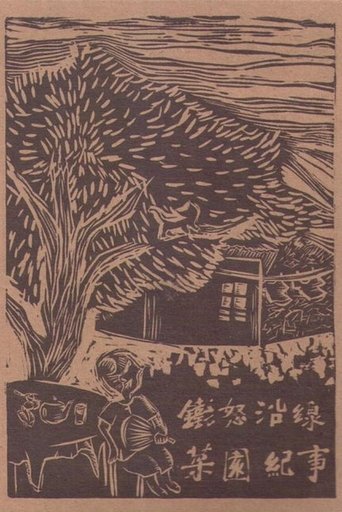
This is a film about Choi Yuen Village, documenting villagers’ lives in the summer and autumn of 2009. Suddenly, weekly meetings, guided tours, protests, and ambiguous government consultations entered their routines. They had to recount their personal histories and the meaning of life. The common belief that protests were only about money began to loosen. The word "agriculture" reemerged for Hongkongers. The timeline depicted in the film leads up to the peak of the anti-high-speed rail protests around the Legislative Council. In the end, the railway was decided to build. In spring and summer 2010, villagers searched for land and negotiated with the government to rebuild their homes and lifestyle, valuing community, and coexistence with nature. What sustains their deep connection to land and life?

After the anti-express rail protests, Choi Yuen Village’s struggle did not end with the railway project approval. Villagers shifted from fighting demolition to painstakingly relocating and rebuilding their community. In 2011, they planned the new village together—including house design, sewage, and land use—while facing government pressure to move out by November. Road access issues caused additional worries. As demolition began, villagers stood together to protect their homes and demanded time to build before moving. By May 2011, villagers left their longtime homes for makeshift housing on newly bought farmland, continuing their collective effort. Their unity in overcoming countless challenges set an example for other rural communities and shows that real resistance is a long journey requiring ongoing attention.

Franco Mella is a devoted figure whose life bridges Catholicism and Communism. He has journeyed through Asia, lived simply, and fought for social justice, notably within Hong Kong's protest history as depicted in "Ordinary Heroes" (1999). Mella's path weaves through religious and revolutionary movements, from church beginnings to Communist activism and the Handover, always driven by his missionary spirit and communist ideals. For four decades, he has steadfastly championed the oppressed, undeterred by shifting politics, expressing solidarity through music and protest, and remaining a symbol of wisdom and resilience for the people of Hong Kong.
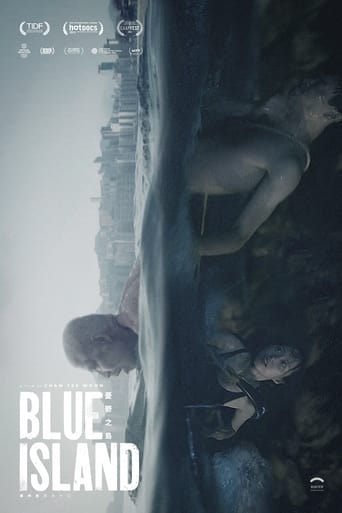
Although the Chinese government promised that Hong Kong would retain separate status until 2047, in recent years the Chinese state has consolidated its power over the metropolis. Large-scale protests by the populace have been brutally suppressed. This mix of documentary, fiction, and visions of the future reveals the current state of desolate depression among the people of Hong Kong. “A desperate attempt to capture the final moments of a sinking island”, as maker Chan Tze-woon himself puts it.

In late 2009, over twenty Hong Kong civic groups united as the "Anti-High-Speed Rail, Stop Funding" coalition, aiming to halt Legislative Council approval of the HKD 66.9 billion Express Rail Link amid deep social rifts. The "Post-80s Anti-High-Speed Rail Youth" group drew thousands of young people with their slogan “Defend Our Homeland, Protest with Joy,” leading to three funding suspensions that surprised the public. Media coverage was intense and innovative, featuring rare camera angles and lively online debate among journalists. This documentary explores how reporters shaped the movement, their emotional involvement, and the dynamic relationship between the media and activists during Hong Kong’s pivotal 2009–10 protests.

At the forefront of most of Hong Kong's demonstrations, 'frontliners' (aka 'the valiant', yung mo in Cantonese) are the black-clad, masked, often armed youth willing to use violence against the HK government and its heavily-armed police force. Willis Ho's remarkably revealing doc approaches from the inside, giving them voices and offering understanding, not judgment.

Hongkongers have been experiencing extremely difficult times due to the political movement caused by anti-Extradition Bill since the summer of 2019 followed by the COVID-19 pandemic. This film explores Hongkongers’ fear in various dimensions, be it a concept or actual physical experience, personal or political, private or public, or the mixing of these pairs.

The film charts the origins of the Umbrella Movement through the eyes of the activists and ordinary people who made it happen. From the June 4th Candlelit Vigil until September 28th, this documentary puts us at the heart of the action, allowing us to experiencing the highs and lows of that remarkable summer, when Hong Kong witnessed a "blossoming of democracy."

In 2019, Hong Kong was swept by demonstrations against the controversial extradition bill. At the Polytechnic University, a group of students also takes a stand for freedom and democracy. Negotiations with the police are chaotic and aggressive, conducted via megaphones and politically charged music played over loudspeakers. The colorful umbrellas which the young people use to protect themselves against the brutal police actions emphasize the group’s bravado, which borders on recklessness. What begins as an energetic battle against the establishment turns into a lopsided game of cat and mouse when the police decide to surround the building. Within its red brick walls, the university building becomes a prison. Over the nearly two weeks that follow, as fear and exhaustion grow among the hundreds of students, so does the uncertainty. Should they hang on inside, or leave the building to face the armed police?

In the aftermath of 2014's Umbrella Revolution, five Hong Kong activists are confronted with the question of what it means to be Hong Kongers.

Hong Kong's high-speed rail link, the demolition of Choi Yuen Village, the impending budget and the influence of the global Occupy movement are at the centre of independent filmmaker Lo's timely measure of the city's pulse. Ostensibly the third entry in a trilogy that began with 21 years after. (2010) and to be continued (2010), which also captured public reaction to watershed moments in Hong Kong's political life since 2009. The documentary was built upon the material used in its previous installment (to be continued, 46 minutes). It disproves the notion of a passive Hong Kong in a chronicle of a generation poised for massive social change.
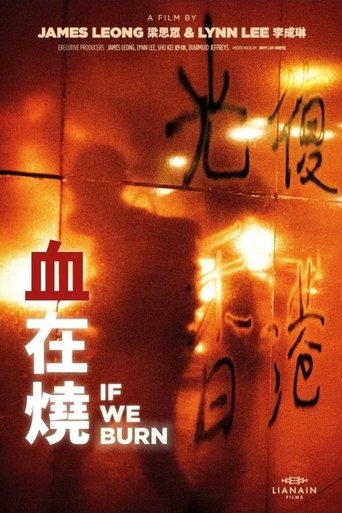
Hundreds of thousands − perhaps even millions − of protestors have taken to the streets of Hong Kong since early June. Sparked initially by the government's plans for a controversial extradition bill, the movement has now transformed into a broader push for greater freedoms and democracy, with anger over police brutality fuelling a cycle of violence. The protests are Hong Kong's biggest challenge to Beijing since its return to China in 1997. If We Burn looks at the movement through the eyes of Hong Kongers whose fates, like their city's future, now hang in the balance.
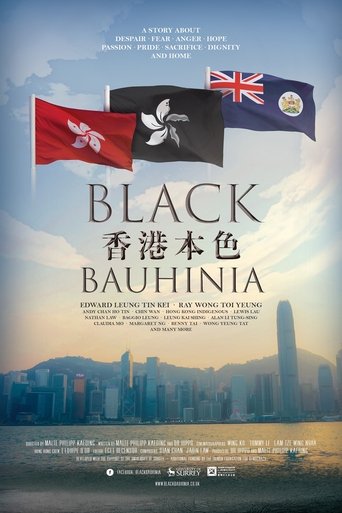
Two young Hong Kong activists reflect on their resistance against China, are forced to decide between long-term imprisonment and refugee camps for a life in exile, while their movement inspires mass protests in the city they love.

Throughout Hong Kong’s history, Hongkongers have fought for freedom and democracy but have yet to succeed. In 2019, a controversial extradition bill was introduced that would allow Hongkongers to be tried in mainland China. This decision spurred massive protests, riots, and resistance against heavy-handed Chinese rule over the City-State. Award-winning director Kiwi Chow documents the events to tell the story of the movement, with both a macro view of its historical context and footage and interviews from protestors on the front lines.
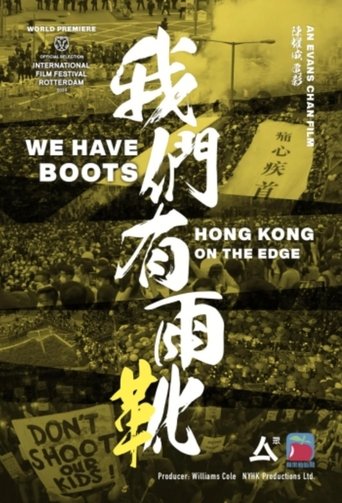
The Umbrella Movement of 2014, also known as the Occupy Movement, paved the way for Hong Kong’s current upheavals, but unfolded in significantly different ways. This creative documentary focuses on the intellectual, political, and discursive underpinnings of the social and political actions of 2014, before fast-forwarding to 2019. A range of thoughtful and engaged intellectuals, students, scholars, activists, and artists including Benny Tai, Chan Kin-man, Ray Wong, and Agnes Chow (many of whom are facing imprisonment for their democratic activism) articulate a range of philosophies, viewpoints and emotions, set against Hong Kong’s spectacular urban background of skyscrapers, night lights, and street-occupying mass movements.

The work documented the story of Yuli, a Hong Kong domestic worker from Indonesia. She is a novelist who won a literature award and also a journalist dedicated to writing. Between the social event that happened in June in Hong Kong, her thoughts and caring about the city are far more from what people used to imagine a narrative of a domestic worker. They are not only domestic workers but they also have other social roles, e.g. a citizen who lived in Hong Kong.