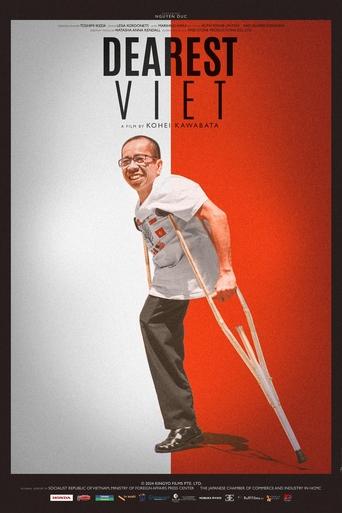
Dearest Viet
2025-02-28 · 73 min · Not rated
Born a conjoined twin due to the effects of Agent Orange used during the Vietnam War, Duc Nguyen, now a father and husband, seeks the truth about his past and contemplates the future.
Trailers are previews, not full movies.
No authorized playback source configured. Use the legal watch options below.
Production details
- Directors
- Kohei Kawabata
- Production companies
- Kingyo Films
- Countries
- Japan, Vietnam, Singapore
- Status
- Released
Top Cast
Title information and images are supplied by TMDb. Explore our discovery guide for advice on comparing metadata and legal viewing options.
Where to watch
Availability provided by JustWatch via TMDb. Offers can change. Provider links are listed on TMDb; full playback requires a separately authorized source.
Availability not listed for this country.
Seasons & episodes
Recommendations
Many times during his presidency, Lyndon B. Johnson said that ultimate victory in the Vietnam War depended upon the U.S. military winning the "hearts and minds" of the Vietnamese people. Filmmaker Peter Davis uses Johnson's phrase in an ironic context in this anti-war documentary, filmed and released while the Vietnam War was still under way, juxtaposing interviews with military figures like U.S. Army Chief of Staff William C. Westmoreland with shocking scenes of violence and brutality.
An Indonesian man with a communist background named Ramli was brutally murdered when the "Communist" purge occurred in 1965. His remaining family members lived in fear and silence until the making of this documentary. Adi, a brother of his, decided to revisit the horrific incident and visited the men who were responsible for the killings and one survivor of the purge. These meetings uncovered sadistic details of the murders and exposed raw emotions and reactions of the killers' family members about what happened in the past - much to Adi's disappointment.
Academy Award winner Errol Morris pulls back the curtain on the storied life and career of David Cornwell, the former spy known to the literary world as John le Carré.

Over 35 years after Bob Lazar's revelations, this documentary exposes secrets of a facility the government still denies. Featuring Lazar's testimony, recreations, and new evidence, it reopens a case that continues to spark global curiosity

When Allied forces liberated the Nazi concentration camps in 1944-45, their terrible discoveries were recorded by army and newsreel cameramen, revealing for the first time the full horror of what had happened. Making use of British, Soviet and American footage, the Ministry of Information’s Sidney Bernstein (later founder of Granada Television) aimed to create a documentary that would provide lasting, undeniable evidence of the Nazis’ unspeakable crimes. He commissioned a wealth of British talent, including editor Stewart McAllister, writer and future cabinet minister Richard Crossman – and, as treatment advisor, his friend Alfred Hitchcock. Yet, despite initial support from the British and US Governments, the film was shelved, and only now, 70 years on, has it been restored and completed by Imperial War Museums under its original title "German Concentration Camps Factual Survey".

In an intimate and joyful story of love in the face of loss, celebrated poets Andrea Gibson and Megan Falley find strength—and unexpected hilarity—in what might be their final year together.
In 1994, a 13-year-old boy disappeared without a trace from his home in San Antonio, Texas. Three-and-a-half years later, he is found alive in a village in southern Spain with a horrifying story of kidnap and torture. His family is overjoyed to bring him home. But all is not quite as it seems.
Former corporate whiz kid Robert McNamara was the controversial Secretary of Defense in the Kennedy and Johnson administrations, during the height of the Vietnam War. Augmented by archival footage and cabinet conversation recordings, Errol Morris gives the conflicted McNamara a platform on which he attempts to confront his and the U.S. government's actions in Southeast Asia in light of the horrors of modern warfare, the end of ideology and the punitive judgment of history.
Exploring the fallout of MIT Media Lab researcher Joy Buolamwini's startling discovery that facial recognition does not see dark-skinned faces accurately, and her journey to push for the first-ever legislation in the U.S. to govern against bias in the algorithms that impact us all.
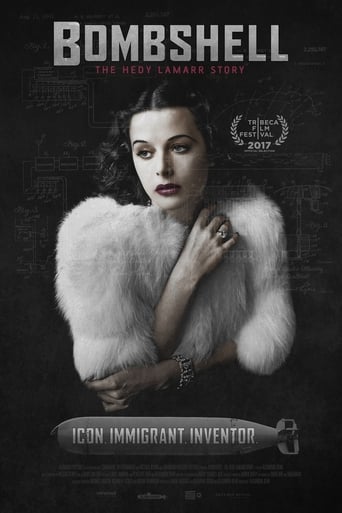
The life and career of the hailed Hollywood movie star and underappreciated genius inventor, Hedy Lamarr.

New York, 1980. Three complete strangers accidentally discover that they're identical triplets, separated at birth. The 19-year-olds' joyous reunion catapults them to international fame, but also unlocks an extraordinary and disturbing secret that goes beyond their own lives – and could transform our understanding of human nature forever.
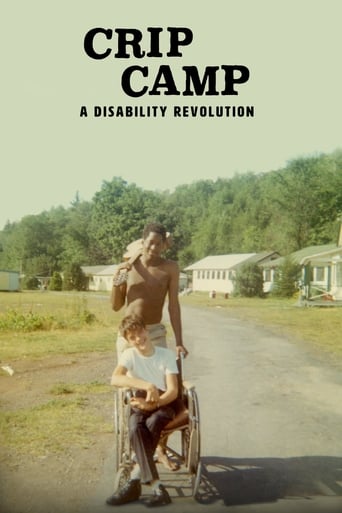
Down the road from Woodstock in the early 1970s, a revolution blossomed in a ramshackle summer camp for disabled teenagers, transforming their young lives and igniting a landmark movement.

Explore the evolution of Buzz Lightyear from toy to human in the making of Pixar’s Lightyear. Dive into the origin and cultural impact of everyone’s favorite Space Ranger, the art of designing a new “human Buzz,” and the challenges faced by the Lightyear crew along the way.

This revealing documentary honors the legendary Sidney Poitier—iconic actor, filmmaker, and civil rights activist. Featuring interviews with Denzel Washington, Spike Lee, Halle Berry, and more.

A string of threatening emails escalates into a revenge plot involving a newly married US marshal and his ex-girlfriend.
Filmmaker Christopher Quinn observes the ordeal of three Sudanese refugees -- Jon Bul Dau, Daniel Abul Pach and Panther Bior -- as they try to come to terms with the horrors they experienced in their homeland, while adjusting to their new lives in the United States.
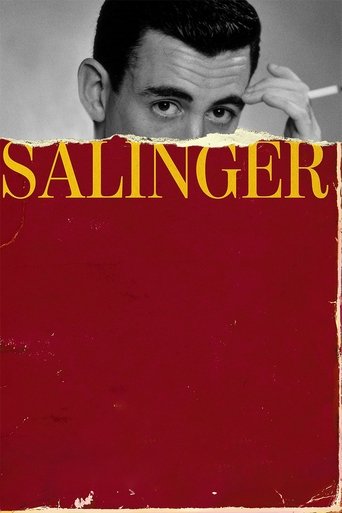
An in-depth investigation into the private world of the American writer J. D. Salinger (1919-2010), who lived most of his life behind the impenetrable wall of a self-imposed seclusion: how his dramatic experiences during World War II influenced his life and work, his relationships with very young women, his obsessive writing methods, his many literary secrets.
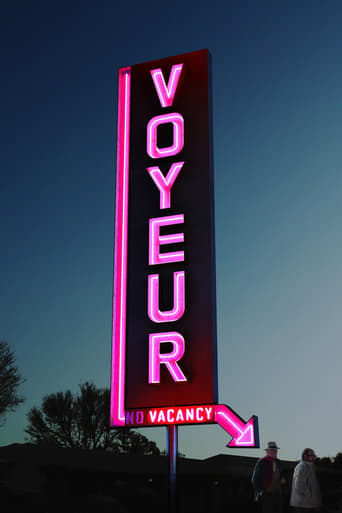
Legendary journalist Gay Talese unmasks a motel owner who spied on his guests for decades. But his bombshell story soon becomes a scandal of its own.
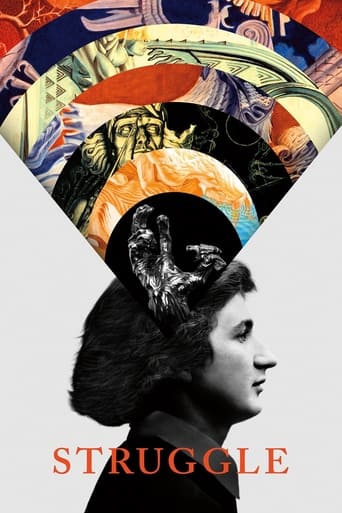
Artists in LA discover the work of forgotten Polish sculptor Stanislav Szukalski, a mad genius whose true story unfolds chapter by astounding chapter.
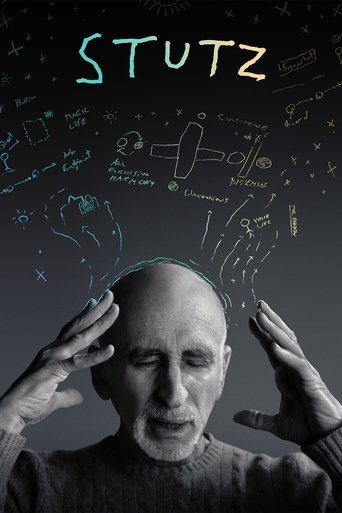
In candid conversations with actor Jonah Hill, leading psychiatrist Phil Stutz explores his early life experiences and unique, visual model of therapy.
Similar titles
A family gathering around what used to be an everyday activity.

Between 1968 and 1970, J M Goodger, a lecturer at the University of Salford, made a film record of the living conditions in the slums of Ordsall, Salford, which were then in the process of being demolished. Under the title 'The Changing face of Salford', the film was in two parts: 'Life in the slums' and 'Bloody slums'.
SauAcker depicts the obstacles faced by Philipp, a young farmer determined to modernize his father's old-fashioned farm. His motto is "I'll do it my way". Philipp is fully committed and is even risking his relationship to attain his goals. The documentary paints a funny and charming picture of the two wayward heroes and presents an entertaining angle on the realities of contemporary society.
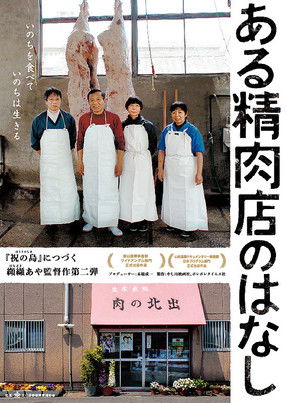
The Kitades run a butcher shop in Kaizuka City outside Osaka, raising and slaughtering cattle to sell the meat in their store. The seventh generation of their family's business, they are descendants of the buraku people, a social minority held over from the caste system abolished in the 19th century that is still subject to discrimination. As the Kitades are forced to make the difficult decision to shut down their slaughterhouse, the question posed by the film is whether doing this will also result in the deconstruction of the prejudices imposed on them. Though primarily documenting the process of their work with meticulous detail, Aya Hanabusa also touches on the Kitades' participation in the buraku liberation movement. Hanabusa's heartfelt portrait expands from the story of an old-fashioned family business competing with corporate supermarkets, toward a subtle and sophisticated critique of social exclusion and the persistence of ancient prejudices.
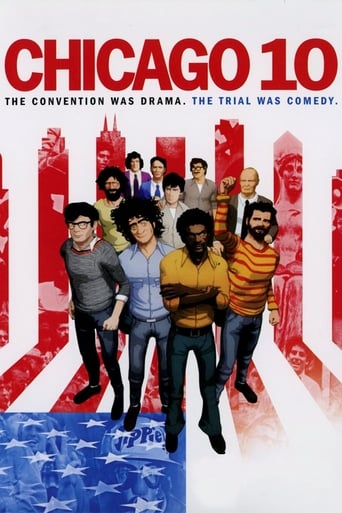
Archival footage, animation and music are used to look back at the eight anti-war protesters who were put on trial following the 1968 Democratic National Convention.

During the COVID-19 pandemic, Sophie Sherman films her relatives confined between France, Belgium, and England. Marked by a birth and a death, she focuses on acts of care, human contact, and the grace and fragility of shared moments.
The story of the South Shore Resource and Advocacy Center, five survivors of domestic violence, and their experience in the Massachusetts justice system.
In this short film, artist Jobie Weetaluktuk turns his gaze on his family and the power of ritual through the story of a young woman and her unplanned child. In Inukjuak, an Inuit community in the Eastern Arctic, a baby boy has come into the world and they call him Timuti, a name that recurs across generations of his people, evoking other Timutis, alive and dead, who will nourish his spirit and shape his destiny.

fifteen zero three nineteenth of january two thousand sixteen explores how everyday routines and gestures are transformed when a mother loses her child in the violence impacting Swedish outskirts since the early 2000s. The film resists simplistic media depictions of the suburbs and shows how a home can hold both mourning and the mobilization of women to fight for their own and others' children.

Keenly aware that his niece is going through a particularly rough time at home, Uncle James teaches Ava Dee how to use the Blackmagic Pocket Cinema Camera. As an experiment, he tells her to shoot whatever she wants and he'll edit it into a film.
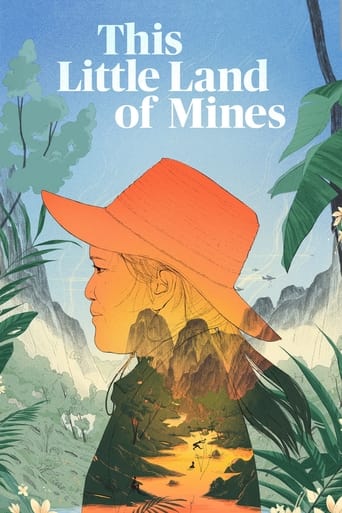
During the Vietnam War, the US bombed Laos more heavily than any other country had been bombed before. Today, the Lao people live among, and risk their lives to clear, over 80 million unexploded bombs on their doorsteps. With great beauty and empathy, this documentary reveals the unbelievable stories of the men and women at the forefront of this monumental task.
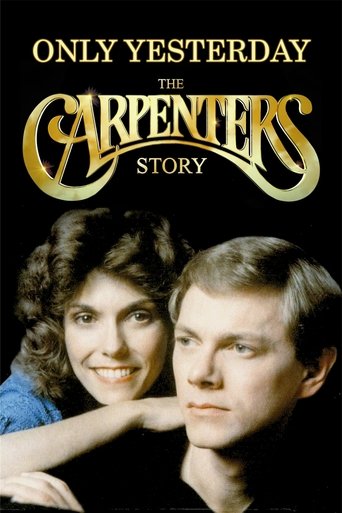
Documentary about brother and sister duo The Carpenters, one of the biggest-selling pop acts of the 1970s, but one with a destructive and complex secret that ended in tragedy.
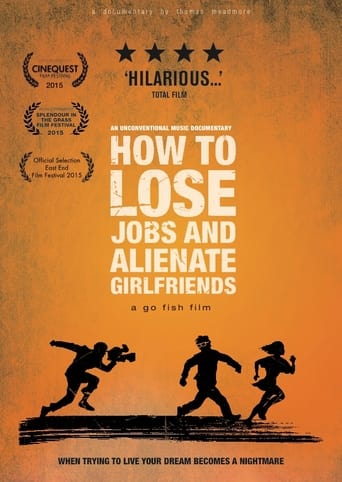
First time filmmaker follows his girlfriend and boss chase their dream as musicians. His insecurities flair while struggling to find a story, and begins challenging their flaws, on camera, jeopardizing the film, relationships and careers.
19-year-old teenager who struggles to balance college, work, and social world in order to realize his dream of buying a house with a mortgage system

A nuanced portrait of a new generation, Dear Thirteen is a cinematic time capsule of coming of age in today’s world. Through the eyes of nine thirteen-year-olds, we see how pressing social, geographical and political challenges are shaping, and being shaped by, young people: rising anti-Semitism in Europe, guns in America, gender identity and racial divisions across Australia and Asia. With no adult commentary outside the filmmaker, Dear Thirteen offers an intimate view into the universal uncertainty inherent in growing up.

A terrorist attack hits Shira's homeland shortly after she moves to the United States. Picking up a camera, she looks for ways to cope with the tragedy, thousands of miles away from those she loves and lost.

Examines the intergenerational impact of addiction by chronicling the love, labor, loss, and uncertainty of one woman’s struggle to live a life of sobriety. Weaving together moments of glee, fulfillment, acceptance, sorrow, and disappointment, this documentary takes an intimate look at the bonds that hold one family together and a disease that threatens to tear them apart.
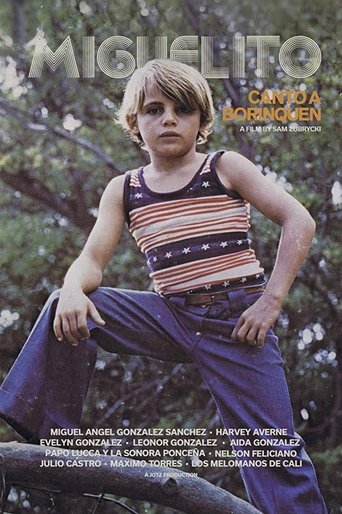
In 1973, eleven year old Miguelito was discovered singing in the San Juan airport by the legendary New York record producer Harvey Averne. Within the year, he went from the slums of Manuel A Perez, to recording an album with some of the finest salsa musicians of the time to finally performing with Eddie Palmieri at Madison Square Garden in front of 20,000 people. Throughout Latin America his songs ‘Payaso’ and ‘Canto a Borinquen’ had become cult hits. And then he simply disappeared...