

Fortress Australia: The Secret Bid for the Atomic Bomb
2001-12-12 · 54 min · Not rated
This documentary explores one of the most extraordinary chapters in Australia's history - the attempts by successive Australian governments to fortress the nation with atomic weapons.
Trailers are previews, not full movies.
No authorized playback source configured. Use the legal watch options below.
Production details
- Directors
- Peter Butt
- Production companies
- Unavailable
- Countries
- Unavailable
- Status
- Released
Top Cast
 Robyn WilliamsNarrator
Title information and images are supplied by TMDb. Explore our discovery guide for advice on comparing metadata and legal viewing options.
Where to watch
Availability provided by JustWatch via TMDb. Offers can change. Provider links are listed on TMDb; full playback requires a separately authorized source.
Seasons & episodes
Recommendations

A string of threatening emails escalates into a revenge plot involving a newly married US marshal and his ex-girlfriend.

Over 35 years after Bob Lazar's revelations, this documentary exposes secrets of a facility the government still denies. Featuring Lazar's testimony, recreations, and new evidence, it reopens a case that continues to spark global curiosity

Unravel the case of Utah therapist Jodi Hildebrandt, whose child abuse arrest with parenting YouTuber Ruby Franke exposed a twisted tale of manipulation.
A disturbing collection of 1940s and 1950s United States government-issued propaganda films designed to reassure Americans that the atomic bomb was not a threat to their safety.
Legendary journalist Gay Talese unmasks a motel owner who spied on his guests for decades. But his bombshell story soon becomes a scandal of its own.
A look at the origins, history and conspiracies behind the "Majestic 12", a clandestine group of military and corporate figureheads charged with reverse-engineering extraterrestrial technology.
Serial killer Dennis Nilsen narrates his life and horrific crimes via a series of chilling audiotapes recorded from his jail cell.
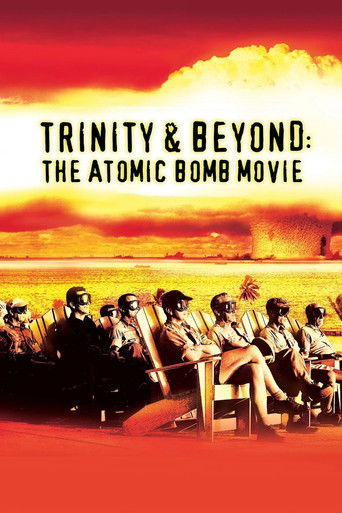
"Trinity and Beyond" is an unsettling yet visually fascinating documentary presenting the history of nuclear weapons development and testing between 1945-1963. Narrated by William Shatner and featuring an original score performed by the Moscow Symphony Orchestra, this award-winning documentary reveals previously unreleased and classified government footage from several countries.

In the Realms of the Unreal is a documentary about the reclusive Chicago-based artist Henry Darger. Henry Darger was so reclusive that when he died his neighbors were surprised to find a 15,145-page manuscript along with hundreds of paintings depicting The Story of the Vivian Girls, in What is Known as the Realms of the Unreal, of the Glodeco-Angelinnian War Storm, Cased by the Child Slave Rebellion.
A documentary about the making of David Fincher's 2008 film THE CURIOUS CASE OF BENJAMIN BUTTON. Virtually every element in the evolution of the Fincher's film is documented here, from the project's attachment to numerous other directors during the 1990s, to its shoot in 2006 and 2007 in New Orleans, to its complex, CGI-intensive postproduction process.

The history of cinematic sound, told by legendary sound designers and visionary filmmakers.

This revealing documentary honors the legendary Sidney Poitier—iconic actor, filmmaker, and civil rights activist. Featuring interviews with Denzel Washington, Spike Lee, Halle Berry, and more.

When Allied forces liberated the Nazi concentration camps in 1944-45, their terrible discoveries were recorded by army and newsreel cameramen, revealing for the first time the full horror of what had happened. Making use of British, Soviet and American footage, the Ministry of Information’s Sidney Bernstein (later founder of Granada Television) aimed to create a documentary that would provide lasting, undeniable evidence of the Nazis’ unspeakable crimes. He commissioned a wealth of British talent, including editor Stewart McAllister, writer and future cabinet minister Richard Crossman – and, as treatment advisor, his friend Alfred Hitchcock. Yet, despite initial support from the British and US Governments, the film was shelved, and only now, 70 years on, has it been restored and completed by Imperial War Museums under its original title "German Concentration Camps Factual Survey".

A visual montage portrait of our contemporary world dominated by globalized technology and violence.

The story lives forever in this feature-length documentary that charts the making of Star Wars: The Rise of Skywalker.
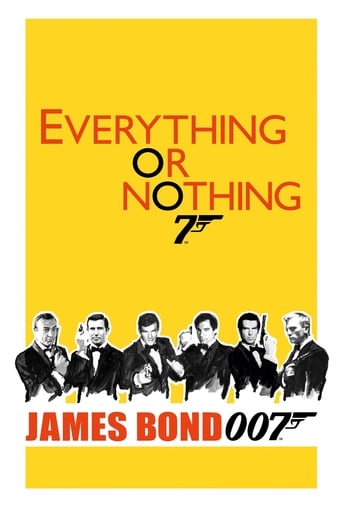
The story of three men with a shared dream: James Bond franchise producers Albert R. Broccoli and Harry Saltzman, and Bond creator and author Ian Fleming. It’s the thrilling and inspiring narrative behind the longest running film franchise in cinema history, which began in 1962.

From the heights of her modeling fame to her tragic death, this documentary reveals Anna Nicole Smith through the eyes of the people closest to her.

A documentary about the life and films of director John Ford.
An intimate documentary delving into Rian Johnson's process as he comes in as a director new to the Star Wars universe.

Following his infamous championship as part of a marketing stunt for the film Ready to Rumble, David Arquette is widely known as the most hated man in pro-wrestling worldwide. Nearly 20 years after he "won" the initial title, through ups and downs in his career, with his family, and with his struggles with addiction, David Arquette seeks redemption by returning to the ring...for real this time.
Similar titles

On November 15, 1938 the steamship Dalfram berthed at No. 4 jetty Port Kembla to load pig iron for Kobe, Japan. Ted Roach, Branch Secretary, addressed the men at the labour pick up for the Dalfram. He told the men of the destination of the pig iron and the use of the pig iron in the use of weapons – first to be used against the Chinese and they feared that eventually - against Australia. At 11 am the men walked off the ship declaring they refused to load pig iron for Japan to turn into weapons. It led to an eleven week lock-out, with incredible pressure being applied by the government of the day. On the 11th of January 1939, Robert Menzies Attorney General at the time, came to Wollongong to sort out the dispute. He met with an angry crowd where a lady screamed out Pig Iron Bob for the first time. It lasted his lifetime.
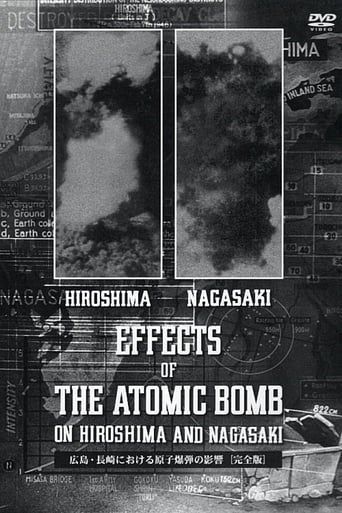
This was the only documentary made in the aftermath of the atomic bombings of 1945. Japanese filmmakers entered the two cities intent on making an appeal to the International Red Cross, but were promptly arrested by newly arriving American troops. The Americans and Japanese eventually worked together to produce this film, a science film unemotionally displaying the effects of atomic particles, blast and fire on everything from concrete to human flesh. No other filmmakers were allowed into the cities, and when the film was done the Americans crated everything up and shipped it to an unknown location. That footage is now lost. However, an American and a Japanese filmmaker each stole and hid a copy of the film, fearful that the reality of Hiroshima and Nagasaki would be hidden from history. Eventually, these prints surfaced and became our only precious archive of the aftermath of nuclear warfare -- a film that everyone knows in part, yet has rarely seen in its entirety.
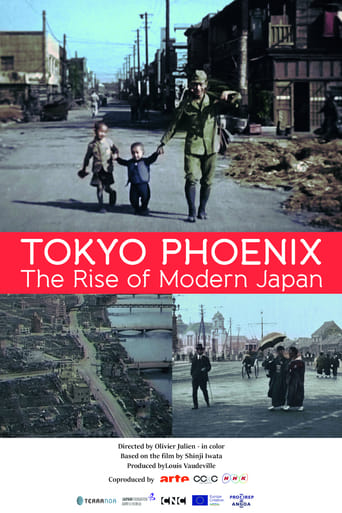
In 150 years, twice marked by total destruction —a terrible earthquake in 1923 and incendiary bombings in 1945— followed by a spectacular rebirth, Tokyo, the old city of Edo, has become the largest and most futuristic capital in the world in a transformation process fueled by the exceptional resilience of its inhabitants, and nourished by a unique phenomenon of cultural hybridization.

To historians, physicist Lise Meitner deserves to be placed on a par with Einstein, Heisenberg and Otto Hahn. In the 1930s on the verge of World War II, she led a small group of scientists who discovered that splitting the atomic nucleus of uranium releases enormous energy. This extraordinary film tells the story of a woman who was far ahead of her time as a scientist and a pioneer of feminism.
The chronicle of a WWII veteran who was sent into Nagasaki to rescue the Allied POWs after the dropping of the second atomic bomb on Japan.
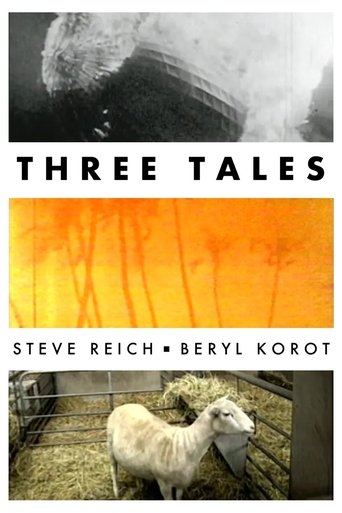
"Three Tales" is a video music work by American composer Steve Reich and video artist Beryl Korot. It is set in three "Acts", each depicting a technological advance of the 20th century and its negative implications on humanity: the dirigible airship Hindenburg and its explosion; the Atom Bomb and its testing on Bikini Atoll; and Dolly the sheep, first successful genetic cloning of a mammal.
An exploration into the early history of Australian herding
The documentary recounts the world's first nuclear attack and examines the alarming repercussions. Covering a three-week period from the Trinity test to the atomic bombing of Hiroshima, the program chronicles America's political gamble and the planning for the momentous event. Archival film, dramatizations, and special effects feature what occurred aboard the Enola Gay (the aircraft that dropped the bomb) and inside the exploding bomb.
Schort documentary on the atomic bomb.
Combining personal accounts with archive footage, this film features the voices of some of the only people left on earth to have survived a nuclear bomb.
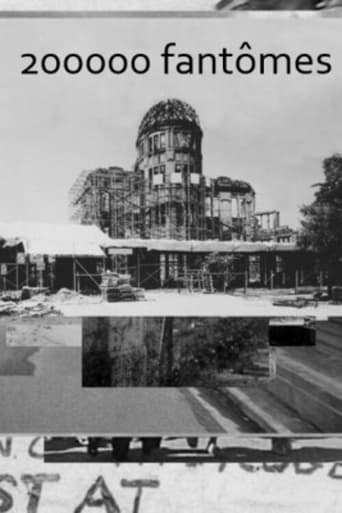
In 1914, the Czech architect Jan Letzel designed in the Japanese city of Hiroshima Center for the World Expo, which has turned into ruins after the atomic bombing in August 1945. “Atomic Dome” – all that remains of the destroyed palace of the exhibition – has become part of the Hiroshima memorial. In 2007, French sculptor, painter and film director Jean-Gabriel Périot assembled this cinematic collage from hundreds of multi-format, color and black and white photographs of different years’ of “Genbaku Dome”.


In 1966, Gurindji stockmen & their families walked off the largest cattle station in the NT. Frank Hardy follows the story of the strike as told by the Gurindji people.
Presented by explorer Frank Hurley in his final film appearance, this documentary chronicles Australia's role in the scientific exploration of Antarctica and the hardships the pioneers endured. Using archival footage, this film spans from 1911, following Sir Douglas Mawson's first expedition, to Phillip Law establishing the continent's first permanent research station in 1954.

Using only archive film and a new musical score by the band Mogwai, Mark Cousins presents an impressionistic kaleidoscope of our nuclear times – protest marches, Cold War sabre-rattling, Chernobyl and Fukishima – but also the sublime beauty of the atomic world, and how x-rays and MRI scans have improved human lives. The nuclear age has been a nightmare, but dreamlike too.
A story of struggle and tragedy, the film features harrowing underground disasters, heroic rescues and traces a history of strikes, industrial turmoil and the current push by global mining giants to destroy regional communities and replace local mineworkers with a subservient itinerant workforce.

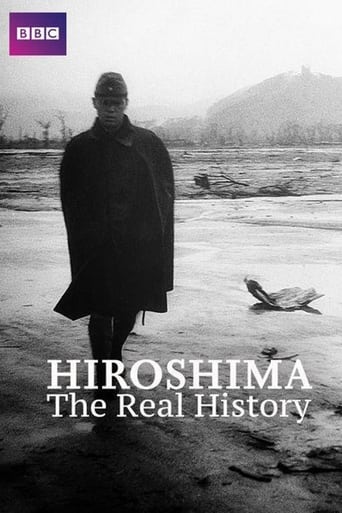
Brand new documentary marking the 70th anniversary of the Hiroshima and Nagasaki bombings which ended WWII and began the nuclear age. Features interviews with survivors from both sides.
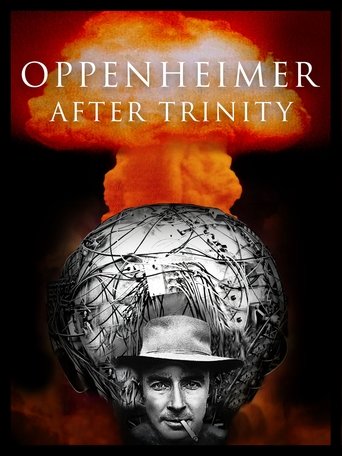
This captivating documentary on J. Robert Oppenheimer, the architect of the atomic bomb, explores his journey before the historic test and reveals the burden he carried after. De-classified documents, rare film footage and exclusive interviews, including Oppenheimer's grandson, show an intimate exploration of the burden Oppenheimer carried and the profound global impact still being debated today.
We've all heard of the atomic bomb, but in the late 1950s, an idea was conceived of a bomb which would maximize damage to people, but minimize damage to buildings and vital infrastructure: perfect for an occupying army. This is the story of a man and his bomb: a melding of world events and scientific discovery inspire the neutron bomb, one of the most hated nuclear weapons ever invented.