Co mogą martwi jeńcy
2010-01-01 · 53 min · Not rated
A documentary about the modern controversy between Poland and Russia over Russian prisoners of war from the time when Poland regained its independence, after the First World War.
Trailers are previews, not full movies.
No authorized playback source configured. Use the legal watch options below.
Production details
- Directors
- Anna Ferens
- Production companies
- Film Open Group, Telewizja Polska
- Countries
- Poland
- Status
- Released
Top Cast
Cast unavailable.
Title information and images are supplied by TMDb. Explore our discovery guide for advice on comparing metadata and legal viewing options.
Where to watch
Availability provided by JustWatch via TMDb. Offers can change. Provider links are listed on TMDb; full playback requires a separately authorized source.
Availability not listed for this country.
Seasons & episodes
Recommendations
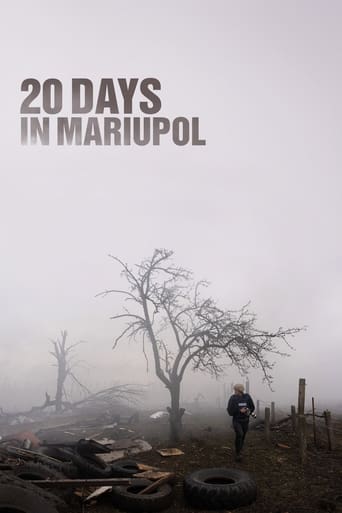
As the Russian invasion begins, a team of Ukrainian journalists trapped in the besieged city of Mariupol struggle to continue their work documenting the war's atrocities.

“The Soviet Story” is a story of an Allied power, which helped the Nazis to fight Jews and which slaughtered its own people on an industrial scale. Assisted by the West, this power triumphed on May 9th, 1945. Its crimes were made taboo, and the complete story of Europe’s most murderous regime has never been told. Until now...

Amid the failing counteroffensive, a journalist follows a Ukrainian platoon on their mission to traverse one mile of heavily fortified forest and liberate a strategic village from Russian occupation. But the farther they advance through their destroyed homeland, the more they realize that this war may never end.

Director Michael Apted revisits the same group of British-born adults after a 7 year wait. The subjects are interviewed as to the changes that have occurred in their lives during the last seven years.

A love letter from a young mother to her daughter, the film tells the story of Waad al-Kateab’s life through five years of the uprising in Aleppo, Syria as she falls in love, gets married and gives birth to Sama, all while cataclysmic conflict rises around her. Her camera captures incredible stories of loss, laughter and survival as Waad wrestles with an impossible choice– whether or not to flee the city to protect her daughter’s life, when leaving means abandoning the struggle for freedom for which she has already sacrificed so much.

A string of threatening emails escalates into a revenge plot involving a newly married US marshal and his ex-girlfriend.

Through deeply personal interviews with her siblings and an examination of the photographs, letters, and belongings left behind, Mariska assembles a new portrait of her mother Jayne Mansfield, an extraordinary and complex woman.
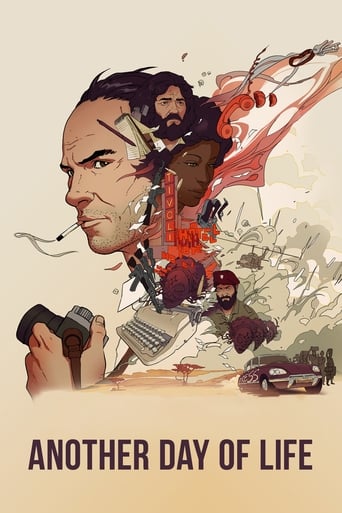
In 1975, Ryszard Kapuściński, a veteran Polish journalist, embarked on a seemingly suicidal road trip into the heart of the Angola's civil war. There, he witnessed once again the dirty reality of war and discovered a sense of helplessness previously unknown to him. Angola changed him forever: it was a reporter who left Poland, but it was a writer who returned…
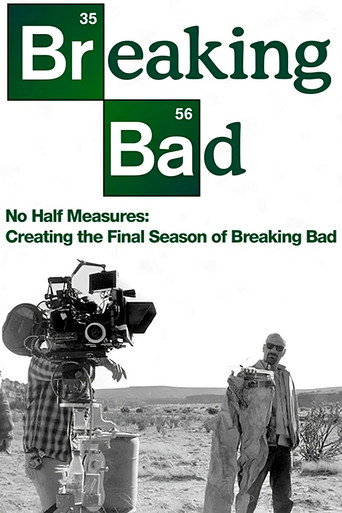
A documentary about the making of season five of the acclaimed AMC series Breaking Bad.
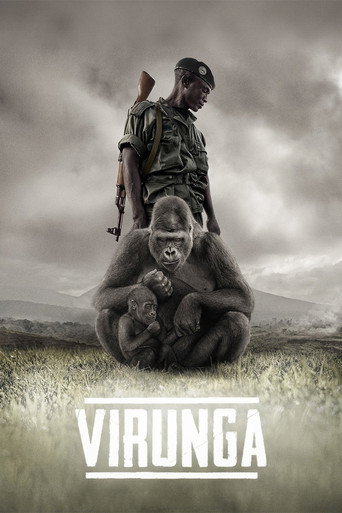
Virunga in the Democratic Republic of the Congo is Africa's oldest national park, a UNESCO world heritage site, and a contested ground among insurgencies seeking to topple the government that see untold profits in the land. Among this ongoing power struggle, Virunga also happens to be the last natural habitat for the critically endangered mountain gorilla. The only thing standing in the way of the forces closing in around the gorillas: a handful of passionate park rangers and journalists fighting to secure the park's borders and expose the corruption of its enemies. Filled with shocking footage, and anchored by the surprisingly deep and gentle characters of the gorillas themselves, Virunga is a galvanizing call to action around an ongoing political and environmental crisis in the Congo.

The final entry in a trilogy of films produced for the U.S. government by John Huston. Some returning combat veterans suffer scars that are more psychological than physical. This film follows patients and staff during their treatment. It deals with what would now be called PTSD, but at the time was categorised as psychoneurosis or shell-shock. Government officials deemed this 1946 film counterproductive to postwar efforts; it was not shown publicly until 1981.

When Sgt. First Class Brian Eisch is critically wounded in Afghanistan, it sets him and his sons on a journey of love, loss, redemption and legacy.

In an intimate and joyful story of love in the face of loss, celebrated poets Andrea Gibson and Megan Falley find strength—and unexpected hilarity—in what might be their final year together.

A documentary on the expletive's origin, why it offends some people so deeply, and what can be gained from its use.
Experience the events of September 11, 2001 through the eyes of President Bush and his closest advisors as they personally detail the crucial hours and key decisions from that historic day.

Over 35 years after Bob Lazar's revelations, this documentary exposes secrets of a facility the government still denies. Featuring Lazar's testimony, recreations, and new evidence, it reopens a case that continues to spark global curiosity

Pete Postlethwaite stars as a man living alone in the devastated future world of 2055, looking at old footage from 2008 and asking: why didn’t we stop climate change when we had the chance?

An inside look at one of the most anticipated movie sequels ever with James Cameron and cast.
A heartfelt documentary focusing on the day-to-day lives of professional wrestlers, some on the rise, some on the wane, and others fighting for their lives.

Korengal picks up where Restrepo left off; the same men, the same valley, the same commanders, but a very different look at the experience of war.
Similar titles
Japanese troops round up Chinese and Russian prisoners of war and take them to unit 731, where they're horribly tortured and experimented on to test new biological weapons.
Linguist-philologist Mark Janse discovers speakers of the Cappadocian language – previously assumed extinct, linguists worldwide are exhilarated at the discovery, but Janse realizes the rediscovered language is doomed to die anyway.
A woman and her daughter struggle to make their way through the aftermath of the Balkan war.
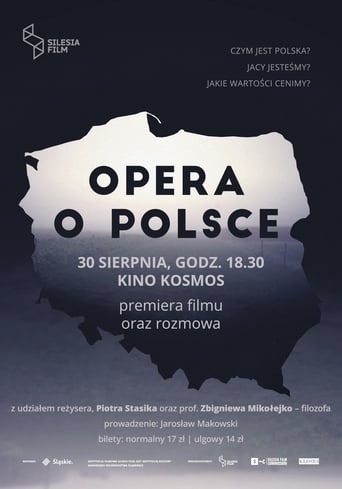
Pole, who are you? This film collage that combines archival and contemporary materials, documentary and staged pictures, press reports, social announcements, sale offers and speech excerpts is an attempt to answer this question. Referring to the Polish tradition of a creative documentary in the style of Wojciech Wiszniewski, the film presents various manifestations of Polishness: patriotic and religious rituals, everyday traditions as well as characteristic landscapes or intimate memories from childhood.
Warsaw is becoming a meeting place for people from different corners of the world, of different ages, with different life stories. What they have in common is a feeling of being lost and a dire need to run away from their solitude. The film shows an image of a contemporary city from couchsurfers’ perspective.
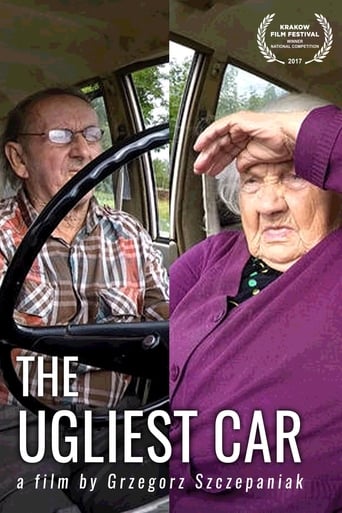
The youngest protagonist of the documentary is Wartburg, an automobile over 50 years of age. The car is still on the road, driven by Bogdan, a 70-year-old who is taking his mother to visit the German factory where she was forced to work during WWII. In this road movie which takes place between Majdanpek and Germany, the trip becomes a journey into the past, retracing memories from the war and revealing a unique relationship between an old son and his elderly mother.
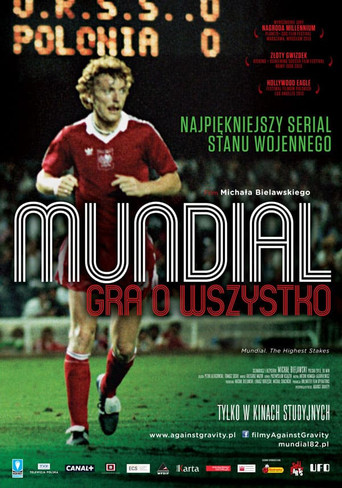
A documentary tale about sport and politics under martial law. All of Poland saw the great goals of Boniek and Smolarek during the Espana '82 championships. For a moment, it was forgotten that the background of the sporting performance was martial law, censorship, an army on the streets, prisons filled with oppositionists. The performance of the players was so successful that it was called "the most beautiful series of martial law". The game is watched by interned activists of "Solidarity", sports journalists and censors, cutting out all manifestations of the opposition from television broadcasts. We also get to know the performance in Spain from the perspective of the players, trying to meet not only their ambitions but also to bear the burden of fans' expectations and regime propaganda.

Two brothers are divided by marriage and fate during the 100 horrifying days of the 1994 Rwandan genocide.
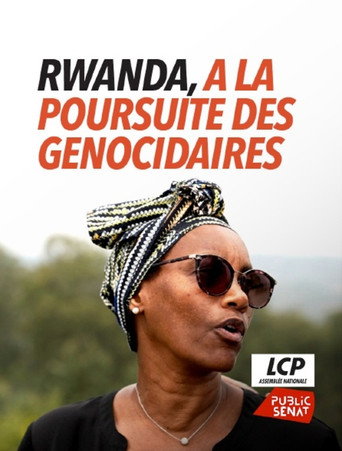
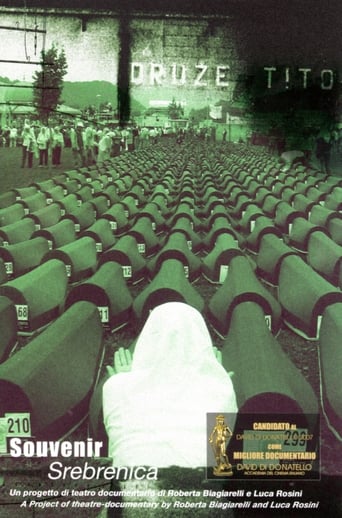
In July 1995, Srebrenica falls into the hands of Bosnian Serb forces led by General Ratko Mladić. Within a few days, thousands of Bosniak men and boys are separated from their families, killed, and buried in mass graves. Through Roberta Biagiarelli’s theatrical monologue, survivors’ testimonies, archival footage, and documents from the International Criminal Tribunal for the former Yugoslavia, the film reconstructs the story of the siege and the Srebrenica genocide. Shot in 2005 at the sites of the massacre, including the battery factory in Potočari, the film brings together memory, testimony, and historical documentation.
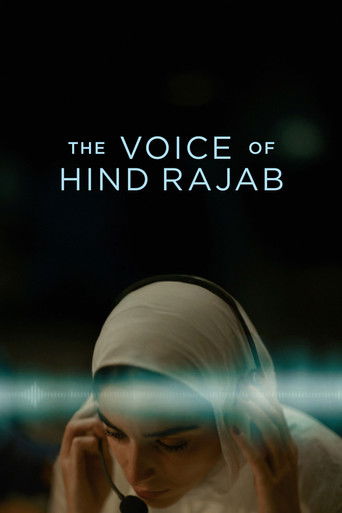
January 29, 2024. Red Crescent volunteers receive an emergency call. A five-year old girl is trapped in a car under fire in Gaza, pleading for rescue. While trying to keep her on the line, they do everything they can to get an ambulance to her. Her name was Hind Rajab.
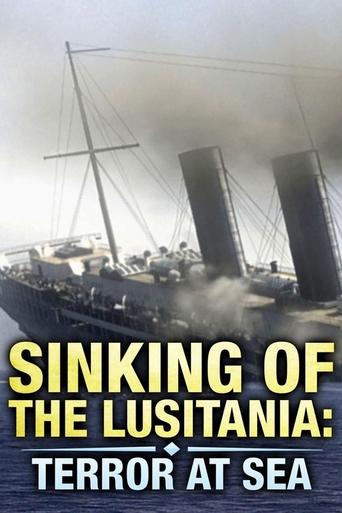
The story of the sinking of the Lusitania in 1915 after she was torpedoed off the Irish coast. The story is told from the perspective of Prof. Holbourn (a passenger), the German U-boat and its captain and crew, and other passengers, crew and Admiralty staff
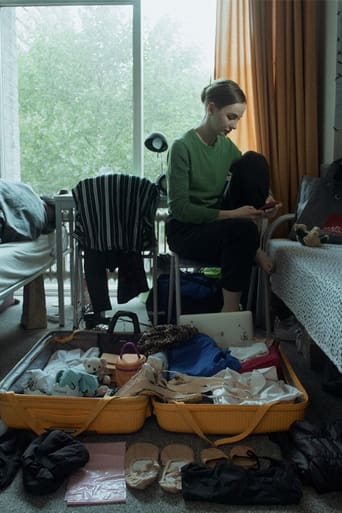
Stories about young Ukrainian dancers and their hasty flight to the Netherlands. You see their new life as refugees. The former conservatory in The Hague is a shelter for them where they collect their lives and find refuge in their profession: dance. The formation of a new ballet company, The United Ukrainian Ballet, is an important foothold in winning back their lives. They find comfort in each other and close friendships develop. In addition, there is the great love for ballet, for the dancers the best way to express themselves.

In an effort to reconnect with her grandfather, a young woman travels to northeast Poland to trace his ancestry.
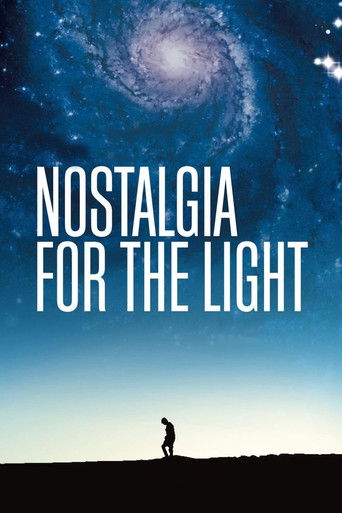
In Chile's Atacama Desert, astronomers peer deep into the cosmos in search for answers concerning the origins of life. Nearby, a group of women sift through the sand searching for body parts of loved ones, dumped unceremoniously by Pinochet's regime.

Explores the Ottoman Empire killings of more than one million Armenians during World War I. The film describes not only what happened before, during and since World War I, but also takes a direct look at the genocide denial maintained by Turkey to the present day.
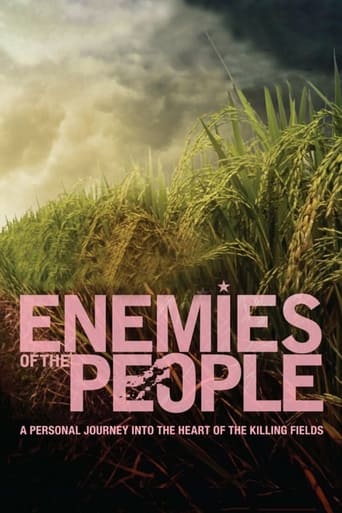
The Khmer Rouge slaughtered nearly two million people in the late 1970s. Yet the Killing Fields of Cambodia remain unexplained. Until now. Enter Thet Sambath, an unassuming, yet cunning, investigative journalist who spends a decade of his life gaining the trust of the men and women who perpetrated the massacres. From the foot soldiers who slit throats to Pol Pot's right-hand man, the notorious Brother Number Two, Sambath records shocking testimony never before seen or heard. Having neglected his own family for years, Sambath's work comes at a price. But his is a personal mission. He lost his parents and his siblings in the Killing Fields. Amidst his journey to discover why his family died, we come to understand for the first time the real story of Cambodia's tragedy.


This 1967 documentary tells the story of 734 Polish children who were adopted by New Zealand in 1944 as WWII refugees. Moving interviews, filmed 20 years later, document their harrowing exodus from Poland: via Siberian labour camps, malnutrition and death, to being greeted by PM Peter Fraser on arrival in NZ. From traumatic beginnings the film chronicles new lives (as builders, doctors, educators, and mothers) and ends with a family beach picnic. Made for television, this was one of the last productions directed by pioneering woman filmmaker Kathleen O'Brien.