

L'Inconnue du Maghreb
2020-01-01 · 53 min · Not rated
A name : Taouss Zahira, at the bottom of a letter mailed in Settat, Maroc. A date : 24 January 1990. Recipient : Charles Bordes, living in Montpellier with his family since the exile of the Pieds Noirs (name given to French nationals born in Algeria) in 1962. He hid the letter in his safe-deposit box at the bank. Upon his death, the letter surfaced, provoking quite a stir in the family. Why did Charles not destroy the letter, carrying his secret to the grave? Who is the person who signed the letter?
Trailers are previews, not full movies.
No authorized playback source configured. Use the legal watch options below.
Production details
- Directors
- Pascale Thirode
- Production companies
- Aum Films
- Countries
- France
- Status
- Released
Top Cast
Cast unavailable.
Title information and images are supplied by TMDb. Explore our discovery guide for advice on comparing metadata and legal viewing options.
Where to watch
Availability provided by JustWatch via TMDb. Offers can change. Provider links are listed on TMDb; full playback requires a separately authorized source.
Availability not listed for this country.
Seasons & episodes
Recommendations

A detailing of the rise to prominence and global sporting superstardom of six supremely talented young Manchester United football players (David Beckham, Nicky Butt, Ryan Giggs, Paul Scholes, Phil and Gary Neville). The film covers the period 1992-1999, culminating in Manchester United's European Cup triumph.

In an intimate and joyful story of love in the face of loss, celebrated poets Andrea Gibson and Megan Falley find strength—and unexpected hilarity—in what might be their final year together.

A night of drunken chaos rocks a quiet Dutch town in this shocking documentary about a teen's birthday invite that accidentally went viral on Facebook.
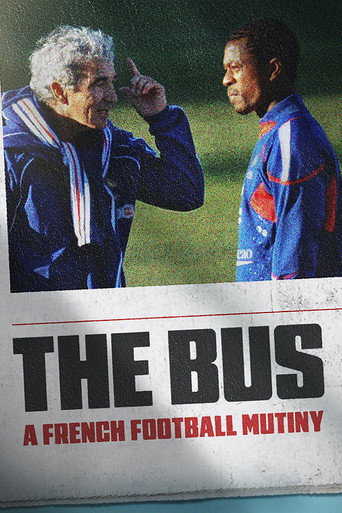
This documentary revisits the French football team's controversial 2010 World Cup and the bus strike that sparked global headlines and national outrage.
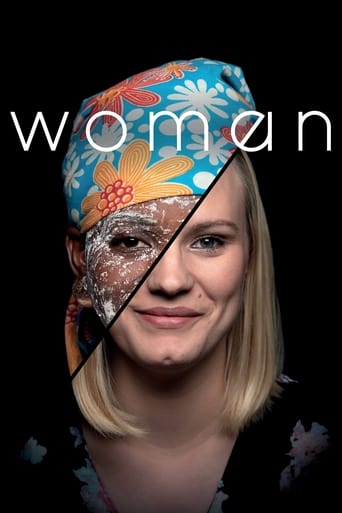
The film is based on interviews with 2,000 women from 50 countries, and covers the status of women all over the world. The topics covered include forced marriages, sexual assault, female genital mutilation, acid attacks, motherhood, sexuality, menstruation, education and the professional success of women.

A string of threatening emails escalates into a revenge plot involving a newly married US marshal and his ex-girlfriend.

From the heights of her modeling fame to her tragic death, this documentary reveals Anna Nicole Smith through the eyes of the people closest to her.

Ranjit, a farmer in India, takes on the fight of his life when he demands justice for his 13-year-old daughter, the victim of a brutal gang rape. His decision to support his daughter is virtually unheard of, and his journey unprecedented.

The life and career of one of comedy's most inimitable modern voices, Mr. Gilbert Gottfried.
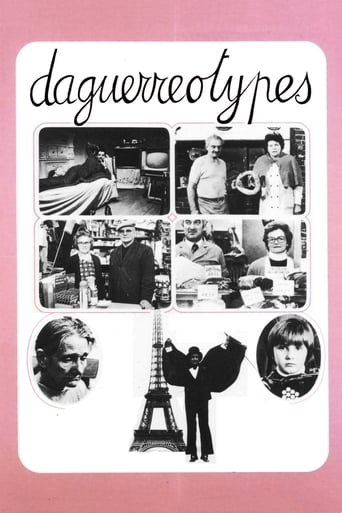
An intimate portrait of the small shops and shopkeepers of the Rue Daguerre in Paris, a picturesque street that has been the filmmaker’s home for more than 50 years.

Brilliant, long in-the-works story of the life and art of the world's greatest comedian and the cinema's first genius, Charlie Chaplin. Produced, written and directed by renowned film critic Richard Schickel.
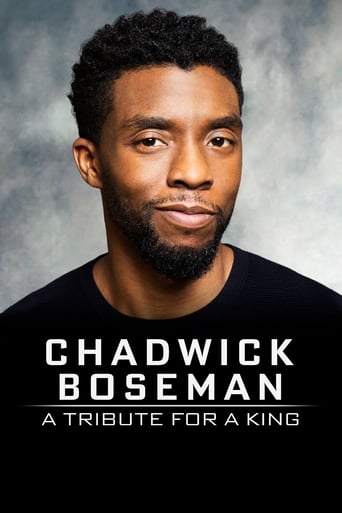
A tribute to Chadwick Boseman, celebrating his life and legacy.

Penetrating the insular world of New York's Hasidic community, focusing on three individuals driven to break away despite threats of retaliation.

A documentary about the life and films of director John Ford.

Over 35 years after Bob Lazar's revelations, this documentary exposes secrets of a facility the government still denies. Featuring Lazar's testimony, recreations, and new evidence, it reopens a case that continues to spark global curiosity
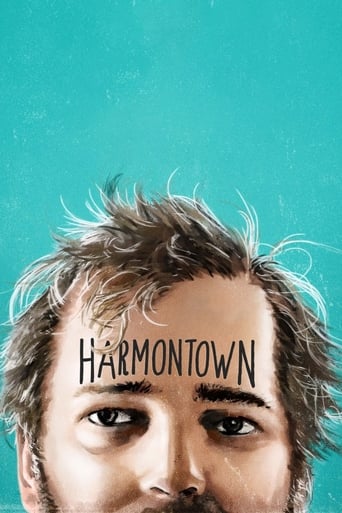
A comedic, brutally honest documentary following self-destructive TV writer Dan Harmon as he takes his live podcast on a national tour.
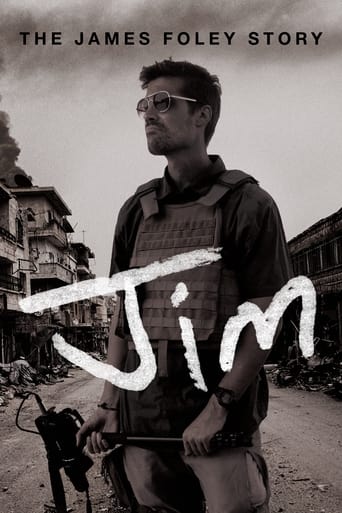
In August, 2014, a video of the public execution of American photojournalist James Foley rippled across the globe. Foley wore an orange jumpsuit as he knelt beside an ISIS militant dressed in black. That image challenged the world to deal with a new face of terror. And it tested one American family. Seen through the lens of filmmaker Brian Oakes, Foley’s close childhood friend, Jim takes us from small-town New England to the adrenaline-fueled front lines of Libya and Syria, where Foley pushed the limits of danger to report on the plight of civilians impacted by war.

When Allied forces liberated the Nazi concentration camps in 1944-45, their terrible discoveries were recorded by army and newsreel cameramen, revealing for the first time the full horror of what had happened. Making use of British, Soviet and American footage, the Ministry of Information’s Sidney Bernstein (later founder of Granada Television) aimed to create a documentary that would provide lasting, undeniable evidence of the Nazis’ unspeakable crimes. He commissioned a wealth of British talent, including editor Stewart McAllister, writer and future cabinet minister Richard Crossman – and, as treatment advisor, his friend Alfred Hitchcock. Yet, despite initial support from the British and US Governments, the film was shelved, and only now, 70 years on, has it been restored and completed by Imperial War Museums under its original title "German Concentration Camps Factual Survey".

A sexual wellness company gains fame and followers, then members come forward with shocking allegations.

This revealing documentary honors the legendary Sidney Poitier—iconic actor, filmmaker, and civil rights activist. Featuring interviews with Denzel Washington, Spike Lee, Halle Berry, and more.
Similar titles
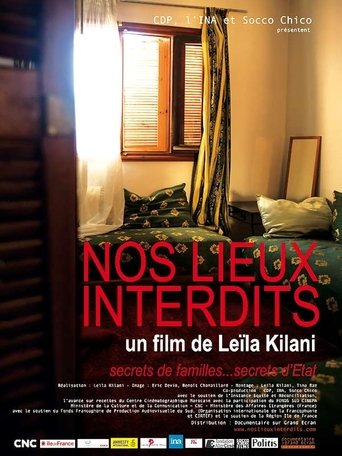
During the oppressive reign of Moroccan King Hassan II in the 70s and 80s (Years of Lead), many dissidents went missing. After the throning of a new king, a truth commission was formed in the 2000's. Families of the missing speak.
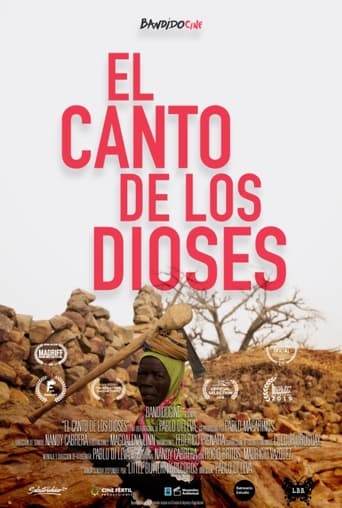
Road documentary that delves into the musical and religious expressions of sub-Saharan Africa. Through Mauritania and Mali, the film documents the lives of Dogon, griots, musicians and instrument makers who, through oral accounts, explain why music plays a fundamental role in the socio-religious organization of peoples. The film culminates its search with the recording of the performance of the traditional Dogon mask dance, in Begnematou, a small village lost in the desert.
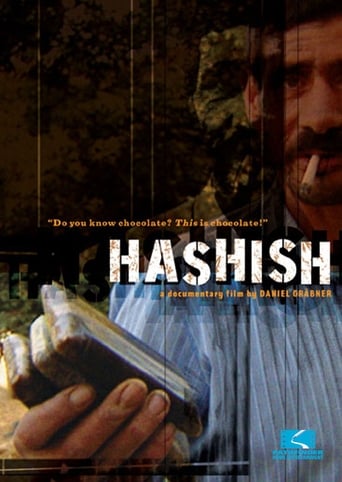
A small village high up in the mountains of Ketama, Northern Morocco. The life of the people here has been shaped by the drug hashish for centuries. Hashish as daily work, hash as exchange currency, hashish as business, hashish as basis and philosophy of a social system, hashish as medium for dreams and hashish as reason for stagnation.
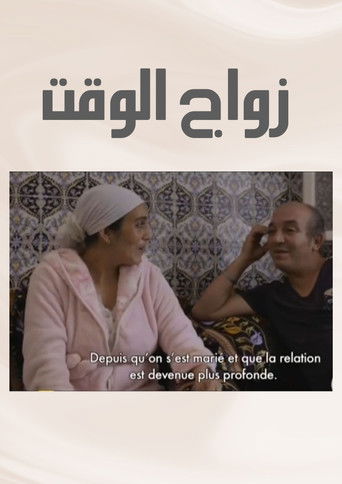
Zwaj El Waqt explores the themes of love and marriage in Morocco. Told through the testimonies of diverse couples, it tackles the issues of relationships, social media, control and sexuality in a conservative society that still struggles to discuss freely about those topics.
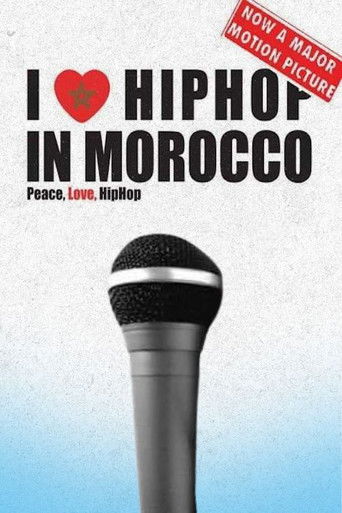
A determined group of Moroccan Hip Hop hopefuls band together to create their country's first Hip Hop festival, a celebration of music, unity, and free speech.
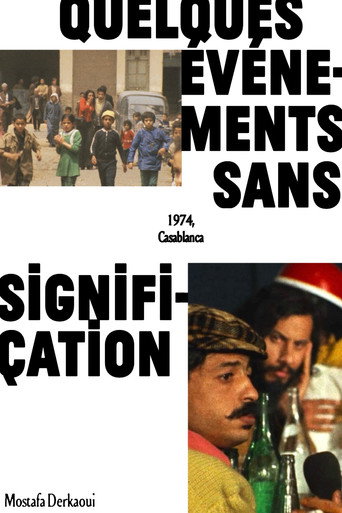
In Casablanca, a group of filmmakers conduct discussions with people about their expectations of, and aspirations for, the emerging Moroccan national cinema. When a disgruntled worker kills his superior accidentally, their inquest shifts focus, and they begin to probe the motives of the killing.
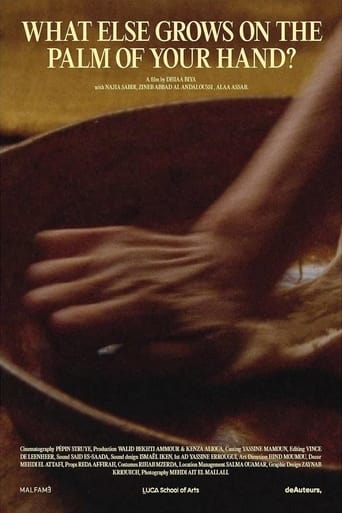
The routines of two women fuse together as their similar gestures get repeated over time. Their hands intersect through their shared memory one movement at a time. The daily routine of Hayat in her absolute loneliness builds as she tries to recollect memories of her grandmother. We observe both their lives separately, the gestures of both women seem to be in an ongoing, subtle dialogue. The rhythm of the events slowly forms itself as their days go by. Eventually, the bond between them unravels the motherly love that unites them.
An undercover documentary film produced and directed by British filmmaker Dominic Brown, about the struggle of the indigenous Sahrawi people of Western Sahara. The documentary covers the current human rights and political situation of the Sahrawi. There are several interviews recorded with human rights victims including an elderly lady who had been attacked in her home the previous day by Moroccan security forces. There is also a focus given to the alleged vested interests of countries in the region, particularly France. The film states that the French Government's close relationship with Morocco, their trade deals and their use of veto over the terms of the UN mission in Western Sahara are major factors.
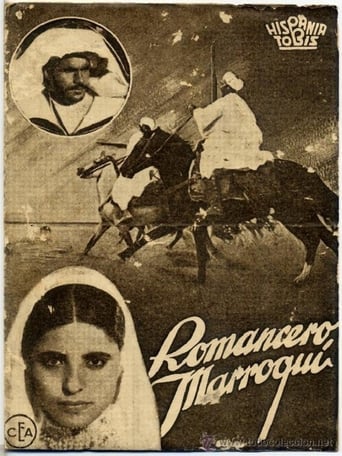
The young farmer Aalami leaves his family to find work elsewhere. He gets to know the country and its people, customs and traditions at Küste in North Africa: Market life in Tetuan, the art of craftsmanship, the life of the Moors, dances and festivities in honour of the caliph, white mosques, the call of the muezzin of the minaret and the music of the shepherd flutes. Aalami also follows Franco's call and flies from Morocco to Spain to fight at Bürgerkrieg. In the end Aalami comes back to his wife and children.
Shot on location in a very remote part of southern Morocco, this short film looks into the amazing craftsmanship and dedication of the Berber rug weavers in the region. These incredibly talented people are part of an ancient tradition that still employs centuries-old techniques to produce beautiful and unique handwoven rugs.

Yann Arthus-Bertrand flew over Morocco with his cameras and asked the journalist Ali Baddou to write and record the comment.
A humorous observation in Barcelona’s immigrant neighbourhood El Raval. Four barber shops, four places of remembrance, strange time and space capsules inhabited by people who left their home to find a better one, while the Spaniards are about to leave their own country themselves.
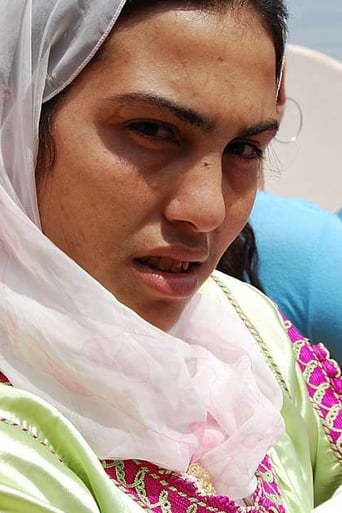
A film about a woman who doesn’t exist. Moroccan Hind was raped and consequently denied an official identity – she has no other choice but to work as a prostitute and traditional wedding dancer, but despite the odds of her situation, refuses to give up her dream of dignity, motherhood and love. This is a story of modern day outlaws, children of prostitutes, abandoned child brides and those who have had to escape to the fringes of patriarchal Moroccan society. Through the eyes of one young woman we see a life of constant struggle, but also a life free of the society’s norms and boundaries. The woman in the centre of the film, Hind, is both vulnerable and courageous as she tries to regain her life, her children and her mere right to live as an equal human being in the 21st century.

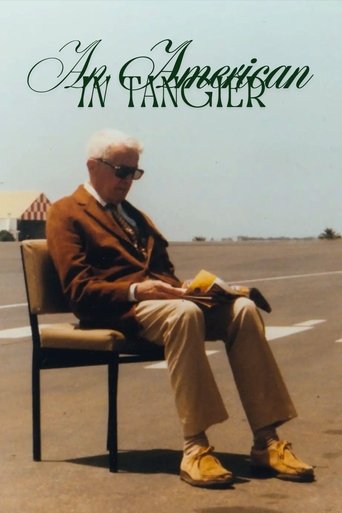
Made in the sunset years of Paul Bowles’ life, the film sees the eccentric author and composer reminisce on how he ended up in Morocco.

Twenty-third sovereign of the Alawite dynasty established in Morocco since the seventeenth century, Mohammed VI took over from his father Hassan II in 1999, and from the moment of his coronation, he positioned himself as a "king of the poor", close to the people. Naturally shy, he prefers to act rather than speak, defining a modern style of governance that has earned him great popularity from the start. Married to a young computer engineer, he asserted a policy of liberalization of morals and even made a critical review of the period of repression led by his father during the years of lead. However, he faces opposition from conservatives, which leads to the election of the Islamist PJD (Party of Justice and Development) as head of government, following the Arab Spring of 2011.
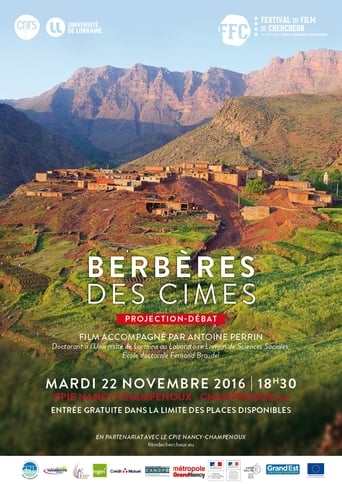
At the heart of the Moroccan High Atlas mountains, water is a resource in short supply. The village of Tizi N'Oucheg has undergone a transformation thanks to Rachid Mandili, who is well-aware that the development of his village depends on access to clean water and on his strong leadership of this project. Mandili rallies all the villagers together and calls upon the knowledge of French and Moroccan scientists to tap water sources, to purify, and reuse waste water for irrigation. The documentary highlights the Berbers' community ties and ingenuity in their dream of independently managing their village water resources. It equally paints a portrait of a man whose initiative and resourcefulness has opened Tizi N'Oucheg up to modernity while still conserving its cultural heritage. Tizi's example presents some of the problems of water access in semi-arid regions and puts forward concrete solutions to these problems.