
The Concrete Road
2021-07-07 · 12 min · Not rated
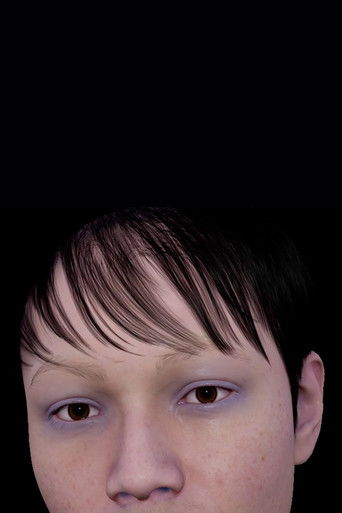
The Concrete Road is a three-channel installation work which was premiered during the Graduation Show 2021 at Gerrit Rietveld Academie. "Landscape shifts, unmodernised desires. This is a story comprising three avatars of myself talking to and interviewing each other, reflecting on memories and weaving a path on coming of age. Sticky childhood memory which never fades. Loosely fitted gender/racial identity struts in juvenile cravings. Self-loathing, negation of the past, and his frowning parents. The tyranny of modernism leaves a leaky path for the protagonist to escape and slobber in a dream of wet summer night. My highest appreciation towards Bertien van Manen, who not only provides images on memory bubbles, but also her images help me to develop the initial script for this work."
Trailers are previews, not full movies.
No authorized playback source configured. Use the legal watch options below.
Production details
- Directors
- Wenrui Zhao
- Production companies
- RietveldTV, AT5
- Countries
- Unavailable
- Status
- Released
Top Cast
Title information and images are supplied by TMDb. Explore our discovery guide for advice on comparing metadata and legal viewing options.
Where to watch
Availability provided by JustWatch via TMDb. Offers can change. Provider links are listed on TMDb; full playback requires a separately authorized source.
Availability not listed for this country.
Seasons & episodes
Recommendations

Daniel Craig candidly reflects on his 15 year adventure as James Bond. Including never-before-seen archival footage from Casino Royale to the upcoming 25th film No Time To Die, Craig shares his personal memories in conversation with 007 producers, Michael G Wilson and Barbara Broccoli.

A compilation of over 30 years of private home movie footage shot by Lithuanian-American avant-garde director Jonas Mekas, assembled by Mekas "purely by chance", without concern for chronological order.

Told through performances, TV interviews, home movies, family photographs, private letters and unpublished memoirs, the film reveals the essence of an extraordinary woman who rose from humble beginnings in New York City to become a glamorous international superstar and one of the greatest artists of all time.

Director Michael Apted revisits the same group of British-born adults after a 7 year wait. The subjects are interviewed as to the changes that have occurred in their lives during the last seven years.
Amber Heard and Nicole Kidman discuss their characters Mera and Atlanna.

Go behind the scenes and witness how the "Squid Game"-inspired reality show transformed from a scripted drama to a cutthroat, nail-biting competition.

In an intimate and joyful story of love in the face of loss, celebrated poets Andrea Gibson and Megan Falley find strength—and unexpected hilarity—in what might be their final year together.
With mesmerizing footage and time lapses of animators at work, this behind-the-scenes special captures the artistry of a unique tale years in the making.

The life and career of an actor, artist, and icon. His own journey through his own camera.
This special explores the return of Obi-Wan Kenobi and Anakin Skywalker to the screen, as well as Ewan McGregor and Hayden Christensen to their classic roles. Director Deborah Chow leads the cast and crew as they create new heroes and villains that live alongside new incarnations of beloved Star Wars characters, and an epic story that dramatically bridges the saga films.

Through deeply personal interviews with her siblings and an examination of the photographs, letters, and belongings left behind, Mariska assembles a new portrait of her mother Jayne Mansfield, an extraordinary and complex woman.

As a visually radical memoir, CAMERAPERSON draws on the remarkable footage that filmmaker Kirsten Johnson has shot and reframes it in ways that illuminate moments and situations that have personally affected her. What emerges is an elegant meditation on the relationship between truth and the camera frame, as Johnson transforms scenes that have been presented on Festival screens as one kind of truth into another kind of story—one about personal journey, craft, and direct human connection.

An inside look at one of the most anticipated movie sequels ever with James Cameron and cast.
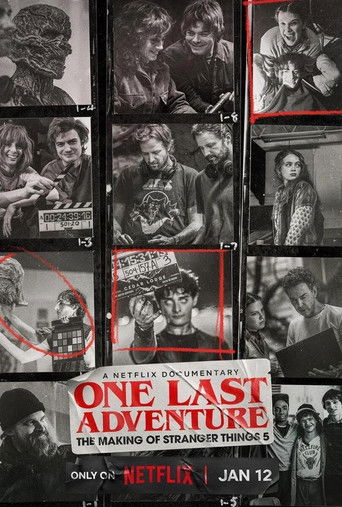
An inside look at the years of effort and craft that went into the final installment of the Duffer Brothers' generation-defining series.
From a prolific career in film and television, Anton Yelchin left an indelible legacy as an actor. Through his journals and other writings, his photography, the original music he wrote, and interviews with his family, friends, and colleagues, this film looks not just at Anton's impressive career, but at a broader portrait of the man.
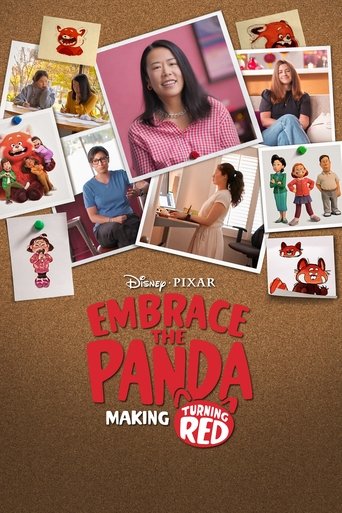
A feature length documentary about the all-women team at the helm of Pixar's original feature, Turning Red. With unprecedented behind-the-scenes access to Director Domee Shi and her core leadership crew, this story shines a light on the powerful professional and personal journeys that brought this incredibly comical, utterly relatable, and deeply heartfelt story to the screen.
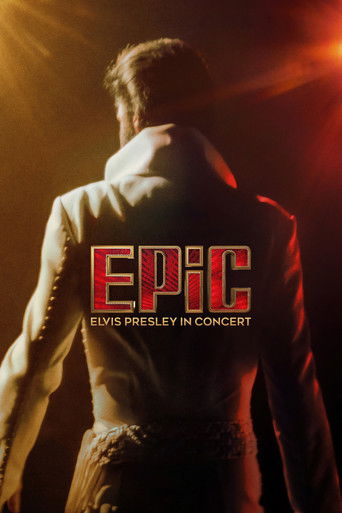
Long-lost footage from Elvis Presley's legendary Las Vegas residency in the 1970s woven together with rare 16mm footage from Elvis on Tour, and 8mm from the Graceland archive, plus recordings of Elvis telling "his side of the story" rediscovered during Baz Luhrmann's research for his 2022 film, Elvis.

Stars of "The Walking Dead," Andrew Lincoln and Danai Gurira, walk down memory lane and visit iconic locations where pivotal moments between their characters, Rick and Michonne, were filmed.
Join director Chloe Zhao and the Cast of Eternals as they recount their experiences during the making of Marvel Studios’ most ambitious film to date. Discover how the ensemble cast felt stepping into their roles, filming in remote locations, and creating bonds that would help to create the on-screen relationships that span over 7,000 years.

A visual montage portrait of our contemporary world dominated by globalized technology and violence.
Similar titles
Things That Go Bump in the Night: Tales of Haunted New England takes you on a journey throughout historic New England collecting tales of the supernatural, the unexplained, and the mysterious — spooky stories of ghosts, spirits, witches... and even a vampire!

On the island of La Gomera, children imagine stories while they examine archeological remains. An ethno-fictional journey in which past and present coalesce, creating resonances between the volcanic landscape and Silbo, the whistled language of the island.
Composed from the conversations that the director holds with people passing by in the street under his Warsaw apartment, each story in 'The Balcony Movie' is unique and deals with the way we try to cope with life as individuals. All together, they create a self-portrait of contemporary human life, and the passers-by present a composite picture of today's world.
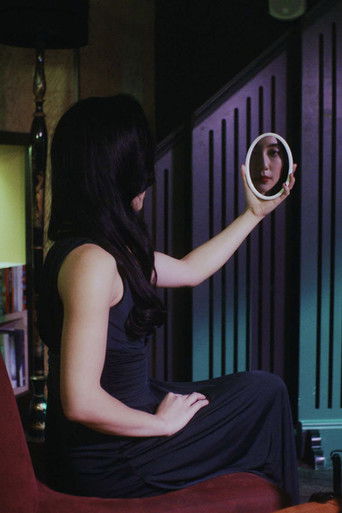
'Afloat' is an experimental film that paints a portrait of Japanese performance artist: Ayumi Lanoire. The film opens as a telephone call between Ayumi and Person X, which meanders the audience through the various layers that make up her personas leading one to wonder whether she is in fact a myth or reality.
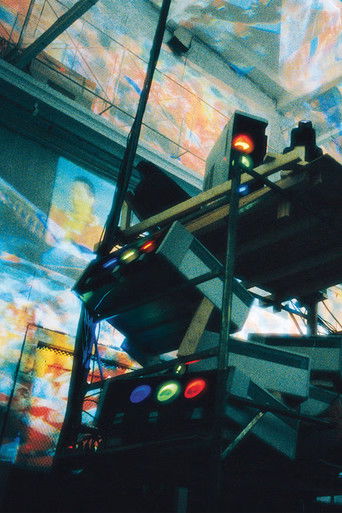
Sistine Chapel is an audio-visual collage of new footage and samples from Paik’s past videos, which featured many of his friends, collaborators, and public figures. It was Paik’s own way of summarizing his artistic career with video. The film installation consists of fast-paced and overlapping images that completely cover the gallery walls and ceiling—one of the most under-appreciated parts of architecture, according to Paik. With its electronic visuals and booming audio, interspersed with periods of silence, the immersive installation stands in stark contrast to the experience of its namesake.
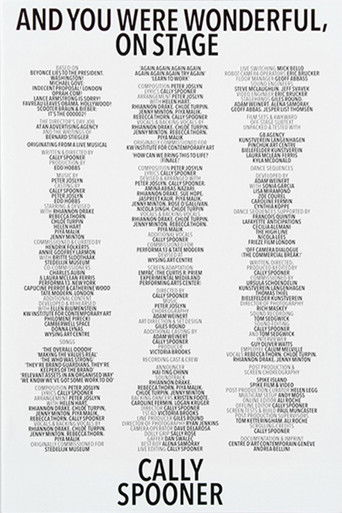
An immersive film installation by Cally Spooner. In this work, a musical for six continuously rolling cameras, a black box soundstage and its inhabitants, are recorded in a single take. The mechanics of the shoot (cameras, microphones, mixing boards, chromakey screens and crew) remain as present as the performers they capture. Cast and crew become a constant-motion human backdrop, pragmatically recomposing scene-changes through lighting cues, voice, body movement, or continuous shifts of filmic apparatus and props. The semblance of a post-production edit arrives through the organisation and orchestration of bodies on set. Delivered by a chorus line of women, the film gossips about various celebrities, athletes and politicians who have outsourced their performances to different technologies.

METALLICA the Complete Story
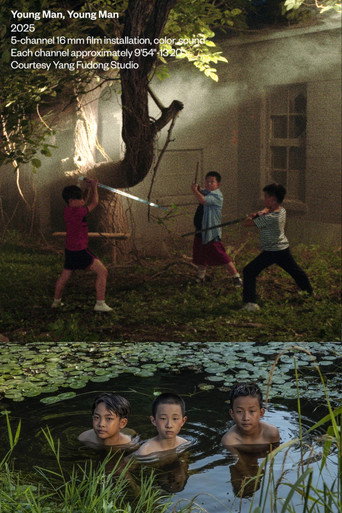
Young Man, Young Man unfolds in a fragmented structure, reconstructing Yang Fudong’s recollections of his 1980s adolescence in a Beijing military compound, along with scattered memories of collective life in the post-socialist era. In the film, young boys run, practice martial arts, wait for the bus, splash in water, and play in cornfields. There is no fixed narrative; instead, the boys seem to drift through an endless summer. Yet an undercurrent of distance and estrangement suggests that childhood has already quietly slipped away. These moments of adolescent innocence and loneliness, crystalized within the film, form a dreamlike allegory.

County Magistrate, County Magistrate depicts a collective migration unfolding in an indeterminate time and place. Men, women, and children from a village move through mountains as the sky gradually grows dark, walking resolutely into the distance until they arrive at a new settlement. The abandoned courtyards they leave behind still bear traces of daily life: a steaming kettle, unfinished bowls of food, an old television flickering with static, and worn-out pieces of furniture. The camera then slowly pans to an outdoor movie screen showing After Armistice, a black-and-white film released in 1962. In the film, a man draws a business card from his pocket and introduces himself as Xianghe’s newly appointed county magistrate. At this moment, the story slips into another layer of fictional time and space.
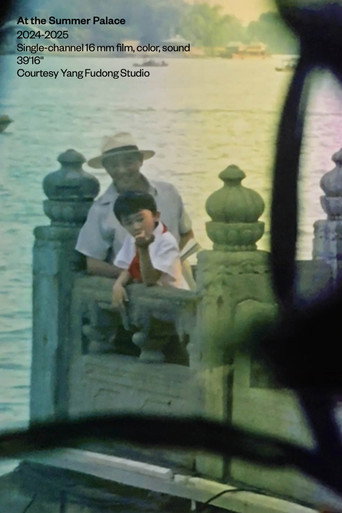
At the Summer Palace follows a mysterious man and a young boy as they wander through the Summer Palace, clad in clothing recalling styles from the 1980s and 1990s. The work unfolds like a hazy moment between dreaming and wakefulness, recalling the stillness of a languid afternoon. The era-specific details present in the setting seem to anachronistically clash with their pair’s clothing and behavior. Through this dislocation of time and space, Yang Fudong evokes the complex emotions of childhood, specifically the mixture of curiosity and unease a child feels upon encountering the strange and unknown.

A student made film tackling the theme of space, how it is used and how it affects. In this particular instance we follow the quite absurd actions taking place in the context of quite a serious, linear and industrial setting. The actions intended to guide self awareness of the participants surroundings and allow them to in turn be more aware of them and the space they occupy. These instructions also form part of a list of equal absurd instructions which may continue to grow.
A self-portrait film about sentimental objects and moments in life.

In a playful critique of the mechanisation of the body and the militarisation of the workplace, Zhou Tao collages choreographed chants that take place in morning group meetings – a form of taking attendance at the beginning of a workday – for shops and companies in Shanghai and Shenzhen.
A documentary-art film, incorporating dance sequences alongside interviews with such luminaries as Rigoberta Menchú Tum, a K’iche’ Guatemalan human rights activist, feminist and Nobel Peace Prize laureate, and current Guatemalan president Bernardo Arévalo.
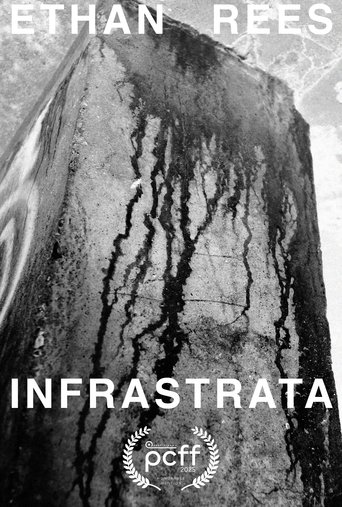
Amongst the contemplative static shots of decaying architecture weaves an abstract narrative unveiling the life-cycle of a higher perception, too large to perceive. Shot at various sites across south-east England, INFRASTRATA is a study on the concept of super-organisms, and the relationship between structure and nature.

sononda is the first part of the short film series future past perfect and was originally recorded in 2006. the series whose single fragments are supposed to be parts of a larger scale film project is designed as a row of conceptually independent movies that document nicolai's focus of interest of the respective year of origin and also builds up on the results of the movie(s) before. despite sononda's visual quality seems artificial at times, it was shot in a natural environment. the focus is directed on the sculptural quality of light. the correspondence of both music - with its low frequency modulations and merging soundscapes - and light play on the curved surfaces of the sculptural stone formations create an ever-changing atmosphere of concrete and abstract appearances.
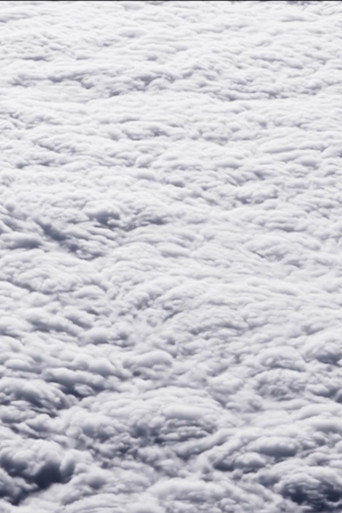
Conceived as the fourth part of the series under the name future past perfect, the fourth short film of the row is the result of a long-term fascination with clouds, their movements, structure/texture, and their potentially infinite variety of forms. shot from the plane on various trips, the sequences of cloud imagery are edited and collaged in different ways to match the diverse qualities of constitution and behaviour of clouds. the short movie especially focussed on so-called stratus clouds, a category of clouds that usually appears rather flat, hazy and featureless. their visual quality as seen from above may imply micro and macro structures at the same time thus potentially deceives the viewer's perception.
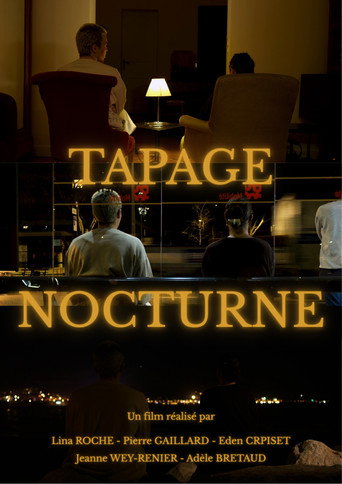
This documentary depicts two young adults discussing their relationship with sound and silence.