
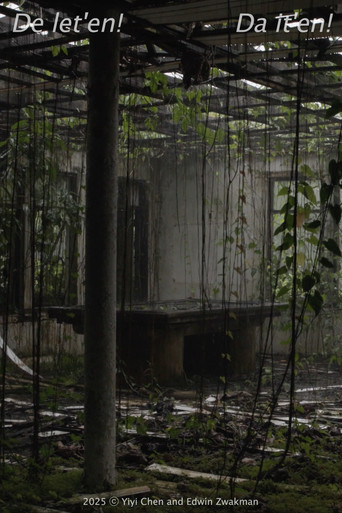
De let'en! - Da it'en!
2026-04-23 · 16 min · Not rated
A meditative depiction of a colonial villa in Mungo, Surinam, taken back by nature.
Trailers are previews, not full movies.
No authorized playback source configured. Use the legal watch options below.
Production details
- Directors
- Yiyi Chen, Edwin Zwakman
- Production companies
- Mondriaan Fonds, Tembe Art Studio, Kibii Foundation
- Countries
- Suriname, Netherlands
- Status
- Released
Top Cast
Cast unavailable.
Title information and images are supplied by TMDb. Explore our discovery guide for advice on comparing metadata and legal viewing options.
Where to watch
Availability provided by JustWatch via TMDb. Offers can change. Provider links are listed on TMDb; full playback requires a separately authorized source.
Availability not listed for this country.
Seasons & episodes
Recommendations

Alexander McQueen's rags-to-riches story is a modern-day fairy tale, laced with the gothic. Mirroring the savage beauty, boldness and vivacity of his design, this documentary is an intimate revelation of McQueen's own world, both tortured and inspired, which celebrates a radical and mesmerizing genius of profound influence.

A visual montage portrait of our contemporary world dominated by globalized technology and violence.

A documentary on the expletive's origin, why it offends some people so deeply, and what can be gained from its use.
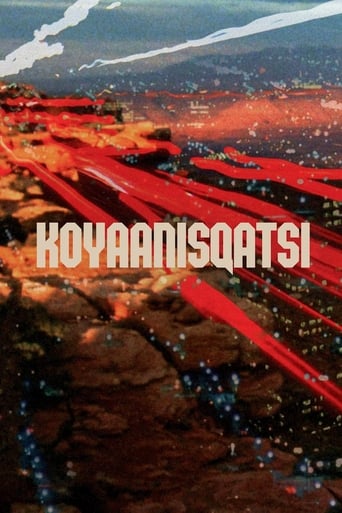
Takes us to locations all around the US and shows us the heavy toll that modern technology is having on humans and the earth. The visual tone poem contains neither dialogue nor a vocalized narration: its tone is set by the juxtaposition of images and the exceptional music by Philip Glass.

An unprecedented and intimate look at the life, work and enduring legacy of British actress Audrey Hepburn (1929-1993).
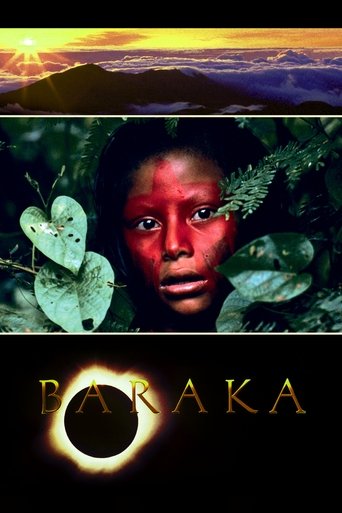
A paralysingly beautiful documentary with a global vision—an odyssey through landscape and time—that attempts to capture the essence of life.
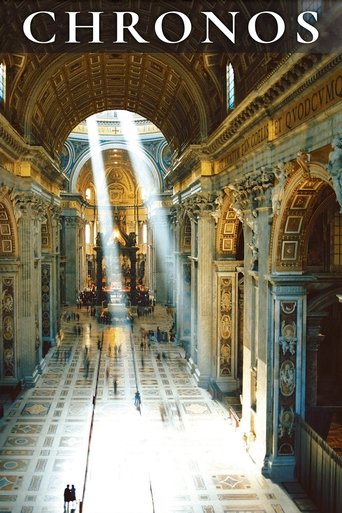
Carefully picked scenes of nature and civilization are viewed at high speed using time-lapse cinematography in an effort to demonstrate the history of various regions.

“The Soviet Story” is a story of an Allied power, which helped the Nazis to fight Jews and which slaughtered its own people on an industrial scale. Assisted by the West, this power triumphed on May 9th, 1945. Its crimes were made taboo, and the complete story of Europe’s most murderous regime has never been told. Until now...

In the Realms of the Unreal is a documentary about the reclusive Chicago-based artist Henry Darger. Henry Darger was so reclusive that when he died his neighbors were surprised to find a 15,145-page manuscript along with hundreds of paintings depicting The Story of the Vivian Girls, in What is Known as the Realms of the Unreal, of the Glodeco-Angelinnian War Storm, Cased by the Child Slave Rebellion.

A compilation of over 30 years of private home movie footage shot by Lithuanian-American avant-garde director Jonas Mekas, assembled by Mekas "purely by chance", without concern for chronological order.

In an intimate and joyful story of love in the face of loss, celebrated poets Andrea Gibson and Megan Falley find strength—and unexpected hilarity—in what might be their final year together.

Director Michael Apted revisits the same group of British-born adults after a 7 year wait. The subjects are interviewed as to the changes that have occurred in their lives during the last seven years.
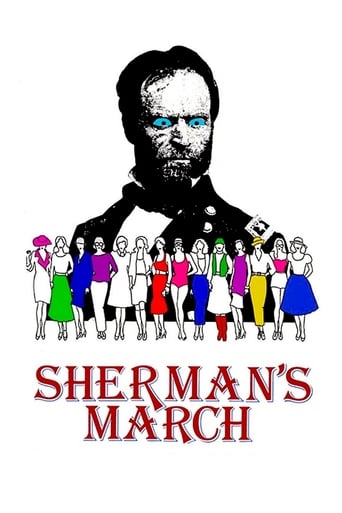
Documentarian Ross McElwee originally set out to make a travelogue of sorts tracing General William T. Sherman's infamous scorched-earth march through the Confederacy in the latter stages of the Civil War. Instead, haunted by a recent breakup with a girlfriend, McElwee ends up documenting his progress -- or lack thereof -- in starting a new relationship. His journey then becomes one of self-reflection and self-discovery rather than a historical/sociological exploration.

Over 35 years after Bob Lazar's revelations, this documentary exposes secrets of a facility the government still denies. Featuring Lazar's testimony, recreations, and new evidence, it reopens a case that continues to spark global curiosity

As a visually radical memoir, CAMERAPERSON draws on the remarkable footage that filmmaker Kirsten Johnson has shot and reframes it in ways that illuminate moments and situations that have personally affected her. What emerges is an elegant meditation on the relationship between truth and the camera frame, as Johnson transforms scenes that have been presented on Festival screens as one kind of truth into another kind of story—one about personal journey, craft, and direct human connection.

Through deeply personal interviews with her siblings and an examination of the photographs, letters, and belongings left behind, Mariska assembles a new portrait of her mother Jayne Mansfield, an extraordinary and complex woman.

The history of cinematic sound, told by legendary sound designers and visionary filmmakers.
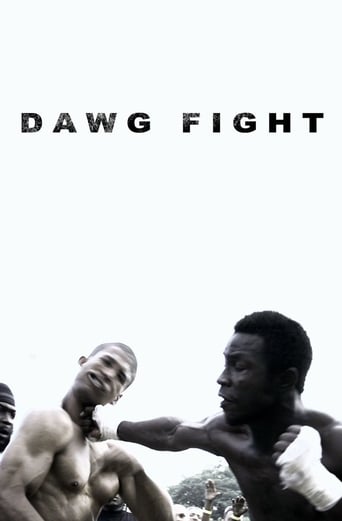
In a crime-plagued neighborhood near Miami, brutal, bare-knuckled backyard fights give young men a chance to earn money -- and self-respect.
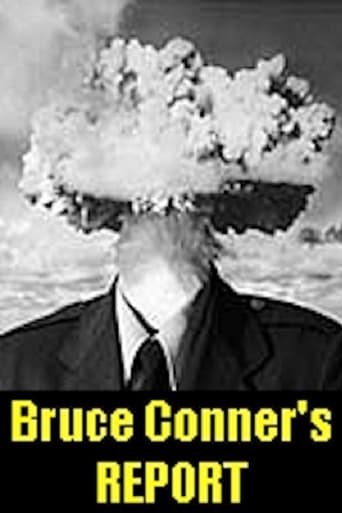
Bruce Conner’s most celebrated film for a reason: it takes historical moments that were replayed over and over on television—chilling repetition of Kennedy assassination coverage—and repurposes them into a meditation on how the media tries to exert authority and apply a sense of order to the anarchic. And though it may sound perverse to say so, the film is also—not incidentally—a thrill to watch. -- The A.V. Club
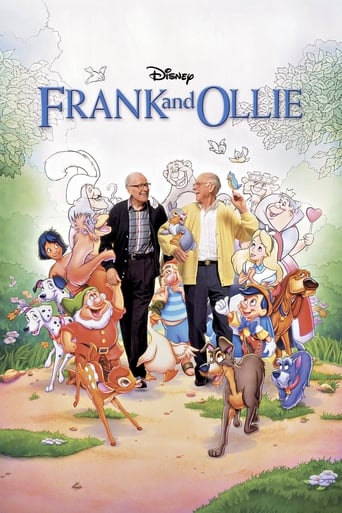
Before computer graphics, special effects wizardry, and out-of-this world technology, the magic of animation flowed from the pencils of two of the greatest animators The Walt Disney Company ever produced -- Frank Thomas and Ollie Johnston. Frank and Ollie, the talent behind BAMBI, PINOCCHIO, LADY AND THE TRAMP, THE JUNGLE BOOK, and others, set the standard for such modern-day hits as THE LION KING. It was their creative genius that helped make Disney synonymous with brilliant animation, magnificent music, and emotional storytelling. Take a journey with these extraordinary artists as they share secrets, insights, and the inspiration behind some of the greatest animated movies the world has ever known!
Similar titles
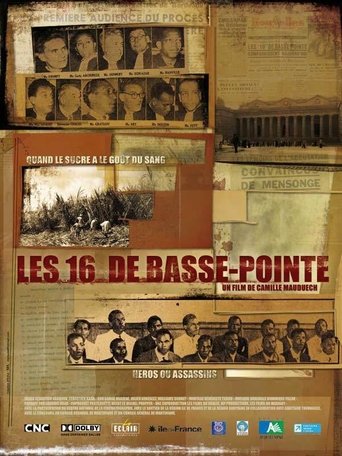
Educational film about Cyprus - landscape, people, work, traditions etc.
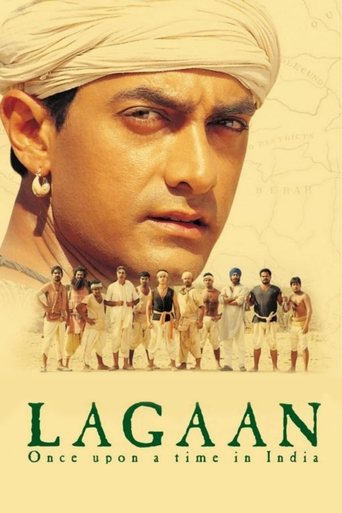
The year is 1893 and India is under British occupation. In a small village, the tyrannical Captain Russell has imposed an unprecedented land tax on its citizens. Outraged, Bhuvan, a rebellious farmer, rallies the villagers to publicly oppose the tax. Russell offers a novel way to settle the dispute: he challenges Bhuvan and his men to a game of cricket, a sport completely foreign to India. If Bhuvan and his men can defeat Russell's team, the tax will be repealed.
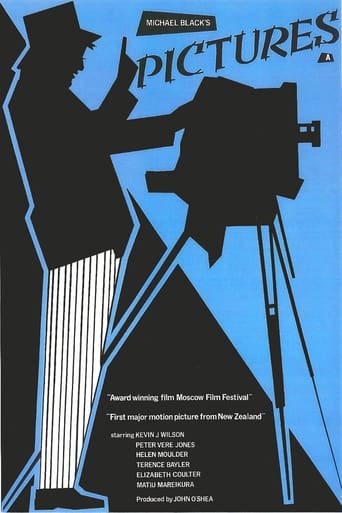
Walter Burton's realistic photographs depicting poor treatment of Maori prisoners are rejected by late 19th century government officials. Walter is condemned to making a living from everyday studio work, the frustration of which is apparently quite sufficient to make him a drunk. His brother Alfred is happy to take the photos that the officials want and therefore gets the commissions. Alfred's photos are well received, but when Walter shows his own photos, toughs are sent around to smash up his plates.
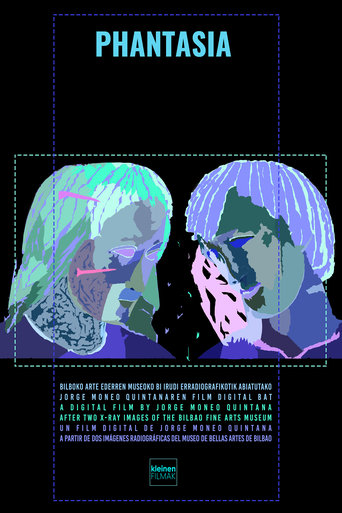
X-ray images were invented in 1895, the same year in which the Lumière brothers presented their respective invention in what today is considered to be the first cinema screening. Thus, both cinema and radiography fall within the scopic regime inaugurated by modernity. The use of X-rays on two sculptures from the Bilbao Fine Arts Museum generates images that reveal certain elements of them that would otherwise be invisible to our eyes. These images, despite being generally created for technical or scientific purposes, seem to produce a certain form of 'photogénie': they lend the radiographed objects a new appearance that lies somewhere between the material and the ethereal, endowing them with a vaporous and spectral quality. It is not by chance that physics and phantasmagoria share the term 'spectrum' in their vocabulary.

A visual poetry short film, inspired by and featuring the poem "Knickknacks" by Tuesday Taylor York.
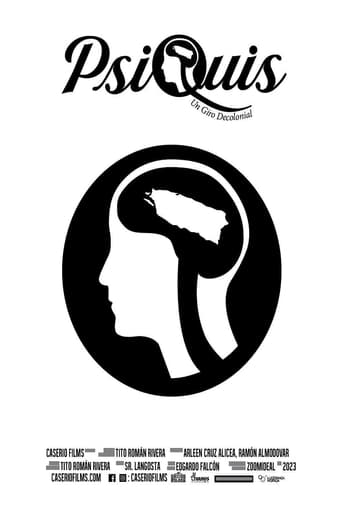
PsiQuis: Un Giro Decolonial is a documentary that presents and discusses the psychological impact that colonialism has had on the Puerto Rican people. The director analyzes the traumas generated in Puerto Rican society by that colonial experience.

Three centuries of Venezuela's history as a Spanish colony are considered from economic, political and social standpoints; evocations of the past are compared to the present. Based on the ideas and research of Federico Brito Figueroa, Alfredo A. Alfonso, Miguel A. Saignes, Josefina Jordan, and Thaelman Urgelles among others.

Starring Masahiko Nishimura, "MADO(Window)" is an extremely closed, socially conscious drama based on a true story of the actual court case known as “Yokohama Secondhand Smoke Trial" in Japan, This is the first feature film directed by a successful commercial director, Mao. Being a son of the plaintiff, he had a great passion for tackling this sensitive issue caused by chemical sensitivities.
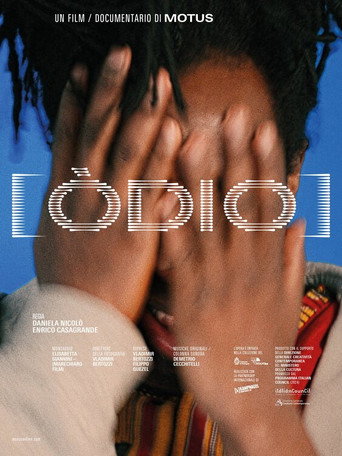
[ÒDIO] is a polyphonic work that resonates as a choral dramaturgy: a fabric of gazes and contrasting testimonies on the spread of violence, emerging from encounters with dozens of young people of various nationalities and backgrounds. A three-chapter documentary film that we shot by placing a lightweight blue photographic backdrop in schools, cultural spaces, and reception centers, starting from Rimini, then Rome (the Quarticciolo district) and Hamburg. [ÒDIO] is the final destination of our long theatrical research into the novel Frankenstein (or the Modern Prometheus).
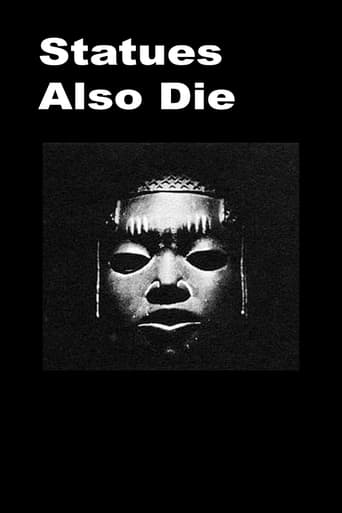
Commissioned by the journal Présence Africaine, this short documentary examines how African art is devalued and alienated through colonial and museum contexts. Beginning with the question of why African works are confined to ethnographic displays while Greek or Egyptian art is celebrated, the film became a landmark of anti-colonial cinema and was banned in France for eight years.
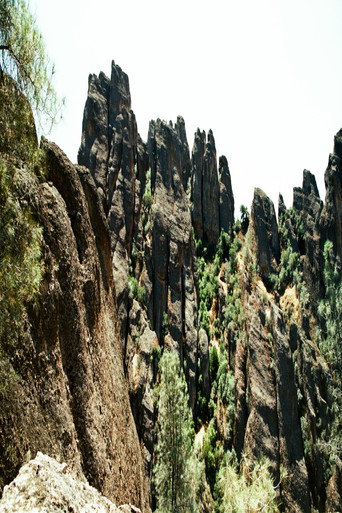
Resulting from an ancient volcanic eruption, revered as sacred by the Chalun and Matsun Native American Tribes as the home of the Firebird/Thunderbird (California Condor) a supernatural being of power and strength. Pinnacles represents transcendent moments, spiritual guidance and forging new timelines within interpersonal landscapes.

In this era of “reconciliation”, Indigenous land is still being taken at gunpoint. Unist’ot’en Camp, Gidimt’en checkpoint and the larger Wet’suwet’en Nation are standing up to the Canadian government and corporations who continue colonial violence against Indigenous people. The Unist’ot’en Camp has been a beacon of resistance for nearly 10 years. It is a healing space for Indigenous people and settlers alike, and an active example of decolonization. The violence, environmental destruction, and disregard for human rights following TC Energy (formerly TransCanada) / Coastal GasLink’s interim injunction has been devastating to bear, but this fight is far from over.

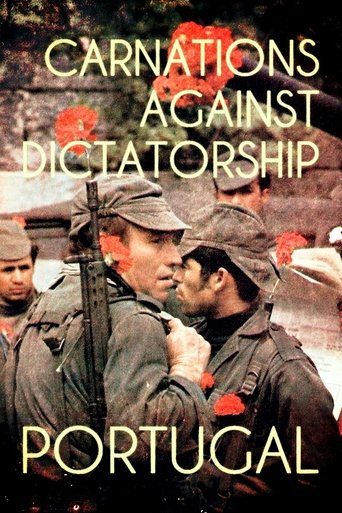
In Portugal, during the night of April 24-25, 1974, a peaceful uprising put an end to the last government of the Estado Novo, the authoritarian regime established in 1933 by dictator António de Oliveira Salazar (1889-1970), paving the way for full democracy: a chronicle of the Carnation Revolution.

In 1750, in the glare of the Caribbean, the man who created history known as the forerunner of independence in Venezuela. His name is Francisco de Miranda and, to be exact, is the largest globetrotter who has known the Americas, Miranda has a reputation as an inveterate wanderer, an eternal conspirator, a turncoat, a conqueror of nobles and courtiers, a lover of asylums, libraries, prisons and brothels, has written 63 volumes of his autobiography, a friend of princes, military and world-renowned artists, collector of women and unthinkable dreams, restless fugitive, owner of ten different names, and presented by the British press the moment as the future liberator of Spanish America.
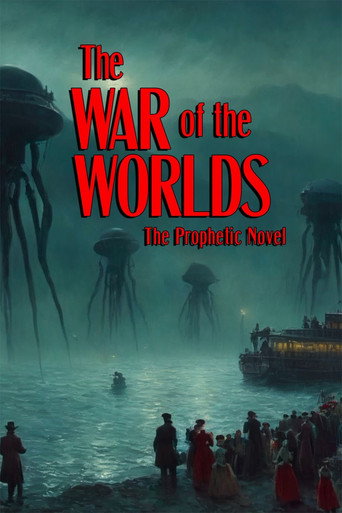
First published in 1898, H.G. Wells’s The War of the Worlds was a veritable literary and cultural revolution. It laid the foundations for modern sci-fi by telling the first- ever story of an alien invasion. A political and moral fable, the novel uses science fiction as a tool to raise our awareness and alert the modern world to the dangers and risks inherent in industrial, scientific and technological progress. It is high time to rediscover this seminal book.

sononda is the first part of the short film series future past perfect and was originally recorded in 2006. the series whose single fragments are supposed to be parts of a larger scale film project is designed as a row of conceptually independent movies that document nicolai's focus of interest of the respective year of origin and also builds up on the results of the movie(s) before. despite sononda's visual quality seems artificial at times, it was shot in a natural environment. the focus is directed on the sculptural quality of light. the correspondence of both music - with its low frequency modulations and merging soundscapes - and light play on the curved surfaces of the sculptural stone formations create an ever-changing atmosphere of concrete and abstract appearances.
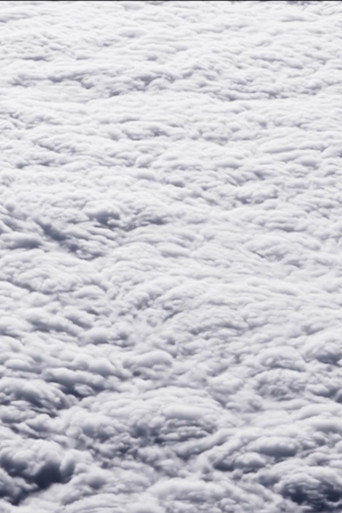
Conceived as the fourth part of the series under the name future past perfect, the fourth short film of the row is the result of a long-term fascination with clouds, their movements, structure/texture, and their potentially infinite variety of forms. shot from the plane on various trips, the sequences of cloud imagery are edited and collaged in different ways to match the diverse qualities of constitution and behaviour of clouds. the short movie especially focussed on so-called stratus clouds, a category of clouds that usually appears rather flat, hazy and featureless. their visual quality as seen from above may imply micro and macro structures at the same time thus potentially deceives the viewer's perception.

Documentary about the coup d'état by Hugo Chávez against the government of Carlos Andrés Pérez, in Venezuela.