A proposito dell'Angola
1973-04-01 · Runtime unavailable · Not rated
Trailers are previews, not full movies.
No authorized playback source configured. Use the legal watch options below.
Production details
- Directors
- Stefano De Stefani
- Production companies
- IDI Cinematografica, Movimento Popular de Libertação de Angola - MPLA
- Countries
- Italy, Angola
- Status
- Released
Top Cast
Title information and images are supplied by TMDb. Explore our discovery guide for advice on comparing metadata and legal viewing options.
Where to watch
Availability provided by JustWatch via TMDb. Offers can change. Provider links are listed on TMDb; full playback requires a separately authorized source.
Availability not listed for this country.
Seasons & episodes
Recommendations

In an intimate and joyful story of love in the face of loss, celebrated poets Andrea Gibson and Megan Falley find strength—and unexpected hilarity—in what might be their final year together.
In 1975, Ryszard Kapuściński, a veteran Polish journalist, embarked on a seemingly suicidal road trip into the heart of the Angola's civil war. There, he witnessed once again the dirty reality of war and discovered a sense of helplessness previously unknown to him. Angola changed him forever: it was a reporter who left Poland, but it was a writer who returned…

Director Michael Apted revisits the same group of British-born adults after a 7 year wait. The subjects are interviewed as to the changes that have occurred in their lives during the last seven years.
A chronicle of the violence that occurred in much of the African continent throughout the 1960s. As many African countries were transitioning from colonial rule to other forms of government, violent political upheavals were frequent. Revolutions in Zanzibar and Kenya in which thousands were killed are shown, the violence not only political; there is also extensive footage of hunters and poachers slaughtering different types of wild animals.

A compilation of over 30 years of private home movie footage shot by Lithuanian-American avant-garde director Jonas Mekas, assembled by Mekas "purely by chance", without concern for chronological order.
To mark the release two weeks ago of the eighth and final movie in the series, Robbie Coltrane narrates a countdown of the movie franchise's best moments. From Harry's first meeting with Ron and Hermione aboard the Hogwarts Express through to magical mysteries.

Through deeply personal interviews with her siblings and an examination of the photographs, letters, and belongings left behind, Mariska assembles a new portrait of her mother Jayne Mansfield, an extraordinary and complex woman.

An inside look at one of the most anticipated movie sequels ever with James Cameron and cast.
Go behind the scenes with stars, puppeteers and creators as they bring Jim Henson's magical world of Thra back to life in a sweeping fantasy series.
Featuring never-before-seen footage, this documentary delivers a startling new look at the Peoples Temple, headed by preacher Jim Jones who, in 1978, led more than 900 members to Guyana, where he orchestrated a mass suicide via tainted punch.

Over 35 years after Bob Lazar's revelations, this documentary exposes secrets of a facility the government still denies. Featuring Lazar's testimony, recreations, and new evidence, it reopens a case that continues to spark global curiosity

A documentary on the expletive's origin, why it offends some people so deeply, and what can be gained from its use.

From the heights of her modeling fame to her tragic death, this documentary reveals Anna Nicole Smith through the eyes of the people closest to her.
Stars of "The Walking Dead," Andrew Lincoln and Danai Gurira, walk down memory lane and visit iconic locations where pivotal moments between their characters, Rick and Michonne, were filmed.

A documentary about how a dominant cultural and demographic institution both sustains their traditional activities and adapts to the digital revolution.
Naples, Trajan's district. Initially it was intended for the inhabitants of the shantytowns on the seafront of Naples, who were homeless after the war. But it soon became a kind of ghetto. Alessandro and Pietro are two teenagers who film with an iPhone to tell their difficult neighborhood, their daily life, the friendship that binds them.

A string of threatening emails escalates into a revenge plot involving a newly married US marshal and his ex-girlfriend.

Ranjit, a farmer in India, takes on the fight of his life when he demands justice for his 13-year-old daughter, the victim of a brutal gang rape. His decision to support his daughter is virtually unheard of, and his journey unprecedented.

Alexander McQueen's rags-to-riches story is a modern-day fairy tale, laced with the gothic. Mirroring the savage beauty, boldness and vivacity of his design, this documentary is an intimate revelation of McQueen's own world, both tortured and inspired, which celebrates a radical and mesmerizing genius of profound influence.

A visual montage portrait of our contemporary world dominated by globalized technology and violence.
Similar titles
Blood Diamonds is a made-for-TV documentary series, originally broadcast on the History Channel, that looks into the trade of diamonds which fund rebellions and wars in many African nations. The program focuses primarily on two nations: Sierra Leone and Angola. Diamonds which are traded for this purpose are known as blood diamonds.
An investigative documentary on the Angolan conflict, filmed on location in Portuguese-controlled Africa by Robert M. Young and first broadcast in 1961. (Note: Originally broadcast as an episode of NBC’s White Paper series (1961), but listed separately due to its independent documentary production, hazardous field filming, major journalistic impact, and sustained scholarly treatment as a standalone documentary work.)
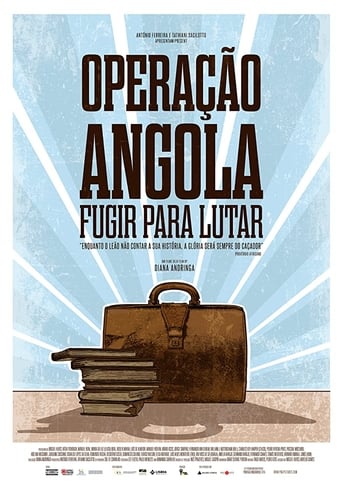
In 1961 the liberation struggles start in Angola against the portuguese colonial power. The African students in Portugal fear for their safety and plan to flee outside the country. With the help of Theology students, French and North-American pastors, the operation code name "Angola" fled over 100 african students abroad towards freedom, amongst them several future leaders of african countries.
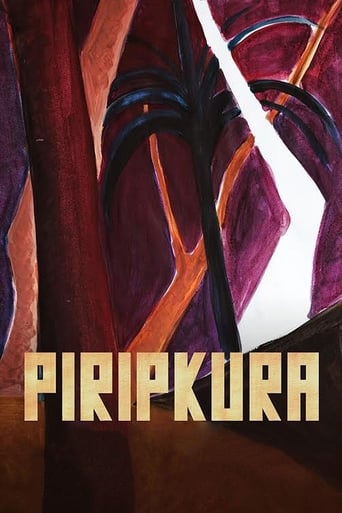
The last two surviving members of the Piripkura people, a nomadic tribe in the Mato Grosso region of Brazil, struggle to maintain their indigenous way of life amidst the region's massive deforestation. Living deep in the rainforest, Pakyî and Tamandua live off the land relying on a machete, an ax, and a torch lit in 1998.
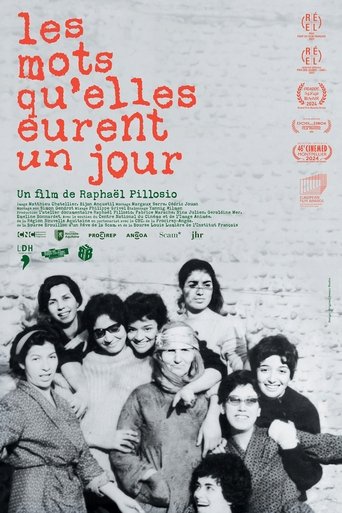
1962, at the end of the Algerian War, Algerian independence activists are released from Rennes prison. For one night, filmmaker Yann Le Masson films them. They tell him their vision for the future of Algeria and the place women must occupy in the new society to be built. Fifty years later, with the soundtrack missing, Raphaël Pillosio sets out to find these women. Two deaf people set about lip-reading the women filmed by Yann Le Masson, revealing snatches of sentences, words cut short by the camera's shifts. An investigative film in which the few activists still alive discover their old testimonies and tell us their silent story. The reconstruction of the lost soundtrack will remain in suspense; no happy ending will come to absorb the absence, to cancel the ferocious operation of time. An essay film about cinema that depicts their disappearance, and forever keeps them alive.

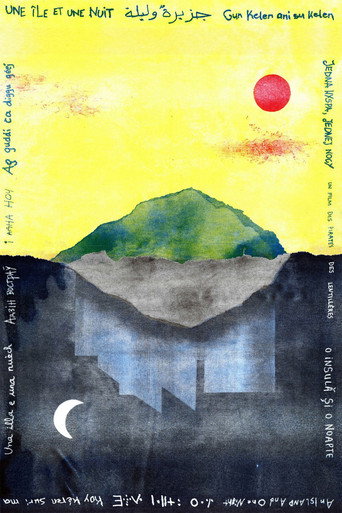
Around the fire, travellers and pirates recount their memories, their dreams, their battles. From one language to another, from story to story, we hear the roar of the storm and the rustle of the leaves, the menacing sirens and the wild dances, the clash of the swords and the song of the birds. Until dawn, a thousand and one paths take shape on this imaginary yet real island.

Filmed immediately after the end of the civil war in Angola, Há Sempre Alguém Que Te Ama records the return of Pocas Pascoal to the country where she was born, in an attempt to reconstruct the episode that, in 1975, led to the capture of the director along with her mother and sisters. An intimate documentary about memory and self-(re)construction.
In Luanda, one of the world's poorest and most dangerous places, three students from Angola's only music school work towards their end-of-year concert. The Music School is Angola's first and only school of its kind. It houses some 80 students, most of them desperately poor. Many face disapproval and outright rejection from their families who can't see a future in music. This film asks if, despite the ravages of 27 years of civil war, musical passion can overcome terrible hardships.
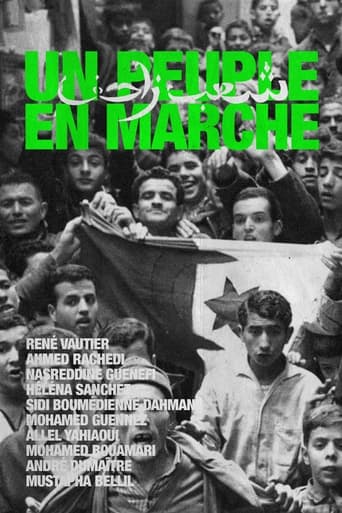
Collectively directed by the members of the Centre audiovisuel d'Alger at Ben Aknoun, the film traces, in two parts, Algeria's recent history, from colonial repression to the birth of the National Liberation Army, and the country's postwar reconstruction, framed in sympathy with the socialist project of Ahmed Ben Bella's government. Released in 1964, the film was banned and sealed after Houari Boumediene's June 1965 coup, precisely because of its favorable treatment of Ben Bella.
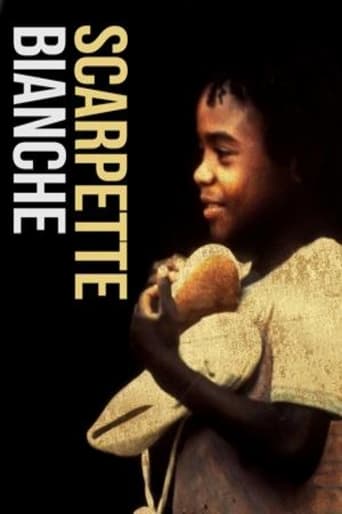
RAI documentary filmed in 1996 about Angola, whose people, after more than ten years of anti-colonial struggle and twenty of civil war, still suffer due to the amount of active landmines scattered all over the country.
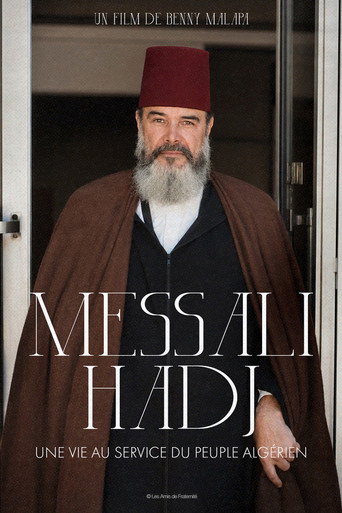
The life and political activism of Messali Hadj (1898-1974), an Algerian internationalist politician who played a pioneering role in the process leading to Algerian independence, which he demanded as early as 1927. He was initially secretary of the North African Star (ENA), then in 1937 he founded the Algerian People's Party (PPA), in 1946 he founded the Movement for the Triumph of Democratic Liberties (MTLD), and finally in 1954, the Algerian National Movement (MNA). In 1937, the leadership of the North African Star (ENA) created its flag, green with a white star and crescent. Messali Hadj's wife, Emilie Busquant-Messali, simply sewed this ENA flag by machine; it would later become the flag of the PPA. In 1943, Messali Hadj, in conjunction with the party leadership, created the ENA-PPA flag, green and white with a red star and crescent, which would later become the current flag of the People's Democratic Republic of Algeria.
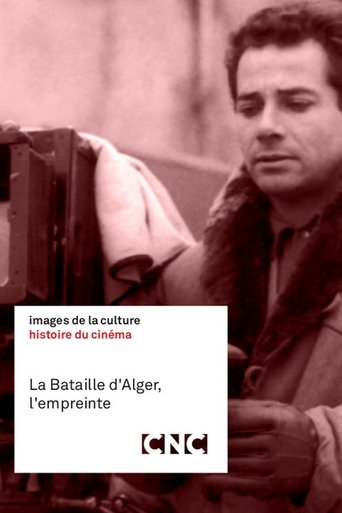
Cheikh Djemaï looks back on the genesis of Gillo Pontecorvo’s feature film, The Battle of Algiers (1965). Through archive images, extracts from the film and interviews with personalities, the filmmaker retraces the journey of a major work - from the events of the Algiers Casbah (1956-1957) to the presentation of the Lion of 'Or causing the anger of the French delegation in Venice - which left its mark as much in the history of cinema as in that of Algeria.
Shows the colonization process in the nature reserves of La Serranía de la Macarena and Bajo Caguán in Caquetá. The settlers and a FARC leader describe the causes of the burning of the forests and the role of the guerrillas in areas where there is no state presence.
Sissako visits a war-torn Angola after thirty years of war in search of a friend and thereby through interviews reflects on the lost utopias of a generation of Africans who experienced the liberation struggles. His camera is witness to the dislocation and despair of those he encounters living in Angola, however he also discovers the resilient spirit of Africa and optimism for its future in unexpected ways.
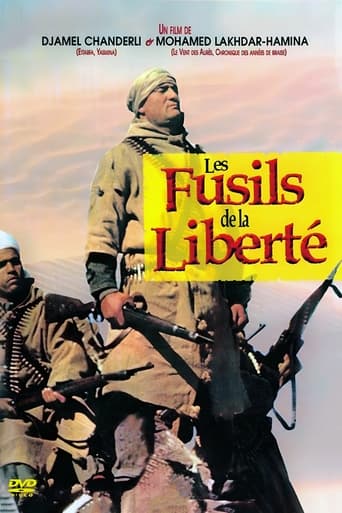
This docu-fiction recounts the difficulties overcome by an ALN detachment whose perilous mission is to transport weapons and ammunition from Tunisia across the Algerian Sahara during the Algerian liberation war (1954-1962) against the French army of occupation.

While the center of Angola's capital Luanda is now ranked as one of the most expensive places in the world, the majority of the city's population lives in abject poverty. But young people are rebelling and creating their own counterculture with their own music styles and acrobatic dances, using the "ghetto" as a trademark to define their style.
An anthropological film of the people of Angola.
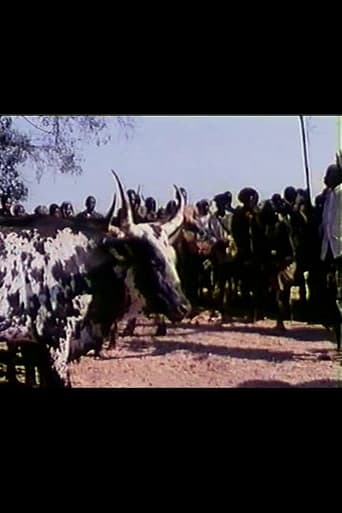
Scenes from the three last days of the festival in which the population of the old Kingdom of Jau participate yearly.