
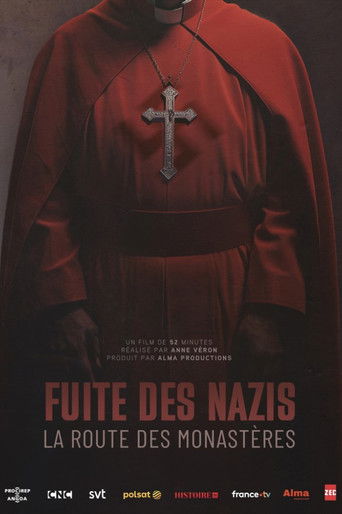
Fuite des nazis, la route des monastères
2025-06-01 · Runtime unavailable · ★ 8.0
Trailers are previews, not full movies.
No authorized playback source configured. Use the legal watch options below.
Production details
- Directors
- Anne Véron
- Production companies
- Alma Productions
- Countries
- France
- Status
- Released
Top Cast
Cast unavailable.
Title information and images are supplied by TMDb. Explore our discovery guide for advice on comparing metadata and legal viewing options.
Where to watch
Availability provided by JustWatch via TMDb. Offers can change. Provider links are listed on TMDb; full playback requires a separately authorized source.
Availability not listed for this country.
Seasons & episodes
Recommendations

Filmmaker Alain Resnais documents the atrocities behind the walls of Hitler's concentration camps.

“The Soviet Story” is a story of an Allied power, which helped the Nazis to fight Jews and which slaughtered its own people on an industrial scale. Assisted by the West, this power triumphed on May 9th, 1945. Its crimes were made taboo, and the complete story of Europe’s most murderous regime has never been told. Until now...

Amid the failing counteroffensive, a journalist follows a Ukrainian platoon on their mission to traverse one mile of heavily fortified forest and liberate a strategic village from Russian occupation. But the farther they advance through their destroyed homeland, the more they realize that this war may never end.
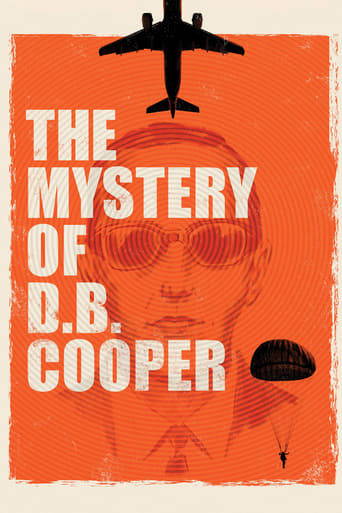
This documentary brings to life the stories of four people believed by their family and friends to be “DB Cooper,” a man who hijacked a 727 flying out of Seattle and jumped from the plane over the wilds of Washington State with a parachute and $200,000, never to be heard from again.

Marcel Ophuls' riveting film details the heinous legacy of the Gestapo head dubbed "The Butcher of Lyon." Responsible for over 4,000 deaths in occupied France during World War II, Barbie would escape—with U.S. help—to South America in 1951, where he lived until a global manhunt led to his 1983 arrest and subsequent trial.
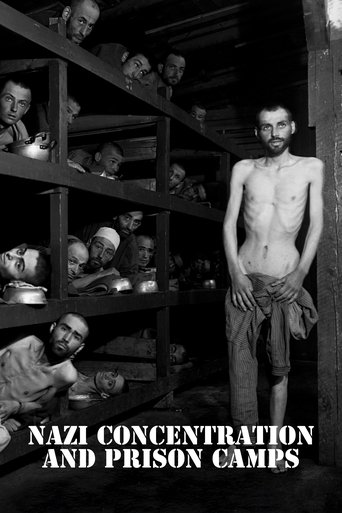
Produced and presented as evidence at the Nuremberg war crimes trial of Hermann Göring and twenty other Nazi leaders, this film consists primarily of dead and surviving prisoners and of facilities used to kill and torture during the World War II.
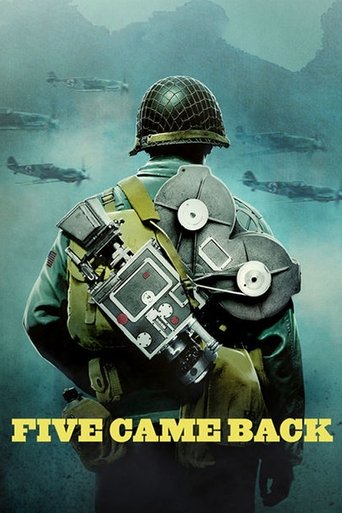
The extraordinary story of how Hollywood changed World War II – and how World War II changed Hollywood, through the interwoven experiences of five legendary filmmakers who went to war to serve their country and bring the truth to the American people: John Ford, William Wyler, John Huston, Frank Capra, and George Stevens. Based on Mark Harris’ best-selling book, “Five Came Back: A Story of Hollywood and the Second World War.”

When Sgt. First Class Brian Eisch is critically wounded in Afghanistan, it sets him and his sons on a journey of love, loss, redemption and legacy.

Oskar Gröning, known as the "Accountant of Auschwitz," was charged with the murder of 300,000 Jews. When he took the stand in 2015, at the age of 94, his trial made headlines worldwide.

Director Claude Lanzmann spent 11 years on this sprawling documentary about the Holocaust, conducting his own interviews and refusing to use a single frame of archival footage. Dividing Holocaust witnesses into three categories – survivors, bystanders, and perpetrators – Lanzmann presents testimonies from survivors of the Chelmno concentration camp, an Auschwitz escapee, and witnesses of the Warsaw Ghetto Uprising, as well as a chilling report of gas chambers from an SS officer at Treblinka.

Prelude to War was the first film of Frank Capra's Why We Fight propaganda film series, commissioned by the Pentagon and George C. Marshall. It was made to convince American troops of the necessity of combating the Axis Powers during World War II. This film examines the differences between democratic and fascist states.
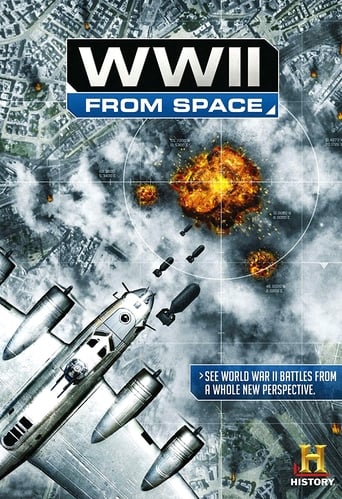
WWII from Space delivers World War II in a way you've never experienced it before. This HISTORY special uses an all-seeing CGI eye that offers a satellite view of the conflict, allowing you to experience it in a way that puts key events and tipping points in a global perspective. By re-creating groundbreaking moments that could never have been captured on camera, and by illustrating the importance of simultaneity and the hidden effects of crucial incidents, HISTORY presents the war's monumental moments in a never-before-seen context. And with new information brought to the forefront, you'll better understand how a nation ranked 19th in the world's militaries in 1939 emerged six years later as the planet's only atomic superpower.

"Trinity and Beyond" is an unsettling yet visually fascinating documentary presenting the history of nuclear weapons development and testing between 1945-1963. Narrated by William Shatner and featuring an original score performed by the Moscow Symphony Orchestra, this award-winning documentary reveals previously unreleased and classified government footage from several countries.

Set both in Latin America and the United States, the film explores the historic and current relationship of Washington with countries such as Venezuela, Bolivia and Chile. Pilger says that the film "...tells a universal story... analysing and revealing, through vivid testimony, the story of great power behind its venerable myths. It allows us to understand the true nature of the so-called "war on terror". According to Pilger, the film’s message is that the greed and power of empire is not invincible and that people power is always the "seed beneath the snow".

A documentary about World War I with never-before-seen footage to commemorate the centennial of Armistice Day, and the end of the war.

This documentary movie is about the battle of San Pietro, a small village in Italy. Over 1,100 US soldiers were killed while trying to take this location, that blocked the way for the Allied forces from the Germans. Preserved by the Academy Film Archive in 2005.
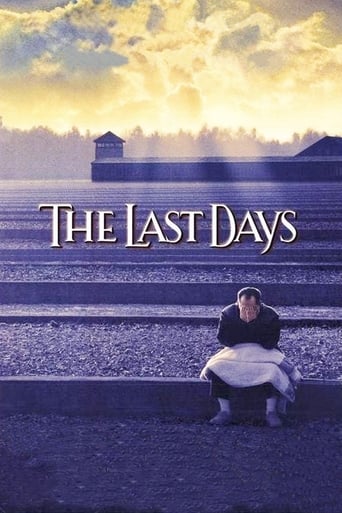
This Oscar-winning documentary recounts the harrowing stories of five Hungarian Jews who endured the horrors of the Holocaust and Hitler's reign.

The full story of the 1972 Munich Olympics Massacre and the Israeli revenge operation 'Wrath of God.' The 1972 Munich Olympics were interrupted by Palestinian terrorists taking Israeli athletes hostage. Besides footage taken at the time, we see interviews with the surviving terrorist, Jamal Al Gashey, and various officials detailing exactly how the police, lacking an anti-terrorist squad and turning down help from the Israelis, botched the operation.

An account of the extraordinary life of film pioneer Georges Méliès (1861-1938) and the amazing story of the copy in color of his masterpiece A Trip to the Moon (1902), unexpectedly found in Spain and restored thanks to the heroic efforts of a group of true cinema lovers.
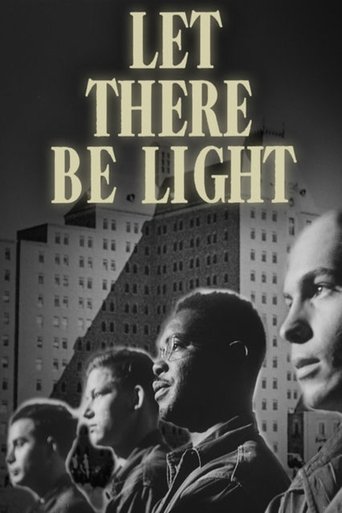
The final entry in a trilogy of films produced for the U.S. government by John Huston. Some returning combat veterans suffer scars that are more psychological than physical. This film follows patients and staff during their treatment. It deals with what would now be called PTSD, but at the time was categorised as psychoneurosis or shell-shock. Government officials deemed this 1946 film counterproductive to postwar efforts; it was not shown publicly until 1981.
Similar titles
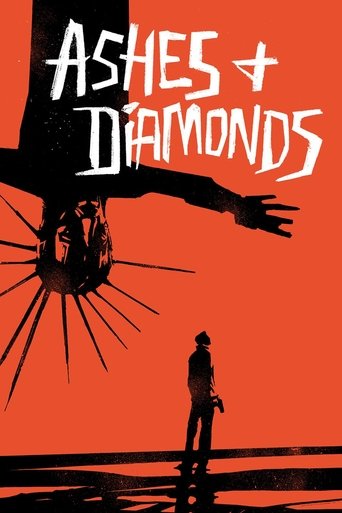
A young academy soldier, Maciek Chelmicki, is ordered to shoot the secretary of the KW PPR. A coincidence causes him to kill someone else. Meeting face to face with his victim, he gets a shock. He faces the necessity of repeating the assassination. He meets Krystyna, a girl working as a barmaid in the restaurant of the "Monopol" hotel. His affection for her makes him even more aware of the senselessness of killing at the end of the war. Loyalty to the oath he took, and thus the obligation to obey the order, tips the scales.
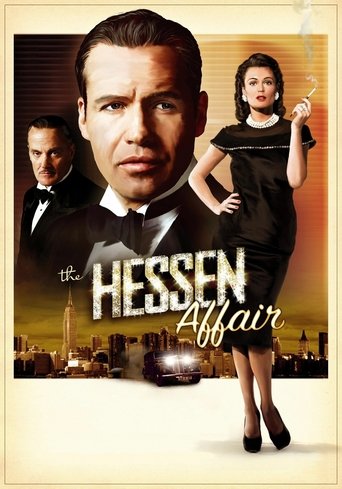
In 1945 a group of victorious American officers discover a stash of German jewels and try to fence them in New York.
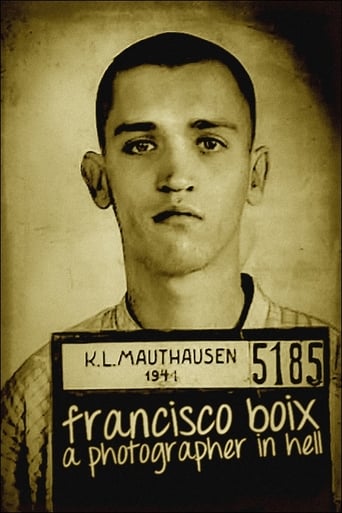
In 1939, just finished the Spanish Civil War, Spanish republican photographer Francesc Boix escapes from Spain; but is captured by the Nazis in 1940 and imprisoned in the Mauthausen concentration camp, in Austria, a year later. There, he works as a prisoner in the SS Photographic Service, hiding, between 1943 and 1945, around 20,000 negatives that later will be presented as evidence during several trials conducted against Nazi war criminals after World War II.
The little-known story of Ukrainian children torn from their homes in the crush between the Nazi and Soviet fronts in World War II. Spending their childhood as refugees in Europe, these inspiring individuals later immigrated to the United States, creating new homes and communities through their grit, faith and deep belief in the importance of preserving culture.

Katherine Watson is a recent UCLA graduate hired to teach art history at the prestigious all-female Wellesley College, in 1953. Determined to confront the outdated mores of society and the institution that embraces them, Katherine inspires her traditional students, including Betty and Joan, to challenge the lives they are expected to lead.
After a fateful encounter in the summer of 1966, the lifepaths of two brothers from a middle-class Roman family diverge, intersecting with some of the most significant events of postwar Italian history in the following decades.
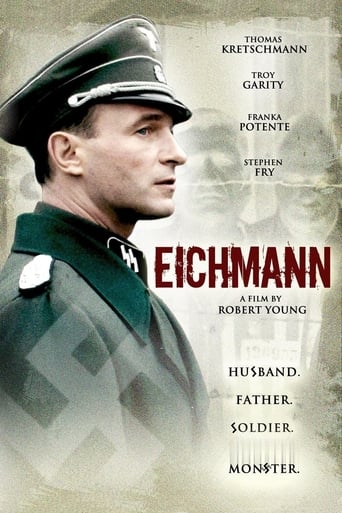
Based upon the final confession of Adolf Eichmann, made before his execution in Israel, of his role in Hitler's plan for the final solution.
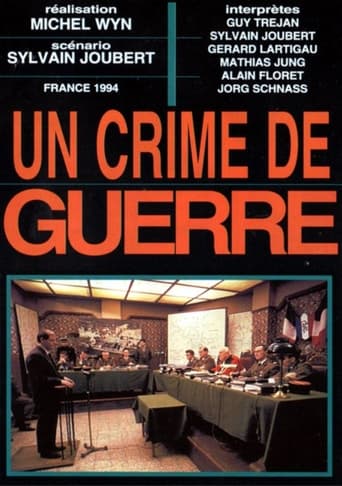
A film that relates the trial in Bordeaux in January 1953 of some of the participants in the Oradour-sur-Glane massacre of June 10, 1944.

1945, Leningrad. World War II has devastated the city, demolishing its buildings and leaving its citizens in tatters, physically and mentally. Two young women, Iya and Masha, search for meaning and hope in the struggle to rebuild their lives amongst the ruins.

Post-war Germany in 1946 while people are struggling to make ends meet, the film follows Hermann, a war veteran who finds employment at a train station. As he falls in love with an agricultural worker and starts comitting thefts, his fragile psyche seems to fall more and more out of balance.

Four Londoners are inseparably linked by their wartime experiences. In a time when the barriers of sexuality and social convention have been broken down, they enjoy a freedom never experienced before.
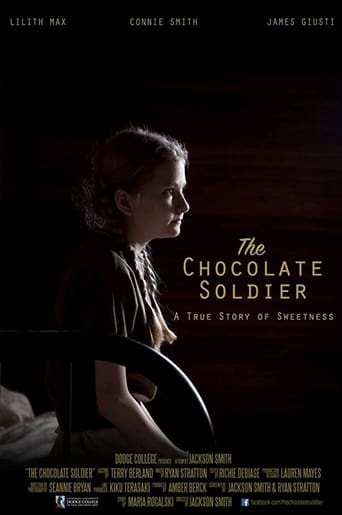
In the twilight of the Second World War, a young refugee girl makes a connection with an enemy soldier.
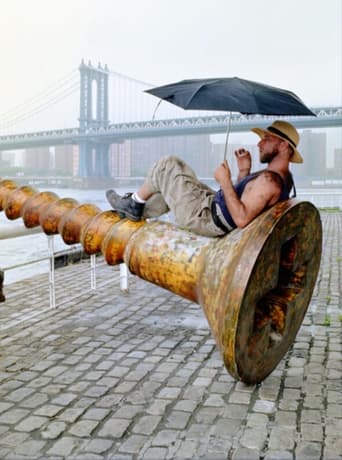
After a failed suicide attempt and time in a psychiatric hospital, Raffael, a young father, decides that he must create his own “missing screw.” Over the next six months, with the help of a sculptor friend, he meticulously crafts a 10-foot screw sculpture while documenting the process with a found video camera. Raffael leaves the psychiatric hospital, curious to see if art and creativity could help him survive in the outside world. With no money and only a vague plan, he says goodbye to his family and embarks on an epic, poignant, often hilarious journey around the globe. He travels with the screw to the Dachau concentration camp, Van Gogh’s grave, the Guggenheim Museum, and the Ganges River in India. Along the way Raffael finds patrons, lovers, and friends - but his son feels abandoned. Can Rafael reinvent himself, his art, and his family?

Docudrama telling the story of a building with a breath taking career that began in the empire, flourished in the Weimar Republic, perished in the Nazi dictatorship, and was rebuilt after its partial destruction.

The name of the director of this documentary is Kigawa Tsuyoshi. Just through having the same family name as Kigawa, he met YOKO. She was born in Yokosuka during the turmoil of post-war Japan and was adopted to the U.S. YOKO know how deep her mother's love for her; however, she had to be adopted and moved to the United States. She hadn't heard from her mother nor meet her more than 66 years. The director searched for her mother's whereabouts and invited YOKO to Japan. The journey to find her mother begins.
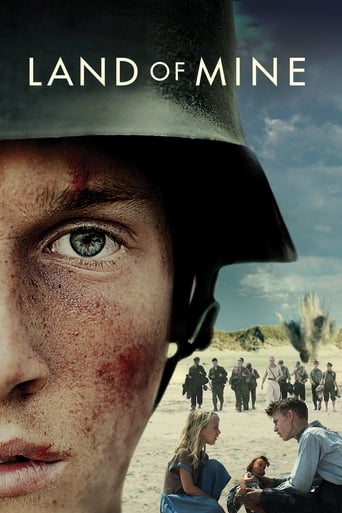
In the days following the surrender of Germany in May 1945, a group of young German prisoners of war is handed over to the Danish authorities and subsequently sent to the West Coast, where they are ordered to remove the more than two million mines that the Germans had placed in the sand along the coast. With their bare hands, crawling around in the sand, the boys are forced to perform the dangerous work under the leadership of a Danish sergeant.