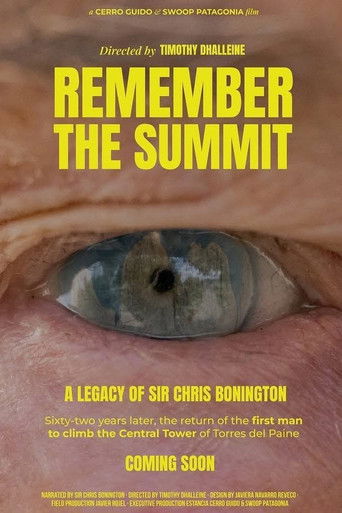
Remember the Summit
2026-11-21 · Runtime unavailable · Not rated
Sir Chris Bonington’s return to Torres del Paine, 62 years after the first ascent of the Central Tower. At 91 years old, and while living with Alzheimer’s disease, the documentary accompanies Bonington in a profoundly human return: an attempt to reconnect with memories that time has erased, but that the Patagonian landscape still seems to guard. During the filming, Chris once again set foot on the territory of Estancia Cerro Guido, closing a circle between past and present, between the epic of mountaineering and the fragility of memory.
Trailers are previews, not full movies.
No authorized playback source configured. Use the legal watch options below.
Production details
- Directors
- Timothy Dhalleine
- Production companies
- SWOOP Patagonia, Estancia Cerro Guido
- Countries
- Chile
- Status
- Released
Top Cast
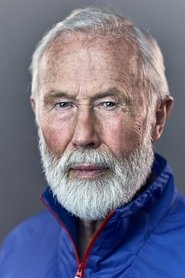 Chris Bonington
Title information and images are supplied by TMDb. Explore our discovery guide for advice on comparing metadata and legal viewing options.
Where to watch
Availability provided by JustWatch via TMDb. Offers can change. Provider links are listed on TMDb; full playback requires a separately authorized source.
Availability not listed for this country.
Seasons & episodes
Recommendations
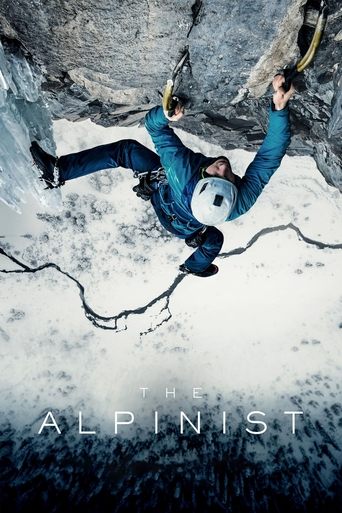
The life of Canadian mountain climber Marc-André Leclerc as he pushes the boundaries of climbing while on an expedition to Patagonia.

The film follows adventurer Jeff Johnson as he retraces the epic 1968 journey of his heroes Yvon Chouinard and Doug Tompkins to Patagonia.
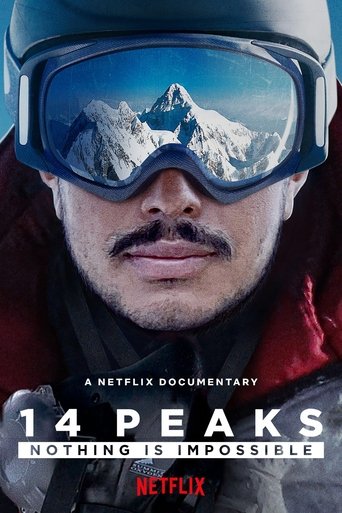
In 2019, Nepalese mountain climber Nirmal “Nims” Purja set out to do the unthinkable by climbing the world’s fourteen highest summits in less than seven months. (The previous record was eight years). He called the effort “Project Possible 14/7” and saw it as a way to inspire others to strive for greater heights in any pursuit. The film follows his team as they seek to defy naysayers and push the limits of human endurance.

Director Michael Apted revisits the same group of British-born adults after a 7 year wait. The subjects are interviewed as to the changes that have occurred in their lives during the last seven years.

Just two years away from turning 30, participants in Michael Apted's documentary series are facing serious questions of identity and purpose, wondering whether they've found their place in the world.

In an intimate and joyful story of love in the face of loss, celebrated poets Andrea Gibson and Megan Falley find strength—and unexpected hilarity—in what might be their final year together.

From the heights of her modeling fame to her tragic death, this documentary reveals Anna Nicole Smith through the eyes of the people closest to her.

A compilation of over 30 years of private home movie footage shot by Lithuanian-American avant-garde director Jonas Mekas, assembled by Mekas "purely by chance", without concern for chronological order.
Follow Alex Honnold as he attempts to become the first person to ever free solo climb Yosemite's 3,000 foot high El Capitan wall. With no ropes or safety gear, this would arguably be the greatest feat in rock climbing history.

A documentary about ten very different lives connected by having appeared onscreen wearing masks or helmets in Star Wars.

This special explores the return of Obi-Wan Kenobi and Anakin Skywalker to the screen, as well as Ewan McGregor and Hayden Christensen to their classic roles. Director Deborah Chow leads the cast and crew as they create new heroes and villains that live alongside new incarnations of beloved Star Wars characters, and an epic story that dramatically bridges the saga films.
In an unbelievable story of perseverance, free climber Tommy Caldwell and climbing partner Kevin Jorgeson attempt to scale the impossible 3000ft Dawn Wall of El Capitan.

An inside look at one of the most anticipated movie sequels ever with James Cameron and cast.
Meru is the electrifying story of three elite American climbers—Conrad Anker, Jimmy Chin, and Renan Ozturk—bent on achieving the impossible.

Daniel Craig candidly reflects on his 15 year adventure as James Bond. Including never-before-seen archival footage from Casino Royale to the upcoming 25th film No Time To Die, Craig shares his personal memories in conversation with 007 producers, Michael G Wilson and Barbara Broccoli.
A comedic, brutally honest documentary following self-destructive TV writer Dan Harmon as he takes his live podcast on a national tour.
Experience the meteoric rise of Oasis through rare footage and untold stories as the band reunites for Oasis Live '25, chronicling their journey from Manchester streets to global rock stardom.

After another 7 year wait, director Michael Apted revisits the same group of British-born children from Seven Up! and 7 Plus Seven. The subjects are interviewed as to the changes that have occurred in their lives during the last seven years.

Told through performances, TV interviews, home movies, family photographs, private letters and unpublished memoirs, the film reveals the essence of an extraordinary woman who rose from humble beginnings in New York City to become a glamorous international superstar and one of the greatest artists of all time.

A documentary about the life and films of director John Ford.
Similar titles
A documentary about André Payraud's descent of the Mont Blanc torrent by swimming down it. "I've always had a thirst for adventure. At 19, I was in a diving club and I loved Jacques Martin's show, 'Incroyable mais vrai' (Incredible but True). I dreamed of participating in this hit program." After careful consideration, André Payraud had the idea of the century, an idea that would attract media attention: to descend the Grands-Montets glacier on his stomach, wearing a full wetsuit (mask, snorkel, fins, and neoprene suit). A crazy idea that drew a flood of press coverage. The film, "Swimming Down the Mont Blanc Torrent," directed by Didier Lafond, was broadcast twice on France 2 and even won an award.
Mountaineering documentary on the Nanga Parbat expedition, in India, in 1982. Led by mountaineer Pierre Mazeaud, this international expedition brings together eight French people, two Germans, an Iraqi, an Austrian and an Englishman including Michel Afanassieff, Michel Berrueux, Walter Cecchinel, Kurt Diemberger, Hans Engl, Shah Jehan, Karim Imamdad and others. On July 14, 1982, Hans Engl reached the summit after twelve hours of struggle.
Seventy-five years after Brad Washburn, one of the greatest aerial mountain photographers of all time, first shot Alaska’s Denali Mountain from the open door of an airplane, climbing buddies Renan Ozturk, Freddie Wilkinson, and Zack Smith look at some of his mountain photographs and have this crazy idea. Rather than go up, their dream is to go sideways across the range’s most foreboding peaks, the Moose’s Tooth massif. It’s a fresh new way to explore the same landscape Washburn first discovered. As the group endures rough conditions, disintegrating ropes, and constant rockfall, their desire to be the first to complete the audacious line grows into an obsession. But friendships begin to fray when Renan suffers a near-fatal brain injury, forcing all three partners to decide what’s most important to them.

The word Pyreneism was invented by the writer Henri Beraldi at the end of the 19th century. Its definition did not come down to a simple practice of mountaineering in the Pyrenees. To be recognized as a Pyrenean, it was necessary to “ascend, write and feel”. An approach to the mountains, according to him, necessarily accompanied by an artistic or intellectual activity. This documentary looks back at the Pyrenees who have left their mark on history, before interviewing contemporary mountain dwellers who, through their mountain practice, consider themselves, or not, Pyreneanists. What prompted Beraldi to coin this term? Does it result from a Pyrenean complex facing the Alps? Chauvinism or a demand for identity? And today, does this word still have meaning? Beyond the reflection on the subject, this film is a wonderful tribute to the massif.
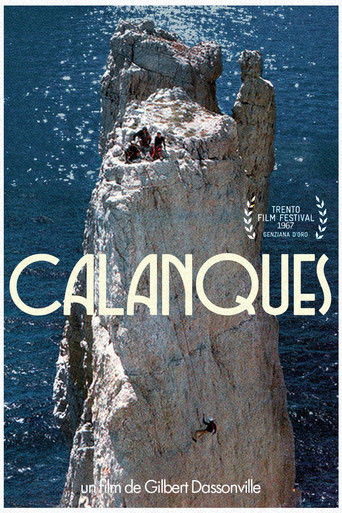
Two climbers, Dany Badier and Françoise Dassonville, swim to explore an underground cave in the Calanques, near Marseille, then equip themselves with climbing gear to scale the spectacular cliffs of the Calanques. Their ascent culminates at the summit of the Grande Candelle. Directed by Gilbert Dassonville in 1970 and produced by Cérès Films, this film won first prize at the Trento Mountain Film Festival in 1967.

Nicolas Jaeger, a French physician specializing in sports and high-altitude physiology, conducted an experiment by spending two months on the highest peak in the Peruvian Andes, Huascarán. From July to September 1979, Nicolas Jaeger lived alone for 60 days at an altitude of 6,700 meters and studied the effects of hypoxia on his body. He documented his experience on film and later in his book, "Carnet De Solitude," published in 1979.
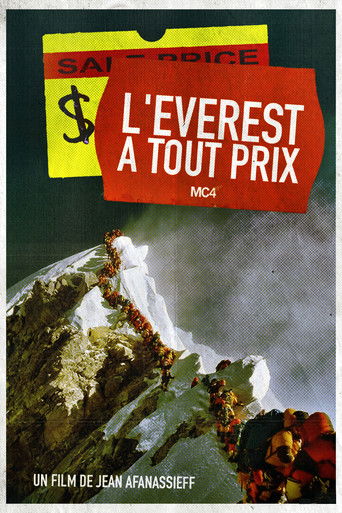
In 1983, three climbers became the first French people to reach the summit of Everest. Among them were expedition leader Pierre Mazeaud and a promising 25-year-old climber, Jean Afanassieff. Twenty years later, the two legends, accompanied by mountain guide Michel Pellé, retrace the steps of their exploit and make the trek from Kathmandu to the foot of the roof of the world. This is an opportunity to retrace the history of the successive assaults on Everest and to assess the current situation of a mountain that has become a victim of its own success: while Sherpas have been able to take advantage of Western enthusiasm and thus enrich themselves and equip the summit to make it more accessible, the site's attendance poses numerous problems, both human and ecological.

Mountaineers Roberto Sorgato and Ignazio Piussi relive their 1961 adventure: the first winter ascent of the north face of Cima Ovest di Lavaredo, a formidable Dolomite wall reaching 2,973 meters. During this expedition, Sorgato accidentally fell 60 meters while the climbers were preparing their third bivouac and found himself suspended in mid-air by a rope. Through sheer perseverance, ingenuity, and courage, he managed to pull himself back to his partner. The film, shot eleven years later, is a reenactment with the protagonists playing themselves. The difficulties this climb presents, even for the most experienced climbers, are irrefutably highlighted. The film received the Genziana d'Oro award at the Trento Film Festival in 1973.

Images of Argentinian companies and factories in the first light of day, seen from the inside of a car, while the director reads out documents in voiceover that reveals the collusion of the same concerns in the military dictatorship’s terror.

For nearly three years, director Dina Khreino interviewed world-class mountain climbing athletes, listening to what compels them to leave behind families, friends, and everyday comforts to risk everything for a fleeting glimpse into the unknown. What she found was a tribe, a diverse group of professional adventurers and amateur philosophers forged by the ultimate test of body, mind, and spirit. In the face of shifting winds, sheer granite cliffs, and impossible odds, they climb. Each for their own reason, but every one connected by the vertical world. In this rarefied air, these athletes are fundamentally changed, not just as climbers, but as human beings.

Laura Pineau and Kate Kelleghan chase history on Yosemite’s granite walls, attempting to become the first women to complete the legendary Triple Crown: linking El Capitan, Half Dome, and Mount Watkins in a single 24-hour push. But this isn’t just a story about summits and speed records. It’s about what happens between two people when the only thing keeping you alive is the person on the other end of the rope.

Heinz Mariacher got closer to the mountains by climbing the most important peaks of the Dolomites. He then devoted himself to free climbing, before returning to classic mountaineering. On this route, he reunited with his partner Luisa Iovane. Immersing yourself in the images of the most beautiful walls of the Dolomites, you can follow the different thoughts that accompany the two climbers, different from each other, but united in life and in the rock by the same thought: "When you reach the summit, keep climbing."

In 1961 the southern face of the Central Pillar of Mont Blanc was still unclimbed. Two roped parties of climbers decided to come together to attempt to open a new route. Four days of violent storms caught the climbers just 80 metres from the summit. Of the seven climbers, only three returned home. One of the most intense and dramatic events in the history of climbing relives on the big screen, thanks to accounts and images of the feat.

When everyone is supposed to be celebrating the arrival of a new year, the Chilean director Cristobal Valenzuela takes to the streets of Santiago to give voice to another facet, less colorful and festive, undoubtedly invisible, of this eve. Lonely pedestrians who roam the streets of the city inhabit the frame of a handheld camera that allows them to express themselves. Comments of hopelessness and tiredness, contrasting with the sky lit by fireworks, give us a glimpse to that other social image.

The two brothers Jean and Pierre Ravier have opened almost all the "classic" (difficult) routes in climbing and mountaineering in the Pyrenees. Roped together at the waist using a few flat knots and little equipment, the two twin brothers achieved more than 200 firsts across the entire massif. A unique style and commitment, a state of mind made up of adventure, literature, inventiveness and friendship. Unclassifiable and outgoing, after 60 years of Pyrenees, their desire for the mountains is intact. When does a race start? How does the idea, the desire, come about? What sense does it make to only achieve firsts? And what is the role of the Pyrenees themselves in this reciprocal and endless game of attraction?

Three years after the 1959 expedition, abandoned 350m from the summit, Lionel Terray leads a new assault on Jannu, one of the most demanding peaks in the Himalayas. At the base camp, equipment and food rations are prepared. The conditions are optimal and the ascent can begin. The camera follows the progress of the mountaineers and Sherpas as closely as possible, from one high-altitude camp to another: installing fixed ropes, progressing over crevasses, in the middle of frozen towers, vertically down immense ice falls or along the edge of sharp ridges. From 7000m, oxygen bottles become essential, as the difficulty of the climb prevents acclimatization. The expedition is a total success: the majority of its members reach the 7710m summit.

The story of the ascent of the Aiguille de la République by mountaineers Jacques Fromentin and Michel Bastien. The Aiguille de la République, in the Mont-Blanc massif, culminates at an altitude of 3,305 meters among the Aiguilles de Chamonix group of summits. In the Fontainebleau forest, children learn mountaineering techniques on the bouldering climbing site. In 1954, rock climbing was also practiced in the Chamonix valley. The Montenvers train crosses the viaduct taking tourists or athletes to the Mer de Glace viewpoint. The two climbers take an approach step and reach the Envers des Aiguilles refuge. They then climb this steep and smooth wall, progressing along the ridge. On the platform, a rope throw allows them to climb up and sit at the top to dominate the panorama. Then the return: abseiling from the summit block.

In 1975, Raymond Renaud, Yves Pollet-Villard, Maurice Gicquel, Maurice Cretton, Jean Coudray, Yvon Masino, Walter Cecchinel, all teacher guides at ENSA in Chamonix, with the help of the Indian Mountaineering Foundation, set out to cross the 2 peaks of the highest mountain in India. After 43 hours in a truck, 10 days of slow and difficult approach walking, helped by goats for the portage due to lack of sherpas, the base camp is set up on the Nanda Devi glacier. Two groups share the two eastern and western slopes, 3 kilometers separate them: the goal being to meet between the two summits by the ridge. But on the big day, with the monsoon, bad weather arrives with wind and snow, we will have to give up. Like the French expedition of 1951 which lost two mountaineers, Roger Duplat and Gilbert Vigne, to whom Paul Gendre and Louis Dubosc pay tribute.
