Spirit of Washington
1940-01-01 · 23 min · Not rated
This silent film documents a day at Washington School, a Black elementary school located at 1025 Washington, Topeka, Kansas. The film follows each grade level through various activities throughout the day. Washington was one of four Black elementary schools in Topeka prior to the the U. S. Supreme Court ruling in Brown v. The Board of Education (1954) that called for the desegregation of public schools.
Trailers are previews, not full movies.
No authorized playback source configured. Use the legal watch options below.
Production details
- Directors
- Unavailable
- Production companies
- Unavailable
- Countries
- Unavailable
- Status
- Released
Top Cast
Cast unavailable.
Title information and images are supplied by TMDb. Explore our discovery guide for advice on comparing metadata and legal viewing options.
Where to watch
Availability provided by JustWatch via TMDb. Offers can change. Provider links are listed on TMDb; full playback requires a separately authorized source.
Availability not listed for this country.
Seasons & episodes
Recommendations
A journalist and a photographer set out to memorialize the bedrooms left behind by children killed in school shootings.
In 1936, Victor H. Green (1892-1960) published The Negro Motorist Green Book, a book that was both a travel guide and a survival manual, to help African-Americans navigate safe those regions of the United States where segregation and Jim Crow laws were disgracefully applied.
On September 15, 1963, a bomb destroyed a black church in Birmingham, Alabama, killing four young girls who were there for Sunday school. It was a crime that shocked the nation--and a defining moment in the history of the civil-rights movement. Spike Lee re-examines the full story of the bombing, including a revealing interview with former Alabama Governor George Wallace.
A documentary on the life of John Lennon, with a focus on the time in his life when he transformed from a musician into an antiwar activist.

A documentary on the modeling industry's 'supply chain' between Siberia, Japan, and the U.S., told through the experiences of the scouts, agencies, and a 13-year-old model.
SEDUCED AND ABANDONED combines acting legend Alec Baldwin with director James Toback as they lead us on a troublesome and often hilarious journey of raising financing for their next feature film. Moving from director to financier to star actor, the two players provide us with a unique look behind the curtain at the world's biggest and most glamourous film festival, shining a light on the bitter-sweet relationship filmmakers have with Cannes and the film business. Featuring insights from directors Martin Scorsese, 'Bernando Bertolucci' and Roman Polanski; actors Ryan Gosling and Jessica Chastain and a host of film distribution luminaries.

When Allied forces liberated the Nazi concentration camps in 1944-45, their terrible discoveries were recorded by army and newsreel cameramen, revealing for the first time the full horror of what had happened. Making use of British, Soviet and American footage, the Ministry of Information’s Sidney Bernstein (later founder of Granada Television) aimed to create a documentary that would provide lasting, undeniable evidence of the Nazis’ unspeakable crimes. He commissioned a wealth of British talent, including editor Stewart McAllister, writer and future cabinet minister Richard Crossman – and, as treatment advisor, his friend Alfred Hitchcock. Yet, despite initial support from the British and US Governments, the film was shelved, and only now, 70 years on, has it been restored and completed by Imperial War Museums under its original title "German Concentration Camps Factual Survey".

A documentary about the life and films of director John Ford.
A documentary on legendary movie-poster artist Drew Struzan.
Reconnecting with a pack of wolves he has followed for seven years, Bertie sets out to capture one of the Arctic's most dangerous and rarely filmed hunts: wolves taking on a bull moose, prey roughly ten times their size. Led by Kona, a striking white breeding male, the pack faces a critical winter as dwindling food supplies, an encroaching rival wolf and an aging leader threaten its survival.
A group of British children aged 7 from widely ranging backgrounds are interviewed about a range of subjects. The filmmakers plan to re-interview them at 7 year intervals to track how their lives and attitudes change as they age.

The cold war, the space race, and NASA’s moon landing are landmark events that defined an era. But they are also fodder for conspiracy theories. In Houston, We Have a Problem! filmmaker Žiga Virc adds new material to the discussion on both fronts. This intriguing docu-fiction explores the myth of the secret multi-billion-dollar deal behind America’s purchase of Yugoslavia’s clandestine space program in the early 1960s.

Oprah Winfrey talks with the exonerated men once known as the Central Park Five, plus the cast and producers who tell their story in "When They See Us."

In an intimate and joyful story of love in the face of loss, celebrated poets Andrea Gibson and Megan Falley find strength—and unexpected hilarity—in what might be their final year together.

A love letter from a young mother to her daughter, the film tells the story of Waad al-Kateab’s life through five years of the uprising in Aleppo, Syria as she falls in love, gets married and gives birth to Sama, all while cataclysmic conflict rises around her. Her camera captures incredible stories of loss, laughter and survival as Waad wrestles with an impossible choice– whether or not to flee the city to protect her daughter’s life, when leaving means abandoning the struggle for freedom for which she has already sacrificed so much.
An investigative look and analysis of gender disparity in Hollywood, featuring accounts from well-known actors, executives and artists in the Industry.

A visual montage portrait of our contemporary world dominated by globalized technology and violence.
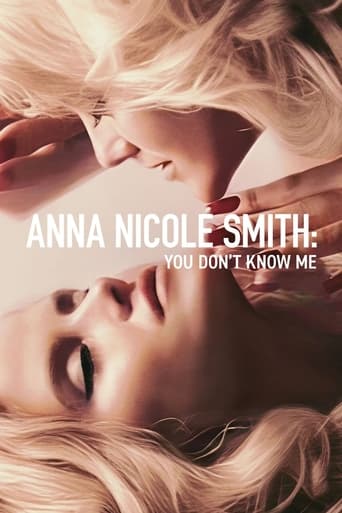
From the heights of her modeling fame to her tragic death, this documentary reveals Anna Nicole Smith through the eyes of the people closest to her.
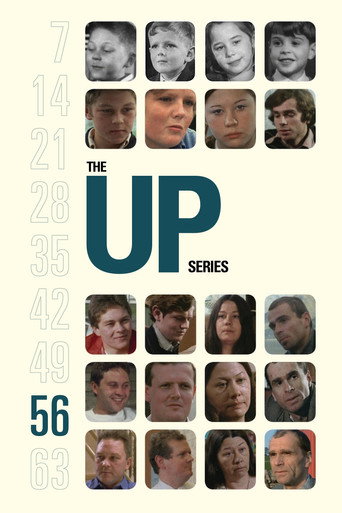
When a cross-section of seven-year-olds were interviewed for 7 Up in 1964 it was immediately evident that their social backgrounds influenced their attitudes towards life. While the upper class children were confident and self-assured, those from middle and working class backgrounds were resigned to a challenging life of hard work. This premise was put to the test every seven years when the same group were interviewed about the progression of their lives. 49 years in the making, the changes that occurred to the original 14 make for fascinating television and are in many ways the stories of all our lives. From success and disappointment, marriage and childbirth, to poverty and illness, nearly every facet of life has been captured on film. Now, at the age of 56, the group are once more brought together and, with the benefit of hindsight, assess whether their lives have been ruled by circumstance or self-determination.

Through deeply personal interviews with her siblings and an examination of the photographs, letters, and belongings left behind, Mariska assembles a new portrait of her mother Jayne Mansfield, an extraordinary and complex woman.
Similar titles
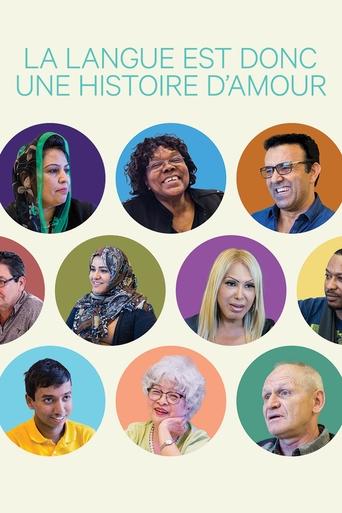
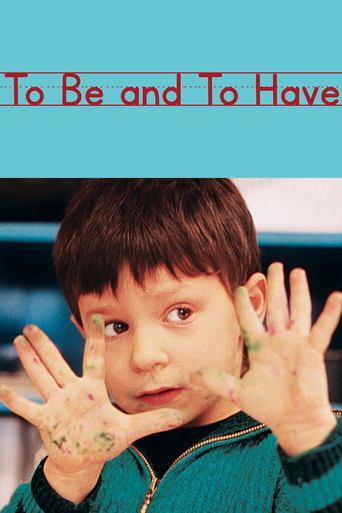
The documentary's title translates as "to be and to have", the two auxiliary verbs in the French language. It is about a primary school in the commune of Saint-Étienne-sur-Usson, Puy-de-Dôme, France, the population of which is just over 200. The school has one small class of mixed ages (from four to twelve years), with a dedicated teacher, Georges Lopez, who shows patience and respect for the children as we follow their story through a single school year.
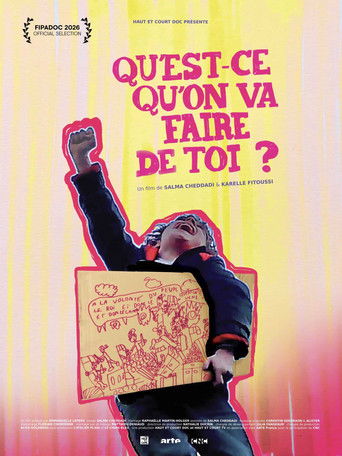
Between playing, colouring in and singing, children in a Paris primary school learn about the impact of political decisions on their everyday lives and their future. The documentary sheds light on the future of the education system.
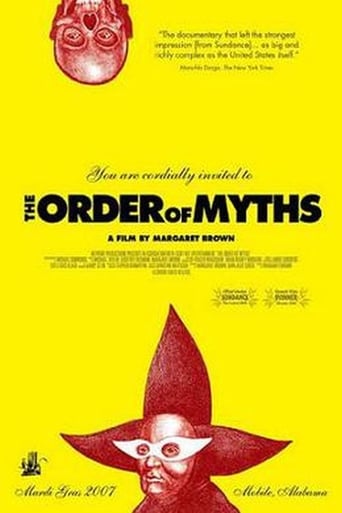
In 2007 Mobile, Alabama, Mardi Gras is celebrated... and complicated. Following a cast of characters, parades, and parties across an enduring color line, we see that beneath the surface of pageantry lies something else altogether.

To write In Cold Blood (1966), a nonfiction novel that revolutionized world literature, Truman Capote (1924-84) spent five years in Kansas researching the murder of members of the Clutter family and collecting the confidences of its two authors.
A documentary about a vision care school that enables visually impaired children to learn the skills necessary for a full life.
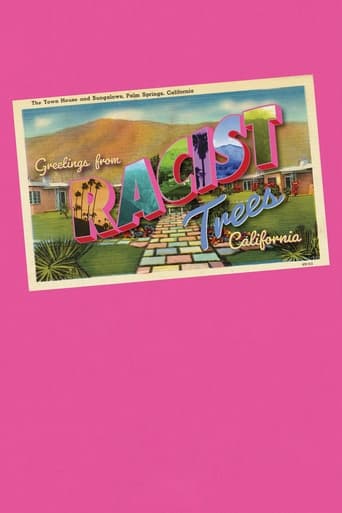
Can a tree be racist? A few years ago, debate on this issue reached as far as Fox News. The focus was a row of tamarisk trees along a huge golf course in Palm Springs, which screened off the neighborhood of Crossley Tract. This is a historically Black neighborhood, named after its founder Lawrence Crossley, who was one of the first Black residents to settle in the largely white tourist paradise, established on indigenous land over a century ago.
A picture of the ceremonial opening of the new school year.
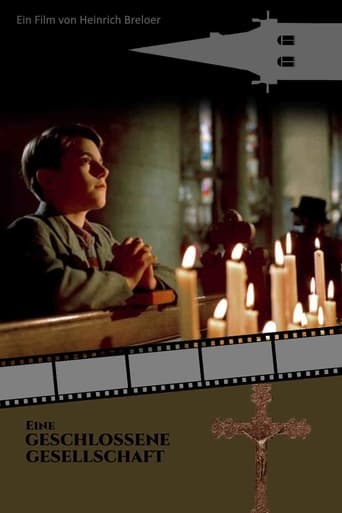
Follows the lives of students and their teachers based on the director's childhood memories. The events of the film take places in the actual boarding school called "Gymnasium Canisianum", founded in 1946 by a German catholic priest.
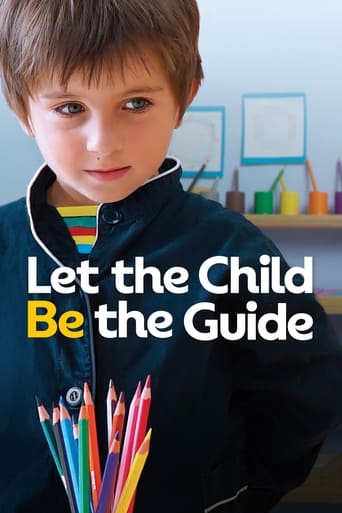
As a young father, watching his daughter go through her life experiences, film director Alexandre Mourot discovered the Montessori approach and decided to set his camera up in a children's house (3 to 6 years of age) in the oldest Montessori school in France. Alexandre was warmly welcomed in a surprisingly calm and peaceful environment, filled with flowers, fruits and Montessori materials. He met happy children, who were free to move about, working alone or in small groups. The teacher remained very discreet. Some children were reading, others were making bread, doing division, laughing or sleeping. The children guided the film director throughout the whole school year, helping him to understand the magic of their autonomy and self-esteem - the seeds of a new society of peace and freedom, which Maria Montessori dedicated her life work to.
This episode from the Czech Journal series examines how a military spirit is slowly returning to our society. Attempts to renew military training or compulsory military service and in general to prepare the nation for the next big war go hand in hand with society’s fear of the Russians, the Muslims, or whatever other “enemies”. This observational flight over the machine gun nest of Czech militarism becomes a grotesque, unsettling military parade. It can be considered not only to be a message about how easily people allow themselves to be manipulated into a state of paranoia by the media, but also a warning against the possibility that extremism will become a part of the regular school curriculum.

Never-before-seen testimony is included in this documentary on Emmett Louis Till, who, in 1955, was brutally murdered after he whistled at a white woman.
The true story of the greatest turnaround in college football history.
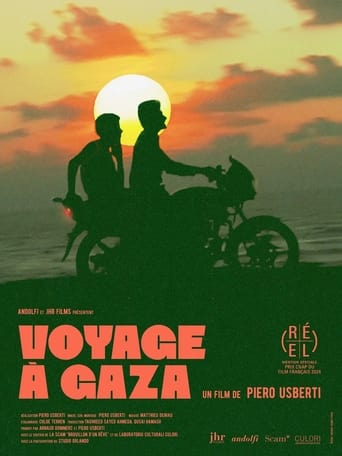
“In Gaza you have to get there in the evening, in spring, lock yourself in your room and from there listen to the sounds coming in through the open window.... It's 2018. I am 25 years old and a foreign traveler. I meet young Palestinians my age..”
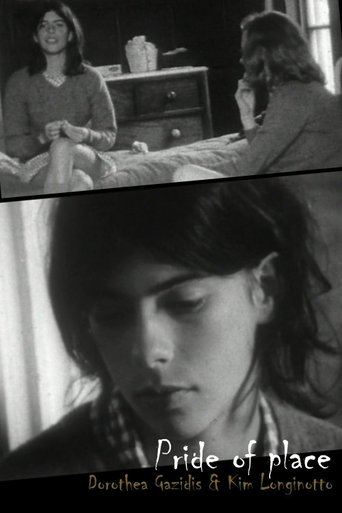
In this first project of Kim Longinotto while she was a student at Englands National School of Television and Film she filmed the daily life in a girls boarding school situated in an old isolated castle in Buckinghamshire. Until she was 17, Longinotto lived in this boarding school, finaly she run away from there. In this dark and expressive black and white documentary, Longinotto exposes the repressive school from the students perspective. It seems to be a kind of miniature state with bizzare rules, idigestibel food and absurd punishments. The documentary begins with an graduation ceremony. The director blows her own trumpet, afterwards the film describes the daily routine of schoollife. The film ends up with the students leaving for holidays. As a result of this documentary, the boarding school was closed down one year after the release of the film.

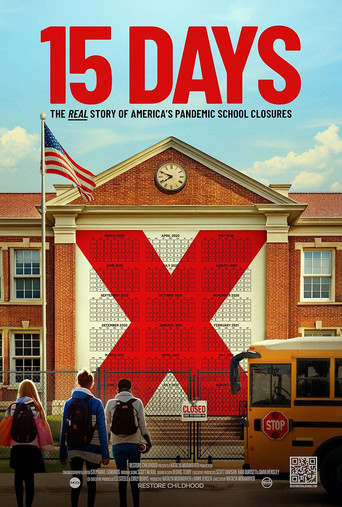
A documentary revealing why America's school closures lasted longer than almost any other nation. Framed as a forensic analysis of what happened to children during school closures, it blends director Natalya Murakhver's perspective as a Soviet immigrant with voices of children and families nationwide, exposing devastating learning loss, mental health crises, and inequality.