Kabylie : au cœur de la révolte
2001-01-01 · 26 min · Not rated
Three months of riots and street fighting. Three months of marches and demonstrations, but the anger of Algerias Kabyle population has not diminished. This rank and file mouvement mistrusts political parties, and presents a real threat to the Algerian government. Berber-speaking, Kabylian native, director Samia Chala followed Mohand, one of the young people who initiated those riots, through his village of Avizar, 40 kilometers from Tizi Ouzou, to get the inside story. Because of her background and intimate knowledge of the region, Samia was allowed to film without any police escort, and this produced a rare document.
Trailers are previews, not full movies.
No authorized playback source configured. Use the legal watch options below.
Production details
- Directors
- Samia Chala
- Production companies
- Article Z, LB Productions, CNC, ARTE
- Countries
- Unavailable
- Status
- Released
Top Cast
Cast unavailable.
Title information and images are supplied by TMDb. Explore our discovery guide for advice on comparing metadata and legal viewing options.
Where to watch
Availability provided by JustWatch via TMDb. Offers can change. Provider links are listed on TMDb; full playback requires a separately authorized source.
Availability not listed for this country.
Seasons & episodes
Recommendations

A documentary on the expletive's origin, why it offends some people so deeply, and what can be gained from its use.

In an intimate and joyful story of love in the face of loss, celebrated poets Andrea Gibson and Megan Falley find strength—and unexpected hilarity—in what might be their final year together.
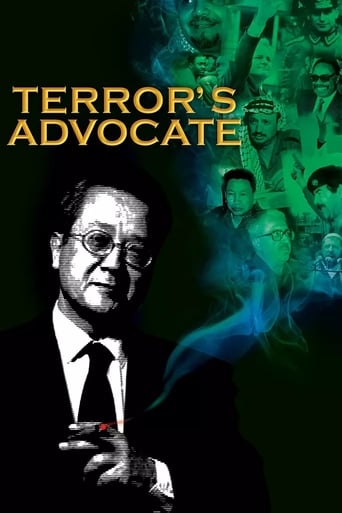
A documentary on Jacques Vergès, the controversial lawyer and former Free French Forces guerrilla, exploring how Vergès assisted, from the 1960s onwards, anti-imperialist terrorist cells operating in Africa, Europe, and the Middle East. Participants interviewed include Algerian nationalists Yacef Saadi, Zohra Drif, Djamila Bouhired and Abderrahmane Benhamida, Khmer Rouge members Nuon Chea and Khieu Samphan, once far-left activists Hans-Joachim Klein and Magdalena Kopp, terrorist Carlos the Jackal, lawyer Isabelle Coutant-Peyre, neo-Nazi Ahmed Huber, Palestinian politician Bassam Abu Sharif, Lebanese politician Karim Pakradouni, political cartoonist Siné, former spy Claude Moniquet, novelist and ghostwriter Lionel Duroy, and investigative journalist Oliver Schröm.
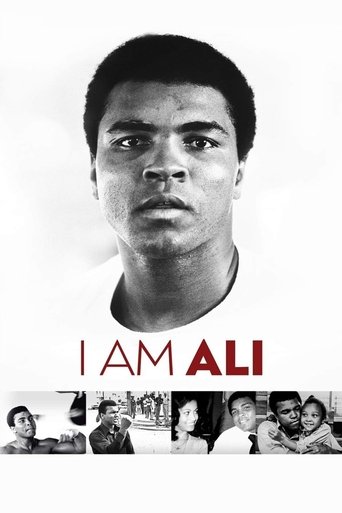
Unprecedented access to Muhammad Ali's personal archive of "audio journals" as well as interviews and testimonials from his inner circle of family and friends are used to tell the legend's life story.
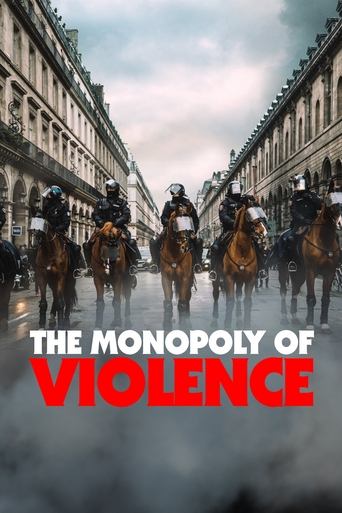
As anger and resentment grow in the face of social inequalities, many citizens-led protests are being repressed with an ever-increasing violence. In this documentary, David Dufresne gathers a panel of citizens to question, exchange and confront their views on the social order and the legitimacy of the use of force by the State.

This revealing documentary honors the legendary Sidney Poitier—iconic actor, filmmaker, and civil rights activist. Featuring interviews with Denzel Washington, Spike Lee, Halle Berry, and more.
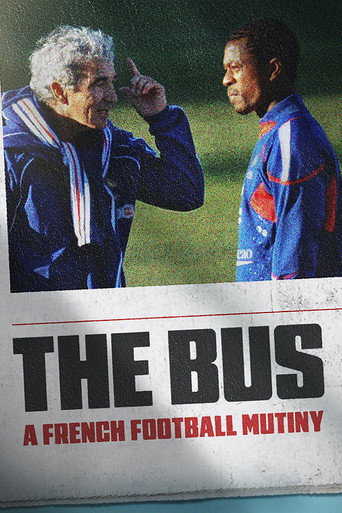
This documentary revisits the French football team's controversial 2010 World Cup and the bus strike that sparked global headlines and national outrage.

A compilation of over 30 years of private home movie footage shot by Lithuanian-American avant-garde director Jonas Mekas, assembled by Mekas "purely by chance", without concern for chronological order.

A 1993 documentary film about Bruce Lee. The film includes interviews from some of his fellow students and opponents who worked alongside him in his movies.

Daniel Craig candidly reflects on his 15 year adventure as James Bond. Including never-before-seen archival footage from Casino Royale to the upcoming 25th film No Time To Die, Craig shares his personal memories in conversation with 007 producers, Michael G Wilson and Barbara Broccoli.
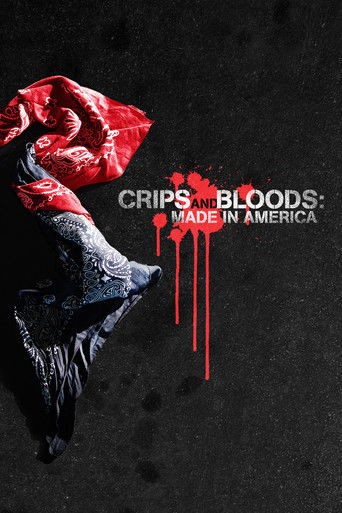
With a first-person look at the notorious Crips and Bloods, this film examines the conditions that have lead to decades of devastating gang violence among young African Americans growing up in South Los Angeles.
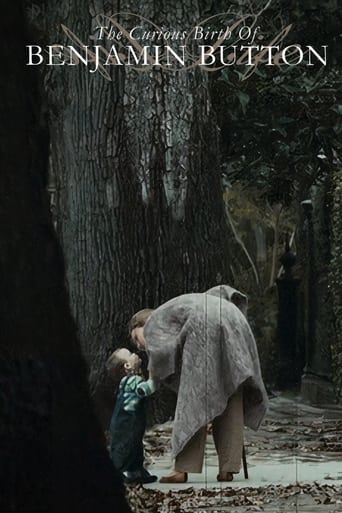
A documentary about the making of David Fincher's 2008 film THE CURIOUS CASE OF BENJAMIN BUTTON. Virtually every element in the evolution of the Fincher's film is documented here, from the project's attachment to numerous other directors during the 1990s, to its shoot in 2006 and 2007 in New Orleans, to its complex, CGI-intensive postproduction process.

In 2001 Jack Cardiff (1914-2009) became the first director of photography in the history of the Academy Awards to win an Honorary Oscar. But the first time he clasped the famous statuette in his hand was a half-century earlier when his Technicolor camerawork was awarded for Powell and Pressburger's Black Narcissus. Beyond John Huston's The African Queen and King Vidor's War and Peace, the films of the British-Hungarian creative duo (The Red Shoes and A Matter of Life and Death too) guaranteed immortality for the renowned cameraman whose career spanned seventy years.
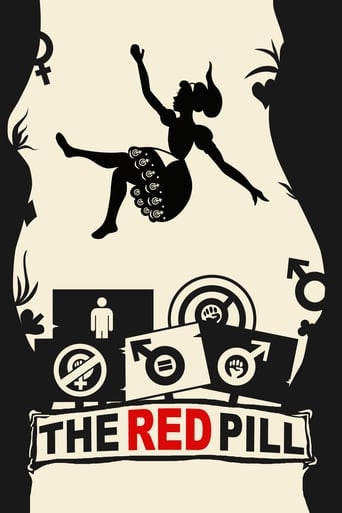
When a feminist filmmaker sets out to document the mysterious and polarizing world of the Men’s Rights Movement, she begins to question her own beliefs. Chronicling Cassie Jaye’s journey exploring an alternate perspective on gender equality, power and privilege.
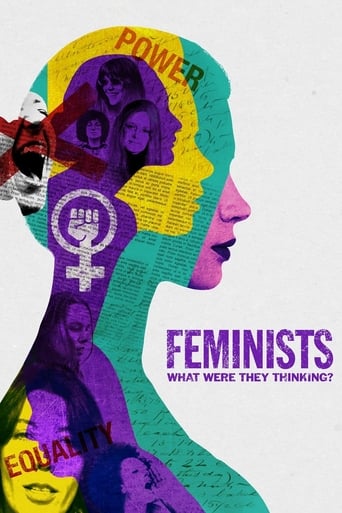
In 1977, a book of photographs captured an awakening - women shedding the cultural restrictions of their childhoods and embracing their full humanity. This documentary revisits those photos, those women and those times and takes aim at our culture today that alarmingly shows the need for continued change.

Just two years away from turning 30, participants in Michael Apted's documentary series are facing serious questions of identity and purpose, wondering whether they've found their place in the world.

A documentary about the life and films of director John Ford.

Ranjit, a farmer in India, takes on the fight of his life when he demands justice for his 13-year-old daughter, the victim of a brutal gang rape. His decision to support his daughter is virtually unheard of, and his journey unprecedented.
When Juan Catalan is arrested for a murder he insists he didn't commit, he builds his case for innocence around unexpected raw footage.

Rachel Dolezal became infamous when she was unmasked as a white woman passing for black so thoroughly that she had become the head of her local N.A.A.C.P. chapter. This portrait cuts through the very public controversy to reveal Dolezal’s motivations.
Similar titles

Packed with drama, high emotions and cliff-hanger moments, Australia Says Yes is the intimate and personal history of struggle and perseverance that propelled Australia to say Yes to marriage equality. The film shows how a group of determined individuals fought tirelessly against unjust laws that treated LGBTIQ people as second-class citizens, creating a movement that saw them go from criminals to legally equal over the course of five decades.

In 1921 the Kwakiut'l people of Alert Bay, British Columbia, held their last secret potlatch. In 1980 at Alert Bay, the U'mista Cultural Centre (U'mista means "something of great value that has come back") opened its doors to receive and house the cultural treasures which were seized decades earlier and only then returned to the people. The center also took up activities such as recording stories told by elders so that some part of the past would always be alive and teaching children about their heritage in order to make them feel connected to their ancestors. This film documents the cultural significance of these events for today's Kwakiut'l people. It is an eloquent testimony to the persistence and complexity of Kwakiut'l society and to the struggle for redefining cultural identity for them.
After five years studying in Paris, Arash has not adjusted to life there and has decided to return to Iran to live. Hoping to change his mind, his two friends Hossein and Ashkan convince him to take a last trip through France.
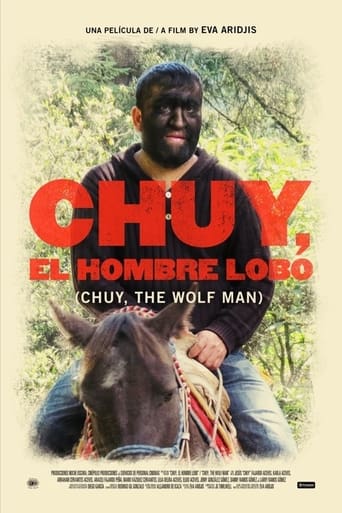
Jesus 'Chuy' Aceves and a dozen living members of his extended family suffer from the very rare condition of congenital hypertrichosis, meaning they were born with excessive hair on their faces and bodies. Due to their appearance, they suffer from discrimination in all areas of their lives: the children are made fun of at school and abandoned by their 'non-hairy' parents, and the adults cannot find work unless they choose to exhibit themselves as freaks in circuses. This moving and visually arresting documentary is a portrait of Chuy and his family members. It examines their day-to-day lives and their struggle to find love, acceptance and employment.

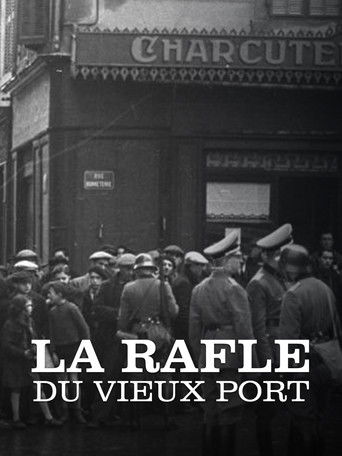
Pierre Clément, student and photographer of René Vauthier, first accompanied him to Tunisia to make a film on the country's independence in 1957. Destiny led him to Algeria and his presence in February 1958 at the Tunisian-Algerian border changed his life. . Forever. He took his camera and photographed the attacks on Sakia Sidi Youssef before committing himself body and soul to the Algerian cause. Shortly after, he directed the film “Algerian Refugees” before being arrested, tortured and imprisoned, while his third film, “The National Liberation Army in Almaki”, was not finished. Abdel Nour Zahzah, a director who commemorates Pierre Clément, the director who risked his life, the brother of the Algerian resistance, who disappeared in 2007.
Documentary tracing the extreme life of outlaw writer, performance artist and punk icon, Kathy Acker. Through animation, archival footage, interviews and dramatic reenactments, director Barbara Caspar explores Acker's colorful history, from her well-heeled upbringing to her role as the scribe of society's fringe.
Journalist Dermi Azevedo has never stopped fighting for human rights and now, three decades after the end of the military dictatorship in Brazil, he's witnessing the return of those same practices.
In 1944 Rudolf Breslauer documented the everyday life in the Westerbork transit camp on film, commissioned by the German camp commander Albert Gemmeker. The Westerbork Film was never completed, but much of the raw footage is preserved.
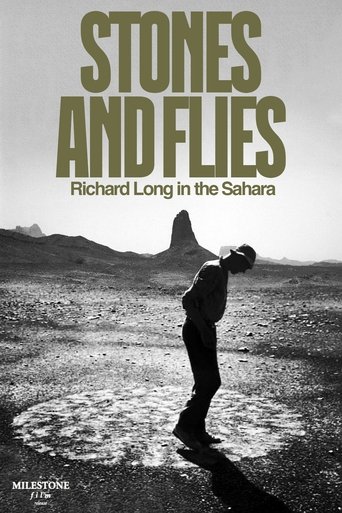
In the fall of 1987, Philippe Haas accompanied the sculptor Richard Long to the Algerian Sahara and filmed him tracing with his feet, or constructing with desert stones, simple geometric figures (straight lines, circles, spirals). In counterpoint to the images, Richard Long explains his approach. Since 1967, Richard Long (1945, Bristol), who belongs to the land art movement, has traveled the world on foot and installed, in places often inaccessible to the public, stones, sticks and driftwood found in situ. His ephemeral works are reproduced through photography. He thus made walking an art, and land art an aspiration of modern man for solitude in nature.
An unlikely collaboration between a forensic scientist from Texas and a group of Latin American students changes the course of forensic science and international human rights.
A documentary about the United States Military Academy at West Point that conveys the vibrancy, sense of fraternity and fierce loyalty that mark the West Point experience.

The Metaphor That Became a Room is a psychological drama exploring identity, communication, and the struggle for self-understanding. Divided into two parts, the film first delves into the protagonist’s frustration with the urge to persuade others, realizing that over-explaining only distorts meaning. A note from the past echoes a hard truth: “Someone’s unwillingness to understand will always outweigh your effort.” In A Symphony of Unfinished Selves, the narrative shifts inward, revealing the protagonist’s fractured identity. Trapped in a metaphorical room built from illusions and contradictions, he reflects on his dual persona—the social facade and the hidden, lost self. The film questions how we see ourselves versus how others see us and whether true self-recognition is possible. Through minimalist dialogue and layered symbolism, the film captures the silent tension between who we are, who we appear to be, and who we long to become.

On the night of February 24-25, 1942, amid terror and neurosis caused by the terrible Pearl Harbor attack only two months earlier, a huge flying object of unknown origin appears in the sky over Los Angeles. The military reacts by imposing a total blackout in the area and firing more than 1440 artillery rounds. However, despite the firepower, no object was shot down. We will try to understand what actually happened and who or what flew over the skies of Los Angeles that night of February 24, 1942.
How are biographies charted? How is identity constructed? Can we relive our past, reinvent it, rearrange or recycle it? Can we really know who we are if we ignore where do we come from?
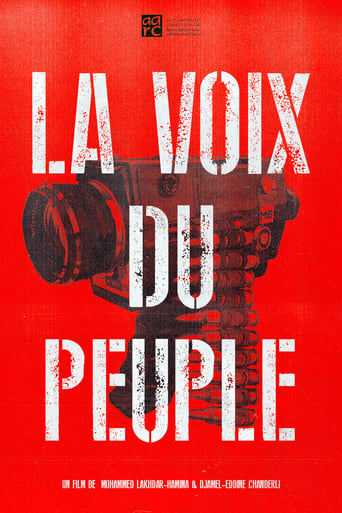
“La Voix du Peuple,” composed of archival photographs by René Vauthier and others, exposes the root causes of the armed conflict of the Algerian resistance. Participating in a war of real images against French colonial propaganda, these images aimed to show the images that the occupier had censored or distorted, by showing the extortions of the French occupation army: torture, arrests and arbitrary executions, napalm bombings, roundabout fires, erasing entire villages from the map, etc. This is what the French media described as a “pacification campaign”.
Devin Boss is on a quest. And he wants you to join him as he explores this simple question: Where We Goin? A millennial Black filmmaker and artist raised in the heart of the whitest city in America, Portland, OR, Boss ventures out to uncover the deeper truths that have shaped not just his city — but his very identity. Boss invites us all along for the ride as he explores the work of Black creatives, cultural stewards and changemakers - past and present - snatching the narratives back, about community resilience and innovation as he examines his roots, to dream of what’s next for him, and all the future ancestors.