A Day with a West Point Cadet
1916-02-21 · Runtime unavailable · Not rated
For his third picture in his series, Mr. Holmes takes his audience on a visit to our National Military Academy at West Point, there to study the daily life of Uncle Sam's Cadets, the future generals who in after years will lead the armies of the United States. Mr. Holmes' series of West Point pictures show all the phases of our Cadets' lives of study, drill and play. They also give a knowledge of the beautifully situated military academy itself, its fine buildings for study. Its drill halls, its mess hall, the parade grounds. Flirtation Walk, the old historic reminiscences of Revolutionary days, and even glimpses of the serving room, during the Sunday dinner hour, when hundreds of roast chickens and gallons upon gallons of ice cream are served to the young soldiers. Building of pontoon bridges, daring artillery and cavalry drilling, target practice, mounted and dismounted, infantry drill, dress parade, guard mount, all these features of life at West Point are interestingly depicted.
Trailers are previews, not full movies.
No authorized playback source configured. Use the legal watch options below.
Production details
- Directors
- Unavailable
- Production companies
- Burton Holmes Travel Pictures
- Countries
- United States of America
- Status
- Released
Top Cast
Cast unavailable.
Title information and images are supplied by TMDb. Explore our discovery guide for advice on comparing metadata and legal viewing options.
Where to watch
Availability provided by JustWatch via TMDb. Offers can change. Provider links are listed on TMDb; full playback requires a separately authorized source.
Availability not listed for this country.
Seasons & episodes
Recommendations

A documentary about World War I with never-before-seen footage to commemorate the centennial of Armistice Day, and the end of the war.
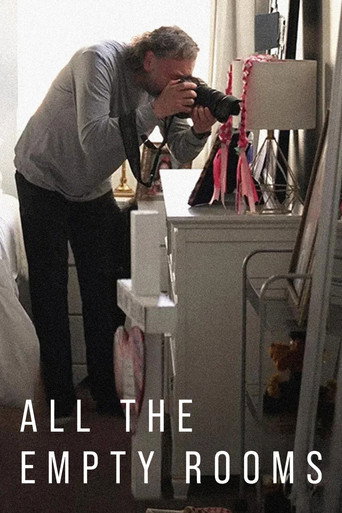
A journalist and a photographer set out to memorialize the bedrooms left behind by children killed in school shootings.

Director Michael Apted revisits the same group of British-born adults after a 7 year wait. The subjects are interviewed as to the changes that have occurred in their lives during the last seven years.

A documentary about the life and films of director John Ford.
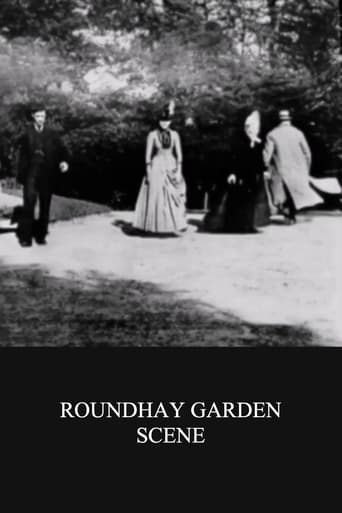
The earliest surviving motion-picture film, and believed to be one of the very first moving images ever created, was shot by Louis Aimé Augustin Le Prince using the LPCCP Type-1 MkII single-lens camera. It was taken on paper-based photographic film in the garden of Oakwood Grange, the Whitley family house in Roundhay, Leeds, West Riding of Yorkshire (UK), on 14 October 1888. The film shows Adolphe Le Prince (Le Prince’s son), Mrs. Sarah Whitley (Le Prince’s mother-in-law), Joseph Whitley, and Miss Harriet Hartley walking around in circles, laughing to themselves, and staying within the area framed by the camera. Roundhay Garden Scene is often associated with a recording speed of around 12 frames per second and runs for about 2 to 3 seconds.

Director Michael Apted revisits the same group of British-born adults after a 7 year wait. The subjects are interviewed as to the changes that have occurred in their lives during the last seven years.

Daniel Craig candidly reflects on his 15 year adventure as James Bond. Including never-before-seen archival footage from Casino Royale to the upcoming 25th film No Time To Die, Craig shares his personal memories in conversation with 007 producers, Michael G Wilson and Barbara Broccoli.

The story lives forever in this feature-length documentary that charts the making of Star Wars: The Rise of Skywalker.

As a visually radical memoir, CAMERAPERSON draws on the remarkable footage that filmmaker Kirsten Johnson has shot and reframes it in ways that illuminate moments and situations that have personally affected her. What emerges is an elegant meditation on the relationship between truth and the camera frame, as Johnson transforms scenes that have been presented on Festival screens as one kind of truth into another kind of story—one about personal journey, craft, and direct human connection.
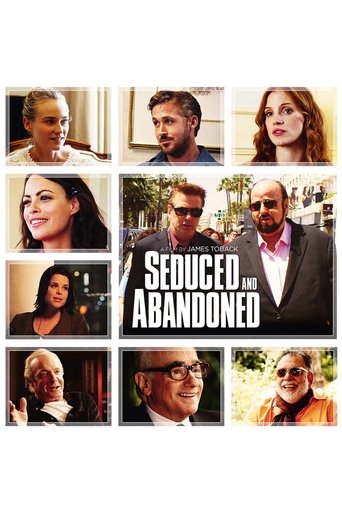
SEDUCED AND ABANDONED combines acting legend Alec Baldwin with director James Toback as they lead us on a troublesome and often hilarious journey of raising financing for their next feature film. Moving from director to financier to star actor, the two players provide us with a unique look behind the curtain at the world's biggest and most glamourous film festival, shining a light on the bitter-sweet relationship filmmakers have with Cannes and the film business. Featuring insights from directors Martin Scorsese, 'Bernando Bertolucci' and Roman Polanski; actors Ryan Gosling and Jessica Chastain and a host of film distribution luminaries.

Stars of "The Walking Dead," Andrew Lincoln and Danai Gurira, walk down memory lane and visit iconic locations where pivotal moments between their characters, Rick and Michonne, were filmed.
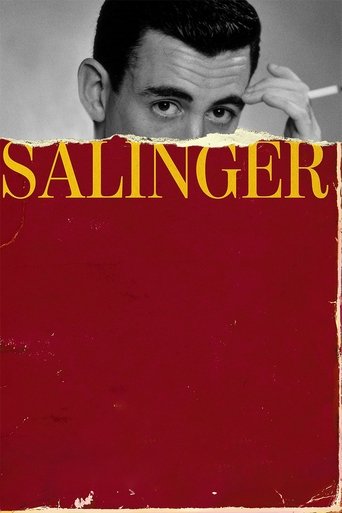
An in-depth investigation into the private world of the American writer J. D. Salinger (1919-2010), who lived most of his life behind the impenetrable wall of a self-imposed seclusion: how his dramatic experiences during World War II influenced his life and work, his relationships with very young women, his obsessive writing methods, his many literary secrets.

Just two years away from turning 30, participants in Michael Apted's documentary series are facing serious questions of identity and purpose, wondering whether they've found their place in the world.
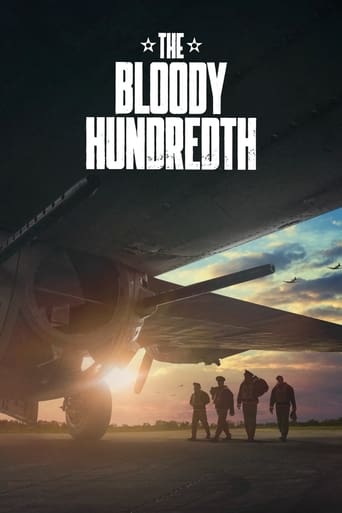
Meet the real-life airmen who inspired Masters of the Air as they share the harrowing and transformative events of the 100th Bomb Group.
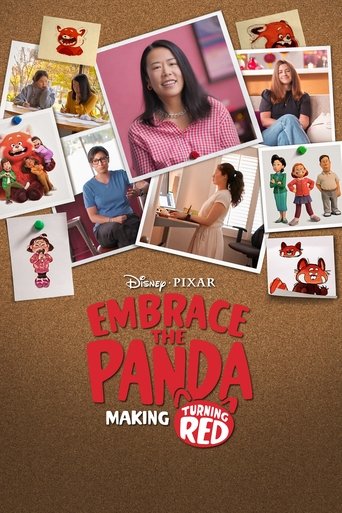
A feature length documentary about the all-women team at the helm of Pixar's original feature, Turning Red. With unprecedented behind-the-scenes access to Director Domee Shi and her core leadership crew, this story shines a light on the powerful professional and personal journeys that brought this incredibly comical, utterly relatable, and deeply heartfelt story to the screen.

The epic life story of Alice Guy-Blaché (1873–1968), a French screenwriter, director and producer, true pioneer of cinema, the first person who made a narrative fiction film; author of hundreds of movies, but banished from history books. Ignored and forgotten. At last remembered.

A 1993 documentary film about Bruce Lee. The film includes interviews from some of his fellow students and opponents who worked alongside him in his movies.
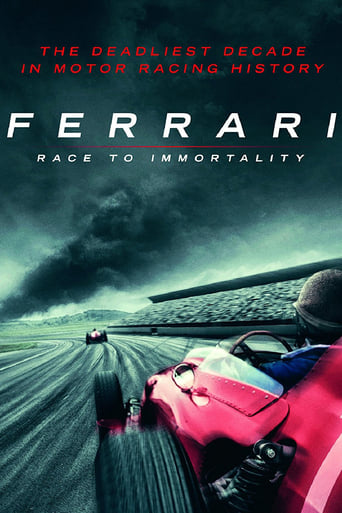
The late 1950s were known as golden years in the world of motor racing, champions were made and lost on a Sunday, and no losses were greater than those of Enzo Ferrari’s Scuderia. Based on Chris Nixon’s bestselling biography Mon Ami Mate, Ferrari: Race to Immortality tells the story of the loves and losses, triumphs and tragedy of a turbulent era that shook the motor racing world.
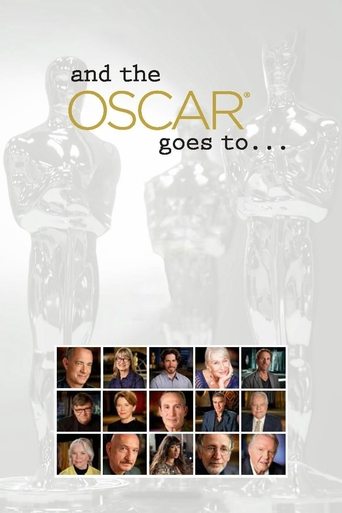
The story of the gold-plated statuette that became the film industry's most coveted prize, AND THE OSCAR GOES TO... traces the history of the Academy itself, which began in 1927 when Louis B. Mayer, then head of MGM, led other prominent members of the industry in forming this professional honorary organization. Two years later the Academy began bestowing awards, which were nicknamed "Oscar," and quickly came to represent the pinnacle of cinematic achievement.
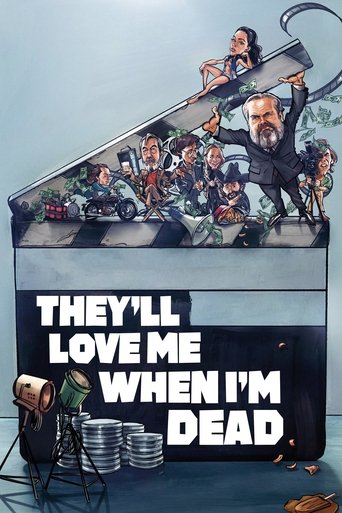
As his life comes to its end, famous Hollywood director Orson Welles puts it all on the line at the chance for renewed success with the film The Other Side of the Wind.
Similar titles
Short documentary on a central african tribe called 'The Chillouks'.

For nearly three decades Laura Aguilar has used photography as a tool to speak about people and issues not considered part of the cultural mainstream. Laura Aguilar: Life, the Body, Her Perspective presents personal video essays by the artist, a lecture she gave at UCLA in 2005 that describes her life as a photographer, plus an interview and documentary filmed by Michael Stone. A comprehensive series of slide shows features works from her extensive oeuvre, including Family and Friends, In Sandy’s Room, and Clothed/Unclothed. A bonus CD contains a PowerPoint survey that enables students and educators to study individual images, facilitating discussion of Aguilar’s groundbreaking art.

Legendary drag performer Ocaña in performance with a cardboard Marilyn on the west side of the Berlin Wall.
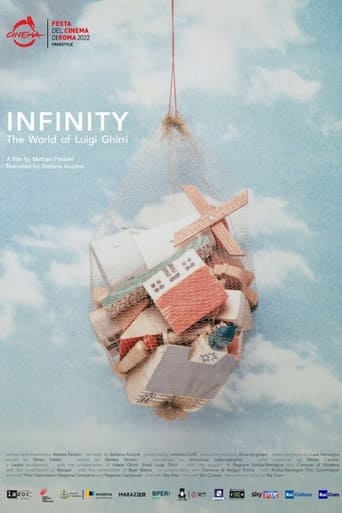
In this poetic portrayal of Luigi Ghirri (1943–1992), a master of contemporary photography, the director gives voice and, in particular the image, to the protagonist. The photographer takes the audience on a tour of the outskirts of daily life as seen from the corner of his eye, the area in between what is artificial and authentic or grand and small – the meso-scale.

To support his mother in Mexico, Angel, a nude dancer, turns the web into his new stage.
A short documentary and character study about a woman's complex relationship with religion and family.

Recalls the story of Major League Baseball’s 1969 World Series.
Shannon Amen unearths the passionate and pained expressions of a young woman overwhelmed by guilt and anxiety as she struggles to reconcile her sexual identity with her religious faith. A loving elegy to a friend lost to suicide.
Directors Errol Morris and Werner Herzog describe and discuss the film The Act of Killing (2012).
This video focuses primarily on the implications of the structure and format of television, especially the consequences of concision, and how these factors can shape the messages of the medium. In addition, other issues, such as how democracies handle dissenters, and how the mainstream media have treated the challenges of Noam Chomsky's media critiques are explored. The media construct reality, and in the conclusion we see the author participating in that very process.
Beginning with Noam Chomsky's response to a college student who role-plays "Jane U.S.A."--someone who naively believes she lives in a democratic society in which she can create her own destiny--the viewer is presented with a cross-section of typically lively Chomsky encounters. Central to a functioning democracy is the necessity of free access to information, ideas and opinions. But what should be our democratic right turns out to be limited and shaped by the biases of insitutions and ideologies within the mass media. Chomsky shows how governments, corporations and other elites manufacture the consent of the public to serve their interests.
Chomsky on the media treatment of the Indonesian invasion of East Timor and Pol Pot's atrocities in Cambodia
In this video, Noam Chomsky concentrates on the contemporary institutions and powers which have set limits on human progress and offers us some concrete ways of challenging them; in effect, he presents a vision of a future society. Chomsky's work is directed at developing intellectual self-defense for "ordinary people" who are often isolated in their struggles. States are seen to be violent through such strategies as the near-genocide of aboriginal peoples. Ultimately, Chomsky feels we must move beyond the myths of modern industrial civilization and the privileged elites who dominate mass communication, and instead foster the interests of a truly global community.
This video focuses on the formative influences in Noam Chomsky's life--those factors which enable him to become a politically engaged intellectual. Starting out as a linguist at the Massachusetts Institute of Technology, where his work revolutionized the study of language, Chomsky was radicalized by the 1960s anti-war movement and became a major critic of American policy. We learn about the important Jewish intellectual influences of his family, as well as those defining incidents in his early schooling that made a lasting impression.
On the island of La Gomera, children imagine stories while they examine archeological remains. An ethno-fictional journey in which past and present coalesce, creating resonances between the volcanic landscape and Silbo, the whistled language of the island.

Ivan and Jožica, a married couple, move to a care home after 70 years of sharing their lives. Despite the hardships of old age, they continue to live together in the new environment. Memories are fading, love remains.
A method soldier boys have for amusing themselves in their leisure moments. New comrades are frequently initiated by the old-fashioned sport of tossing in a blanket. The newly arrived recruit, who is the victim of their sport, enjoys himself, perhaps, less than the other participants.

This documentary, the final film directed by Frank Capra, explores America's plans for the future of space exploration. It was produced by the Martin-Marietta Corporation for exhibition in the Hall of Science at the 1964 New York World's Fair.