Quando è pronto, il fieno canta
2026-11-05 · Runtime unavailable · Not rated
Trailers are previews, not full movies.
No authorized playback source configured. Use the legal watch options below.
Production details
- Directors
- Letizia Buoso
- Production companies
- Okta Film
- Countries
- Italy
- Status
- Released
Top Cast
Cast unavailable.
Title information and images are supplied by TMDb. Explore our discovery guide for advice on comparing metadata and legal viewing options.
Where to watch
Availability provided by JustWatch via TMDb. Offers can change. Provider links are listed on TMDb; full playback requires a separately authorized source.
Availability not listed for this country.
Seasons & episodes
Recommendations

The movie is a biopic about Mia Martini, an italian singer who died in 1995.
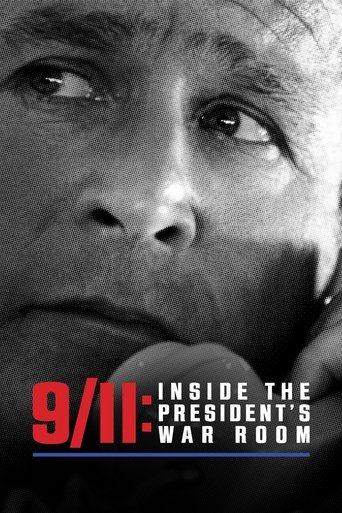
Experience the events of September 11, 2001 through the eyes of President Bush and his closest advisors as they personally detail the crucial hours and key decisions from that historic day.
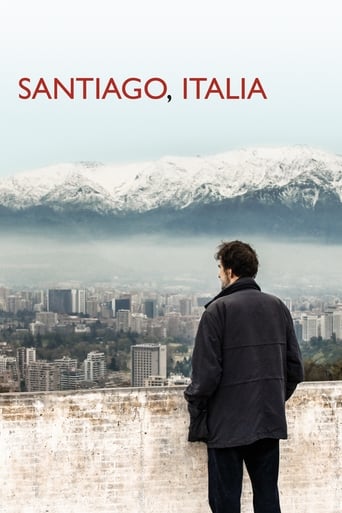
After the coup d'État of the Democratic government of Allende, the embassy of Italy in Santiago played a major role in helping the opposers of the regime, and extradited many of them to Italy.

Oliver Stone charts the history of the United States from the Second World War to the present.
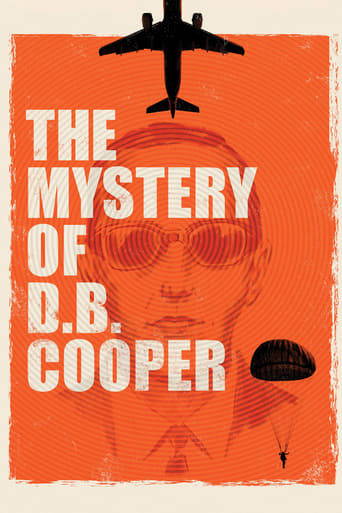
This documentary brings to life the stories of four people believed by their family and friends to be “DB Cooper,” a man who hijacked a 727 flying out of Seattle and jumped from the plane over the wilds of Washington State with a parachute and $200,000, never to be heard from again.

Through deeply personal interviews with her siblings and an examination of the photographs, letters, and belongings left behind, Mariska assembles a new portrait of her mother Jayne Mansfield, an extraordinary and complex woman.

Prelude to War was the first film of Frank Capra's Why We Fight propaganda film series, commissioned by the Pentagon and George C. Marshall. It was made to convince American troops of the necessity of combating the Axis Powers during World War II. This film examines the differences between democratic and fascist states.

In an intimate and joyful story of love in the face of loss, celebrated poets Andrea Gibson and Megan Falley find strength—and unexpected hilarity—in what might be their final year together.
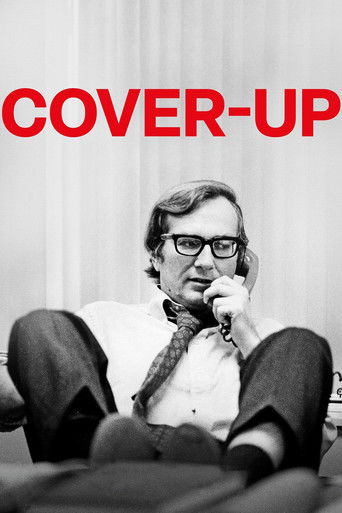
He's devoted his career to uncovering stories the powerful want buried. From My Lai to Abu Ghraib, dig into the life's work of journalist Seymour Hersh.

Former United States Secretary of Defense Donald Rumsfeld discusses his career in Washington D.C. from his days as a congressman in the early 1960s to planning the invasion of Iraq in 2003.

Amid the failing counteroffensive, a journalist follows a Ukrainian platoon on their mission to traverse one mile of heavily fortified forest and liberate a strategic village from Russian occupation. But the farther they advance through their destroyed homeland, the more they realize that this war may never end.

A visual montage portrait of our contemporary world dominated by globalized technology and violence.

The history of cinematic sound, told by legendary sound designers and visionary filmmakers.

When Sgt. First Class Brian Eisch is critically wounded in Afghanistan, it sets him and his sons on a journey of love, loss, redemption and legacy.

A love letter from a young mother to her daughter, the film tells the story of Waad al-Kateab’s life through five years of the uprising in Aleppo, Syria as she falls in love, gets married and gives birth to Sama, all while cataclysmic conflict rises around her. Her camera captures incredible stories of loss, laughter and survival as Waad wrestles with an impossible choice– whether or not to flee the city to protect her daughter’s life, when leaving means abandoning the struggle for freedom for which she has already sacrificed so much.

Diaries, audiotapes, videotapes and testimonials from friends and colleagues offer insight into the life and career of Gilda Radner -- the beloved comic and actress who became an icon on Saturday Night Live.

The life and career of one of comedy's most inimitable modern voices, Mr. Gilbert Gottfried.

A tribute to Italian filmmaker Sergio Corbucci (1926-90), presented by American filmmaker Quentin Tarantino.
An in-depth investigation into the private world of the American writer J. D. Salinger (1919-2010), who lived most of his life behind the impenetrable wall of a self-imposed seclusion: how his dramatic experiences during World War II influenced his life and work, his relationships with very young women, his obsessive writing methods, his many literary secrets.

A documentary about World War I with never-before-seen footage to commemorate the centennial of Armistice Day, and the end of the war.
Similar titles
Brad and Barbara Washburn were filmed by National Geographic and RKO Pictures on their ascent of Mount McKinley in Alaska. The film is a pictorial record of the first scientific conquest of Mount McKinley, filmed with the cooperation of the Boston Museum of Science. The short is part of the RKO's 'This is America' documentary series.
Joseph Vallot and his team of guides and porters climb Mont Blanc in 1906. Their ascent will take three days. They spent their nights at the Grands Mulets refuge and the Grand Plateau refuge. This is the very first successfully filmed ascent. Joseph Vallot (1854-1925), rich heir of Lodève in Occitania. He devotes part of his fortune to the observation of the Alps, sometimes opposing the scientific community. He built an observatory, still standing today.

Set in a remote village in Asturias during the Spanish Civil War (1937), Inés, Julia, and their father José struggle to protect their home from a neighbor determined to seize their land amid the turmoil of war. Branded as fugitives' accomplices and accused by the villagers of sheltering a wanted man, their situation deteriorates further with the arrival of armed Falangists, who turn suspicion into brutal violence. 'Tierres' is a thriller based on true events, telling a story of survival, injustice, and a family's resilience in the face of war.
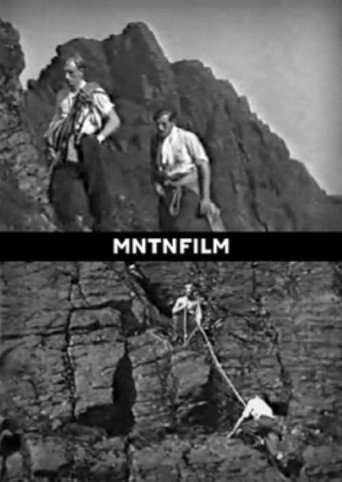
Rock climbing on the "Cobbler". Awarded first prize by Michael Powell in the 1948 Scottish Amateur Film Festival
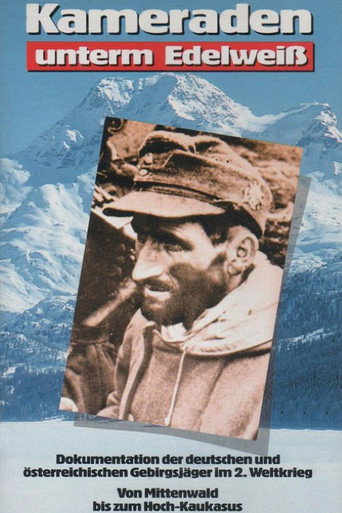
This rare documentary was filmed with the participation and personal camera of Wolfgang Gorther, a German military cinematographer of the 1st mining division, who participated in the legendary ascent of Elbrus on the night of August 21, 1942. From the beginning of the Second World War and the last international winter sports week in Garmisch-Partenkirchen follows the invasion of the German troops into the Soviet Union: Dnieper, Zaporozhy, Kharkov, Rostov-on-Don, Nogaean Steppe, Caucasus – fighting at 50 degrees below zero, military expedition into the world of ice and snow; – ascent of mountain arrows and subsequent hoisting of flags on the Elbrus at an altitude of 5,633 meters.

On September 28th, 1903, the Urban Mountaineering Expedition, headed by Frank Ormiston-Smith, left Zermatt to attempt the conquest of the Matterhorn. On the 29th, the conquest was completed by the filming of the panorama from the actual summit of the mountain. The film consists of 20 scenes and illustrates the whole ascent from Zermatt through the Hornli Ridge. A copy of the film was found in Zermatt in 1953 and was was erroneously attributed to Frederick Burlingham and dated 1901. Since then, the film has been widely publicized as the first mountain film under the title of 'Cervin 1901', but this is incorrect. Ormiston previously had made 'Alpine series' (1901), 'The ascent of Mont Blanc' (1902), 'Climbing the Great Schreckhorn' (1902) and 'Ascent of the Jungfrau' (1903). The pictures and descriptions of the Charles Urban Trading 1903 film catalogue show without any doubt that 'Ascent of the Matterhorn' and 'Cervin 1901' are the same film.
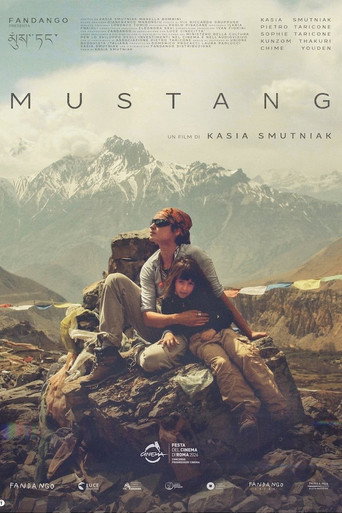
At the age of twenty, Sophie Taricone sets out to tell a story that began before she was born. Through archival footage shot by her parents, Kasia Smutniak and Pietro Taricone, she retraces their 2003 journey to Mustang—a remote Himalayan kingdom known as "the last Tibet"—and she follows Kasia’s return there after Pietro’s death. Spanning more than two decades, the film weaves together past and present as Kasia forges a lasting bond with a local community in Mustang and helps to establish a school dedicated to preserving its culture. Through Sophie’s journey, the film explores memory, identity, and the fragile balance between Western progress and an ancient, spiritual way of life.

"Flammes de Pierre" is the first documentary made by Gaston Rébuffat himself in 1947. It depicts Rébuffat in full ascent of the Flammes De Pierre, wild ridges in the heart of the Mont Blanc massif overlooking Chamonix. Like Roger Frison-Roche, Walter Bonatti, René Desmaison or Giusto Gervasutti, Gaston Rébuffat has written and filmed the great pages of contemporary mountaineering but above all, he knew how to talk about it with enough poetry so that it is not simply airtight race stories for spectators. Stories that have been triggers for many readers, who have come to know “stone flames” thanks to him.

Jean des Bossons is a documentary-fiction which recounts the activities of a high mountain guide in 1947. Around Chamonix Mont-Blanc, the guide Jean des Bossons, interpreter by the mountaineer Armand Charlet, accompanies on mountain hikes, Jean-Pierre, an apprentice guide. The novice, skis on the shoulder, is already clumsy. The professional taught him how to travel on skis uphill and downhill, then mountaineering in ice and rock parishes. By dint of training, Jean-Pierre has made it his job. Guides are also lifeguards. A group went to a glacier to rescue a man who had fallen into a crevasse. During this rescue, Jean des Bossons is the victim of an accident. A drama that prevents him from practicing the profession, but not climbing. The man sinks into the fog and Jean-Pierre cannot find him.

L'Appel Des Cimes, directed by Alain Pol, is a documentary commissioned by the CAF and the various French ministries on the practice of post-war mountaineering. In 1946, climbers trained at the Fontainebleau Climbing School. Guy Poulet and Jacques Poincenot try to climb the Aiguilles de Chamonix but fail during the climbing phase. After a night in a refuge with Denise Rouzeau and the guide Pierre Allain, the mountaineers make a new attempt. Successful demonstration for those who continued the approach walk then the passage of the seracs of the glacier. On the rock, the roped party crosses a chimney and a crack to reach the summit and abseil down. Led by high mountain scouts, Guy and Jacques rediscover the glaciers and needles of the Mont-Blanc massif during the next lesson.

Marcel Ichac accompanied the mountaineer Armand Charlet, in 1943, in the repetition of the first crossing of the Aiguilles du Diable that the guide of the Chamonix valley had made in 1925. A roped party joined on snow and ice the Col du Géant, reached at the Mont-Blanc-du-Tacul stop and on the Col du Diable. The men cross the needles by climbing chimneys, cracks and abseiling walls. They access the eastern slope of the Mont-Blanc massif which offers a panorama of the Grandes Jorasses and Mont-Blanc. Armand Charlet was the first to reach the summits of four needles above 4000 meters: the Devil's Horn, Pointe Chaubert, Pointe Médiane and Pointe Carmen; he also tells how he successfully climbed the furthest, the Isolated. Marcel Ichac shot these scenes as close as possible to his subject, he responded with this film with a “truth” cinema, the principle of which we find in his later productions.
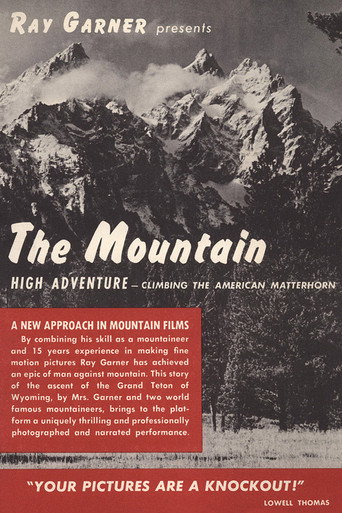
A film on mountain-climbing in Grand Teton National Park, Wyo. Glenn Exum, Virginia Garner, and Paul Petzoldt demonstrate mountaineering techniques and equipment. They reach the peak, shake hands, and rappel and glissade to base of mountain.
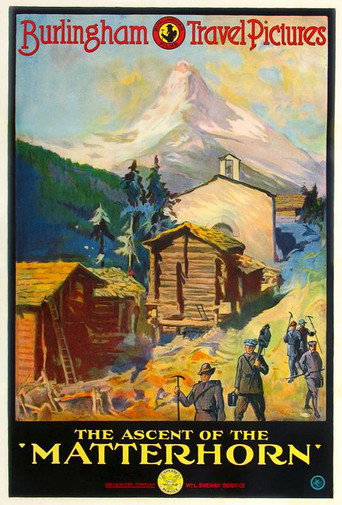
The ascent of the Matterhorn by the Hornli Ridge, filmed in July 1913 by Frederick Burlingham. The team, composed of Burlingham and four mountain guides from Zermatt, carried the 15-kilo camera and the 10-kilo tripod to the top the mountain to film the summit of the Matterhorn. Frederick Burlingham, known at the time as 'The man who kinomatographed the Matterhorn', was a traveller cinematographer and one of the mountain film pioneers. Continuing the mountain film tradition established by Ormiston-Smith, Burlingham filmed several mountaineering films largely in Switzerland, taking mountain film in a new direction of immediacy and perceived peril.

I used to think that when people said to me, "You're not like other girls," it was a compliment.
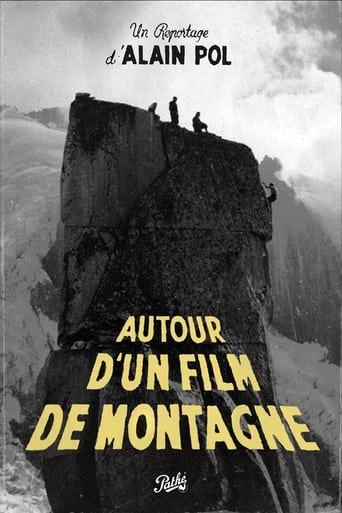
Making of the cinematographic shooting of "Premier de cordée" directed by Louis Daquin in the Mont-Blanc massif. In 1943. Alain Pol films the risky adventure of filming in the high mountains with a team of seventy people. The images of the making-of reveal the technical constraints encountered by the actors and technicians: falling rocks, crossing glaciers and long approach walks at altitude to the filming locations. Six actors and technicians will also be injured and the main role - that of Pierre - will be reassigned to André Le Gall following a bad fall by Roger Pigaut.
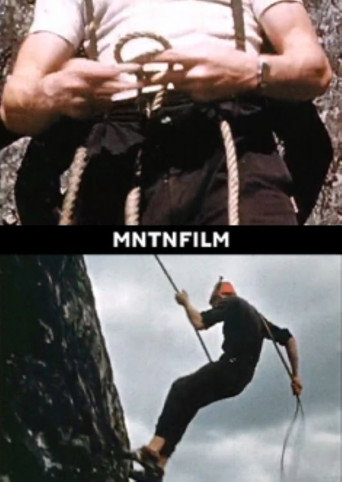
An ascent of 'The Tooth' via the South-east Face. The film was made by Burge Bickford and Lyman Boyer. It features Jim Crooks leading Fred Beckey on a rock climbing ascent of the southeast face of The Tooth, near Snoqualmie Pass, Washington. At the summit, the climbers find a brass tube with a Mountaineers register book inside. Illustrates Cascade Mountains climbing just before World War II. The leader never places any protection such as pitons or slings. The film focuses on the climbers' hand and foot work intermixed with mountain views.
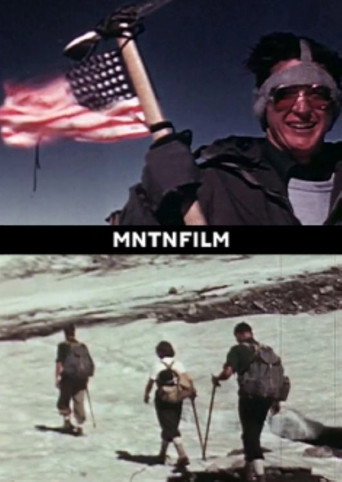
An early silent color film of Glacier National Park and Mount Rainier. The film is part of the 'Our Colorful World' series, produced by Bell & Howell. It shows a drive up to the Logan Pass in Glacier National Park, and a two-day ascent to Mount Rainier through Nisqually Glacier by two men and a woman. This Filmosound Library series produced in the early 1940s initially included thirty-seven single reels, for the most part silent, bringing beauty spots and wildlife of America and the world to the school screen in full natural color.
A winter ascent of Piz Bernina by Swiss mountain soldiers under the command of Major Charles Golay. The film also shows images of avalanche research, the use of avalanches as a weapon, avalanche rescue by dogs, and other military maneuvers. An early color Swiss military film by Major Charles Golay and Egon Sommer.