

21-87
1963-04-24 · 10 min · ★ 6.8
This short film from Arthur Lipsett is an abstract collage of snippets from discarded footage found by Lipsett in the editing room of the National Film Board (where he worked as an animator), combined with his own black and white 16mm footage shot on the streets of Montreal and New York City, among other locations. A commentary on a machine-dominated society, it is often cited as an influence on George Lucas's Star Wars and his conceptualization of "The Force."
Trailers are previews, not full movies.
No authorized playback source configured. Use the legal watch options below.
Production details
- Directors
- Arthur Lipsett
- Production companies
- ONF | NFB
- Countries
- Canada
- Status
- Released
Top Cast
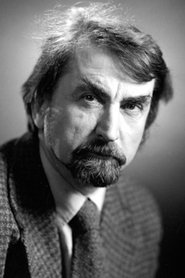 Roman Kroitor(Archive audio)
Title information and images are supplied by TMDb. Explore our discovery guide for advice on comparing metadata and legal viewing options.
Where to watch
Availability provided by JustWatch via TMDb. Offers can change. Provider links are listed on TMDb; full playback requires a separately authorized source.
Seasons & episodes
Recommendations
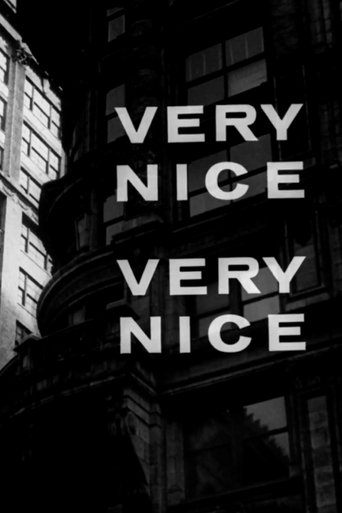
Arthur Lipsett's first film is an avant-garde blend of photography and sound. It looks behind the business-as-usual face we put on life and shows anxieties we want to forget. It is made of dozens of pictures that seem familiar, with fragments of speech heard in passing and, between times, a voice saying, "Very nice, very nice." The film was nominated for an Oscar for Best Live Action Short Film.

A visual montage portrait of our contemporary world dominated by globalized technology and violence.
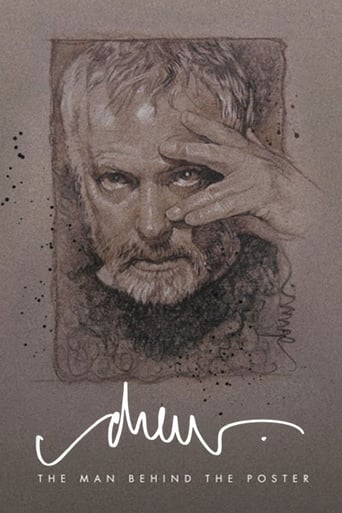
A documentary on legendary movie-poster artist Drew Struzan.
A documentary that explores the downloading revolution; the kids that created it, the bands and the businesses that were affected by it, and its impact on the world at large.

In an intimate and joyful story of love in the face of loss, celebrated poets Andrea Gibson and Megan Falley find strength—and unexpected hilarity—in what might be their final year together.
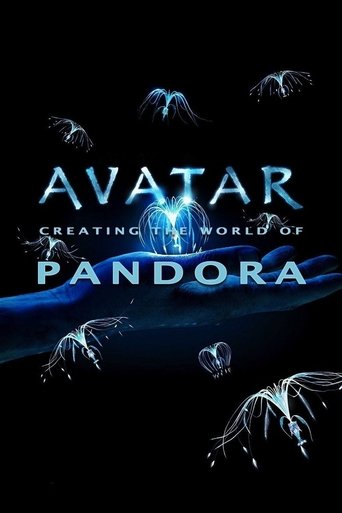
The Making-of James Cameron's Avatar. It shows interesting parts of the work on the set.
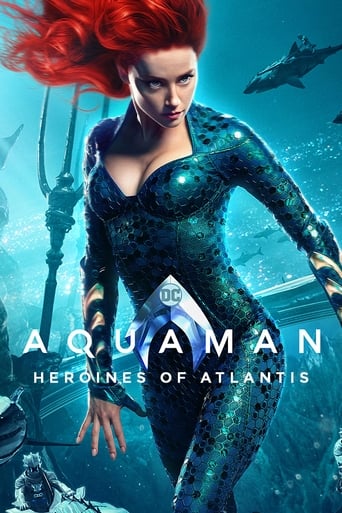
Amber Heard and Nicole Kidman discuss their characters Mera and Atlanna.

Director Michael Apted revisits the same group of British-born adults after a 7 year wait. The subjects are interviewed as to the changes that have occurred in their lives during the last seven years.

A 1993 documentary film about Bruce Lee. The film includes interviews from some of his fellow students and opponents who worked alongside him in his movies.
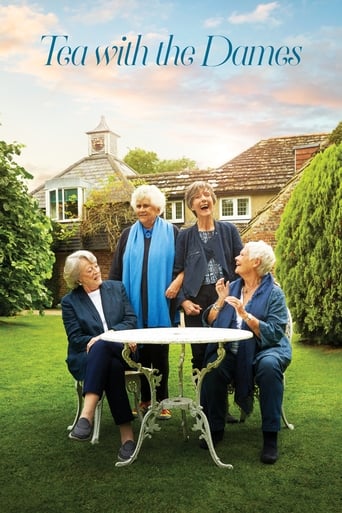
BBC Arena's documentary on the Dames of British Theatre and film featuring Maggie Smith, Eileen Atkins, Judi Dench and Joan Plowright on screen together for the first time as they reminisce over a long summer weekend in a house Joan once shared with Sir Laurence Olivier.

Martin Scorsese, Robert De Niro, Joe Pesci, and Al Pacino in conversation about The Irishman.

A compilation of over 30 years of private home movie footage shot by Lithuanian-American avant-garde director Jonas Mekas, assembled by Mekas "purely by chance", without concern for chronological order.

Artists in LA discover the work of forgotten Polish sculptor Stanislav Szukalski, a mad genius whose true story unfolds chapter by astounding chapter.

A documentary on the expletive's origin, why it offends some people so deeply, and what can be gained from its use.

Through deeply personal interviews with her siblings and an examination of the photographs, letters, and belongings left behind, Mariska assembles a new portrait of her mother Jayne Mansfield, an extraordinary and complex woman.
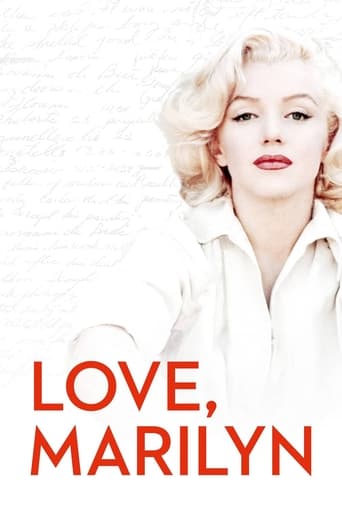
Using the book 'Fragments', which collects Marilyn Monroe's poems, notes and letters, and with participation from the Arthur Miller and Truman Capote estates who have contributed more material, each of the actresses will embody the legend at various stages in her life.

A string of threatening emails escalates into a revenge plot involving a newly married US marshal and his ex-girlfriend.

An inside look at one of the most anticipated movie sequels ever with James Cameron and cast.
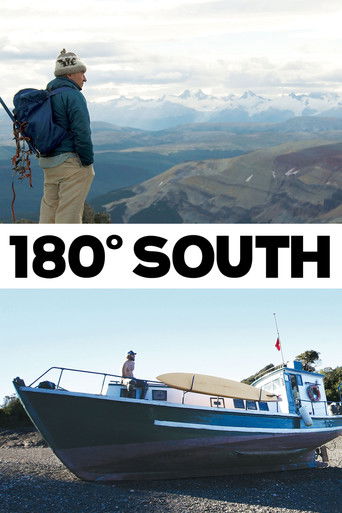
The film follows adventurer Jeff Johnson as he retraces the epic 1968 journey of his heroes Yvon Chouinard and Doug Tompkins to Patagonia.

When Allied forces liberated the Nazi concentration camps in 1944-45, their terrible discoveries were recorded by army and newsreel cameramen, revealing for the first time the full horror of what had happened. Making use of British, Soviet and American footage, the Ministry of Information’s Sidney Bernstein (later founder of Granada Television) aimed to create a documentary that would provide lasting, undeniable evidence of the Nazis’ unspeakable crimes. He commissioned a wealth of British talent, including editor Stewart McAllister, writer and future cabinet minister Richard Crossman – and, as treatment advisor, his friend Alfred Hitchcock. Yet, despite initial support from the British and US Governments, the film was shelved, and only now, 70 years on, has it been restored and completed by Imperial War Museums under its original title "German Concentration Camps Factual Survey".
Similar titles
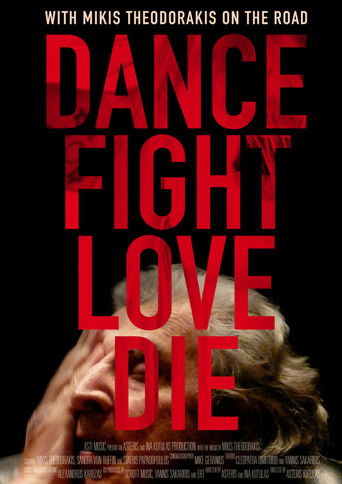
An intimate look into the life of composer Mikis Theodorakis from 1987 until 2017: comprising three decades, four continents, 100 locations and 600 hours of film material. The film interweaves personal moments with archive footage, documentary recordings and fictional pieces, all accompanied by Theodorakis’ music in jazz, classic, electro and rap versions.
An exploration of Rodez Cathedral and its stained glass windows: praying figures and scientific imagery. A study on color, repetition and flickering consisting of 292 photographs.

Something takes us underground, where gods and monsters are active, amid the ruins of a world they move around with their innumerable hands. Inspired by Fritz Lang and Richard Wagner, Remains is a daydream.
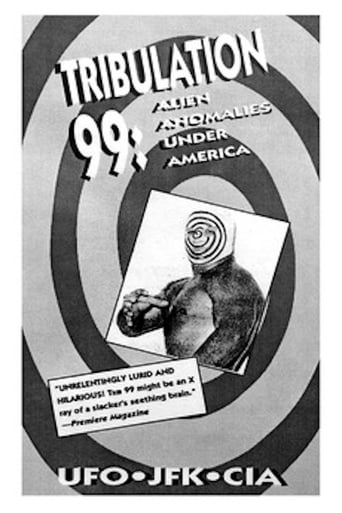
Baldwin’s “pseudo-pseudo-documentary” presents a factual chronicle of US intervention in Latin America in the form of the ultimate conspiracy theory, combining covert action, environmental catastrophe, space aliens, cattle mutilations, killer bees, religious prophecy, doomsday diatribes, and just about every other crackpot theory broadcast through the dentures of the modern paranoiac.
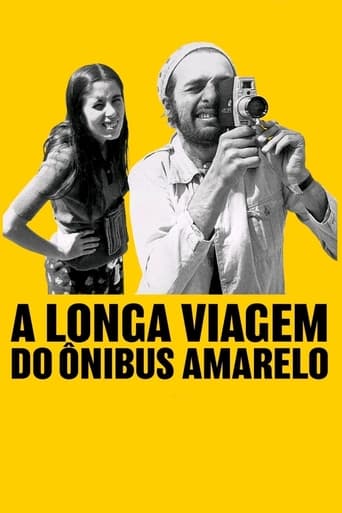
For this behemoth, Bressane took his opera omnia and edited it in an order that first adheres to historical chronology but soon starts to move backwards and forward. The various pasts – the 60s, the 80s, the 2000s – comment on each other in a way that sheds light on Bressane’s themes and obsessions, which become increasingly apparent and finally, a whole idea of cinema reveals itself to the curious and patient viewer. Will Bressane, from now on, rework The Long Voyage of the Yellow Bus when he makes another film? Is this his latest beginning? Why not, for the eternally young master maverick seems to embark on a maiden voyage with each and every new film!
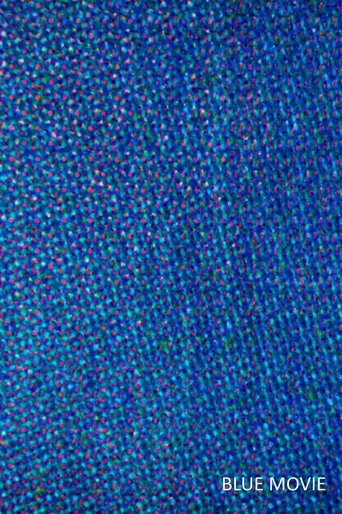
C+M, for YK. Subtractive colour blending is used in an attempt to conjure Yves Klein's 'L'accord bleu (RE 10)', 1960. The limitations imposed by media and technology ensure that my perfect pigment never is, and that what is produced is ephemeral, declarative, and reverent of the impure. Laser printed onto recycled 16mm film in 2014.

Mudos testigos is a cinematographic collage made from all the surviving material of Colombian silent films, re-editing the images in such a way as to create a single imaginary film: the impossible love story of Efraín and Alicia that traces the convulsive first half of the twentieth century in Colombia. Compiled by the late Luis Ospina and finished posthumously by Jeronimo Atehortúa.

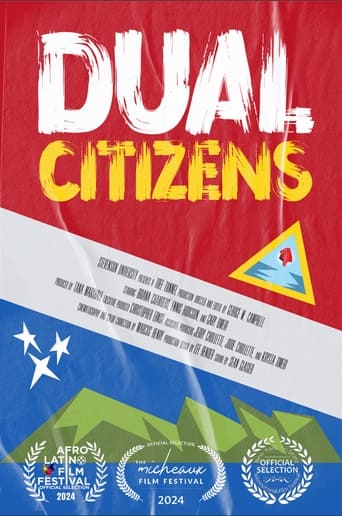
Three Nicaraguan-American artists from the Washington D.C. Metro area discuss growing up in two cultures and how it influences their art.
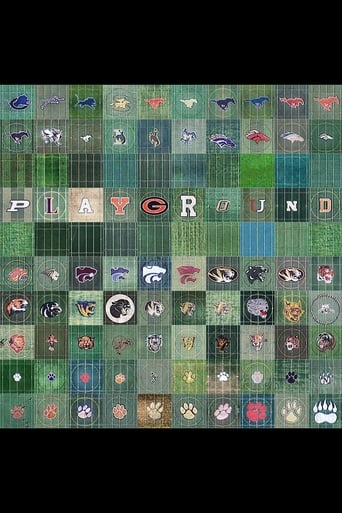
A battle between nature and culture, between organic rye-grass and artificial turf. American football is played on rectangular fields, 120 yards long and 160 feet wide. These dimensions defined the framework for this film. Made with images found in Google Earth. With music by Michel Banabila.

"Visionary post-war modernist Tyeb Mehta channels the nightmares of the nation in Koodal, at once the artist’s self-described “autobiography” and a profound meditation on collage, crowd control, cinematic subjectivity and the violence buried within every glorious act of foundation." -- Sarkari Shorts

Bernadette Corporation describes this work as "A fashion film about the poetry of Stéphane Mallarmé and the color white." Produced for the 2000 Walker Art Center exhibition Let's Entertain, this short film employs a range of strategies to approach the idea of nothingness, emptiness, and vacuity, with an eye to how these notions relate to contemporary mass-cultural entertainment. Juxtaposing "documentary" takes on a fashion shoot with footage of semiologist Sylvère Lotringer giving an impromptu lecture on Mallarmé on a frozen lake, Hell Frozen Over maintains an ambiguous stance from which to both critique and celebrate the power of surface.

An abstract and detailed observation of a young life told through a series of observational montages. Part of the 'Technicolour' series of films from Lot 108 Productions.
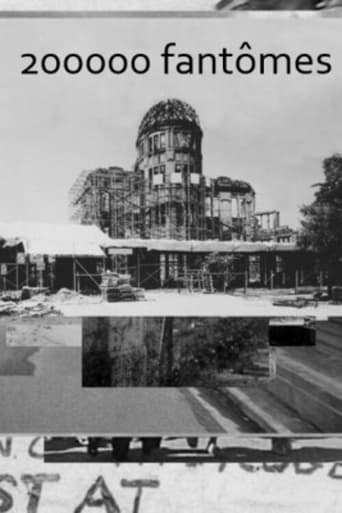
In 1914, the Czech architect Jan Letzel designed in the Japanese city of Hiroshima Center for the World Expo, which has turned into ruins after the atomic bombing in August 1945. “Atomic Dome” – all that remains of the destroyed palace of the exhibition – has become part of the Hiroshima memorial. In 2007, French sculptor, painter and film director Jean-Gabriel Périot assembled this cinematic collage from hundreds of multi-format, color and black and white photographs of different years’ of “Genbaku Dome”.

A collaborator since 2002 (Notre Musique), Fabrice Aragno did not want to make a documentary ‘on’ but ‘with’ Jean-Luc Godard. The latter decided on a mathematical approach. The TV station asked for 26 minutes, and so Godard suggested they make 26 one-minute sequences, and have 4 shots in each sequence, all recycled from his work.
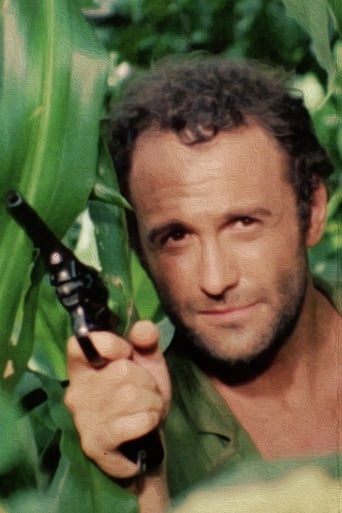
Somewhere between Sri Lanka and the island of New Guinea, in the upper reaches of the Amazonia jungle, there is rumoured to be a lost tribe of cannibals. Assembled out of Italo cannibal mondo movies, Hollow Jungle documents their rituals, sourcing their power in narrative repetitions and analogies, before structurally locating them in the prurient pathologies of certain pseudo-ethnographies.

Collage film about R.D. Laing, who spearheaded the social and cultural revolutions of the 1960s, weaves archival material with his own filmic observations. For Laing, normality meant adjusting ourselves to the mystification of an alienating world.
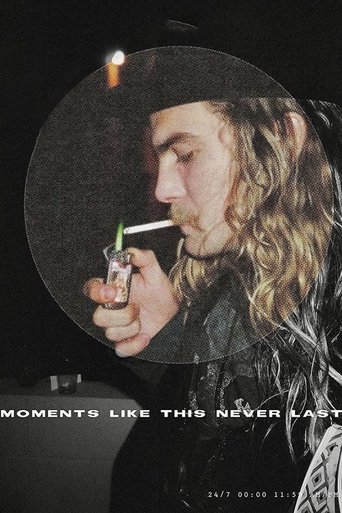
Dash Snow rejected a life of privilege to make his own way as an artist on the streets of downtown New York City in the late 1990s. Developing from a notorious graffiti tagger into an international art star, he documented his drug- and alcohol-fueled nights with the surrogate family he formed with friends and fellow artists Ryan McGinley and Dan Colen before his death by heroin overdose in 2009. Drawing from Snow’s unforgettable body of work and involving archival footage, Cheryl Dunn’s exceptional portrait captures his all-too-brief life of reckless excess and creativity.

Diverse voices trace the history of postmodernism from its roots in art and philosophy all the way to Fox News, Q-Anon, and election denial.