
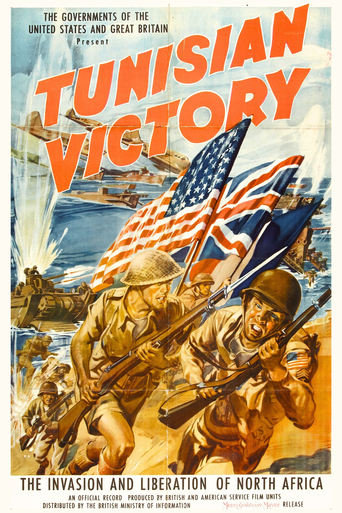
Tunisian Victory
1944-03-23 · 75 min · ★ 6.4
Documentary made by the U.S. Army Signal Corps after the North African campaign.
Trailers are previews, not full movies.
No authorized playback source configured. Use the legal watch options below.
Production details
- Directors
- Frank Capra, Hugh Stewart, John Huston, John Boulting, Roy Boulting
- Production companies
- U.S. Army Signal Corps, British Service Units
- Countries
- United States of America
- Status
- Released
Top Cast
 Leo GennNarrator (voice)
 Burgess MeredithAmerican soldier (voice)
 Bernard MilesBritish soldier (voice)
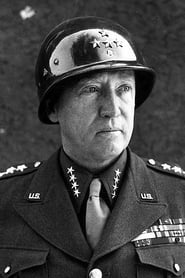 George S. PattonSelf (archive footage)
Title information and images are supplied by TMDb. Explore our discovery guide for advice on comparing metadata and legal viewing options.
Where to watch
Availability provided by JustWatch via TMDb. Offers can change. Provider links are listed on TMDb; full playback requires a separately authorized source.
Streaming
Amazon Prime Video, fuboTV, MGM+ Amazon Channel, Philo, MGM Plus Roku Premium Channel, MGM Plus, GuideDoc, FlixFling, IndieFlix, Amazon Prime Video with Ads
Rental
FlixFling
Purchase
FlixFling
Free
Hoopla, Fawesome
With ads
Cineverse, Mometu, Tubi TV
View authorized watch options on TMDbSeasons & episodes
Recommendations

This documentary movie is about the battle of San Pietro, a small village in Italy. Over 1,100 US soldiers were killed while trying to take this location, that blocked the way for the Allied forces from the Germans. Preserved by the Academy Film Archive in 2005.

A love letter from a young mother to her daughter, the film tells the story of Waad al-Kateab’s life through five years of the uprising in Aleppo, Syria as she falls in love, gets married and gives birth to Sama, all while cataclysmic conflict rises around her. Her camera captures incredible stories of loss, laughter and survival as Waad wrestles with an impossible choice– whether or not to flee the city to protect her daughter’s life, when leaving means abandoning the struggle for freedom for which she has already sacrificed so much.

Amid the failing counteroffensive, a journalist follows a Ukrainian platoon on their mission to traverse one mile of heavily fortified forest and liberate a strategic village from Russian occupation. But the farther they advance through their destroyed homeland, the more they realize that this war may never end.

When Sgt. First Class Brian Eisch is critically wounded in Afghanistan, it sets him and his sons on a journey of love, loss, redemption and legacy.

Korengal picks up where Restrepo left off; the same men, the same valley, the same commanders, but a very different look at the experience of war.

Prelude to War was the first film of Frank Capra's Why We Fight propaganda film series, commissioned by the Pentagon and George C. Marshall. It was made to convince American troops of the necessity of combating the Axis Powers during World War II. This film examines the differences between democratic and fascist states.

The final entry in a trilogy of films produced for the U.S. government by John Huston. Some returning combat veterans suffer scars that are more psychological than physical. This film follows patients and staff during their treatment. It deals with what would now be called PTSD, but at the time was categorised as psychoneurosis or shell-shock. Government officials deemed this 1946 film counterproductive to postwar efforts; it was not shown publicly until 1981.

A documentary about World War I with never-before-seen footage to commemorate the centennial of Armistice Day, and the end of the war.
With unprecedented access, this documentary follows the extraordinary journey of “Raqqa is Being Slaughtered Silently”—a group of anonymous citizen journalists who banded together after their homeland was overtaken by ISIS—as they risk their lives to stand up against one of the greatest evils in the world today.
As the Russian invasion begins, a team of Ukrainian journalists trapped in the besieged city of Mariupol struggle to continue their work documenting the war's atrocities.

Set both in Latin America and the United States, the film explores the historic and current relationship of Washington with countries such as Venezuela, Bolivia and Chile. Pilger says that the film "...tells a universal story... analysing and revealing, through vivid testimony, the story of great power behind its venerable myths. It allows us to understand the true nature of the so-called "war on terror". According to Pilger, the film’s message is that the greed and power of empire is not invincible and that people power is always the "seed beneath the snow".
Virunga in the Democratic Republic of the Congo is Africa's oldest national park, a UNESCO world heritage site, and a contested ground among insurgencies seeking to topple the government that see untold profits in the land. Among this ongoing power struggle, Virunga also happens to be the last natural habitat for the critically endangered mountain gorilla. The only thing standing in the way of the forces closing in around the gorillas: a handful of passionate park rangers and journalists fighting to secure the park's borders and expose the corruption of its enemies. Filled with shocking footage, and anchored by the surprisingly deep and gentle characters of the gorillas themselves, Virunga is a galvanizing call to action around an ongoing political and environmental crisis in the Congo.

“The Soviet Story” is a story of an Allied power, which helped the Nazis to fight Jews and which slaughtered its own people on an industrial scale. Assisted by the West, this power triumphed on May 9th, 1945. Its crimes were made taboo, and the complete story of Europe’s most murderous regime has never been told. Until now...
An experimental documentary that explores Saudi Arabia's relationship with the U.S. and the role this has played in the war in Afghanistan.

A documentary about the life and films of director John Ford.

Pete Postlethwaite stars as a man living alone in the devastated future world of 2055, looking at old footage from 2008 and asking: why didn’t we stop climate change when we had the chance?

Meet the real-life airmen who inspired Masters of the Air as they share the harrowing and transformative events of the 100th Bomb Group.

Police pull over a woman who claims she just gave birth. But the baby — and the blood — aren't hers. Twisted lies unravel in this true-crime documentary.

Documentary filmmaker Amy Berg investigates the life of 30-year pedophile Father Oliver O'Grady and exposes the corruption inside the Catholic Church that allowed him to abuse countless children. Victims' stories and a disturbing interview with O'Grady offer a view into the troubled mind of the spiritual leader who moved from parish to parish gaining trust ... all the while betraying so many.

When Allied forces liberated the Nazi concentration camps in 1944-45, their terrible discoveries were recorded by army and newsreel cameramen, revealing for the first time the full horror of what had happened. Making use of British, Soviet and American footage, the Ministry of Information’s Sidney Bernstein (later founder of Granada Television) aimed to create a documentary that would provide lasting, undeniable evidence of the Nazis’ unspeakable crimes. He commissioned a wealth of British talent, including editor Stewart McAllister, writer and future cabinet minister Richard Crossman – and, as treatment advisor, his friend Alfred Hitchcock. Yet, despite initial support from the British and US Governments, the film was shelved, and only now, 70 years on, has it been restored and completed by Imperial War Museums under its original title "German Concentration Camps Factual Survey".
Similar titles
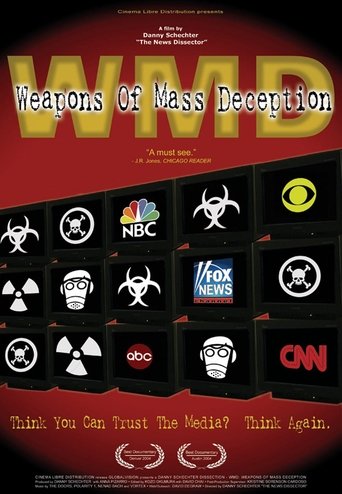
There were two wars in Iraq--a military assault and a media war. The former was well-covered; the latter was not. Until now... Independent filmmaker, Emmy-award winningTV journalist, author and media critic, Danny Schechter turns the cameras on the role of the media. His new film, WMD, is an outspoken assessment of how Pentagon propaganda and media complicity misled the American people...
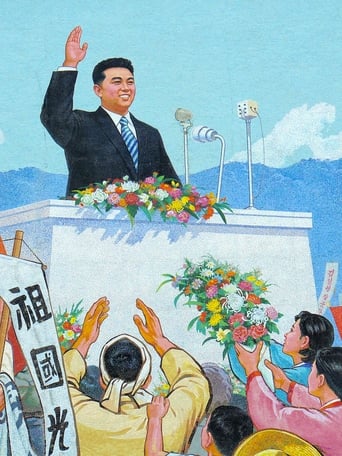
North Korean propaganda film about orchards that yield bigger crops after Kim Il-sung visits. The films was presented as a gift to friendly-minded countries in the world. And expected by the North Korean Culture Ministry to be displayed publicly. Sweden was one of the countries honored by receiving a copy of "Gwasu-ui nara / Country of Orchards".
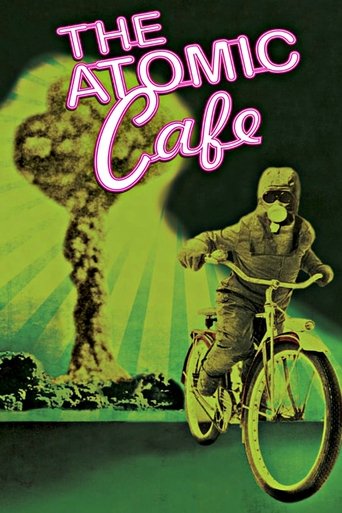
A disturbing collection of 1940s and 1950s United States government-issued propaganda films designed to reassure Americans that the atomic bomb was not a threat to their safety.
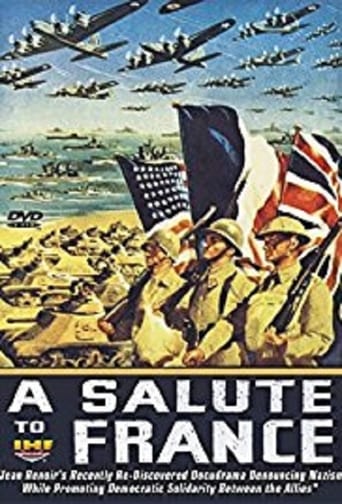
Commissioned to prepare Allied troops for the liberation of Europe, the film uses a blend of staged narratives and historical footage to promote solidarity and dispel the myth that France was a nation of willing collaborators.
A love affair with collectivist ideologies has lead to ever bigger government and the welfare-warfare state. Lead by a Marxist splinter group called the "Frankfurt School" -- "the long march through the institutions" has infiltrated every corner of Western culture to corrupt traditional Christian values with "political correctness," another name for "cultural Marxism." The ultimate goal of cultural Marxism is to first destroy American free-enterprise capitalism by undermining its economic engine, the Middle Class and this will lead -- they hope -- to the destruction of the basic building block of society: the Family Unit.
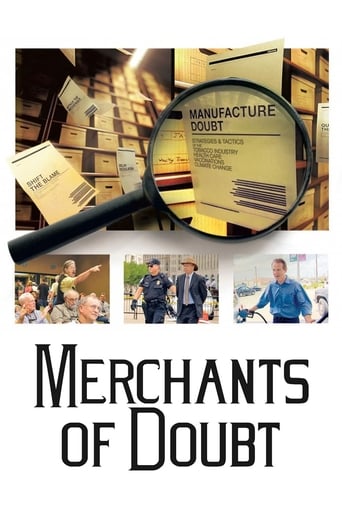
Spin doctors spread misinformation and confusion among American citizens to delay progress on such important issues as global climate change.
Made by the highly influential Russian cameraman Roman Karmen, this documentary vividly features Albanian life immediately after the communists came to power in 1944. The film is especially memorable since it’s missing much of the heavy socialist realism that marked Albanian doc making. Shortly after he completed the film, Karmen set off for Berlin to shoot the Soviet victory over Nazi Germany.
The story of Viktor Stratoberdha (1921-1991) mirrors many of Albania’s tragedies. Stradoberdha’s humorous, buoyant style led him to be one of the country’s most promising filmmakers. But after being denounced in 1956, he was expelled from the Kinostudio and sent into internal exile. In 1967, Stratoberdha directed a local theater play in which the economic five year plan was placed in a coffin. He was then jailed for the next two decades. Urime Shokë Studentë! is one of the surviving documentaries of Viktor Stratoberdha’s all too short career.

The "true" story of Wehrmacht sniper Fredrick Zoller as he single-handedly fends off an Allied siege of a Sicilian town.
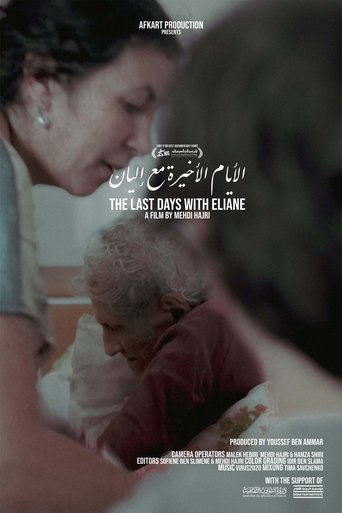
A portrait of the Director’s maternal grandmother, Eliane, a French woman who lived her entire life in Tunisia. The film shows her last moments at home with her family before her passing due to Alzheimer's disease.

See how alt-right icon Steve Bannon’s years as a documentary filmmaker catapulted him to Breitbart News and the Trump White House.
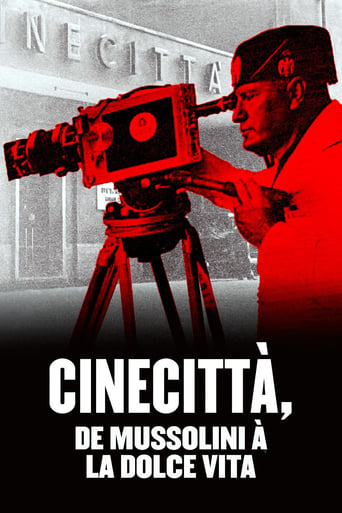
Cinecitta is today known as the center of the Italian film industry. But there is a dark past. The film city was solemnly inaugurated in 1937 by Mussolini. Here, propaganda films would be produced to strengthen the dictator's position.
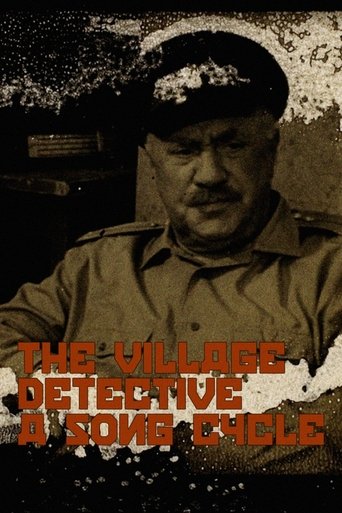
Atlantic Ocean, off the coast of Iceland, July 9, 2016. The surprising discovery of a canister —containing four reels of The Village Detective (Деревенский детектив), a 1969 Soviet film—, caught in the nets of an Icelandic trawler, is the first step in a fascinating journey through the artistic life of film and stage actor Mikhail Ivanovich Zharov (1899-1981), icon and star of an entire era of Russian cinema.
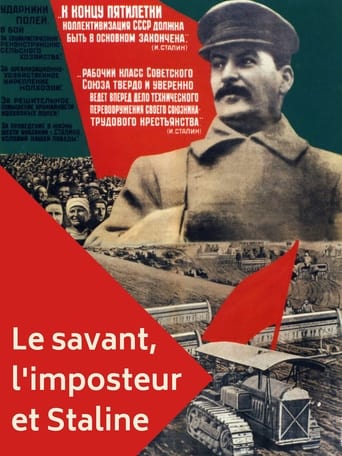
The documentary tells two very different human fates in the 1920s Soviet Union. Nikolai Vavilov was a botanical genius, Trofim Lyssenko was an agronomist who made great promises and fake inventions. Each of them tried to solve the country's nutritional problem, but only one succeeded.
Social democracy propaganda film about future dreams for Denmark in 1960. Although Denmark is free again, the former opponent and worker, Svend, is disillusioned: "It is all something soft". The dream of the future is incarnated by a young woman, Karen, who shows Svend the visions of a better life in the 'youth's land'. There are homes and a nuclear-powered car for everyone.
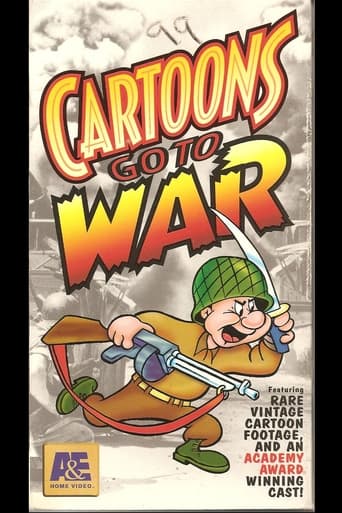
This remarkable documentary dedicates itself to an extraordinary chapter of the second World War – the psychological warfare of the USA. America’s trusted cartoon darlings from the studios of Warner Bros., Paramount, and the “big animals” of the Disney family were supposed to give courage to the people at the homefront, to educate them, but also to simultaneously entertain them. Out of this mixture grew a genre of its own kind – political cartoons. Insightful Interviews with the animators and producers from back then elucidate in an amusing and astonishing way under which bizarre circumstances these films partially came into existence.
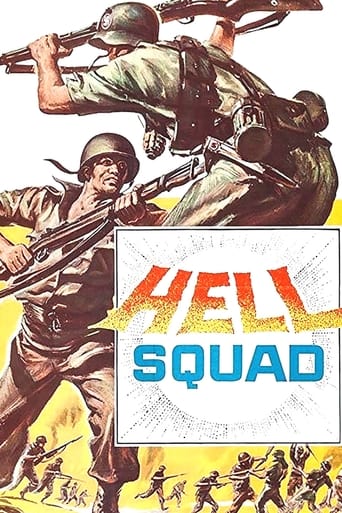
During World War II, a squad of five American soldiers become lost in Tunisia and are killed one by one in fights with German units. Finally only one man, Private Russo, is left, in the midst of a mine field, together with a German officer, locked in a stalemate. Russo has water, while the German claims to have a map revealing the mine positions. So Russo agrees to swap water for the map, but the German officer tries to double-cross him. This was Burt Topper's debut film, made on 16mm on weekends together with some friends in Indio, California. It was also Wally Campo's debut film, as well as script supervisor Joyce King's.
Compilation short film about the Communist Revolution and Soviet Union.
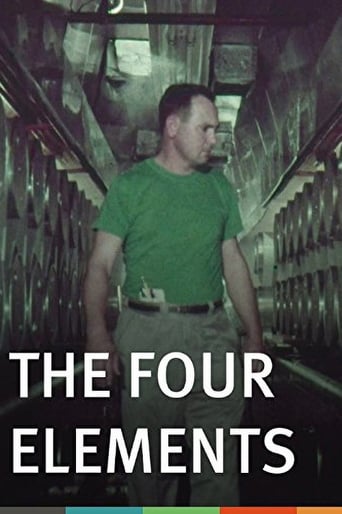
An educational film about power sources that’s rendered as a lyrical meditation on heat and vapor, The Four Elements is a poetic and avant-garde documentary Curtis Harrington made for the United States Information Agency.
During World War II, the propaganda engine of the U.S. government made a pivotal decision with unforeseeable results: they tapped John Huston to shoot war documentaries with an expressly patriotic spin. Few could guess the degree to which Huston's documentaries would depict the sheer brutality and horror of modern warfare - particularly his Let There Be Light and The Battle of San Pietro. The films served (by default) as cinematic protests, even as they graced new and brilliant heights within the scope of American documentary. (Indeed, Light was banned by the government for 35 years). Midge Mackenzie's 1998 documentary John Huston: War Stories explores this little known facet of Huston's career, intercutting clips from the various documentaries with a Huston interview shot just prior to his death.