
Łódź Ghetto
1989-03-22 · 98 min · ★ 8.0
The Polish city of Łódź was under Nazi occupation for nearly the entirety of WWII. The segregation of the Jewish population into the ghetto, and the subsequent horrors are vividly chronicled via newsreels and photographs. The narration is taken almost entirely from journals and diaries of those who lived–and died–through the course of the occupation, with the number of different narrators diminishing as the film progresses, symbolic of the death of each narrator.
Trailers are previews, not full movies.
No authorized playback source configured. Use the legal watch options below.
Production details
- Directors
- Alan Adelson, Kate Taverna
- Production companies
- Corporation for Public Broadcasting, The National Endowment for the Humanities
- Countries
- United States of America
- Status
- Released
Top Cast
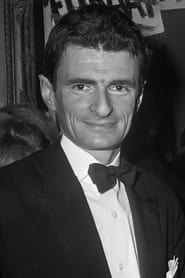 Jerzy KosińskiMordechai Chaim Rumkowski
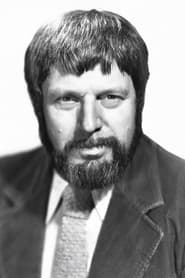 Theodore Bikel(voice)
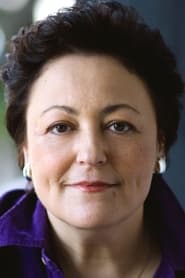 Barbara Rosenblat(voice)
 David Warrilow(voice)
 Lynn Cohen(voice)
Title information and images are supplied by TMDb. Explore our discovery guide for advice on comparing metadata and legal viewing options.
Where to watch
Availability provided by JustWatch via TMDb. Offers can change. Provider links are listed on TMDb; full playback requires a separately authorized source.
Availability not listed for this country.
Seasons & episodes
Recommendations
Marcel Ophuls' riveting film details the heinous legacy of the Gestapo head dubbed "The Butcher of Lyon." Responsible for over 4,000 deaths in occupied France during World War II, Barbie would escape—with U.S. help—to South America in 1951, where he lived until a global manhunt led to his 1983 arrest and subsequent trial.
A visual montage portrait of our contemporary world dominated by globalized technology and violence.

Through deeply personal interviews with her siblings and an examination of the photographs, letters, and belongings left behind, Mariska assembles a new portrait of her mother Jayne Mansfield, an extraordinary and complex woman.
The history of cinematic sound, told by legendary sound designers and visionary filmmakers.
For the 20th anniversary of "Titanic," James Cameron reopens the file on the disaster.
Oliver Stone charts the history of the United States from the Second World War to the present.

A documentary highlighting the Soviet Union's legendary and enigmatic hockey training culture and world-dominating team through the eyes of the team's Captain Slava Fetisov, following his shift from hockey star and celebrated national hero to political enemy.

Using the book 'Fragments', which collects Marilyn Monroe's poems, notes and letters, and with participation from the Arthur Miller and Truman Capote estates who have contributed more material, each of the actresses will embody the legend at various stages in her life.

An unprecedented and intimate look at the life, work and enduring legacy of British actress Audrey Hepburn (1929-1993).
Go behind the scenes with stars, puppeteers and creators as they bring Jim Henson's magical world of Thra back to life in a sweeping fantasy series.
A story of two coalitions – ACT UP and TAG (Treatment Action Group) – whose activism and innovation turned AIDS from a death sentence into a manageable condition. Despite having no scientific training, these self-made activists infiltrated the pharmaceutical industry and helped identify promising new drugs, moving them from experimental trials to patients in record time.
An on-the-scene documentary following the events of September 11, 2001 from an insider's view, through the lens of two French filmmakers who simply set out to make a movie about a rookie NYC fireman and ended up filming the tragic event that changed our lives forever.
During the chaotic final weeks of the Vietnam War, the North Vietnamese Army closes in on Saigon as the panicked South Vietnamese people desperately attempt to escape. On the ground, American soldiers and diplomats confront a moral quandary: whether to obey White House orders to evacuate only U.S. citizens.

Musician and performance artist Laurie Anderson reflects on the deaths of her husband Lou Reed, her mother and her beloved dog.

Prelude to War was the first film of Frank Capra's Why We Fight propaganda film series, commissioned by the Pentagon and George C. Marshall. It was made to convince American troops of the necessity of combating the Axis Powers during World War II. This film examines the differences between democratic and fascist states.

Retrospective documentary about the making of the horror cult classic "The Return of the Living Dead."

An astonishing journey revealing the awesome power of the natural world. Over the course of one single day, we track the sun from the highest mountains to the remotest islands to exotic jungles.
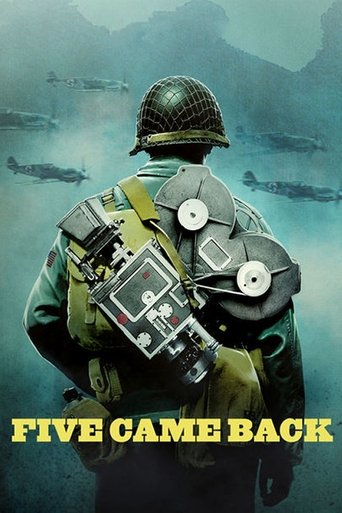
The extraordinary story of how Hollywood changed World War II – and how World War II changed Hollywood, through the interwoven experiences of five legendary filmmakers who went to war to serve their country and bring the truth to the American people: John Ford, William Wyler, John Huston, Frank Capra, and George Stevens. Based on Mark Harris’ best-selling book, “Five Came Back: A Story of Hollywood and the Second World War.”
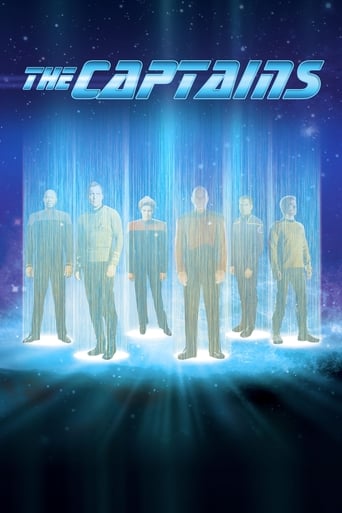
The Captains is a feature-length documentary film written and directed by William Shatner. The film follows Shatner as he interviews the other actors who have portrayed starship captains in the Star Trek franchise.
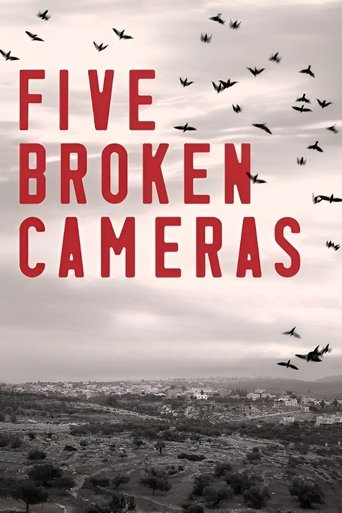
Five broken cameras – and each one has a powerful tale to tell. Embedded in the bullet-ridden remains of digital technology is the story of Emad Burnat, a farmer from the Palestinian village of Bil’in, which famously chose nonviolent resistance when the Israeli army encroached upon its land to make room for Jewish colonists. Emad buys his first camera in 2005 to document the birth of his fourth son, Gibreel. Over the course of the film, he becomes the peaceful archivist of an escalating struggle as olive trees are bulldozed, lives are lost, and a wall is built to segregate burgeoning Israeli settlements.
Similar titles
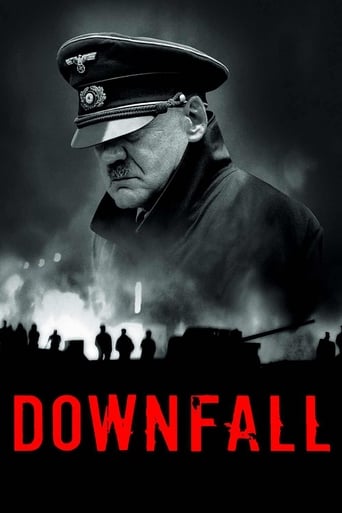
In April of 1945, Germany stands at the brink of defeat with the Russian Army closing in from the east and the Allied Expeditionary Force attacking from the west. In Berlin, capital of the Third Reich, Adolf Hitler proclaims that Germany will still achieve victory and orders his generals and advisers to fight to the last man. When the end finally does come, and Hitler lies dead by his own hand, what is left of his military must find a way to end the killing that is the Battle of Berlin, and lay down their arms in surrender.
19 year old Irena Gut is promoted to housekeeper in the home of a highly respected Nazi officer in Poland when she finds out that the Jewish ghetto is about to be liquidated. Determined to help twelve Jewish workers, she decides to shelter them in the safest place she can think of – the basement of the German Major's house. Over the next eight months, Irena uses her wit, humour and immense courage to hide her friends as long as possible.
At the turn of the century, Lodz, Poland, was a quick-paced manufacturing center for textiles, replete with cutthroat industrialists and unsafe working conditions. Three young friends, a Pole, a Jew, and a German, pool their money together to build a factory.
A retrospective on Hollywood's role in the war effort in World War II, narrated by Johnny Carson.
A story set during the famous WWII air battle between the British Royal Air Force and the German Luftwaffe.
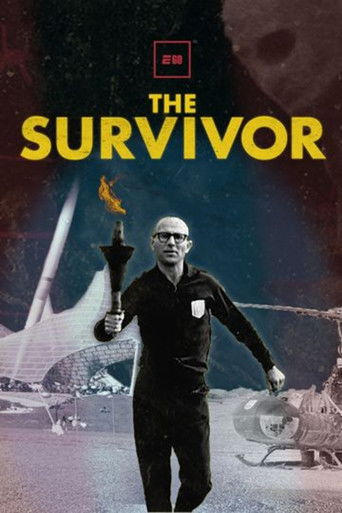
A powerful and emotional new episode of ESPN E60 will look back 50 years to one of the darkest moments in sports history – the Munich Massacre, when Palestinian terrorists murdered 11 Israeli sportsmen at the 1972 Summer Olympics. E60 will tell the story of one Israeli athlete, now 86, who survived, just as he had survived World War II and the Holocaust when he was a child.
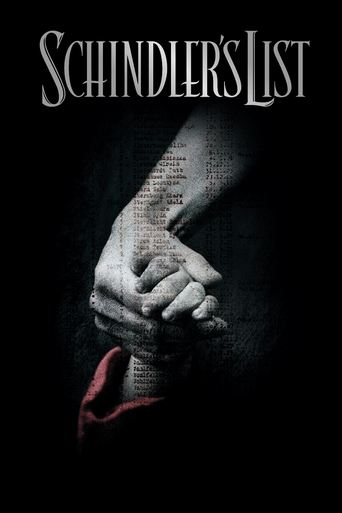
The true story of how businessman Oskar Schindler saved over a thousand Jewish lives from the Nazis while they worked as slaves in his factory during World War II.
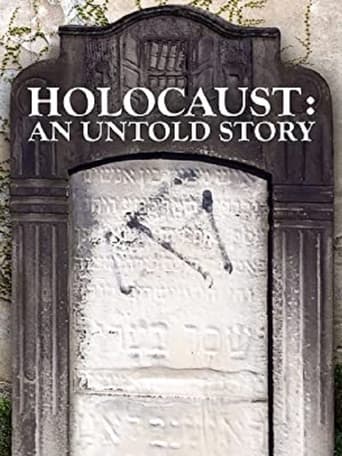
With the help of a Baptist minister and people abroad, the son of Holocaust survivors unshackles his inherited trauma and reconstructs his future.
Interviews with two veteran survivors of the pivotal battle of WWII
Vastly outnumbered and outgunned, America's triumph at Midway seems like a miracle until you look at the key event that paved the way to victory: Breaking the secret Japanese military code. Discover how an intrepid group of code breakers made this victory possible, and meet Joe Rochefort, their eccentric leader, an oddball genius who wore a smoking jacket and bathrobe to work, but whose brilliance helped put an end to Japanese dominance in the Pacific.
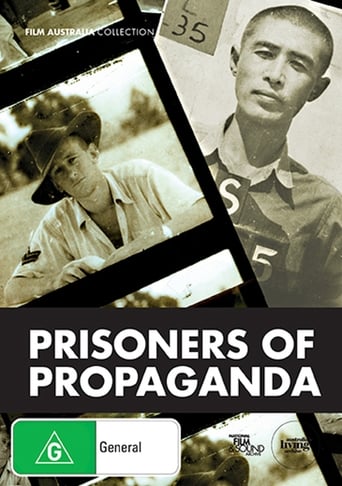
In 1943, the Imperial Japanese Secret Service made a film called Calling Australia! to show the "exemplary conditions" under which prisoners of war were kept, and to "soften up" the Australian public for the anticipated occupation of their country by Japanese forces. Prisoners of Propaganda tells why the film was made, and how it came to be forgotten.
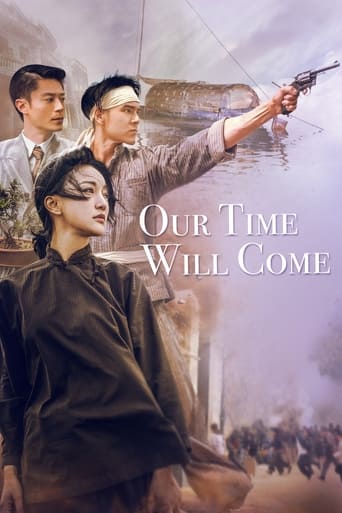
In Japanese-occupied Hong Kong, a school teacher and her would-be-fiancé link up with Chinese guerrilla fighters, forging their own path to freedom.
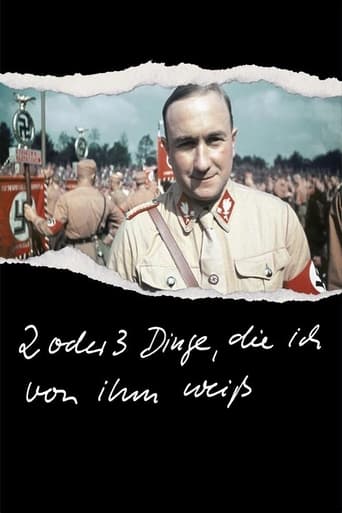
What would your family reminiscences about dad sound like if he had been an early supporter of Hitler’s, a leader of the notorious SA and the Third Reich’s minister in charge of Slovakia, including its Final Solution? Executed as a war criminal in 1947, Hanns Ludin left behind a grieving widow and six young children, the youngest of whom became a filmmaker. It's a fascinating, maddening, sometimes even humorous look at what the director calls "a typical German story." (Film Forum)
The background to, events of and consequences of the Battle of Mers-El-Kebir on 3 July 1940. In that battle, Royal Navy ships fired on the French Fleet in order to prevent it from falling into German hands. A French battleship was sunk and several other ships damaged. Nearly 1,300 French sailors were killed.
2-channel film installation 'Die Last meines Namens', wherein Heydt deals with an unpleasant part of his own family history. Heydt’s great-grandfather was a member of the NSDAP and mayor of the small town of Haselünne in Emsland for almost 10 years during the Third Reich. Based on interviews with his grandfather and research in various archives, Heydt develops a personal perspective on the subject. The film deals with how we construct identity from oral retellings, how we process family histories, and how we can find current and personal points of access to German remembrance culture. At the heart of the work are two conversations with his grandfather Heinrich Heydt, recorded at different points in the research process. In them, the grandfather describes his memories of his father, the time, and the two reflect on the subject and the results of the research.
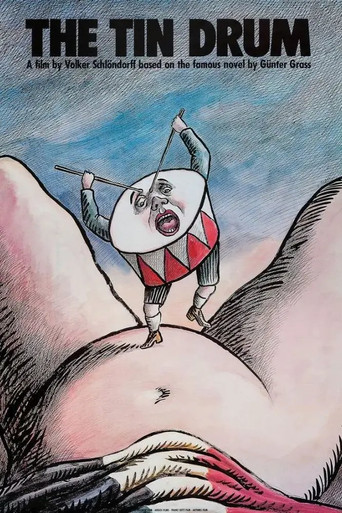
In 1924, Oskar Matzerath is born in the Free City of Danzig. At age three, he falls down a flight of stairs and stops growing. In 1939, World War II breaks out.
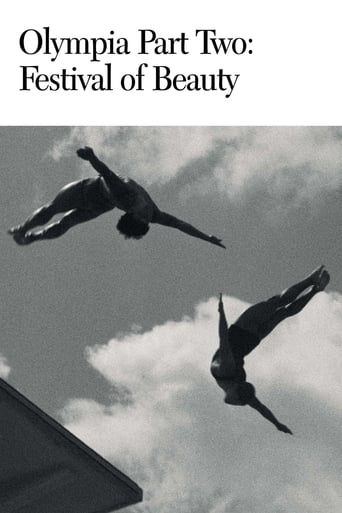
Part two of Leni Riefenstahl's monumental examination of the 1938 Olympic Games, the cameras leave the main stadium and venture into the many halls and fields deployed for such sports as fencing, polo, cycling, and the modern pentathlon, which was won by American Glenn Morris.
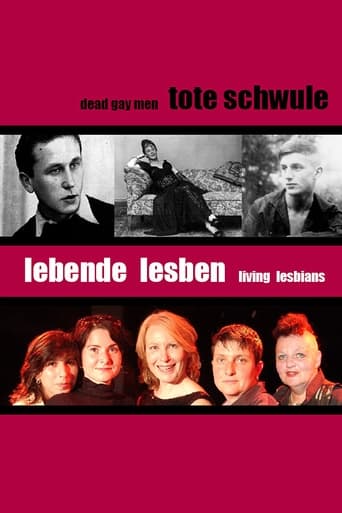
As a result of the Holocaust and later, AIDS, the male homosexual community has sustained bitter losses and, according to Praunheim, lesbian women have now placed themselves at the head of the so-called queer movement. The female protagonists in the film represent two different generations; they also incorporate the past and present status of homosexuals in society.
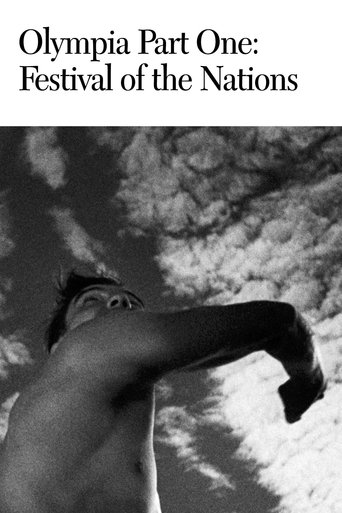
Starting with a long and lyrical overture, evoking the origins of the Olympic Games in ancient Greece, Riefenstahl covers twenty-one athletic events in the first half of this two-part love letter to the human body and spirit, culminating with the marathon, where Jesse Owens became the first track and field athlete to win four gold medals in a single Olympics.