Armin und die blaue Tonne
1998-06-30 · Runtime unavailable · Not rated
Go with Armin and the blue garbage can through Munich and discover what happens to the garbage: Let us show you how 365 cans fit into just 16 water bottles. See how new paper is made from an old newspaper. Watch how waste from the organic waste garbage can is turned back into potting soil.
Trailers are previews, not full movies.
No authorized playback source configured. Use the legal watch options below.
Production details
- Directors
- Unavailable
- Production companies
- Stadt München
- Countries
- Germany
- Status
- Released
Top Cast
Title information and images are supplied by TMDb. Explore our discovery guide for advice on comparing metadata and legal viewing options.
Where to watch
Availability provided by JustWatch via TMDb. Offers can change. Provider links are listed on TMDb; full playback requires a separately authorized source.
Availability not listed for this country.
Seasons & episodes
Recommendations

When Allied forces liberated the Nazi concentration camps in 1944-45, their terrible discoveries were recorded by army and newsreel cameramen, revealing for the first time the full horror of what had happened. Making use of British, Soviet and American footage, the Ministry of Information’s Sidney Bernstein (later founder of Granada Television) aimed to create a documentary that would provide lasting, undeniable evidence of the Nazis’ unspeakable crimes. He commissioned a wealth of British talent, including editor Stewart McAllister, writer and future cabinet minister Richard Crossman – and, as treatment advisor, his friend Alfred Hitchcock. Yet, despite initial support from the British and US Governments, the film was shelved, and only now, 70 years on, has it been restored and completed by Imperial War Museums under its original title "German Concentration Camps Factual Survey".

Through deeply personal interviews with her siblings and an examination of the photographs, letters, and belongings left behind, Mariska assembles a new portrait of her mother Jayne Mansfield, an extraordinary and complex woman.

In an intimate and joyful story of love in the face of loss, celebrated poets Andrea Gibson and Megan Falley find strength—and unexpected hilarity—in what might be their final year together.

An inside look at one of the most anticipated movie sequels ever with James Cameron and cast.

Using the book 'Fragments', which collects Marilyn Monroe's poems, notes and letters, and with participation from the Arthur Miller and Truman Capote estates who have contributed more material, each of the actresses will embody the legend at various stages in her life.

Marcel Ophuls' riveting film details the heinous legacy of the Gestapo head dubbed "The Butcher of Lyon." Responsible for over 4,000 deaths in occupied France during World War II, Barbie would escape—with U.S. help—to South America in 1951, where he lived until a global manhunt led to his 1983 arrest and subsequent trial.
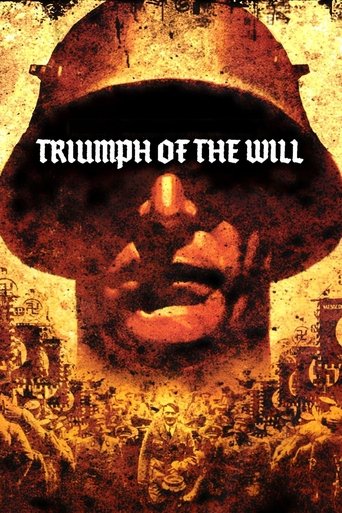
A showcase of German chancellor and Nazi Party leader Adolf Hitler at the 1934 Nuremberg Rally.

A night of drunken chaos rocks a quiet Dutch town in this shocking documentary about a teen's birthday invite that accidentally went viral on Facebook.
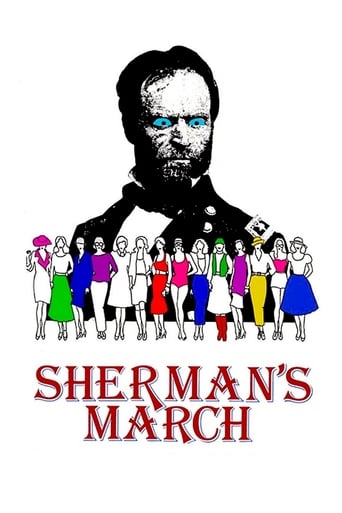
Documentarian Ross McElwee originally set out to make a travelogue of sorts tracing General William T. Sherman's infamous scorched-earth march through the Confederacy in the latter stages of the Civil War. Instead, haunted by a recent breakup with a girlfriend, McElwee ends up documenting his progress -- or lack thereof -- in starting a new relationship. His journey then becomes one of self-reflection and self-discovery rather than a historical/sociological exploration.
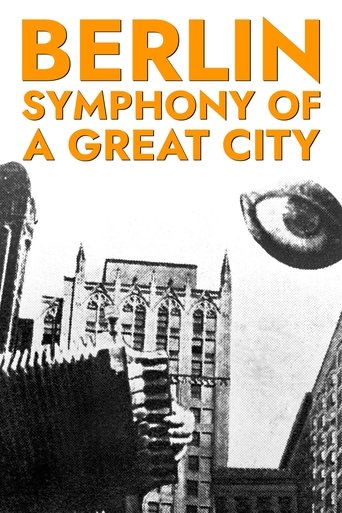
A day in the city of Berlin, which experienced an industrial boom in the 1920s, and still provides an insight into the living and working conditions at that time. Germany had just recovered a little from the worst consequences of the First World War, the great economic crisis was still a few years away and Hitler was not yet an issue at the time.

A compilation of over 30 years of private home movie footage shot by Lithuanian-American avant-garde director Jonas Mekas, assembled by Mekas "purely by chance", without concern for chronological order.

Over 35 years after Bob Lazar's revelations, this documentary exposes secrets of a facility the government still denies. Featuring Lazar's testimony, recreations, and new evidence, it reopens a case that continues to spark global curiosity

A documentary about the making of season five of the acclaimed AMC series Breaking Bad.

Musician and performance artist Laurie Anderson reflects on the deaths of her husband Lou Reed, her mother and her beloved dog.
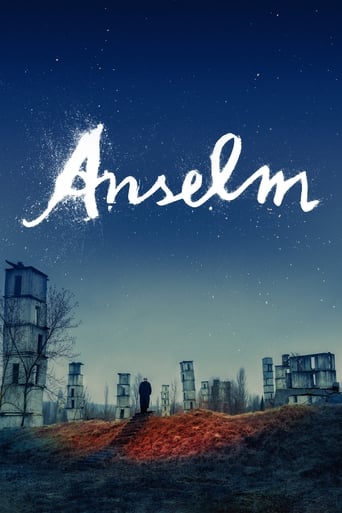
This unique cinematic experience dives deep into an artist’s work and reveals his life path, inspiration, and creative process. It explores his fascination with myth and history. Past and present are interwoven to diffuse the line between film and painting, allowing the audience to be completely immersed in the remarkable world of one of the greatest contemporary artists, Anselm Kiefer. Wim Wenders shot this unique portrait over the course of two years in stunning 3D.
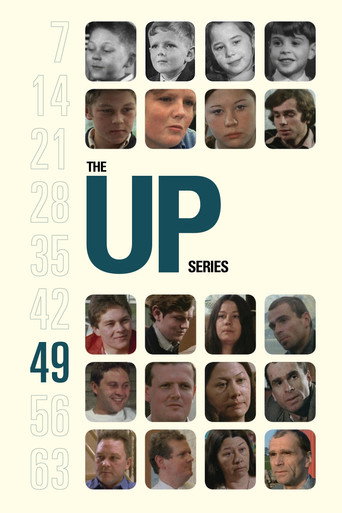
49 Up is the seventh film in a series of landmark documentaries that began 42 years ago when UK-based Granada's World in Action team, inspired by the Jesuit maxim "Give me the child until he is seven and I will give you the man," interviewed a diverse group of seven-year-old children from all over England, asking them about their lives and their dreams for the future. Michael Apted, a researcher for the original film, has returned to interview the "children" every seven years since, at ages 14, 21, 28, 35, 42 and now again at age 49.In this latest chapter, more life-changing decisions are revealed, more shocking announcements made and more of the original group take part than ever before, speaking out on a variety of subjects including love, marriage, career, class and prejudice.

A look at the origins, history and conspiracies behind the "Majestic 12", a clandestine group of military and corporate figureheads charged with reverse-engineering extraterrestrial technology.

A documentary on the expletive's origin, why it offends some people so deeply, and what can be gained from its use.
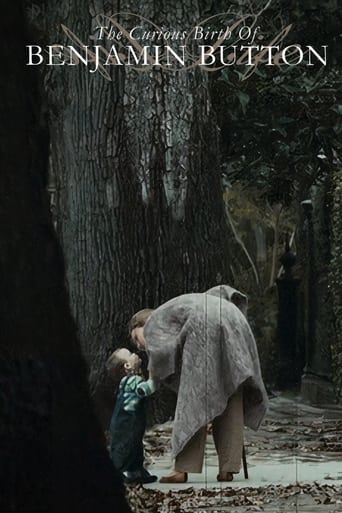
A documentary about the making of David Fincher's 2008 film THE CURIOUS CASE OF BENJAMIN BUTTON. Virtually every element in the evolution of the Fincher's film is documented here, from the project's attachment to numerous other directors during the 1990s, to its shoot in 2006 and 2007 in New Orleans, to its complex, CGI-intensive postproduction process.
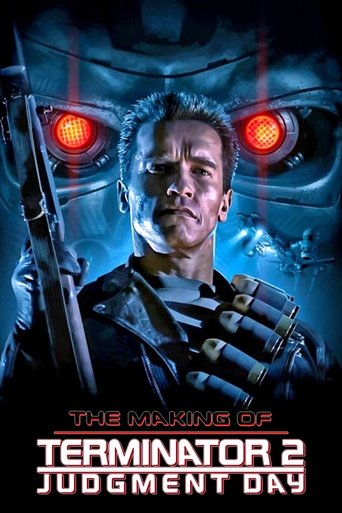
Documentary of the making of the sequel to the popular Schwarzenegger film, The Terminator.
Similar titles

It does not happen every day that a gigantic stadium is built on a greenfield: In October of 2001, the citizens of Munich voted with a clear yes for a new soccer stadium in the north of the city. 66,000 soccer fans of FC Bayern and 1860 Munich will find a new common home in the futuristic looking structure. But before that stand four years of work on a construction site of superlatives. The director Wolfgang Ettlich and his cameraman Hans-Albrecht Lusznat followed the construction of the new Munich soccer arena since the first groundbreaking. They have recorded several phases of the construction and did thereby get to know the microcosm of a large construction site from the inside: The logistics, with which hundreds of construction workers have to be coordinated, and the steady growth of the stadium all the way to the perfectly conceptualized illuminated structure, with VIP-boxes, mass restaurants, and Europe’s largest parking garage.
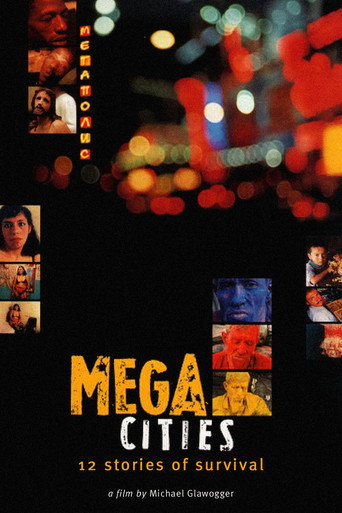
Megacities is a documentary about the slums of four different metropolitan cities.
Documentary film with play scenes about the rise and fall of the short-lived Bavarian Soviet Republic in 1919 from the perspective of various well-known poets and writers who experienced the events as contemporary witnesses.
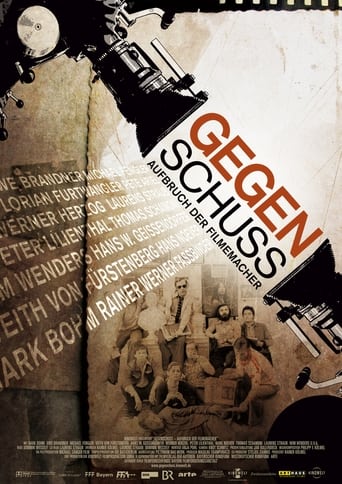
Documentary about filmmakers of the New German Cinema who were members of the legendary Filmverlag für Autoren (Film Publishing House for Authors). Among them are Werner Herzog, Rainer Werner Fassbinder, and Wim Wenders.

An anti-littering public service announcement from the Chicago Park District
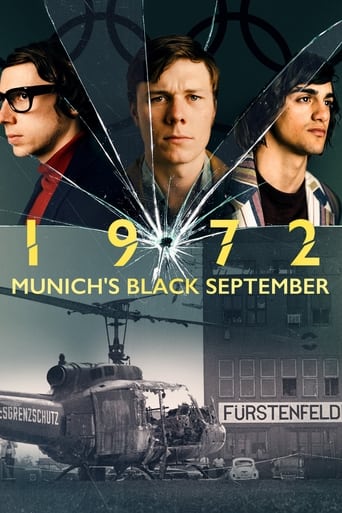
Explore the tragic truth about the massacre at the 1972 Olympic Games in Germany. Through interviews with key people such as the families of slain Olympians, German investigators and an anonymous perpetrator.

The night of November 8, 1923, is arguably the most significant and transformative in the history of the twentieth century. A localised uprising in the Bavarian capital of Munich, led by a small man with a toothbrush moustache and a poisonous yet compelling grandiloquence, would have repercussions that would lead to the political shackling of an entire nation, the most abhorrent crimes of the century and a world war. You might say, Adolf Hitler came of age amid the smell of sweat and sawdust of a Munich beer hall. In the political chaos of 1923, he was a local irritant, gaining popularity among workers and soldiers, the ethos of his Nazi Party spreading like a virus. His first attempt at attaining true power came with an attempted putsch on the already separatist government of Bavaria, which left him imprisoned.

Documentary about the messie Günther Hilmer, in whose house the garbage is piled up to the ceiling. For him, trash is more of a passion than a vice, but his particular penchant for garbage has negative consequences for his social life.
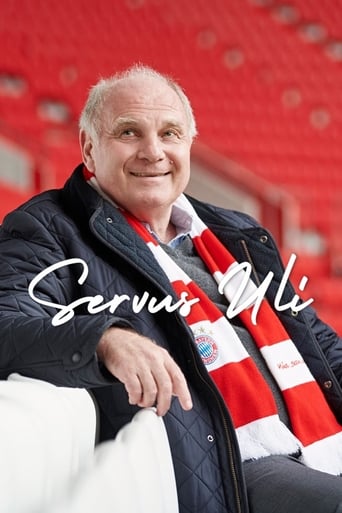
"Servus", he said after 49 years as a leading personality at FC Bayern München. Whether as player, manager or president, he played a major role in making FC Bayern the most successful German football club ever. Now, after countless athletical and personal ups and downs, Uli Hoeneß is retiring in late 2019.
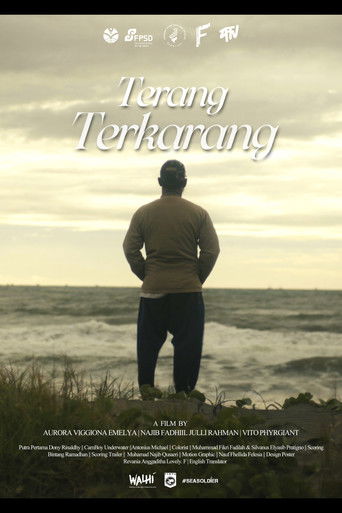
Kang Entis who is a former fisherman in Palabuhan Ratu, struggles to defend his life when the sea damage due to garbage and development eliminates his livelihood.
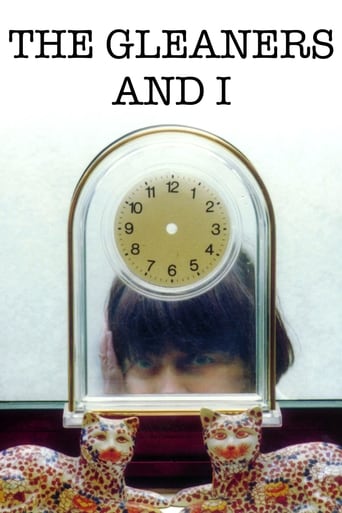
Varda focuses her eye on gleaners: those who scour already-reaped fields for the odd potato or turnip. Her investigation leads from forgotten corners of the French countryside to off-hours at the green markets of Paris, following those who insist on finding a use for that which society has cast off, whether out of necessity or activism.

A look back at the meeting in Munich in 1977 between composer and producer Giorgio Moroder and singer Donna Summer, which was to result, amongst other global hits, in the extraordinary “I Feel Love”.

As the first woman in Europe to found a private space company, Hélène Huby sets out to challenge the dominance of SpaceX. In doing so, she enters a global race in which Europe barely has a foothold. But this is about more than technology: whoever controls access to space also shapes the order of our world. Over the course of several years, the film follows Huby through negotiations, setbacks and the lead-up to a crucial first rocket launch in the United States. Between airports, conference rooms and ever fewer moments with her family, it becomes clear what this ambition demands. As she tries to change the system, she risks becoming part of it herself.

A film about our garbage that is found in the most remote areas and about the people who try to dispose of it. Not only in the sea and on coasts, also in the Arctic, the jungle, high up on the mountains and deep inside the desert, garbage is found almost everywhere in various forms and dimensions, sometimes as whole car wrecks, old TV sets or simply construction rubble, but mostly in the form of disintegrated plastic particles a few millimetres in size. Humanity has handed out its visiting cards thoroughly.
Franky is a unique street sweeper who cleans his neighborhood in Munich every morning at 4:30. In addition to his work on the streets of Munich, he is also a painter and hobby philosopher.

From 1929 to 1939 Edgar Feuchtwanger lived across the street from Adolf Hitler in Munich Germany From his bedroom the young Jewish boy often viewed the Fuumlhrer just across the avenue A schoolboy in Munich at the time Edgar witnessed the rise of Nazism firsthand sharing in the fear and dread felt by all German Jews witnessing the unstoppable ascent of a madman and the start of World War II
Documentary about Kurt Landauer, the long-time Jewish president of FC Bayern München, who led the club to its first German championship, was persecuted and forced out of office by the Nazis, and rebuilt the club after the war.