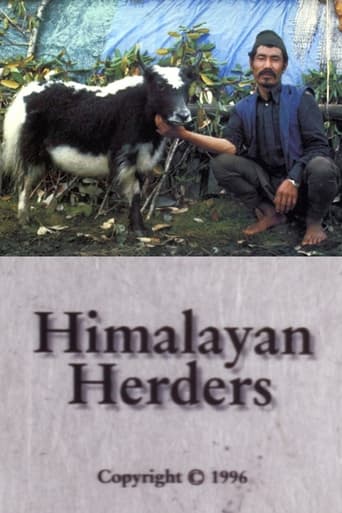
Himalayan Herders
1997-06-11 · 76 min · Not rated
John Bishop and Naomi Bishop present a portrait a peculiar life style of the Himalayan indigenous Sherpa people in their documentary , the Himalayan Herders. The 76 minutes long film is about the diverse culture and life style of herders community near Mt. Everest region of Nepal.The film was made in 1997 as a part of Case Studies in Cultural Anthropology Series.
Trailers are previews, not full movies.
No authorized playback source configured. Use the legal watch options below.
Production details
- Directors
- John Bishop, Naomi Bishop
- Production companies
- Unavailable
- Countries
- Unavailable
- Status
- Released
Top Cast
Cast unavailable.
Title information and images are supplied by TMDb. Explore our discovery guide for advice on comparing metadata and legal viewing options.
Where to watch
Availability provided by JustWatch via TMDb. Offers can change. Provider links are listed on TMDb; full playback requires a separately authorized source.
Seasons & episodes
Recommendations
Meru is the electrifying story of three elite American climbers—Conrad Anker, Jimmy Chin, and Renan Ozturk—bent on achieving the impossible.
An epic story of adventure, starring some of the most magnificent and courageous creatures alive, awaits you in EARTH. Disneynature brings you a remarkable story of three animal families on a journey across our planet – polar bears, elephants and humpback whales.

Unprecedented access to Muhammad Ali's personal archive of "audio journals" as well as interviews and testimonials from his inner circle of family and friends are used to tell the legend's life story.
In 2019, Nepalese mountain climber Nirmal “Nims” Purja set out to do the unthinkable by climbing the world’s fourteen highest summits in less than seven months. (The previous record was eight years). He called the effort “Project Possible 14/7” and saw it as a way to inspire others to strive for greater heights in any pursuit. The film follows his team as they seek to defy naysayers and push the limits of human endurance.

In an intimate and joyful story of love in the face of loss, celebrated poets Andrea Gibson and Megan Falley find strength—and unexpected hilarity—in what might be their final year together.

Through deeply personal interviews with her siblings and an examination of the photographs, letters, and belongings left behind, Mariska assembles a new portrait of her mother Jayne Mansfield, an extraordinary and complex woman.

A documentary on the expletive's origin, why it offends some people so deeply, and what can be gained from its use.

A documentary about ten very different lives connected by having appeared onscreen wearing masks or helmets in Star Wars.

Director Michael Apted revisits the same group of British-born adults after a 7 year wait. The subjects are interviewed as to the changes that have occurred in their lives during the last seven years.

A look at the origins, history and conspiracies behind the "Majestic 12", a clandestine group of military and corporate figureheads charged with reverse-engineering extraterrestrial technology.

Ranjit, a farmer in India, takes on the fight of his life when he demands justice for his 13-year-old daughter, the victim of a brutal gang rape. His decision to support his daughter is virtually unheard of, and his journey unprecedented.

In the Realms of the Unreal is a documentary about the reclusive Chicago-based artist Henry Darger. Henry Darger was so reclusive that when he died his neighbors were surprised to find a 15,145-page manuscript along with hundreds of paintings depicting The Story of the Vivian Girls, in What is Known as the Realms of the Unreal, of the Glodeco-Angelinnian War Storm, Cased by the Child Slave Rebellion.

Alexander McQueen's rags-to-riches story is a modern-day fairy tale, laced with the gothic. Mirroring the savage beauty, boldness and vivacity of his design, this documentary is an intimate revelation of McQueen's own world, both tortured and inspired, which celebrates a radical and mesmerizing genius of profound influence.

From a prolific career in film and television, Anton Yelchin left an indelible legacy as an actor. Through his journals and other writings, his photography, the original music he wrote, and interviews with his family, friends, and colleagues, this film looks not just at Anton's impressive career, but at a broader portrait of the man.

A detailing of the rise to prominence and global sporting superstardom of six supremely talented young Manchester United football players (David Beckham, Nicky Butt, Ryan Giggs, Paul Scholes, Phil and Gary Neville). The film covers the period 1992-1999, culminating in Manchester United's European Cup triumph.

In 1999, Internet entrepreneur Josh Harris recruits dozens of young men and women who agree to live in underground apartments for weeks at a time while their every movement is broadcast online. Soon, Harris and his girlfriend embark on their own subterranean adventure, with cameras streaming live footage of their meals, arguments, bedroom activities, and bathroom habits. This documentary explores the role of technology in our lives, as it charts the fragile nature of dot-com economy.

Daniel Craig candidly reflects on his 15 year adventure as James Bond. Including never-before-seen archival footage from Casino Royale to the upcoming 25th film No Time To Die, Craig shares his personal memories in conversation with 007 producers, Michael G Wilson and Barbara Broccoli.

A documentary about how a dominant cultural and demographic institution both sustains their traditional activities and adapts to the digital revolution.

A real-life undercover thriller about two ordinary men who embark on an outrageously dangerous ten-year mission to penetrate the world's most secretive and brutal dictatorship: North Korea.
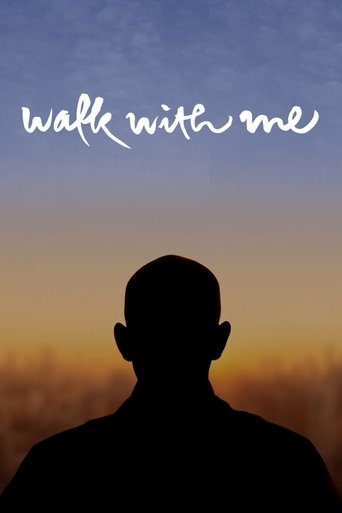
Narrated by Benedict Cumberbatch, Walk With Me is a cinematic journey into the world of a monastic community who practice the art of mindfulness with Zen Buddhist master Thich Nhat Hanh.
Similar titles

An actuality film showing a Buddhist festival in Kyoto. The procession includes Buddhist monks, geishas, and others dressed coordinately to the Japanese tradition.

Vaastu Marabu documents the theory and practice of the Vaastu tradition of Indian art, architecture, craft and design. One of the foremost shilpis (designer-builder-sculpter) of India, Shri. V. Ganapati Sthapati of Mammallapuram, meditates on his art and his occupation. The film shows the process of making stone idols at Mammallapuram, near Madras, of casting bronzes in Kumbakonam, and of building stone temples at Kamudhi, near Madurai and at Ratnagiri, near Vellore. It illustrates the continuity of the tradition and reveals a technology that is ancient, yet still relevant today. The film explores the process of translating inner experience into art, and invites us to experience the naked beauty of the form while understanding the metaphysical message. The art of the Vishwakarma has given form and expression to all denominations of metaphysical thought in India. The film also probes the underlying scientific and mathematical principles.
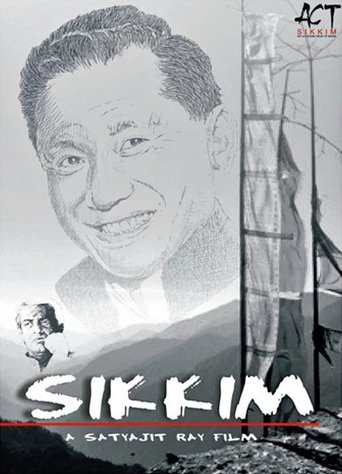
Satyajit Ray's poetic documentary was commissioned by the Chogyal (King) of Sikkim at a time when he felt the sovereignty of Sikkim was under threat from both China and India. Ray's documentary is about the sovereignty of Sikkim. The film was banned by the government of India when Sikkim merged with India in 1975. The ban was finally lifted by the Ministry of External Affairs in September 2010. Preserved by the Academy Film Archive in 2007.
27-year-old German alpinist Jost Kobusch wants to climb Everest, alone, without oxygen and in Winter, when the roof of the world is deserted.
"Heart of the Country" is the story of Shinichi Yasutomo, the extraordinary principal of a rural elementary school in Kanayama, central Hokkaido, Northern Japan. Yasutomo is a man driven by his vision for learning and his passion for educating the heart as well as the mind. The film follows Yasutomo, his teachers and staff, students and their families over the course of one entire school year. The film is also the story of the families of Kanayama. Parents and elders of this once impoverished town embrace Yasutomo's vision, but not without wary glances back to the past. This small community, bound together by love for its children, is also defined by its journey through the cultural upheavals of postwar Japan.
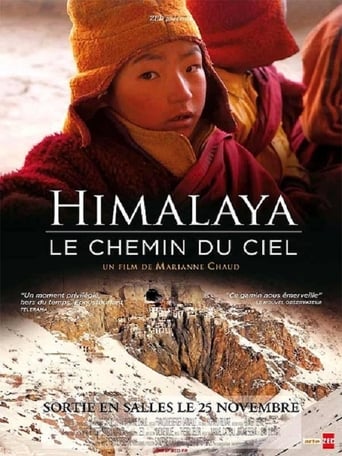
Directed by Marianne Chaud
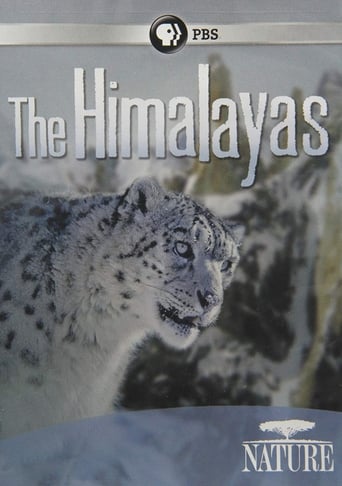
The highest mountain range in the world, the Himalayan range is far reaching, spanning thousands of miles, and holds within it an exceptionally diverse ecology. Coniferous and subtropical forests, wetlands, and montane grasslands are as much a part of this world as the inhospitable, frozen mountaintops that tower above. The word Himalaya is Sanskrit for abode of snow, fitting for a stretch of land that houses the world’s largest non polar ice masses. Extensive glacial networks feed Asia's major rivers including the Ganges, Indus, and Brahmaputra. More than a billion people rely on these glacier-fed water sources for drinking water and agriculture. The Himalayas are not only a remarkable expanse of natural beauty. They're also crucial for our survival.

"With characteristic wit and rigor, experimental filmmaker Larry Gottheim here applies his impressionistic editing style to footage collected during his travels in the Dominican Republic. Gottheim’s formal emphasis on repetition and fissures between sound and image resonates here as a mode of sociological reflection (with the fragmentary montage mirroring elements of ritual while also destabilizing the ethnographic gaze). A largely overlooked antecedent to the contemporary blending of avant-garde and ethnographic filmmaking, MACHETTE GILLETTE… MAMA still poses a potent challenge to documentary convention." - Max Goldberg

Avid for steep slopes, Marco Siffredi (1979-2002) obeys only one rule: not to fall. This gifted kid with hair sometimes blond peroxidized, green or blue clashed in his valley: Chamonix, mecca of mountaineering. His thing was to go up and down on a snowboard. . 90 minutes September 8, 2002, altitude 8848 meters, rare oxygen, his head already brushing the sky and his snowboard running, Marco Siffredi, 23, rushes from the summit of Everest in the Horbein corridor and its slopes at 50 degrees . A year earlier, he had already made the first descent of the mountain on a snowboard. But there remains another corridor… more direct. It's not a challenge, just a reason to be... However, that day, at the top of the roof of the world, his trace is lost...
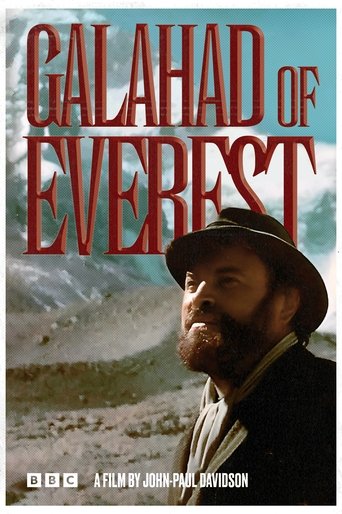
Brian Blessed plays George Mallory in this intrepid recreation of his ill fated 1924 climb to Everest. Meeting Sir Chris Bonington, Rheinhold Messnerhe learns of the pitfalls that await him before setting off for his epic struggle with the mountain. Against all odds he reaches 26000 feet on the North face of Everest, and is a changed man

Lignes chronicles the sublime interplay between alpine literature and an expedition seeking the true meaning of mountaineering. Four high-mountain guides—Matthieu Maynadier, Pierre Labbre, Matthieu Détrie, and Julien Dusserre—embark on a project: to summit Nangpai-Gosum, an unclimbed 7,000-meter peak in Nepal, using the "alpine style" adapted to the Himalayas—the toughest and purest approach of all. Through this expedition, Lignes attempts to answer the question: "Why do we climb mountains?" Why, despite the harsh conditions and exhaustion, do these four Alpine guides pursue a perilous dream in a realm that belongs to no one? Lignes finds some answers in the past, drawing on 150 years of alpine literature. Serving as both narrator and seasoned guide, Raymond Renaud takes us on a tour of his books and speaks of the "conquerors of the useless"—from the turn of the century to the present day.
An ethnographic documentary which looks at the relationship between music and work in predominantly rural cultures. It depicts the lives of fisherman, shepherds and farmers and their relationship with music. The film also describes Basque ancestral instruments, with special emphasis on the origin and history of ‘bertsolarism’ (Basque verse singing) as a form of oral communication.
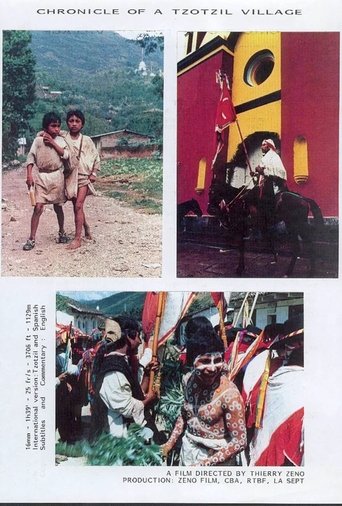
A documentary about the daily life of a native Tzotzil community in southern Mexico, shot over a period of eight years.

Nicolas Jaeger, a French physician specializing in sports and high-altitude physiology, conducted an experiment by spending two months on the highest peak in the Peruvian Andes, Huascarán. From July to September 1979, Nicolas Jaeger lived alone for 60 days at an altitude of 6,700 meters and studied the effects of hypoxia on his body. He documented his experience on film and later in his book, "Carnet De Solitude," published in 1979.
Short documentary about the traditions, lives and culture of the Qadiri tariqa of Iran's Kurdistan
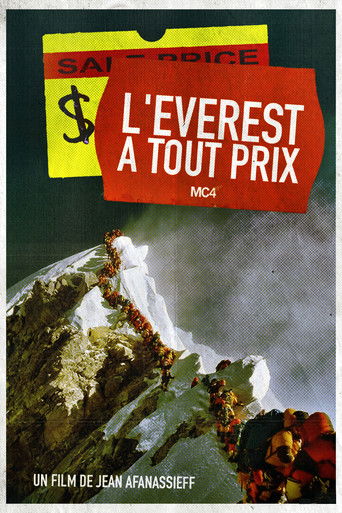
In 1983, three climbers became the first French people to reach the summit of Everest. Among them were expedition leader Pierre Mazeaud and a promising 25-year-old climber, Jean Afanassieff. Twenty years later, the two legends, accompanied by mountain guide Michel Pellé, retrace the steps of their exploit and make the trek from Kathmandu to the foot of the roof of the world. This is an opportunity to retrace the history of the successive assaults on Everest and to assess the current situation of a mountain that has become a victim of its own success: while Sherpas have been able to take advantage of Western enthusiasm and thus enrich themselves and equip the summit to make it more accessible, the site's attendance poses numerous problems, both human and ecological.


On 9 August 2018, Slovenian climbers Luka Stražar and Aleš Česen, along with British climber Tom Livingstone, reached the summit of Latok I (7,145 m) in the Karakorum Mountains of Pakistan. They climbed three-quarters of the way up the coveted "impossible ridge" before deviating from it. The North Ridge of Latok has been/is recognized as one of the last great unclimbed lines in high-altitude mountaineering. This is the second successful ascent of the summit and the first ascent from the north face.

This documentary follows three couples to see how things turned out several years after their weddings. The film presents challenging ideas about relationships, as it answers the question: Why is marriage so difficult?
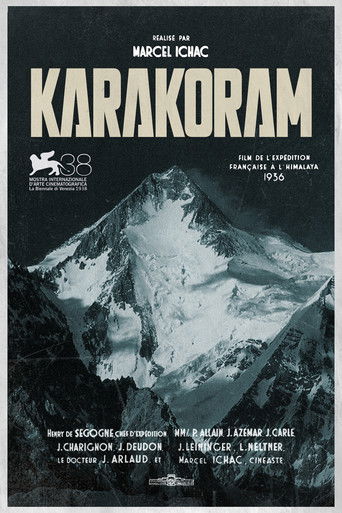
Account of the first French expedition to the Himalayas, which attempted to climb the hidden peak (Gasherbrum I) in 1936, from the preparations for the trip to the end of the ascent. After a long approach walk through quasi-desert regions, then on a huge glacier, the caravan of 700 porters arrives at the foot of Hidden Peak. The expedition was led by Henry de Ségogne, with Jean Charignon, Pierre Allain, Raymond Leininger, Jean Carle, Jean Deudon, Louis Neltner, Jacques Azémar, doctor Jeand Arlaud and director Marcel Ichac. Weather conditions, logistical problems and a strike among Sherpas forced the team to retire at 6900m on the south face. The film received the Silver Lion at the Venice Film Festival in 1938.