
The Night
1985-05-08 · 367 min · ★ 8.3
An installation film that consists of a six-hour-long monologue performed by Edith Clever, who reads texts by Syberberg and many different authors, such as Johann Wolfgang von Goethe, Heinrich von Kleist, Plato, Friedrich Hölderlin, Novalis, Friedrich Nietzsche, Eduard Mörike, Richard Wagner, William Shakespeare, Samuel Beckett, and Chief Seattle.
Trailers are previews, not full movies.
No authorized playback source configured. Use the legal watch options below.
Production details
- Directors
- Hans-Jürgen Syberberg
- Production companies
- TMS Film GmbH
- Countries
- Germany
- Status
- Released
Top Cast
 Edith Clever
Title information and images are supplied by TMDb. Explore our discovery guide for advice on comparing metadata and legal viewing options.
Where to watch
Availability provided by JustWatch via TMDb. Offers can change. Provider links are listed on TMDb; full playback requires a separately authorized source.
Availability not listed for this country.
Seasons & episodes
Recommendations

A compilation of over 30 years of private home movie footage shot by Lithuanian-American avant-garde director Jonas Mekas, assembled by Mekas "purely by chance", without concern for chronological order.
A portrait of the day-to-day operations of the National Gallery of London, that reveals the role of the employees and the experiences of the Gallery's visitors. The film portrays the role of the curators and conservators; the education, scientific, and conservation departments; and the audience of all kinds of people who come to experience it.

A documentary about the making of season five of the acclaimed AMC series Breaking Bad.

Director Michael Apted revisits the same group of British-born adults after a 7 year wait. The subjects are interviewed as to the changes that have occurred in their lives during the last seven years.
Documentarian Ross McElwee originally set out to make a travelogue of sorts tracing General William T. Sherman's infamous scorched-earth march through the Confederacy in the latter stages of the Civil War. Instead, haunted by a recent breakup with a girlfriend, McElwee ends up documenting his progress -- or lack thereof -- in starting a new relationship. His journey then becomes one of self-reflection and self-discovery rather than a historical/sociological exploration.
Brilliant, long in-the-works story of the life and art of the world's greatest comedian and the cinema's first genius, Charlie Chaplin. Produced, written and directed by renowned film critic Richard Schickel.
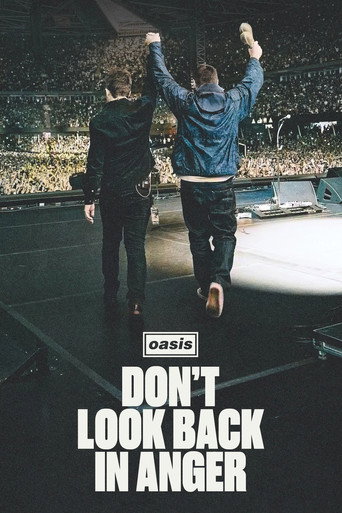
Experience the meteoric rise of Oasis through rare footage and untold stories as the band reunites for Oasis Live '25, chronicling their journey from Manchester streets to global rock stardom.
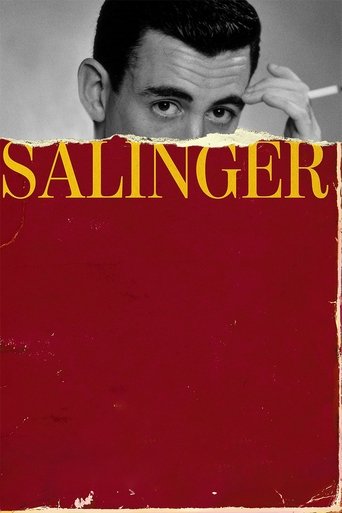
An in-depth investigation into the private world of the American writer J. D. Salinger (1919-2010), who lived most of his life behind the impenetrable wall of a self-imposed seclusion: how his dramatic experiences during World War II influenced his life and work, his relationships with very young women, his obsessive writing methods, his many literary secrets.
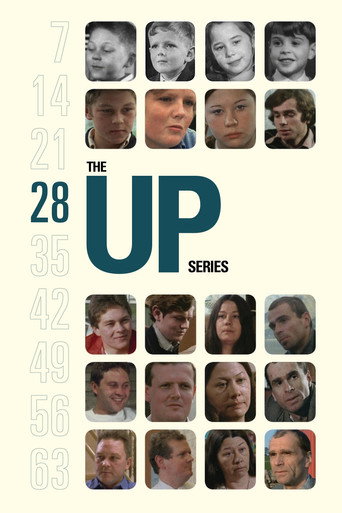
Just two years away from turning 30, participants in Michael Apted's documentary series are facing serious questions of identity and purpose, wondering whether they've found their place in the world.

Ranjit, a farmer in India, takes on the fight of his life when he demands justice for his 13-year-old daughter, the victim of a brutal gang rape. His decision to support his daughter is virtually unheard of, and his journey unprecedented.
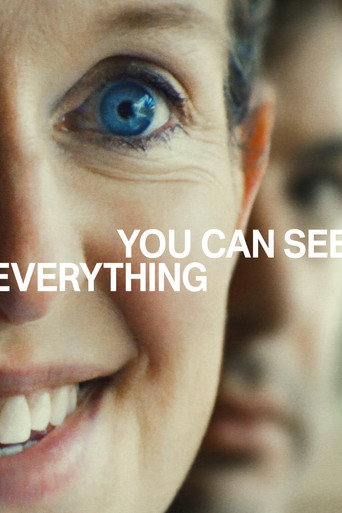
Thirty-four days before she's sent to prison, notorious Silicon Valley founder Elizabeth Holmes invites a skeptical film crew to document her every move. What begins as an intimate portrait of an enigmatic felon becomes a mind-bending three-year journey into the abyss.

A documentary about how a dominant cultural and demographic institution both sustains their traditional activities and adapts to the digital revolution.
Live Aid was held on 13 July 1985, simultaneously in Wembley Stadium in London, England, and the John F. Kennedy Stadium in Philadelphia, United States. It was one of the largest scale satellite link-ups and television broadcasts of all time: watched live by an estimated global audience of 1.9 billion, across 150 nations. "It's twelve noon in London, seven AM in Philadelphia, and around the world it's time for Live Aid...!"

A look at the origins, history and conspiracies behind the "Majestic 12", a clandestine group of military and corporate figureheads charged with reverse-engineering extraterrestrial technology.
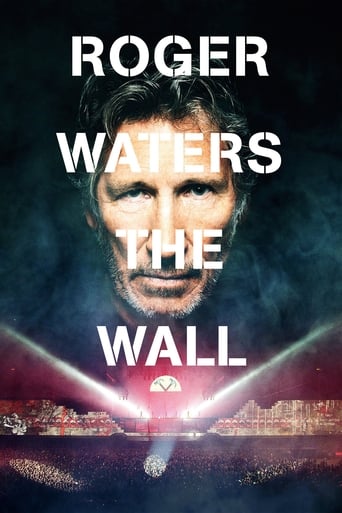
A concert film that the former Pink Floyd singer-songwriter made on various tour dates between 2010 and 2013, when he was playing his former group's 1980 double-album in its entirety.
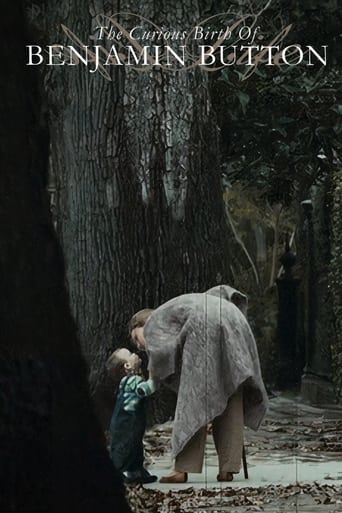
A documentary about the making of David Fincher's 2008 film THE CURIOUS CASE OF BENJAMIN BUTTON. Virtually every element in the evolution of the Fincher's film is documented here, from the project's attachment to numerous other directors during the 1990s, to its shoot in 2006 and 2007 in New Orleans, to its complex, CGI-intensive postproduction process.

Taking inspiration from Peter M. Bracke's definitive book of the same name, this seven-hour documentary dives into the making of all twelve Friday the 13th films, with all-new interviews from the cast and the crew.
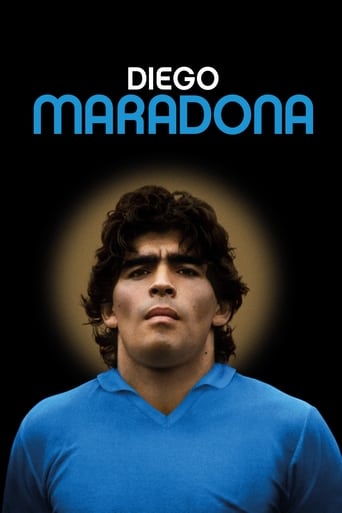
Constructed from over 500 hours of never-before-seen footage, this documentary centers on the personal life and career of the controversial football player Diego Maradona who played for SSC Napoli and Argentina in the 1980s.
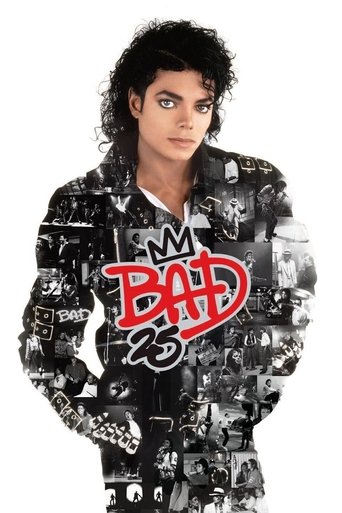
Spike Lee pays tribute to Michael Jackson's Bad on the twenty-fifth anniversary of the epochal album, offering behind-the-scenes footage of Jackson recording the album and interviews with confidants, musicians, choreographers, and such music-world superstars as Kanye West, Sheryl Crow, Cee Lo Green and Mariah Carey.
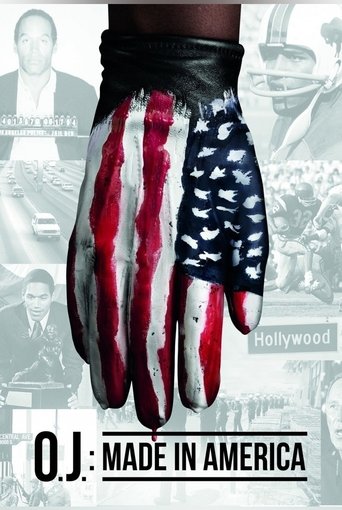
A chronicle of the rise and fall of O.J. Simpson, whose high-profile murder trial exposed the extent of American racial tensions, revealing a fractured and divided nation.
Similar titles

A discovery of the pictorial art that Ndebele women traditionally practice in South Africa: painting the walls of their houses.

A documentary about the Estonian artist Kaarel Kurismaa shows the viewer an insight into the world of artists. Kaarel changed his creative direction several times; he explored different artistic styles. Kaarel Kurismaa laid the foundations for Estonian kinetic and sound art. He is a highly versatile artist whose creative energy is divided between painting, sound, installation, monumental art, and film. On the crest of the avant-garde wave of the 1970s, he created several important sound and kinetic objects in Estonian art history.

Celebrating Billy Connolly's 75th birthday and 50 years in the business, three Scottish artists - John Byrne, Jack Vettriano and Rachel MacLean - each create a new portrait of the Big Yin. As he sits with each artist, Billy talks about his remarkable life and career which has taken him from musician and pioneering stand-up to Hollywood star and national treasure.

One public housing flat in Moscow stood out above all others: the home of George Costakis, the foremost collector of early 20th century Russian avant-garde art. Its walls were crowded with banned and forgotten works by artists such as Malevich, Tatlin, Kandinsky, Chagall, Lissitzky, Rodchenko, and Kliun; public figures such as Edward Kennedy, Stravinsky, and Alfred Barr visited. Barrie Gavin met the collector in 1982 at his home in Athens. Costakis, a Greek born in Russia, passionately shares his story and those of the great Russian avant-garde artists. Their works are his legacy – without him, they would not have survived the political upheavals in Russia.
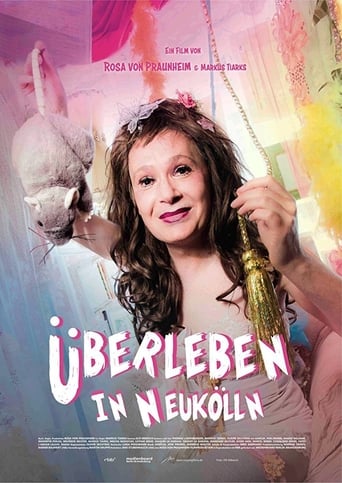
About Stefan Stricker, who calls himself Juwelia and has been running a gallery on Sanderstraße in Berlin Neukölln for many years. Every weekend he invites guests to shamelessly recount from his life and to sing poetic songs written with his friend from Hollywood Jose Promis. Juwelia has been poor and sexy all her life, has always struggled for recognition, but only partially.
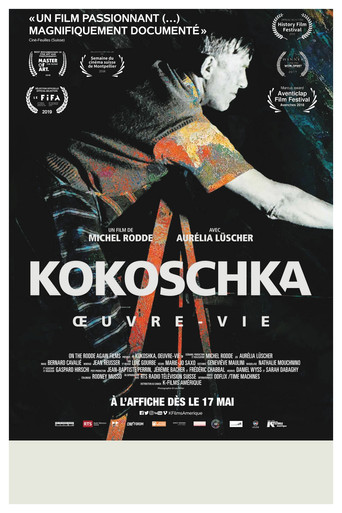
Painter, poet and playwright, teacher and freethinker, lover and traveler, Austrian artist Oskar Kokoschka (1886-1980) was a rare individual who remained lucid and passionate throughout his long life.

Presents Alex Ross demonstrating how he creates arresting patterns of vivid color and how he uses acrylic paint on a textured media board.

The Victorian era is often cited for its lack of sexuality, but as this documentary reveals, the period's artists created a strong tradition surrounding the classical nude figure, which spread from the fine arts to more common forms of expression. The film explains how 19th-century artists were inspired by ancient Greek and Roman works to highlight the naked form, and how that was reflected in the evolving cultural attitudes toward sex.
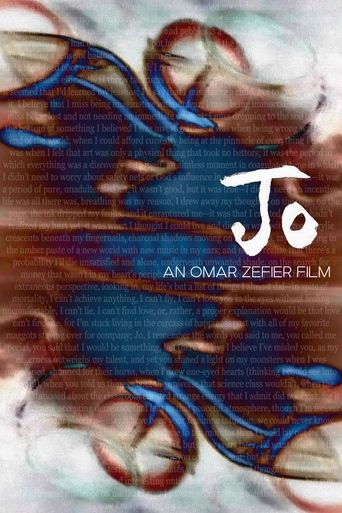
Jo; or The Act of Riding a Bike is Zefier's third film.
The decision to move to Holland doesn't sound like a wise idea. Why move to a country that could be flooded at any moment? For the last 25 years, the political climate has shifted. The public debate on migration has become harsher, more heated, and polarized. What would have been considered right-wing xenophobia back then, is now considered mainstream. Populists simplify complex realities into good and evil, victims and perpetrators: ‘us’ versus ‘them’. Their rhetoric often consists of dehumanizing words and metaphors. One of these is ‘water’. In reality, water is not an immediate threat to the average Dutch person; but it is a huge threat to the thousands trying to reach the Netherlands. People trying to survive the Mediterranean Sea in rubber boats. Trying to survive winter on the Aegean coast in primitive tents. To them, water really is deadly.
In subarctic Norway in a storm the sun projects shadows of clouds on a mountain forest.

‘Under the Weight of a Waking Dream’ is Zefier's debut swan song to the ending year. Comprised of poetry and endless enumerations is a diaristic film chronicling the lessons and contradictions found throughout the human experience.
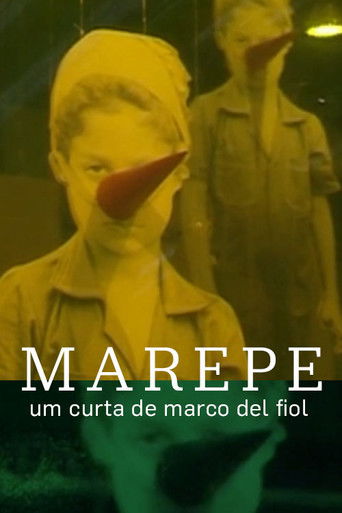
Marepe, an artist from Bahia, produces art with anything he comes across in the town he lives in, Santo Antônio de Jesus. Packs of cigarettes, coconut palms, walls, and memories taken from the streets, go into putting together a personal archeology for this young artist.
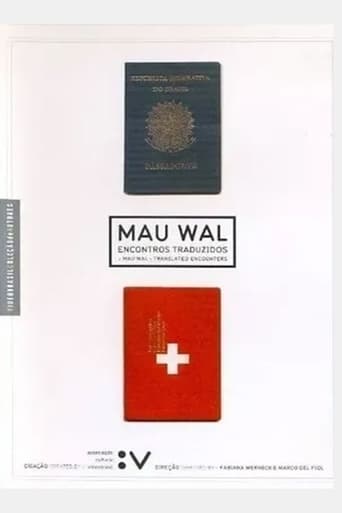
Maurício Dias & Walter Riedweg often say the streets are their studio. From the observation of them and of those who populate them there arise installations about encounters, identity and territoriality. The Brazilian-born Dias met the Swiss Riedweg in 1993. Together they learned that they could boost one another’s ideas. “This marriage became Mau Wal,” says Dias. In this documentary, they present their works and the many characters behind them: people who make day-to-day living in the big cities. Street vendors at a Northeast Brazilian fair in São Paulo, illegal immigrants in their quest for the European dream, street kids and their memories. In stories or in the role it plays, the human element is always a centerpiece to the duo’s work.
Documentary about belgian illustrator Félicien Rops (1833-1898) whose works combined eroticism and death in a very provocative way.

They have collected legends and fairy tales that have been passed down from generation to generation, albeit with slight changes and added meanings always intended for a specific time. Tales of all the enchanted characters, the wicked witches and the knights in shining armour. Venture into the woods with us and experience amazing things. You can meet evil or find your fortune. But what is it that makes the forest so terrifyingly appealing? In all the old tales and fables there is always at least a grain of truth - a reflection of reality. We all know the forest. Yet it guards its secrets well and will not give anything away. More than two hundred years ago, it enchanted two brothers. They told each other fantastic stories from the past, which they saw as symbols of their present. In Germany, where the brothers Jacob and Wilhelm Grimm grew up, as throughout central Europe, there were once dense and vast forests and woods that surrounded villages and towns...
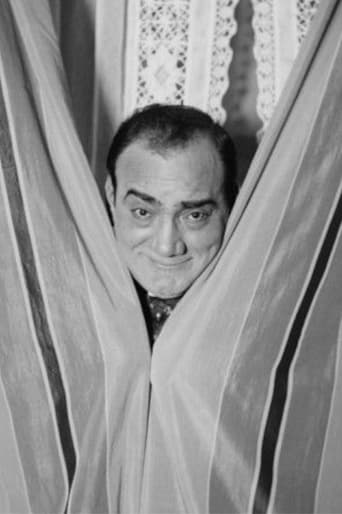
Born in 1873 in a poor neighbourhood in Naples, Enrico Caruso conquered the world with his singing voice. At the age of 27 he got a contract at the Scala in Milan, and his already considerable popularity skyrocketed thanks to the invention of the gramophone. He sold millions of records, and garnered international acclaim. In 1903 he moved to New York to perform at the prestigious Metropolitan Opera, in the role of Radames. But his riches and fame attracted the attention of the Mafia, who started blackmailing him. He felt trapped by his fame and died at just 48 years old. Biographer Francesco Canessa, the music critic Jürgen Kesting and the composer Micha Hamel explain the ups and downs of the man behind the timeless Italian voice.