
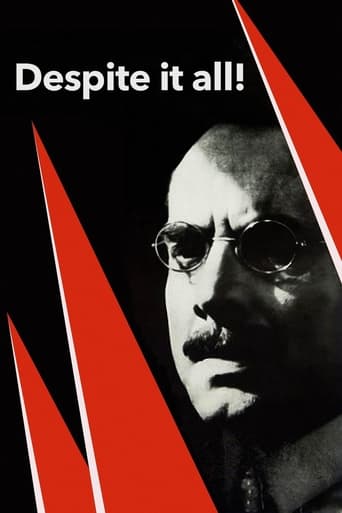
Despite It All!
1972-01-13 · 125 min · ★ 7.2
October 1918: Karl Liebknecht is released from prison and Berlin workers celebrate his release. Although WWI is almost over, the German Kaiserreich in vain sends its last reserves to the slaughter. The working class is in a rebellious mood; the uprising of Kiel’s sailors against war and militarism sets off a call for revolution led by Liebknecht. On November 9, Liebknecht declares the Free Socialist Republic of Germany. But pro-Kaiser military and right wing Social Democrats oppose him.
Trailers are previews, not full movies.
No authorized playback source configured. Use the legal watch options below.
Production details
- Directors
- Günter Reisch
- Production companies
- DEFA-Studio für Spielfilme
- Countries
- East Germany
- Status
- Released
Top Cast
 Horst SchulzeKarl Liebknecht
 Lyudmila KasyanovaSophie Liebknecht
 Zofia MrozowskaRosa Luxemburg
 Mikhail UlyanovV.I. Lenin
 Ulrich AnschützErich Habersat
 Albert Hetterle
 Erika Dunkelmann
 Jutta HoffmannKäthe Schreiner
 Burkhard Mann
 Fred DelmareWaldemar Lehmann
 Rolf Ludwig
 Harry HindemithGeneral von Hohenberg
 Walter PlatheJugendlicher
 Jaecki SchwarzFähnrich
 Helga GöringFrau
 Rüdiger JoswigArbeiter
 Christoph BeyerttSoldat
Title information and images are supplied by TMDb. Explore our discovery guide for advice on comparing metadata and legal viewing options.
Where to watch
Availability provided by JustWatch via TMDb. Offers can change. Provider links are listed on TMDb; full playback requires a separately authorized source.
Availability not listed for this country.
Seasons & episodes
Recommendations
In 1984 East Berlin, dedicated Stasi officer Gerd Wiesler begins spying on a famous playwright and his actress-lover Christa-Maria. Wiesler becomes unexpectedly sympathetic to the couple, and faces conflicting loyalties when his superior takes a liking to Christa-Maria.

Thomas Montgomery, a married father of two young daughters, gets seduced by the world of online gambling and chat rooms where a virtual romance and sexual obsession ultimately leads to the murder of an innocent man.

The film follows Kaspar Hauser, who lived the first seventeen years of his life chained in a tiny cellar with only a toy horse to occupy his time, devoid of all human contact except for a man who wears a black overcoat and top hat who feeds him.
A group of people are imprisoned in a rail car bound from Berlin to a concentration camp in 1945.

Fr. Hugh O'Flaherty is a Vatican official in 1943-45 who has been hiding downed pilots, escaped prisoners of war, and Italian resistance families. His activities become so large that the Nazis decide to assassinate him the next time he leaves the Vatican.
When Ruth's husband dies in New York, in 2000, she imposes strict Jewish mourning, which puzzles her children. A stranger comes to the house - Ruth's cousin - with a picture of Ruth, age 8, in Berlin, with a woman the cousin says helped Ruth escape. Hannah, Ruth's daughter engaged to a gentile, goes to Berlin to find the woman, Lena Fisher, now 90. Posing as a journalist investigating intermarriage, Hannah interviews Lena who tells the story of a week in 1943 when the Jewish husbands of Aryan women were detained in a building on Rosenstrasse. The women gather daily for word of their husbands. The film goes back and forth to tell Ruth and Lena's story. How will it affect Hannah?
In the early 17th century, a soldier arrives at an isolated Protestant village in Germany claiming to be the heir to an abandoned farmstead. Even though he proves to be a good man, the villagers’ suspicions about his identity grow and they force a reckoning.
Summer 1936: young unemployed communist David Carr leaves Liverpool to join the fight against fascism in Spain. He joins an international group of Militia-men and women, the POUM (Partido Obrero de Unificación Marxista). After being wounded, he goes to Barcelona, where he joins another group of fighters.
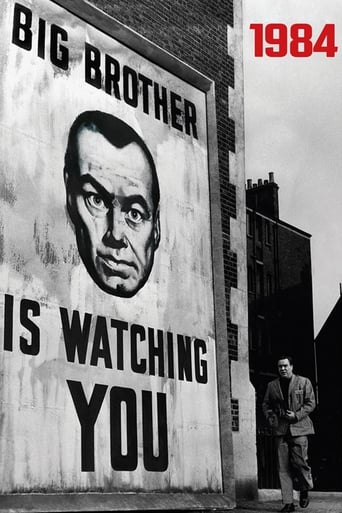
In a totalitarian future society, a man whose daily work is rewriting history tries to rebel by falling in love.
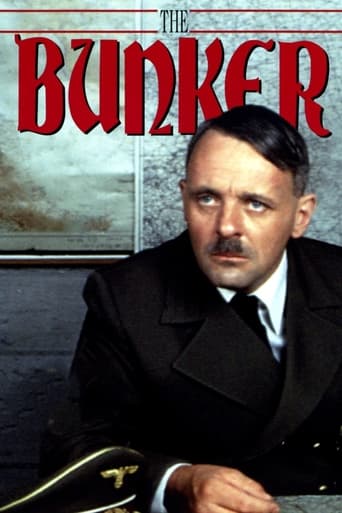
Dramatization depicting the events surrounding Adolf Hitler's last weeks in and around his underground bunker in Berlin before and during the battle for the city.
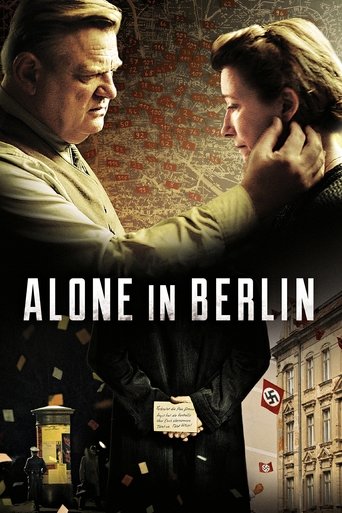
Berlin in June of 1940. While Nazi propaganda celebrates the regime’s victory over France, a kitchen-cum-living room in Prenzlauer Berg is filled with grief. Anna and Otto Quangel’s son has been killed at the front. This working class couple had long believed in the ‘Führer’ and followed him willingly, but now they realise that his promises are nothing but lies and deceit. They begin writing postcards as a form of resistance and in a bid to raise awareness: Stop the war machine! Kill Hitler! Putting their lives at risk, they distribute these cards in the entrances of tenement buildings and in stairwells. But the SS and the Gestapo are soon onto them, and even their neighbours pose a threat.

In the future, the government maintains control of public opinion by outlawing literature and maintaining a group of enforcers, known as “firemen,” to perform the necessary book burnings. Fireman Montag begins to question the morality of his vocation…

The adaptation of the eponymous play by Carl Zuckmayer tells the story of renegade general Harras of the German Luftwaffe, who during WWII openly criticizes the Nazi regime. As a consequence, he is put under surveillance, and even imprisoned for a brief period of time. Still remaining outspoken, Harras realizes the horrific dimensions of this hopeless and injust war waged by Germany.

A group of POWs in a German prison camp during World War II play the German National Soccer Team in this powerful film depicting the role of prisoners during wartime.
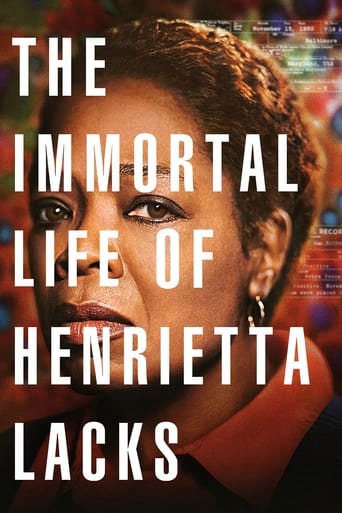
An African-American woman becomes an unwitting pioneer for medical breakthroughs when her cells are used to create the first immortal human cell line in the early 1950s.

In Depression-era Ireland, Jimmy Gralton returns home after a decade's exile in America. Witnessing the levels of poverty and oppression, his inner activist reawakens and he seeks to reopen the dance hall that led to his deportation.

Inspired by Chris Marker's iconic 1962 featurette La Jetée; the year is 2073—a not-so-distant dystopian future—and the setting is New San Francisco, the scorched-earth tech-dominant police state where democracy and personal freedom have been well and truly obliterated.

A psychotherapist helps a law student cope with schizophrenia in one of five interconnected tales dealing with mental illness.

Painting is an unacceptable vocation for a woman in provincial Germany in the year 1900, but budding artist Paula Becker is determined to make her own rules.

1981, Quiberon, a small village on the coast of Brittany, France. Hilde Fritsch arrives to visit her old friend who has retreated to a spa hotel to escape the daily pressures of her life. Her friend is world-famous star Romy Schneider, but together, they appear like two regular women who are just happy to be reunited. Yet it quickly becomes apparent that Hilde is supposed to offer the support the sensitive actress needs to be able to truly face her own demons.
Similar titles

Comrade Krishna Kumar wants to make it big in politics but lacks the ideals a sakhavu should possess. He is ruthless enough to even get rid of friends who might be possible hurdles on his way up. His paths cross with that of a veteran comrade, sakhavu Krishnan and the film depicts how his life influences Krishna Kumar.

When Martin, a former GDR citizen, is released from jail, he lately becomes confronted with the consequences of the German re-unification.

A young Polish filmmaker sets out to find out what happened to Mateusz Birkut, a bricklayer who became a propaganda hero in the 1950s but later fell out of favor and disappeared.

Mihajlo, an introvert piano teacher starts romance with a pretty careerist who teaches modeling at the university in Belgrade where they both work. His feelings are awakened after a long period, but this relationship makes him see the flashbacks, as well as yet unseen images that remind him of his troubled childhood - as if he experienced this already. When their university wins a contest to hold public TV performance, Mihailo fails to play the piano on the decisive night and she dumps him. The boiling point is about to come.

At the end of the World War II and the middle of the Chinese Revolution, three couples from different backgrounds with different nationalities flee from China to the island of Taiwan.

In a dystopian America dominated by a tyrannical police state, a stirring revolution clashes with a forbidden romance.
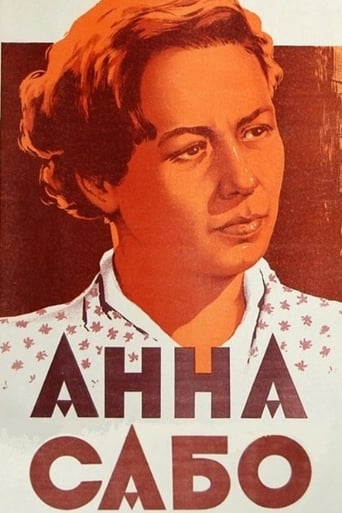
A female worker in Socialist Hungary gains the acceptance of her male colleagues.

In a Canadian mountain resort, Vixen Palmer resides with her naive pilot husband Tom. While he's away flying in tourists, she sleeps with practically everybody including a husband and his wife, and even her biker brother. However, the only one she won't bed is her brother's friend... who is Black.

Animals on a farm lead a revolution against the farmers to put their destiny in their own hands. However this revolution eats their own children and they cannot avoid corruption.
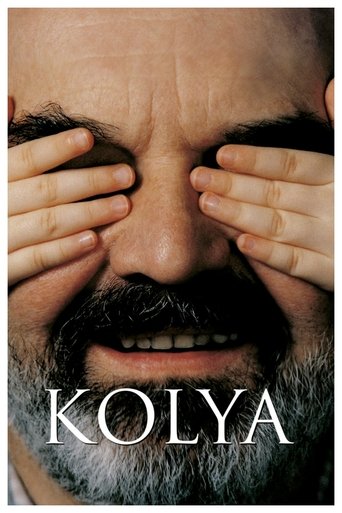
After a fictitious marriage with a Russian emigrant, Cellisten Louka, a Czech man, must suddenly take responsibility for her son. However, it’s not long before the communication barrier is broken between the two new family members.

Kuhle Wampe takes place in early-1930s Berlin. The film begins with a montage of newspaper headlines describing steadily-rising unemployment figures. This is followed by scenes of a young man looking for work in the city and the family discussing the unpaid back rent. The young man, brother of the protagonist Anni, removes his wristwatch and throws himself from a window out of despair. Shortly thereafter his family is evicted from their apartment. Now homeless, the family moves into a garden colony of sorts with the name “Kuhle Wampe.”
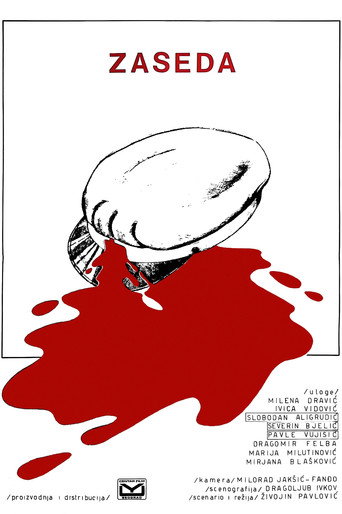
Idealistic young man supports the party and the new Yugoslavia's communist regime, but soon gets involved in various political and criminal machinations becoming more and more confused about what's right and what's wrong.
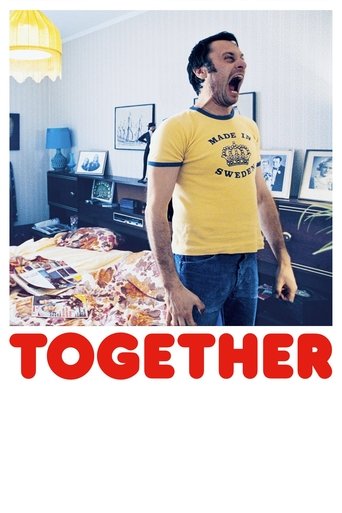
Elisabeth leaves her abusive and drunken husband Rolf, and goes to live with her brother, Göran. The year is 1975 and Göran lives in a commune called Together. Living in this leftist commune Elisabeth learns that the world can be viewed from different perspectives.
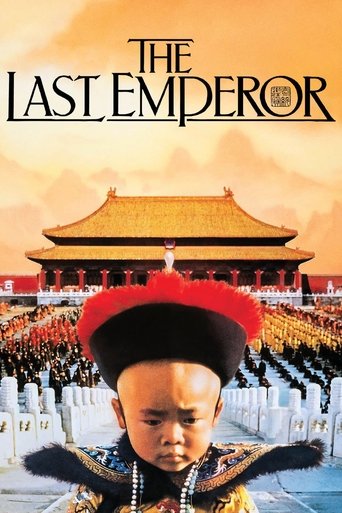
A dramatic history of Pu Yi, the last of the Emperors of China, from his lofty birth and brief reign in the Forbidden City, the object of worship by half a billion people; through his abdication, his decline and dissolute lifestyle; his exploitation by the invading Japanese, and finally to his obscure existence as just another peasant worker in the People's Republic.
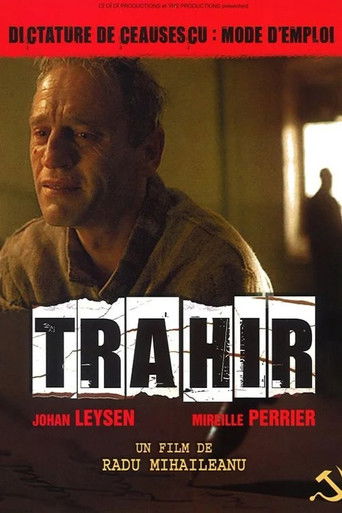
After the war, in Bucharest, a young Romanian poet arrested for having written an article denouncing Stalinist crimes, will save his life by accepting to become a hostage of the regime.

Set in the frozen steppes of Mongolia, a young nomad is confronted with his destiny after animals fall victim to a plague which threatens to eradicate nomadism.

Marta is a young, energetic girl who wants to become a tractor driver. Her husband, Adem, initially supports her, but then she discovers his true nature.

Two college roommates have 24 hours to make the ultimate choice as they finalize arrangements for a black market abortion.
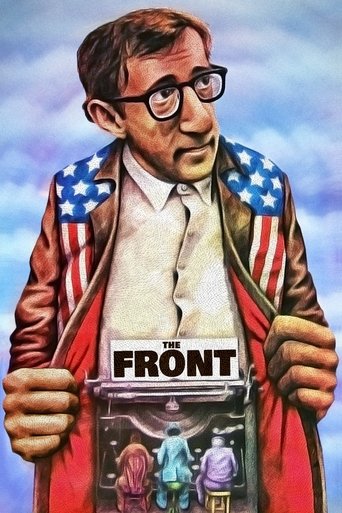
A cashier poses as a writer for blacklisted talents to submit their work through, but the injustice around him pushes him to take a stand.
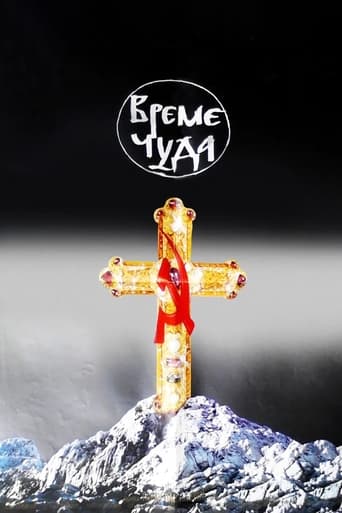
September 1945. The new communist authorities go into the church, hang the flag of the Party and paint over the old frescoes, but each time the frescoes miraculously return. A stranger comes to town and works miracles; the townsfolk are convinced he is the Messiah. Director Paskaljevic cut his TV miniseries, based on the novel by Borislav Pekic, to feature film length.