

Socorro Nobre
1995-11-08 · 23 min · ★ 7.4
When the inmate Maria do Socorro Nobre reads an article about the Polish artist Franz Krajcberg in Veja magazine, she decides to write a letter to him. Socorro was sentenced to more than twenty-one years in a prison for women in Salvador, Bahia, while Franz is a tormented artist that lost his family and lived his childhood in a ghetto in Poland but survived the Holocaust. Franz moved to Brazil and recovered life wish living close to nature and inspires Socorro to dream with life again.
Trailers are previews, not full movies.
No authorized playback source configured. Use the legal watch options below.
Production details
- Directors
- Walter Salles
- Production companies
- VideoFilmes
- Countries
- Brazil
- Status
- Released
Top Cast
Title information and images are supplied by TMDb. Explore our discovery guide for advice on comparing metadata and legal viewing options.
Where to watch
Availability provided by JustWatch via TMDb. Offers can change. Provider links are listed on TMDb; full playback requires a separately authorized source.
Availability not listed for this country.
Seasons & episodes
Recommendations
An interview with film director Roman Polanski conducted during his period of house arrest, discussing his life and work.

In an intimate and joyful story of love in the face of loss, celebrated poets Andrea Gibson and Megan Falley find strength—and unexpected hilarity—in what might be their final year together.

A compilation of over 30 years of private home movie footage shot by Lithuanian-American avant-garde director Jonas Mekas, assembled by Mekas "purely by chance", without concern for chronological order.

Over 35 years after Bob Lazar's revelations, this documentary exposes secrets of a facility the government still denies. Featuring Lazar's testimony, recreations, and new evidence, it reopens a case that continues to spark global curiosity

A documentary about how a dominant cultural and demographic institution both sustains their traditional activities and adapts to the digital revolution.

A night of drunken chaos rocks a quiet Dutch town in this shocking documentary about a teen's birthday invite that accidentally went viral on Facebook.

Alexander McQueen's rags-to-riches story is a modern-day fairy tale, laced with the gothic. Mirroring the savage beauty, boldness and vivacity of his design, this documentary is an intimate revelation of McQueen's own world, both tortured and inspired, which celebrates a radical and mesmerizing genius of profound influence.

When Allied forces liberated the Nazi concentration camps in 1944-45, their terrible discoveries were recorded by army and newsreel cameramen, revealing for the first time the full horror of what had happened. Making use of British, Soviet and American footage, the Ministry of Information’s Sidney Bernstein (later founder of Granada Television) aimed to create a documentary that would provide lasting, undeniable evidence of the Nazis’ unspeakable crimes. He commissioned a wealth of British talent, including editor Stewart McAllister, writer and future cabinet minister Richard Crossman – and, as treatment advisor, his friend Alfred Hitchcock. Yet, despite initial support from the British and US Governments, the film was shelved, and only now, 70 years on, has it been restored and completed by Imperial War Museums under its original title "German Concentration Camps Factual Survey".

Ranjit, a farmer in India, takes on the fight of his life when he demands justice for his 13-year-old daughter, the victim of a brutal gang rape. His decision to support his daughter is virtually unheard of, and his journey unprecedented.
A documentary on legendary movie-poster artist Drew Struzan.

A documentary about the life and films of director John Ford.
A documentary on the life of John Lennon, with a focus on the time in his life when he transformed from a musician into an antiwar activist.
Featuring a wealth of previously unseen archive, this film looks at how Bowie continually evolved: from Ziggy Stardust to the Soul Star of Young Americans, to the ‘Thin White Duke’. It explores his regeneration in Berlin with the critically acclaimed album Heroes, his triumph with Scary Monsters and his global success with Let’s Dance. With interviews with all his closest collaborators, David Bowie - Five Years presents a unique account of why Bowie has become an ‘icon of our times’.

Grammy® winner singer-songwriter Olivia Rodrigo takes a familiar road trip from Salt Lake City, where she began writing her debut album “SOUR,” to Los Angeles. Along the way, Rodrigo recounts the memories of writing and creating her record-breaking debut album and shares her feelings as a young woman navigating a specific time in her life. Through new live arrangements of her songs, intimate interviews and never-before-seen footage from the making of the album, audiences will follow Olivia along on a cinematic journey exploring the story of “SOUR.”

The life and career of an actor, artist, and icon. His own journey through his own camera.

Documentary filmmaker Amy Berg investigates the life of 30-year pedophile Father Oliver O'Grady and exposes the corruption inside the Catholic Church that allowed him to abuse countless children. Victims' stories and a disturbing interview with O'Grady offer a view into the troubled mind of the spiritual leader who moved from parish to parish gaining trust ... all the while betraying so many.

A detailing of the rise to prominence and global sporting superstardom of six supremely talented young Manchester United football players (David Beckham, Nicky Butt, Ryan Giggs, Paul Scholes, Phil and Gary Neville). The film covers the period 1992-1999, culminating in Manchester United's European Cup triumph.

A portrait of singer-songwriter Shawn Mendes' life, chronicling the past few years of his rise and journey.

Artists in LA discover the work of forgotten Polish sculptor Stanislav Szukalski, a mad genius whose true story unfolds chapter by astounding chapter.
City of God – 10 Years Later investigates what happened to the actors who took part in the award-winning film directed by Fernando Meirelles and Katia Lund. This documentary shows what City of God’s worldwide success meant to their lives. Were the actors prepared for the film’s success? Did the social background of some of them prove stronger than the opportunity that came their way?
Similar titles
High-speed film and time-lapse photography combined to create breathtaking images of the night sky and Halley's Comet in this astronomical short subject.

Rescue plunges audiences into the hard, but inspiring work of saving lives in the face of a natural disaster. Behind the scenes, the film follows a Canadian naval commander, two pilots, and a volunteer rescue technician as they train for action. When an earthquake strikes Haiti, creating one of the biggest humanitarian disasters of the century, the audience is swept along, joining with the massive effort that brings military and civilian responders and hardware from around the world. Rescue is a journey of real-world disaster and emergency response captured (in 3D) with unprecedented scale and impact for the giant screen.

A group of people are having a snowball fight. In the middle of this melee, a cyclist appears, at whom everyone throws snowballs and who ends up rolling on the ground; he gets up and dodges quickly with his bicycle as the battle resumes with even greater intensity.
Billy Bitzer filmed 21 short actualities inside the Pittsburgh Westinghouse Works in April and May of 1904. Audiences of the day would have been treated to footage of factory panoramas, women winding armatures and turbines being assembled. These industrial films were produced for the American Mutoscope & Biograph Company.
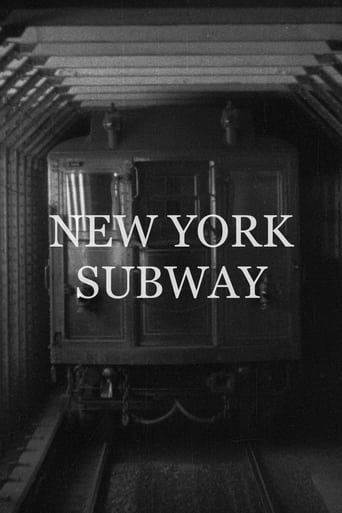
The camera platform was on the front of a New York subway train following another train on the same track. Lighting is provided by a specially constructed work car on a parallel track. At the time of filming, the subway was only seven months old, having opened on October 27, 1904. The ride begins at 14th Street (Union Square) following the route of today's east side IRT, and ends at the old Grand Central Station, built by Cornelius Vanderbuilt in 1869. The Grand Central Station in use today was not completed until 1913.
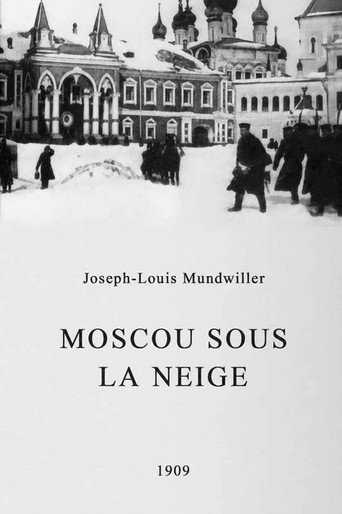
The film is in four parts. First, the camera pans the Kremlin and Marshal's Bridge. Sleds are parked in rows. Horse-drawn sleighs run up and down a busy street. Next, we visit the mushroom and fish market where common people work and shop. In Petrovsky Park are the well-to-do. Men are in great coats. A file of six or seven women ski past on a narrow lane. Last, there's a general view of Moscow. A slow pan takes us to a view above the riverfront where the film began.
This short documentary presents an early scientific visualization of X-ray technology, documenting the discovery of Röntgen rays and their application in medical diagnostics. Through staged demonstrations and instructional imagery, the film illustrates the principles of radiographic imaging and its emerging role in modern medicine.
A short documentary about the work of the National Trust in Great Britain

"The Einstein Theory of Relativity" is the short version (587 m) of the lost American long version (1219 m) of Hanns Walter Kornblum's original German feature "Die Grundlagen der Einsteinschen Relativitäts-Theorie" from 1922 that is also lost.

Tommy Tucker's Tooth is a live-action short film by Walt Disney at his short-lived Laugh-O-Grams studio in Kansas City from 1922. The film was one of two commissioned by Kansas City Dentist Thomas B. McCrum. It earned the Laugh-O-Gram studio $500.

A documentary showing Norman McLaren working on the hand-drawn sound process he uses for his short film, Loops.
A woman feeds pigeons on the Piazza San Marco in Venice.
A woman wearing a light-colored leotard, gathered at the waist, and tights stands against a black background. Although she is filmed in a long shot, her feet are cut off in the frame. She opens with a flourish of her arms and faces the camera. First stretching up with her arms, Latina then bends in half at the waist, steps into a metal ring or hoop, and places her head in the ring as well.
A camera moving forward on an overhead crane gives a traveling view of men working on machinery. Carts carrying parts and pieces of machinery pass by on rails; cranes lift machinery; and men perform their various duties, including hammering objects. (Library of Congress)
Opens with a European-American woman posing on a pedestal, dressed in a white body leotard with a sash tied at her hips. Marshall continues with various feminine poses, reminiscent of classic Greek statuary, to accentuate her figure. Film cuts to Treloar posed on the bare stage without a pedestal. He wears brief leopard-skin trunks or short tunic, wrist bands, and Roman-looking laced sandals. His poses accentuate the muscular development of his upper body, particularly that of his arms, and include movements that make the muscles jump. Treloar finishes with a slight nod to the camera.

In this color-tinted short, we first see a close-up of a red rose, perfectly formed. Then, we see the rose held by a young woman who is wearing a bright yellow dress. She's the second beauty. Behind her is a slow dissolve to the US flag, tinted in red, white, and blue, blowing in the wind. Behind the flag is a star-lit sky.
The camera scrolls through a landscape to reveal the aftermath of a huge gas explosion.

It's common knowledge that Scotsmen are macho enough to pull off wearing a skirt - perhaps it's all that caber-tossing. This disarmingly simple film concentrates on the tartan cloths of various clans rather than the men who wore them, and is an early filmic reminder of their huge importance to both Scottish national identity and the thriving tourist industry north of the border. The film's unique selling point was that pioneering filmmaker G. A. Smith showed off the vibrant designs in Kinemacolor, among the earliest colour film processes that didn't involve meticulous hand-painting. And no dangly bits in sight.
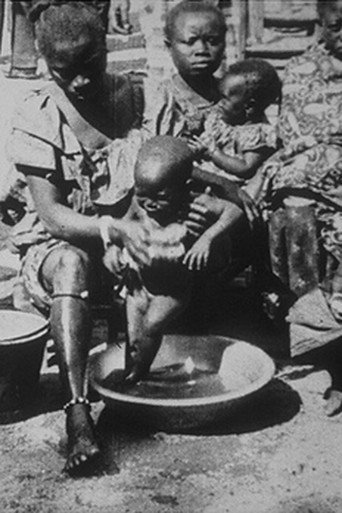
“These views were taken in a village of Aschantis which was set up in Lyon at the time of the Exhibition. All these views are very interesting; their titles are sufficiently explanatory.” After washing him, a woman dries her child with a towel.
Travellers, nomads and salesmen make their way along a dam next to the Nile.