

Out of the Sun
1984-01-01 · 32 min · Not rated
This short film takes viewers on a whirlwind tour of the history of air combat, from World War I through the Vietnam War. It was produced by General Dynamics sometime prior to 1990 and re-released by Lockheed Martin in the mid-nineties. As a promotional short for the F-16 Fighting Falcon, the film reviews the development of aerial combat to place the F-16 in historical context. Informational narration is supplemented with snippets from interviews of top fighter aces. The aces focus on the characteristics that make great fighter pilots and great fighter aircraft. The interviewees include World War I ace W.C. "Bill" Lambert; World War II aces Douglas Bader, Stanford Tuck, Adolf Galland, Erich Hartmann, Gabby Gabreski, Tex Hill, and Svein Heglund; Korean War ace Ralph Parr; and Vietnam War ace Steve Ritchie. The film includes historical footage and stills, along with opening and closing segments briefly featuring the F-16 Fighting Falcon.
Trailers are previews, not full movies.
No authorized playback source configured. Use the legal watch options below.
Production details
- Directors
- Unavailable
- Production companies
- General Dynamics, Fort Worth Division
- Countries
- United States of America
- Status
- Released
Top Cast
Title information and images are supplied by TMDb. Explore our discovery guide for advice on comparing metadata and legal viewing options.
Where to watch
Availability provided by JustWatch via TMDb. Offers can change. Provider links are listed on TMDb; full playback requires a separately authorized source.
Availability not listed for this country.
Seasons & episodes
Recommendations

Meet the real-life airmen who inspired Masters of the Air as they share the harrowing and transformative events of the 100th Bomb Group.

Prelude to War was the first film of Frank Capra's Why We Fight propaganda film series, commissioned by the Pentagon and George C. Marshall. It was made to convince American troops of the necessity of combating the Axis Powers during World War II. This film examines the differences between democratic and fascist states.
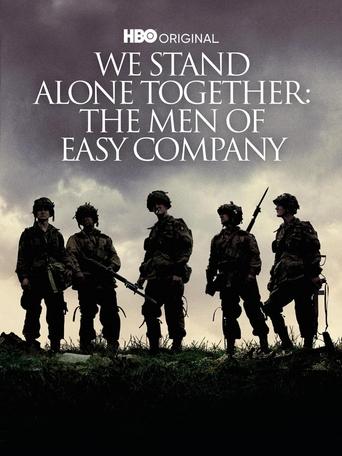
Over a period of two years, Mark Cowen and his crew travelled to thirty U.S. states and ten European cities, to interview the veterans of Easy Company. The stories told by the veterans themselves, create a history of the Second World War from the point of view of this heroic company of men, made famous in the mini-series Band of Brothers.

Amid the failing counteroffensive, a journalist follows a Ukrainian platoon on their mission to traverse one mile of heavily fortified forest and liberate a strategic village from Russian occupation. But the farther they advance through their destroyed homeland, the more they realize that this war may never end.

When Sgt. First Class Brian Eisch is critically wounded in Afghanistan, it sets him and his sons on a journey of love, loss, redemption and legacy.

Korengal picks up where Restrepo left off; the same men, the same valley, the same commanders, but a very different look at the experience of war.
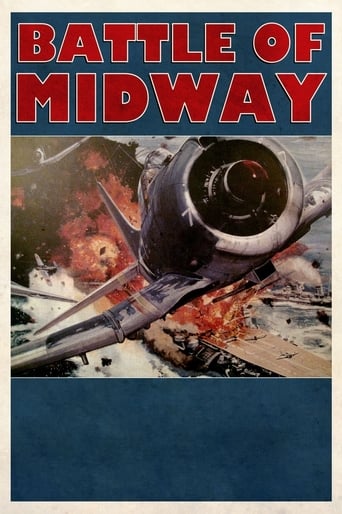
The Japanese attack on Midway in June 1942, filmed as it happened. Preserved by the Academy Film Archive, in partnership with Twentieth Century Fox Film Corporation, in 2006.

Set both in Latin America and the United States, the film explores the historic and current relationship of Washington with countries such as Venezuela, Bolivia and Chile. Pilger says that the film "...tells a universal story... analysing and revealing, through vivid testimony, the story of great power behind its venerable myths. It allows us to understand the true nature of the so-called "war on terror". According to Pilger, the film’s message is that the greed and power of empire is not invincible and that people power is always the "seed beneath the snow".

This documentary movie is about the battle of San Pietro, a small village in Italy. Over 1,100 US soldiers were killed while trying to take this location, that blocked the way for the Allied forces from the Germans. Preserved by the Academy Film Archive in 2005.

A documentary about World War I with never-before-seen footage to commemorate the centennial of Armistice Day, and the end of the war.

The history of cinematic sound, told by legendary sound designers and visionary filmmakers.

A documentary highlighting the Soviet Union's legendary and enigmatic hockey training culture and world-dominating team through the eyes of the team's Captain Slava Fetisov, following his shift from hockey star and celebrated national hero to political enemy.
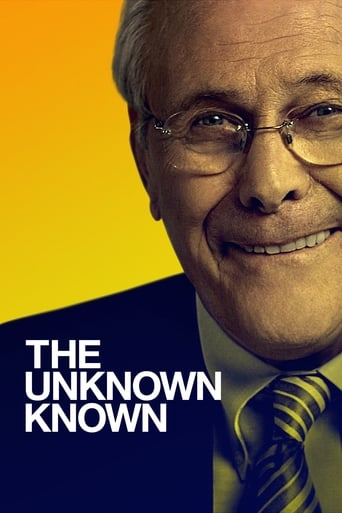
Former United States Secretary of Defense Donald Rumsfeld discusses his career in Washington D.C. from his days as a congressman in the early 1960s to planning the invasion of Iraq in 2003.

“The Soviet Story” is a story of an Allied power, which helped the Nazis to fight Jews and which slaughtered its own people on an industrial scale. Assisted by the West, this power triumphed on May 9th, 1945. Its crimes were made taboo, and the complete story of Europe’s most murderous regime has never been told. Until now...

This WW2 documentary centers on the crew of the American B-17 Flying Fortress Memphis Belle as it prepares to execute a strategic bombing raid on Nazi submarine pens in Wilhelmshaven, Germany.

The final entry in a trilogy of films produced for the U.S. government by John Huston. Some returning combat veterans suffer scars that are more psychological than physical. This film follows patients and staff during their treatment. It deals with what would now be called PTSD, but at the time was categorised as psychoneurosis or shell-shock. Government officials deemed this 1946 film counterproductive to postwar efforts; it was not shown publicly until 1981.

Oliver Stone charts the history of the United States from the Second World War to the present.
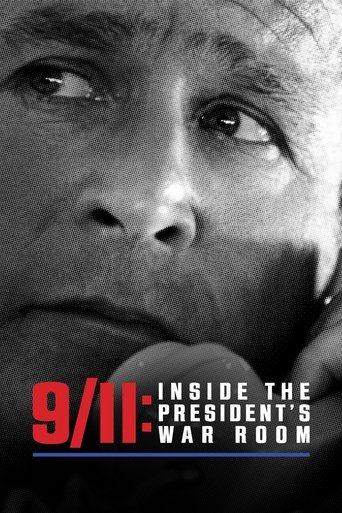
Experience the events of September 11, 2001 through the eyes of President Bush and his closest advisors as they personally detail the crucial hours and key decisions from that historic day.

Cameramen and women discuss the craft and art of cinematography and of the "DP" (the director of photography), illustrating their points with clips from 100 films, from Birth of a Nation to Do the Right Thing. Themes: the DP tells people where to look; changes in movies (the arrival of sound, color, and wide screens) required creative responses from DPs; and, these artisans constantly invent new equipment and try new things, with wonderful results. The narration takes us through the identifiable studio styles of the 30s, the emergence of noir, the New York look, and the impact of Europeans. Citizen Kane, The Conformist, and Gordon Willis get special attention.
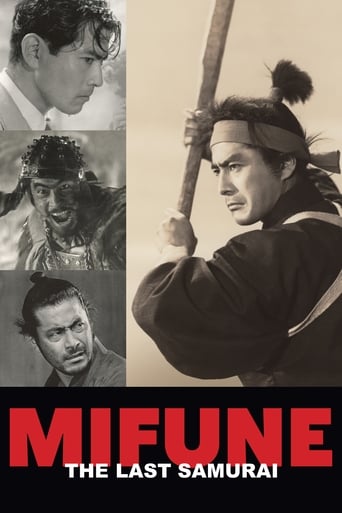
An account of the life and work of legendary Japanese actor Toshirō Mifune (1920-97), the most prominent actor of the Golden Age of Japanese cinema.
Similar titles

Two generals prepare for battle at the Plains of Abraham.
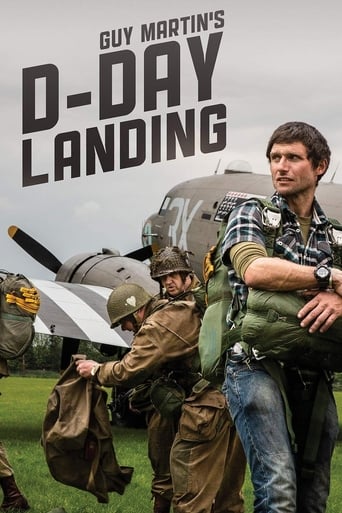
Guy Martin undertakes a challenge to restore a plane from the Second World War, and recreate a parachute jump into Normandy, as thousands of Allied soldiers did during D-Day.


Unassuming catering salesmen Jim Ferguson falls through a time hole to 1917 where he saves the life of dashing Royal Flying Corps pilot James "Biggles" Bigglesworth after his photo recon mission is shot down. Before he can work out what has happened, Jim is zapped back to the 1980s......
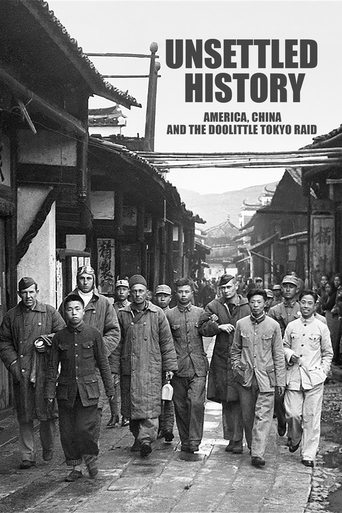
Doolittle's Raiders pull off a one-way bombing run over Tokyo and ditch their planes in and along the coast of China, where they are rescued by Chinese villagers, guerrillas, and missionaries. That generosity triggers horrific retaliation by the Japanese that claims an estimated quarter-million lives and prompts comparisons to the 1937-38 Rape of Nanking. The memory of the Raiders and their rescuers is kept alive by their children and grandchildren.
A look behind the scenes of No Country for Old Men (2007), including interviews with cast and crew.


The disastrous first combat patrol of the K-19, the Soviet Union's first atomic-powered nuclear missile submarine.

Looking back on the creation of the Vietnam Memorial, this Emmy-nominated documentary chronicles the controversy surrounding the monument's construction and touches on the history of the polarizing war that inspired it. Fueled by the vision of Vietnam veteran Jan Scruggs and brought to life by then-fledgling designer Maya Lin, the memorial would eventually become the nation's most visited monument. But its success was a hard-fought victory.

Guy Martin honours the Lancaster bomber crews of World War II, as he tries out several onboard roles including pilot, gunner and bomb aimer. Has he got what it takes to join Bomber Command?

The Three Musketeers is a legendary work, whose heroes have rocked multiple generations. These fictional musketeers have eclipsed the real musketeers, those who formed the royal company that existed between 1622 and 1775. Who were these men, and how did they serve the King? Did they really take part in the affairs of the Crown? Did Athos, Porthos, Aramis and D'Artagnan really exist? Thanks to the best historians, discover the true story of the Musketeers.

How did the USSR - a country considered a second-rate industrial power, economically inferior to Germany, the USA and the UK - shape its victory over the armies of Hitler's regime, and secure its place among the winners?


Spend time on both sides of World War I, partly with German flying ace Baron Manfred Von Richthofen (John Phillip Law), aka "The Red Baron," and his colorful "flying circus" of Fokker fighter planes, during the time from his arrival at the war front to his death in combat. On the other side is Roy Brown of the Royal Air Force, sometimes credited with shooting Richthofen down.


The Handley Page Halifax four-engined heavy bomber was the unsung hero of Bomber Command during the Second World War. It flew over 39,000 sorties over enemy territory, towed gliders, dropped agents, carried cargo, and pioneered electronic warfare. In all 6,178 were built. Today only three remain.

On the Pacific front, towards the end of World War II, Japan's imperial armed forces launched 'kamikaze' attacks - suicide missions by aircraft laden with bombs. It was a mad operation with no hope of returning alive, but the nation went wild, and the attacks continued for ten months, literally until the very last day of the war. Close to 4,000 Japanese airmen died, and nearly 7,000 Allied military personnel were killed, and thousands more were injured by the attacks. How could this happen? Utilising 15 years' worth of extensive interviews with US and Japanese World War II veterans, Takayuki Oshima’s film delves into the mechanism of how a crazed madness swept through an entire nation.

“Wings of Silver: The Vi Cowden Story,” follows one 93-year-old woman’s journey from the Black Hills of South Dakota where she learned to fly biplanes, to flying fighter planes for the Army Air Corps in 1943 & ’44. Vi was among these first women in United States history to fly military planes, and one of 114 who flew Pursuit Planes like the P51 and Thunderbolt!
Two well-known Quebec artists (filmmaker Jacques Godbout and playwright René-Daniel Dubois) look at the Battle of the Plains of Abraham. Whose version of this historic event should prevail? Is history best served by documentary or fiction? We also meet Baron Georges Savarin de Marestan and Andrew Wolfe-Burroughs, direct descendants of Montcalm and Wolfe, both of whom died in the battle that would give birth to Canada and to the province of Quebec.