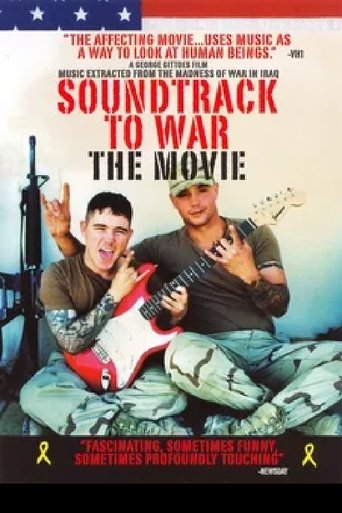
Soundtrack to War
2005-01-02 · 90 min · ★ 7.0
Soundtrack to War showcases spontaneous music performances by a striking cast of battle weary. Performances made without rehearsal, under the blaring Iraqi sun, with a destroyed city, the distraction of gunfire and bursting mortar shells forming a frightening backdrop. American culture came into Iraq, wired into its tanks and helicopters - a live soundtrack to war, with lyrics such as Let The Bodies Hit The Floor, Round Out, The Tank and Bombs over Baghdad, being memorised by every soldier and forever linked to the violent events they accompanied. As the war extended into a second year, many started writing and performing their own songs. It was rock, rap & roll.
Trailers are previews, not full movies.
No authorized playback source configured. Use the legal watch options below.
Production details
- Directors
- George Gittoes
- Production companies
- Gittoes & Dalton Films
- Countries
- Australia
- Status
- Released
Top Cast
Cast unavailable.
Title information and images are supplied by TMDb. Explore our discovery guide for advice on comparing metadata and legal viewing options.
Where to watch
Availability provided by JustWatch via TMDb. Offers can change. Provider links are listed on TMDb; full playback requires a separately authorized source.
Availability not listed for this country.
Seasons & episodes
Recommendations

Prelude to War was the first film of Frank Capra's Why We Fight propaganda film series, commissioned by the Pentagon and George C. Marshall. It was made to convince American troops of the necessity of combating the Axis Powers during World War II. This film examines the differences between democratic and fascist states.

The life and career of one of comedy's most inimitable modern voices, Mr. Gilbert Gottfried.

When Sgt. First Class Brian Eisch is critically wounded in Afghanistan, it sets him and his sons on a journey of love, loss, redemption and legacy.

In an intimate and joyful story of love in the face of loss, celebrated poets Andrea Gibson and Megan Falley find strength—and unexpected hilarity—in what might be their final year together.
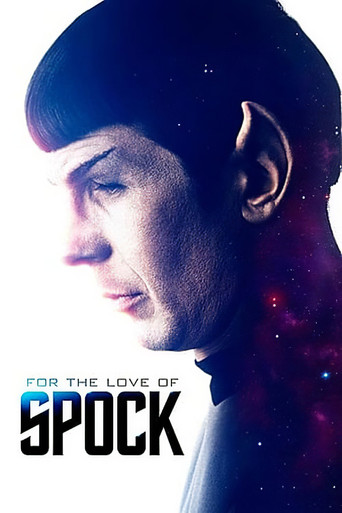
The life of Mr. Spock, as well as that of Leonard Nimoy, the actor who played him for almost fifty years, written and directed by his son: Adam.

A visual montage portrait of our contemporary world dominated by globalized technology and violence.
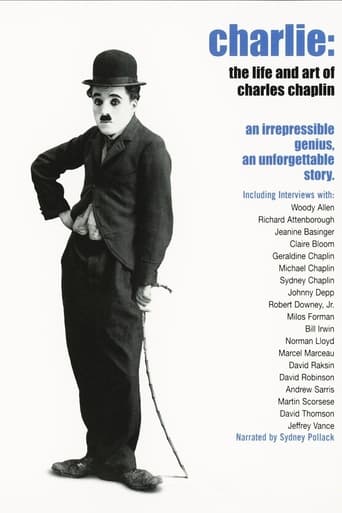
Brilliant, long in-the-works story of the life and art of the world's greatest comedian and the cinema's first genius, Charlie Chaplin. Produced, written and directed by renowned film critic Richard Schickel.

A 1993 documentary film about Bruce Lee. The film includes interviews from some of his fellow students and opponents who worked alongside him in his movies.

When Allied forces liberated the Nazi concentration camps in 1944-45, their terrible discoveries were recorded by army and newsreel cameramen, revealing for the first time the full horror of what had happened. Making use of British, Soviet and American footage, the Ministry of Information’s Sidney Bernstein (later founder of Granada Television) aimed to create a documentary that would provide lasting, undeniable evidence of the Nazis’ unspeakable crimes. He commissioned a wealth of British talent, including editor Stewart McAllister, writer and future cabinet minister Richard Crossman – and, as treatment advisor, his friend Alfred Hitchcock. Yet, despite initial support from the British and US Governments, the film was shelved, and only now, 70 years on, has it been restored and completed by Imperial War Museums under its original title "German Concentration Camps Factual Survey".

Daniel Craig candidly reflects on his 15 year adventure as James Bond. Including never-before-seen archival footage from Casino Royale to the upcoming 25th film No Time To Die, Craig shares his personal memories in conversation with 007 producers, Michael G Wilson and Barbara Broccoli.
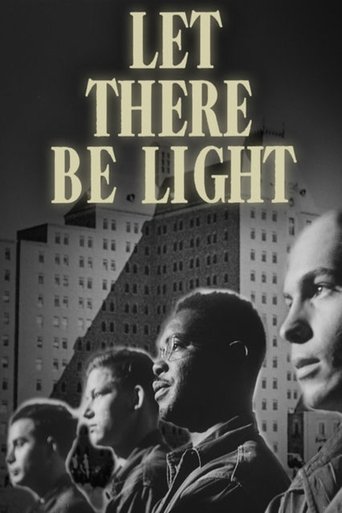
The final entry in a trilogy of films produced for the U.S. government by John Huston. Some returning combat veterans suffer scars that are more psychological than physical. This film follows patients and staff during their treatment. It deals with what would now be called PTSD, but at the time was categorised as psychoneurosis or shell-shock. Government officials deemed this 1946 film counterproductive to postwar efforts; it was not shown publicly until 1981.

Amid the failing counteroffensive, a journalist follows a Ukrainian platoon on their mission to traverse one mile of heavily fortified forest and liberate a strategic village from Russian occupation. But the farther they advance through their destroyed homeland, the more they realize that this war may never end.
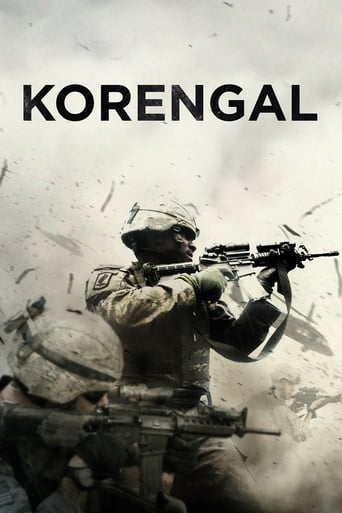
Korengal picks up where Restrepo left off; the same men, the same valley, the same commanders, but a very different look at the experience of war.
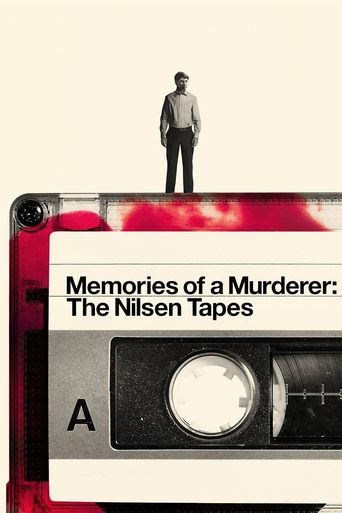
Serial killer Dennis Nilsen narrates his life and horrific crimes via a series of chilling audiotapes recorded from his jail cell.
Pull back the curtain on the remarkable history of six decades of James Bond music, from Sean Connery’s Dr No through to Daniel Craig’s final outing in No Time to Die.

Through deeply personal interviews with her siblings and an examination of the photographs, letters, and belongings left behind, Mariska assembles a new portrait of her mother Jayne Mansfield, an extraordinary and complex woman.

Al Pacino's deeply-felt rumination on Shakespeare's significance and relevance to the modern world through interviews and an in-depth analysis of "Richard III."

This documentary movie is about the battle of San Pietro, a small village in Italy. Over 1,100 US soldiers were killed while trying to take this location, that blocked the way for the Allied forces from the Germans. Preserved by the Academy Film Archive in 2005.
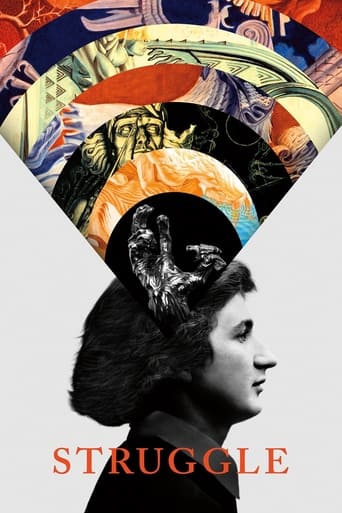
Artists in LA discover the work of forgotten Polish sculptor Stanislav Szukalski, a mad genius whose true story unfolds chapter by astounding chapter.

A compilation of over 30 years of private home movie footage shot by Lithuanian-American avant-garde director Jonas Mekas, assembled by Mekas "purely by chance", without concern for chronological order.
Similar titles
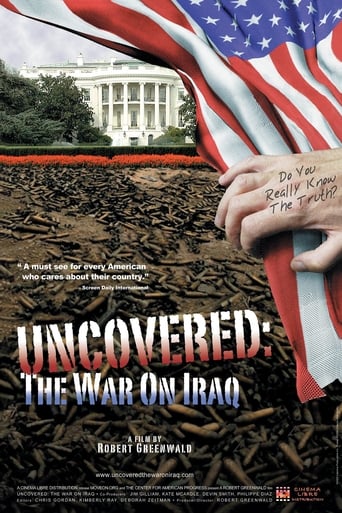
Interviews with varied U.S officials and experts offer a deconstruction on the Bush administration's case for war in Iraq in the wake of 9/11.
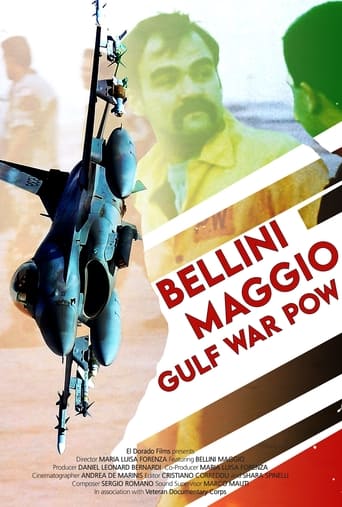
On the eve of Operation Desert Storm in the first Gulf War, the Italian government deployed eight Tornado Fighter-bombers. Gianmarco Bellini was one of these pilots. He was shot down, captured, and abused, but returned and was able to rise to the rank of General.
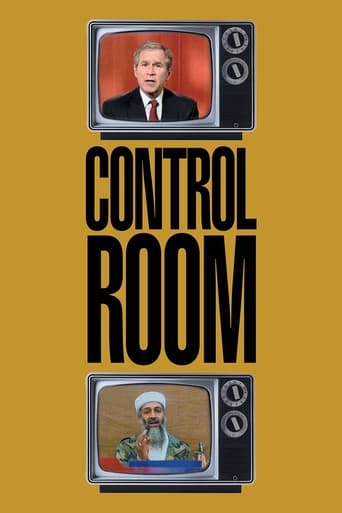
A chronicle which provides a rare window into the international perception of the Iraq War, courtesy of Al Jazeera, the Arab world's most popular news outlet. Roundly criticized by Cabinet members and Pentagon officials for reporting with a pro-Iraqi bias, and strongly condemned for frequently airing civilian causalities as well as footage of American POWs, the station has revealed (and continues to show the world) everything about the Iraq War that the Bush administration did not want it to see.

American soldiers of the 2/3 Field Artillery, a group known as the "Gunners," tell of their experiences in Baghdad during the Iraq War. Holed up in a bombed out pleasure palace built by Sadaam Hussein, the soldiers endured hostile situations some four months after President George W. Bush declared the end of major combat operations in the country.

An opus in three parts, Iraq In Fragments offers a series of intimate, passionately-felt portraits: A fatherless 11-year-old is apprenticed to the domineering owner of a Baghdad garage; Sadr followers in two Shiite cities rally for regional elections while enforcing Islamic law at the point of a gun; a family of Kurdish farmers welcomes the US presence, which has allowed them a measure of freedom previously denied. American director James Longley spent more than two years filming in Iraq to create this stunningly photographed, poetically rendered documentary of the war-torn country as seen through the eyes of Sunnis, Shiites and Kurds.
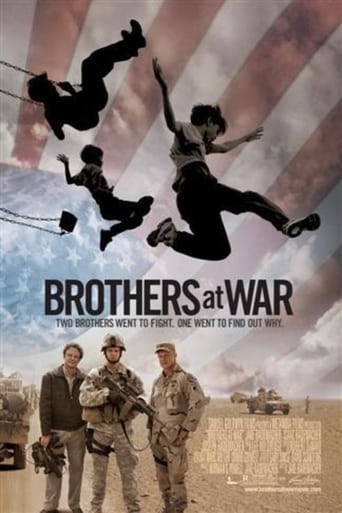
BROTHERS AT WAR is an intimate portrait of an American family during a turbulent time. Jake Rademacher sets out to understand the experience, sacrifice, and motivation of his two brothers serving in Iraq. The film follows Jake’s exploits as he risks everything—including his life—to tell his brothers’ story.

Civilians, journalists and soldiers from both sides of the conflict explain their experience during the Iraq War, from the 2003 invasion through the 17 years that followed. Edited version from "Once Upon a Time in Iraq" (2020)
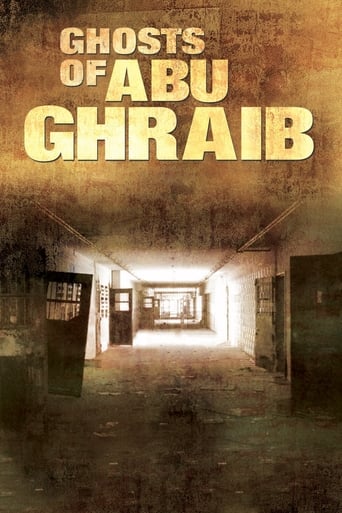
An examination of the prisoner abuse scandal involving U.S. soldiers and detainees at Iraq's Abu Ghraib prison in the fall of 2003.
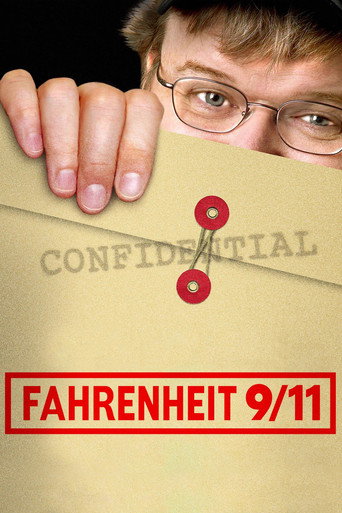
Michael Moore's view on how the Bush administration allegedly used the tragic events on 9/11 to push forward its agenda for unjust wars in Afghanistan and Iraq.
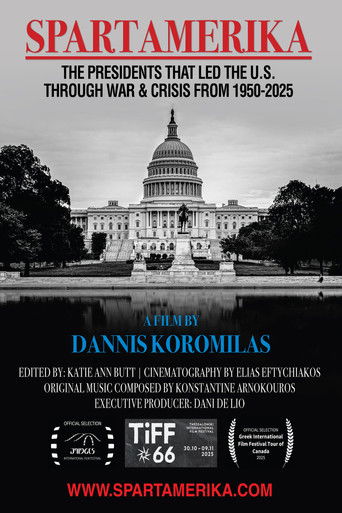
An essay film exploring the thirteen United States Presidents that have led the country through war and conflict from 1950 to 2025.

The award-winning filmmaker Peter Lilienthal is dedicated to this extremely poignant documentary of U.S. military policy and the living conditions of former resistance fighters in Latin America.

Morgan Spurlock tours the Middle East to discuss the war on terror with Arabic people.

On Sept. 11, 2001, deep inside a White House bunker, Vice President Dick Cheney was ordering U.S. fighter planes to shoot down any commercial airliner still in the air above America. At that moment, CIA Director George Tenet was meeting with his counter-terrorism team in Langley, Virginia. Both leaders acted fast, to prepare their country for a new kind of war. But soon a debate would grow over the goals of the war on terror, and the decision to go to war in Iraq. Cheney, Defense Secretary Donald Rumsfeld, and others saw Iraq as an important part of a broader plan to remake the Middle East and project American power worldwide. Meanwhile Tenet, facing division in his own organization, saw non-state actors such as Al Qaeda as the highest priority. FRONTLINE’s investigation of the ensuing conflict includes more than 40 interviews, thousands of pages of documentary evidence, and a substantial photographic archive.
A powerful and poignant film in which families and friends of those who have died fighting in Afghanistan and Iraq talk openly about their loved ones and their grief. Epic in scale and spanning seven years of war, this landmark three-hour film gives a rare insight into the personal impact and legacy of this loss.
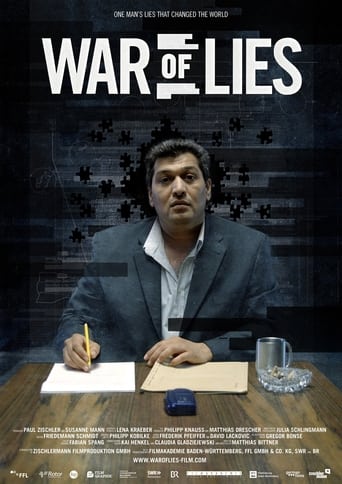
War of Lies is the story of an Iraqi refugee, whose information about portable weapons of mass destruction passed through the hands of the BND, MI6 and CIA. This information was ultimately used by the US government to legitimize the invasion of Iraq in 2003. Today we know the war was based on a lie. The press blamed Rafed Ahmed Alwan, he, though, proudly presents himself as the man who helped remove Saddam Hussein. Was Alwan really able to walk all over the worlds intelligence services and how did this lie become a convenient truth?

FRONTLINE tells the stories of soldiers who have come home haunted by their experiences during the Iraq War and asks whether the government is doing enough to help.

Did America rush into a war in Iraq for which it was unprepared? FRONTLINE examines why the U.S. went to war in Iraq, what went wrong in the planning for the postwar occupation, and what was at stake for both the U.S. and for Iraqis.
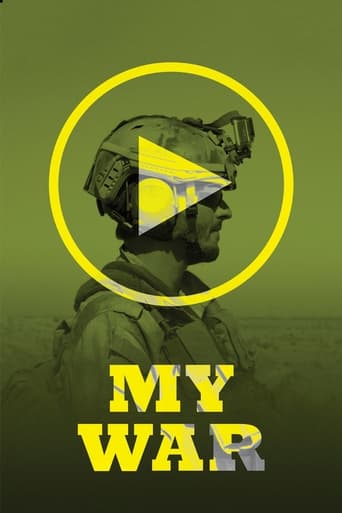
A disturbing portrait of four Western volunteers who risk their lives to fight ISIS alongside Kurdish forces. The feature documentary 'My War' probes the complex motives behind the need to take up arms on someone else’s behalf.
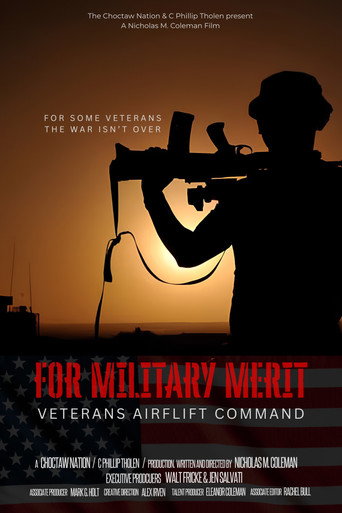
Explore the world of injured US soldiers - their loss, pain, redemption and rise as they return to an America which is ill-equipped for them. When a missile exploded next to his helicopter, Walt Fricke's life changed forever.

Deserter follows Ryan Johnson and his wife Jen during their flight from the Central Valley of California to Toronto, Canada. Johnson deserted the American army after hearing that he was going to be deployed to Iraq, despite assurances that this would not happen. Like many of his contemporaries, Johnson only joined the army because he could not find a job, and he sees the war in Iraq as both illegal and immoral. Desertion means imprisonment, so he decides to flee, realising that there will be no way back. Johnson seeks advice from various helpful organisations that guide him and Jen to Canada. The employees include both Vietnam veterans and young soldiers who have already served in Iraq.