
Les pouponnières du IIIème Reich
2013-01-09 · Runtime unavailable · ★ 8.0
Trailers are previews, not full movies.
No authorized playback source configured. Use the legal watch options below.
Production details
- Directors
- Romain Icard
- Production companies
- Nilaya Productions
- Countries
- Unavailable
- Status
- Released
Top Cast
Cast unavailable.
Title information and images are supplied by TMDb. Explore our discovery guide for advice on comparing metadata and legal viewing options.
Where to watch
Availability provided by JustWatch via TMDb. Offers can change. Provider links are listed on TMDb; full playback requires a separately authorized source.
Availability not listed for this country.
Seasons & episodes
Recommendations

In an intimate and joyful story of love in the face of loss, celebrated poets Andrea Gibson and Megan Falley find strength—and unexpected hilarity—in what might be their final year together.

When Allied forces liberated the Nazi concentration camps in 1944-45, their terrible discoveries were recorded by army and newsreel cameramen, revealing for the first time the full horror of what had happened. Making use of British, Soviet and American footage, the Ministry of Information’s Sidney Bernstein (later founder of Granada Television) aimed to create a documentary that would provide lasting, undeniable evidence of the Nazis’ unspeakable crimes. He commissioned a wealth of British talent, including editor Stewart McAllister, writer and future cabinet minister Richard Crossman – and, as treatment advisor, his friend Alfred Hitchcock. Yet, despite initial support from the British and US Governments, the film was shelved, and only now, 70 years on, has it been restored and completed by Imperial War Museums under its original title "German Concentration Camps Factual Survey".

This revealing documentary honors the legendary Sidney Poitier—iconic actor, filmmaker, and civil rights activist. Featuring interviews with Denzel Washington, Spike Lee, Halle Berry, and more.
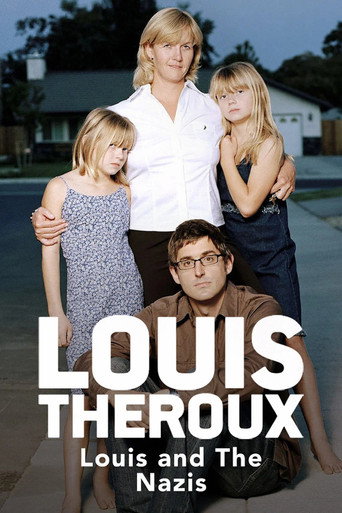
Louis Theroux travels to California to meet the man dubbed "the most dangerous racist in America"; Tom Metzger. Louis meets him, his family and his publicity manager as well as following him to skinhead rallies and on a visit to Mexico.

The film is based on interviews with 2,000 women from 50 countries, and covers the status of women all over the world. The topics covered include forced marriages, sexual assault, female genital mutilation, acid attacks, motherhood, sexuality, menstruation, education and the professional success of women.

A 1993 documentary film about Bruce Lee. The film includes interviews from some of his fellow students and opponents who worked alongside him in his movies.

Through deeply personal interviews with her siblings and an examination of the photographs, letters, and belongings left behind, Mariska assembles a new portrait of her mother Jayne Mansfield, an extraordinary and complex woman.

A detailing of the rise to prominence and global sporting superstardom of six supremely talented young Manchester United football players (David Beckham, Nicky Butt, Ryan Giggs, Paul Scholes, Phil and Gary Neville). The film covers the period 1992-1999, culminating in Manchester United's European Cup triumph.

Over 35 years after Bob Lazar's revelations, this documentary exposes secrets of a facility the government still denies. Featuring Lazar's testimony, recreations, and new evidence, it reopens a case that continues to spark global curiosity

A string of threatening emails escalates into a revenge plot involving a newly married US marshal and his ex-girlfriend.

Retrospective documentary about the making of the horror cult classic "The Return of the Living Dead."

A documentary on the expletive's origin, why it offends some people so deeply, and what can be gained from its use.
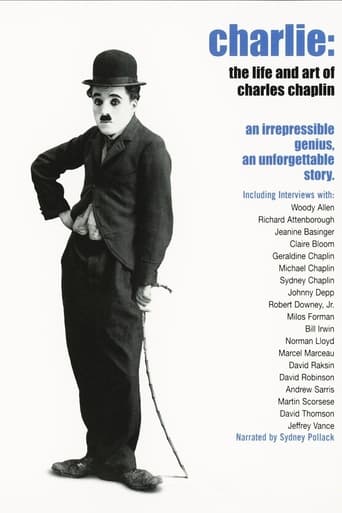
Brilliant, long in-the-works story of the life and art of the world's greatest comedian and the cinema's first genius, Charlie Chaplin. Produced, written and directed by renowned film critic Richard Schickel.

Oskar Gröning, known as the "Accountant of Auschwitz," was charged with the murder of 300,000 Jews. When he took the stand in 2015, at the age of 94, his trial made headlines worldwide.
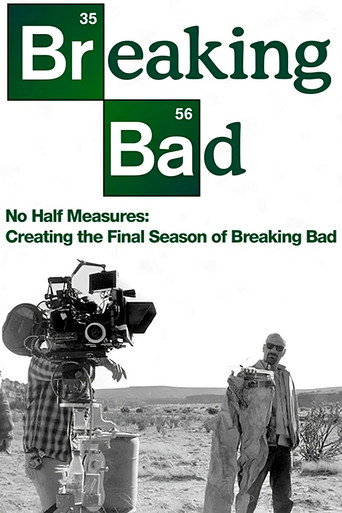
A documentary about the making of season five of the acclaimed AMC series Breaking Bad.

In the Realms of the Unreal is a documentary about the reclusive Chicago-based artist Henry Darger. Henry Darger was so reclusive that when he died his neighbors were surprised to find a 15,145-page manuscript along with hundreds of paintings depicting The Story of the Vivian Girls, in What is Known as the Realms of the Unreal, of the Glodeco-Angelinnian War Storm, Cased by the Child Slave Rebellion.

Film adaptation of French economist Thomas Piketty's ground-breaking global bestseller of the same name: an eye-opening journey through wealth and power.

Marcel Ophuls' riveting film details the heinous legacy of the Gestapo head dubbed "The Butcher of Lyon." Responsible for over 4,000 deaths in occupied France during World War II, Barbie would escape—with U.S. help—to South America in 1951, where he lived until a global manhunt led to his 1983 arrest and subsequent trial.

A compilation of over 30 years of private home movie footage shot by Lithuanian-American avant-garde director Jonas Mekas, assembled by Mekas "purely by chance", without concern for chronological order.

The life and career of one of comedy's most inimitable modern voices, Mr. Gilbert Gottfried.
Similar titles
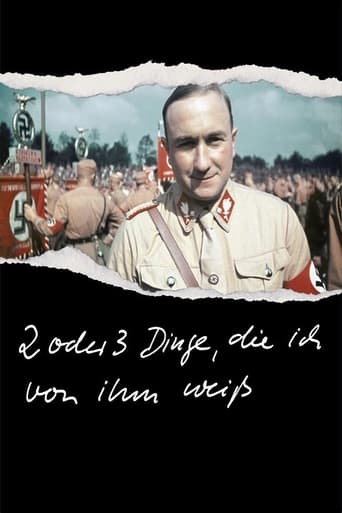
What would your family reminiscences about dad sound like if he had been an early supporter of Hitler’s, a leader of the notorious SA and the Third Reich’s minister in charge of Slovakia, including its Final Solution? Executed as a war criminal in 1947, Hanns Ludin left behind a grieving widow and six young children, the youngest of whom became a filmmaker. It's a fascinating, maddening, sometimes even humorous look at what the director calls "a typical German story." (Film Forum)
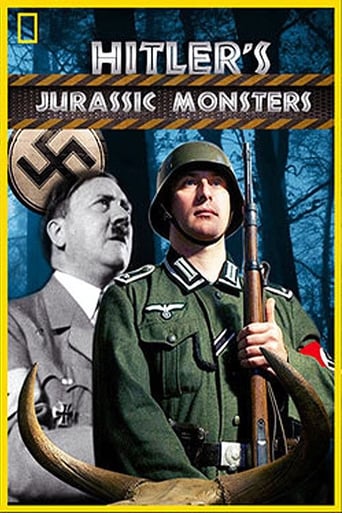
This is the untold story of a Nazi vision, that went far beyond the military conquest of European countries. As part of their crazed dream to create a thousand-year Reich they developed detailed blueprints for Aryan settlements and vast hunting parks for ‘Aryan’ animals. Goering and Himmler employed Germany’s best scientists to launch a hugely ambitious programme of genetic manipulation to change the course of nature itself, both in the wild and for domestic use. In a fascinating blend of politics and biology, Hitler's Jurassic Monsters is the true and asthonishing story of how the Nazis tried to take control of nature and change the course of evolution.
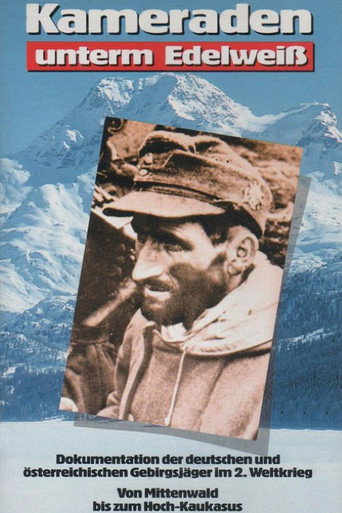
This rare documentary was filmed with the participation and personal camera of Wolfgang Gorther, a German military cinematographer of the 1st mining division, who participated in the legendary ascent of Elbrus on the night of August 21, 1942. From the beginning of the Second World War and the last international winter sports week in Garmisch-Partenkirchen follows the invasion of the German troops into the Soviet Union: Dnieper, Zaporozhy, Kharkov, Rostov-on-Don, Nogaean Steppe, Caucasus – fighting at 50 degrees below zero, military expedition into the world of ice and snow; – ascent of mountain arrows and subsequent hoisting of flags on the Elbrus at an altitude of 5,633 meters.

This story follows one man's quest to uncover the origins and reveal the mysteries of a possible Holocaust artifact some historians now say never existed: lampshades made of human skin. When the flood waters of Hurricane Katrina receded, they left behind a wrecked New Orleans and a strange looking lamp that an illicit dealer claimed was 'made from the skin of Jews.'
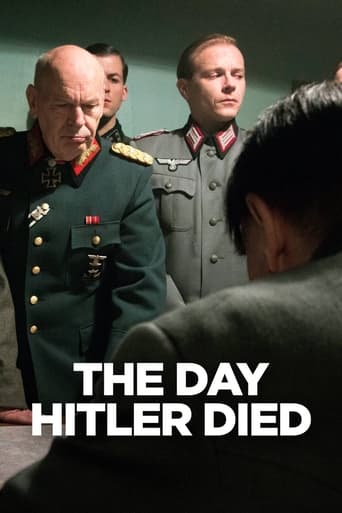
The story of Hitler’s final hours told by people who were there. This special features exclusive forgotten interviews, believed lost for 65 years, with members of Hitler’s inner circle who were trapped with him in his bunker as the Russians fought to take Berlin. These unique interviews from figures such as the leader of the Hitler Youth Artur Axmann and Hitler’s secretary Traudl Junge, have never before been seen outside Germany. Using rarely seen archive footage and dramatic reconstruction, this special tells the story of Adolf Hitler’s final days in his Berlin bunker.
Chronicles combat action of Hitler's elite bodyguard regiment from 1940 to 1941. From Rotterdam to Greece, German frontline cameramen captured footage of early victorious campaigns. Scenes of camp life and ceremonies convey an impression of the comradeship, pride, and elan of this mighty military formation.

To historians, physicist Lise Meitner deserves to be placed on a par with Einstein, Heisenberg and Otto Hahn. In the 1930s on the verge of World War II, she led a small group of scientists who discovered that splitting the atomic nucleus of uranium releases enormous energy. This extraordinary film tells the story of a woman who was far ahead of her time as a scientist and a pioneer of feminism.

A documentary about the life of the actress Hildegard Knef.
By tracking scientists and Holocaust survivors in Lithuania, The Good Nazi tells the story of a Schindler-type Nazi officer who turned his back on his dark ideology and risked his life to save hundreds of Jews.
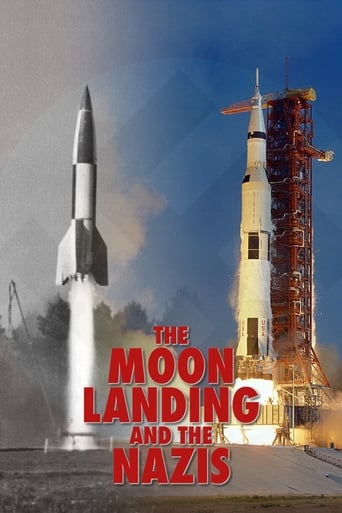
The fact that Neil Armstrong was the first man to set foot on the moon on July 19, 1969, was also the success of Wernher von Braun and a team of more than 100 NASA technicians and engineers from Germany. But the success story is shrouded in dark shadows: Many of the Germans had a Nazi past and were part of the development of the infamous V2 rocket. Some 20,000 forced laborers lost their lives during the production under the inhumane working conditions at several Nazi underground weapons factories. In a secret operation to secure German rocket technology, the Americans brought the scientists to the USA in 1945. Only decades later were classified documents released, detailing the involvement of German NASA employees with the Third Reich.
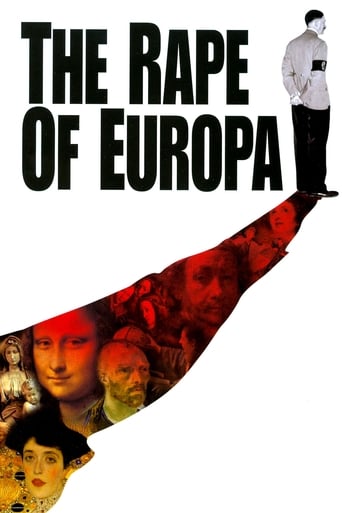
World War II was not just the most destructive conflict in humanity, it was also the greatest theft in history: lives, families, communities, property, culture and heritage were all stolen. The story of Nazi Germany's plundering of Europe's great works of art during World War II and Allied efforts to minimize the damage.
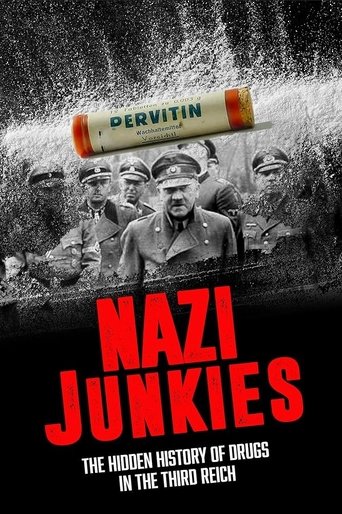
In Third Reich, the abuse of drugs made commanders and soldiers feel invincible. The Führer himself took them on daily basis. This is the unbelievable story of the D-IX project and of methamphetamines, which, abundantly furnished to soldiers, changed the course of history.
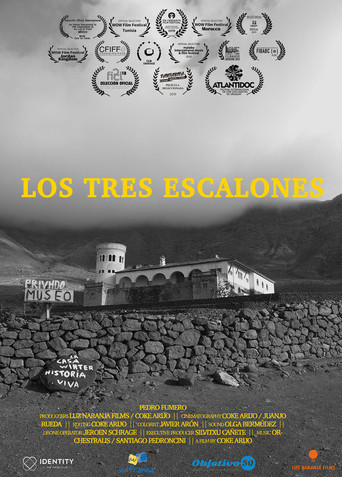
Pedro lives in Cofete, an isolated beach of Fuerteventura. He abandoned his lifestyle to find out the obscure history of his family’s old house. “The three steps” tells a story of a man who decides not to give up and struggle against the elements.

Featuring never-before-seen film footage of Adolf Hitler and the Nazi regime, The Architecture of Doom captures the inner workings of the Third Reich and illuminates the Nazi aesthetic in art, architecture and popular culture. From Nazi party rallies to the final days inside Hitler's bunker, this sensational film shows how Adolf Hitler rose from being a failed artist to creating a world of ponderous kitsch and horrifying terror. Hitler worshipped ancient Rome and Greece, and dreamed of a new Golden Age of classical art and monumental architecture, populated by beautiful, patriotic Aryans. Degenerated artists and inferior races had no place in his lurid fantasy. As this riveting film shows, the Nazis went from banning the art of modernists like Picasso to forced euthanasia of the retarded and sick, and finally to the persecution of homosexuals and the extermination of the Jews.
A poignant documentary about the history of a family haunted by World War II. On the basis of archive material, documents left behind by her great-aunt Ro Miller and stories told by her father Eli Asser, Hella de Jonge reconstructs what happened to her family during, before and after the war. How they became aware of the danger, how they fled, how they hid, how they survived and how they died. And how, after the war was over, it continued to weigh on their lives. In Hella’s words, “The doctor advised my mother to have children, to help cope with the incredible loss.” A portrait of her grandmother, who died in the war, still hangs in her father’s living room. The filmmaker’s relationship with him has always been difficult. Fragments of memory never before discussed run together during an emotional journey embarked upon together by father and daughter to places of significance in the history of their family.
Short documentary on people who survived the Nazi concentration camps.

For the first time, you will see dramatic moments of WWII that were captured in 3D with stereographs and then shuttered away in secret archives and attics, until now. This stunning collection of color 3D photos includes Allied reconnaissance photos, a trove of images that documents the rise and fall of the Third Reich, and photos secretly taken by a civilian in occupied France. WWII IN 3D also features an actual 3D motion picture film shot by the Nazis in 1943 and creates a fully immersive, three dimensional portrait of history's largest and bloodiest conflict.

Enric Marco, ex-president of the Spain’s main deportees’ association, embarks on a car trip to Germany, a demythologising journey into his past. Two years earlier, a historian had shown that Enric Marco wasn’t the member of the Resistance he had claimed to be, and that he’d made up the stories of his experiences in a concentration camp that he had been recounting on television for years. Now, Marco retraces the route of his 1941 train journey as part of a convoy of workers sent by Franco to Hitler, in the middle of the Second World War.

A "know-your-enemy" propaganda film similar to "Know Your Enemy: Japan" and "My Japan", films about Japan with the same objective. It contains a history of the prelude to WW II, the death camps and other Nazi war crimes, and commentary on the character of the German people. Directed by Frank Capra, this film is in essentially the same format as his "Why We Fight" series. It was intended to be shown to American troops participating in the invasion and occupation of Germany. But by the time it was ready, events had overtaken it -- Germany was already well on its way to falling -- so the film was shelved. Although it is readily available for public-domain viewing on the Internet, it has never been widely distributed or shown.