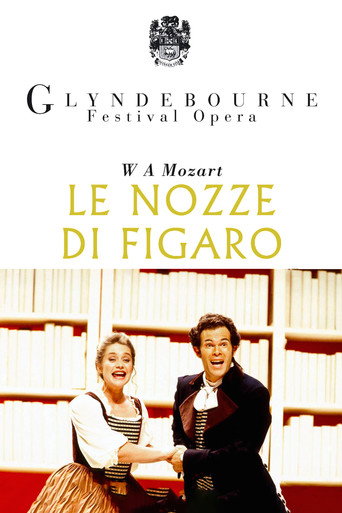
The Marriage of Figaro
1994-05-28 · 189 min · ★ 8.5
Live from Glyndebourne 1994. The first production to be filmed Live in Glyndebourne´s new opera house May 1994. The Marriage of Figaro is a continuation of the plot of The Barber of Seville several years later, and recounts a single “day of madness” in the palace of the Count Almaviva near Seville, Spain. Rosina is now the Countess; Dr. Bartolo is seeking revenge against Figaro for thwarting his plans to marry Rosina himself; and Count Almaviva has degenerated from the romantic youth of Barber into a scheming, bullying, skirt-chasing baritone. This follows the Count trying to obtain favours from Susanna, Figaro’s bride to be, under the nose of the Countess.
Trailers are previews, not full movies.
No authorized playback source configured. Use the legal watch options below.
Production details
- Directors
- Derek Bailey, Stephen Medcalf
- Production companies
- Channel 4 Television, Glyndebourne Festival Opera, NVC Arts
- Countries
- United Kingdom
- Status
- Released
Top Cast
 Alison HagleySusanna
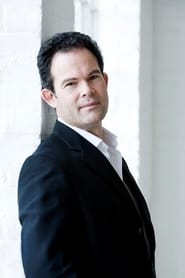 Gerald FinleyFigaro
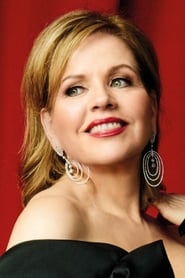 Renée FlemingCountess Almaviva
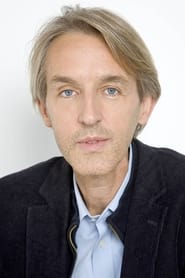 Andreas SchmidtCount Almaviva
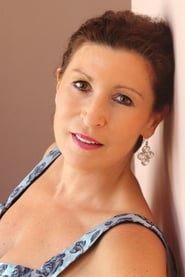 Marie-Ange TodorovitchCherubino
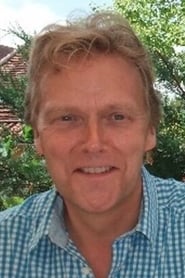 John Graham-HallDon Cruzio
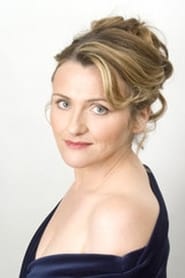 Susan GrittonBarbarina
 Liza PulmanBridesmaid
Title information and images are supplied by TMDb. Explore our discovery guide for advice on comparing metadata and legal viewing options.
Where to watch
Availability provided by JustWatch via TMDb. Offers can change. Provider links are listed on TMDb; full playback requires a separately authorized source.
Availability not listed for this country.
Seasons & episodes
Recommendations

Taylor Swift takes the stage in Dallas for the Reputation Stadium Tour and celebrates a monumental night of music, memories and visual magic.
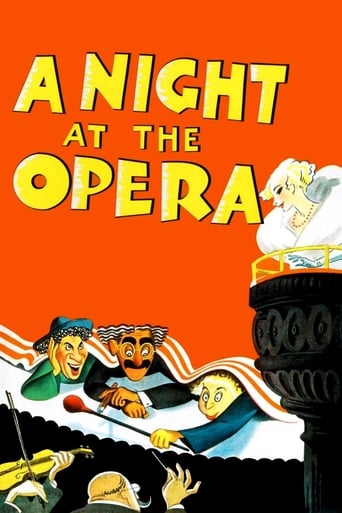
The Marx Brothers take on high society and the opera world to bring two lovers together. A sly business manager and two wacky friends of two opera singers help them achieve success while humiliating their stuffy and snobbish enemies.

Recorded in Seattle, WA on Halloween Night, 1991, Live at the Paramount is the only known Nirvana live show recorded on 16mm film. Now released to coincide with the 20th anniversary of the release of Nirvana's watershed album.
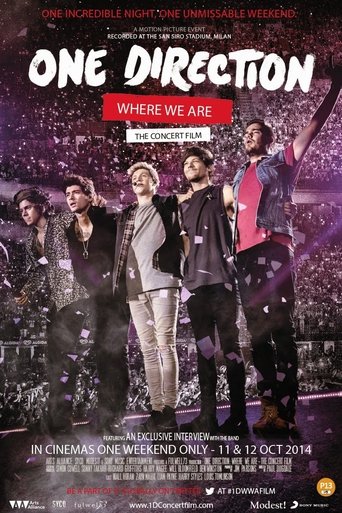
Where We Are: Live from San Siro Stadium features the entire 23 track concert filmed at San Siro Stadium in Milan in June 2014, as well as 24 minutes of bonus content including backstage footage of One Direction and their crew.
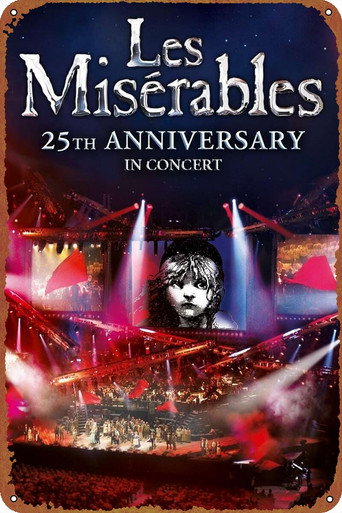
This concert, recorded to celebrate the 25th anniversary of the landmark musical Les Miserables, gathers the casts of the show's 2010 original production at the Queen's Theatre, the 1985 original production by the London company, and the 2010 production at the Barbican together for one performance. Together with talents like Michael Ball, Hadley Fraser, and John Owen-Jones, the performers present the play's musical numbers in a semi-theatrical style, fully costumed and with all the emotion of the musical's heyday.
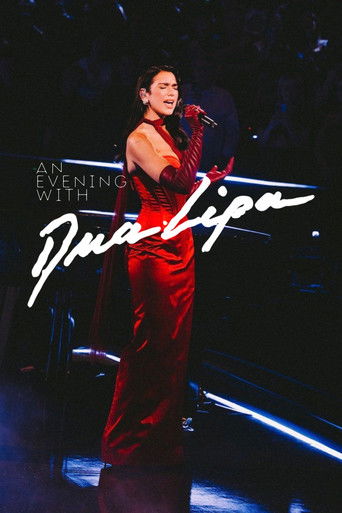
Features live performances of Dua Lipa's greatest hits accompanied by the Heritage Orchestra, as well as personal reflections on her career.

The Prismatic World Tour Live is a sensory explosion of eye-popping theatrics, daring acrobatics and of course, all the hits. This concert film is a visually stunning production that captures Katy’s fun-loving personality and artistic vision. Spanning the entire length of the arena floor, the innovative Prismatic Tour stage allows Katy to share intimate moments with her fans in a unique shared connection with the music. Directed for the stage in seven thematic acts, this unmissable spectacle features hit after hit after hit, and The Prismatic World Tour Live truly captures the excitement, color and energy of the live Katy Perry extravaganza.
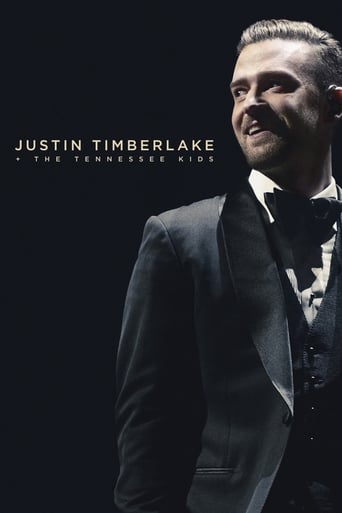
In January 2015, at the MGM Grand Garden Arena in Las Vegas, the final nights of the "20/20 Experience World Tour", director Jonathan Demme captures what makes the show soar: gifted musicians, deft dancers and a magnetic star.
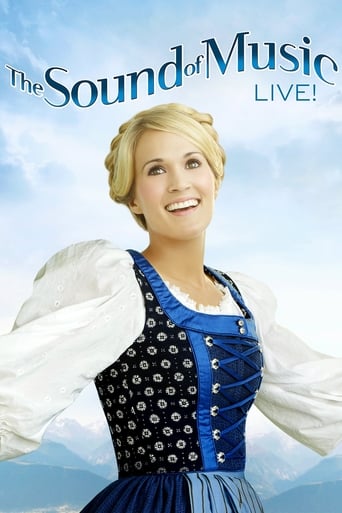
The Sound of Music Live! is a television special that was originally broadcast by NBC on December 5, 2013. Produced by Craig Zadan and Neil Meron, the special was an adaptation of Rodgers and Hammerstein's Broadway musical The Sound of Music, starring country singer Carrie Underwood as Maria von Trapp, performed and televised live from Grumman Studios in Bethpage, New York. Meron felt that if the telecast were successful, the concept could become "another kind of entertainment that can exist on TV." By her request, Underwood's casting as Maria was personally endorsed by Julie Andrews, who starred in the 1965 film.

Lady Gaga Presents The Monster Ball Tour at Madison Square Garden is a 2011 concert special documenting the February 21 and 22, 2011 shows of Lady Gaga's The Monster Ball Tour. It features concert footage as well as pre-concert and backstage content.
Featuring never-before-seen footage, concert performances and intimate interviews, filmmaker Ron Howard examines the life and career of famed opera tenor Luciano Pavarotti.

This concert was filmed at Madison Square Garden in New York in 2005 at the culmination of his farewell tour prior to his retirement. It’s a spectacular show with multi-level staging, amazing lighting and guest appearances from D12, Obie Trice and Stat Quo. Originally filmed for US TV station Showtime the show is now available on Blu-ray for the first time and gives us Eminem at his charismatic best.
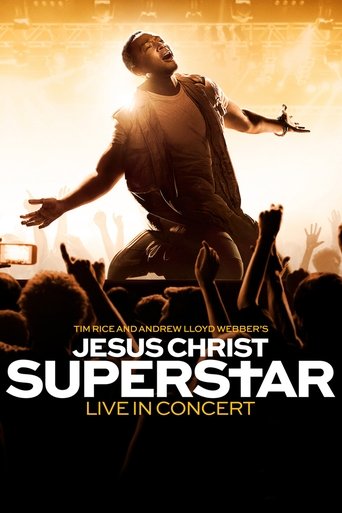
The award-winning show is re-imagined as a live concert event, featuring an all-star cast of recording artists, set during the last week of Jesus' life as he deals with betrayal, love and jealousy, and told from the perspective of Judas.
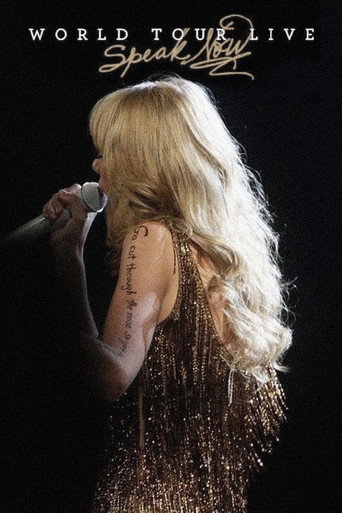
Recorded during her Speak Now World Tour in 2011, this live recording collects 18 performances from the country-pop starlet, including almost all songs from her 2010 studio album "Speak Now".
A concert film that the former Pink Floyd singer-songwriter made on various tour dates between 2010 and 2013, when he was playing his former group's 1980 double-album in its entirety.

On September 22nd 2011, Adele played The Royal Albert Hall in London. A dream come true moment and a highlight of her record breaking year with the album '21'.

Live at Rome Olympic Stadium is a live album and video by English alternative rock band Muse, released on 29 November 2013. Featuring the band's performance at Rome's Stadio Olimpico on 6 July 2013, in front of a crowd of 60,963 people, the concert was a part of The Unsustainable Tour, which is a moniker for the band's summer 2013 European leg of The 2nd Law World Tour.
Live Aid was held on 13 July 1985, simultaneously in Wembley Stadium in London, England, and the John F. Kennedy Stadium in Philadelphia, United States. It was one of the largest scale satellite link-ups and television broadcasts of all time: watched live by an estimated global audience of 1.9 billion, across 150 nations. "It's twelve noon in London, seven AM in Philadelphia, and around the world it's time for Live Aid...!"

Filmed in its entirety at London's Wembley Arena during her worldwide sold-out 25-city Confessions Tour (2006's top-grossing tour world-wide), this concert film features songs from throughout the queen's career but largely focuses on Confessions On A Dance Floor.

Filmed at LA's SoFi Stadium, The Weeknd brings down the house – and your living room – in this epic concert event.
Similar titles

Anthony Dean Griffey creates a haunting portrait of the outcast fisherman who struggles under the burden of presumed guilt. This chilling production by Tony Award-winning director John Doyle also features the superb Patricia Racette as the sympathetic Ellen Orford and the Met chorus in a truly hair-raising performance as the oppressively judgmental fishing village.
Wagner's Ring of the Nibelungen is regarded as one of the most important milestones in the history of music. In the first part, the Rheingold, it begins with the chain of fateful entanglements that ultimately attracts the downfall of the race of the gods.
Disciplined Italian composer Antonio Salieri becomes consumed by jealousy and resentment towards the hedonistic and remarkably talented young Salzburger composer Wolfgang Amadeus Mozart.
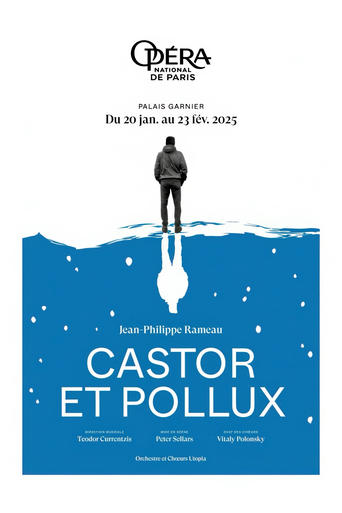
A return to its roots for Castor et Pollux, Jean-Philippe Rameau’s lyric tragedy first performed in 1737 at the Académie royale and inspired by the mythological episode of the Gemini. Rarely performed in its original version – the score was reworked by Rameau himself in 1754 –, this daring work plays on contrasts and expressiveness, as in the famous “Tristes apprêts”. The aria is sung by Télaïre mourning the death of her fiancé Castor, killed in battle, before his twin brother Pollux descends into the Underworld to ask his father, Jupiter, to bring him back to life. While this opera celebrates brotherly love, its prologue poses an essential question for director Peter Sellars: how do you stop a war and its attendant hatred and resentment?

Part of an epoch-making release of Mozart's complete operas on DVD, here is the 18-year old composer's first mature opera buffa. Hilarity mingles with passionate emotions when belfiore believes he has killed his lover in a fit of jealousy, but then encounters her disguised as gardener sandrina. Famed filmmaker Doris Dorie directs a superb young cast in this tale of love, hate and intrigue across class barriers, all vividly depicted by Mozart's astonishingly rich and varied music.

An excellent performance of this delightful opera. The principals are superb, especially the sisters. Bruscantini as Don Alfonso is past his prime, but he knows and understands the role inside out, so one does not even notice his vocal limitations. Araiza is in top form as Ferrando, and Morris makes virile Guglielmo. The only disappointment is Battle as Despina. Unlike her partners, she does not have feel for the Mozart ensemble, and her vocal mannerisms are totally unbecoming. How the producers allowed that to happen is a mystery. Muti's conducting is terrific, much better than on his La Scala video, where he is uninvolved.
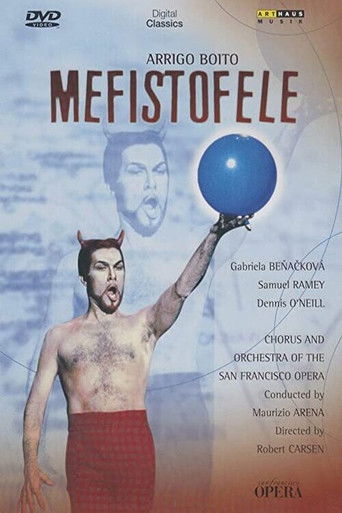
1989 recording of the San Francisco Opera production of Mefistofele: Boito's retelling of Goethe's Faust
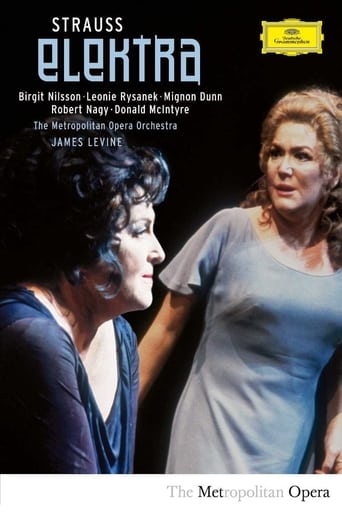
It's hard to imagine confirmed Straussians not wanting this starry Metropolitan Opera performance of Elektra. Strauss and his librettist, Hugo von Hofmannstahl, transformed Sophocles' take on Homer's tale into a harrowing opera noir. Elektra lives for one reason, to kill her mother, Klytämnestra, and her stepfather, Aegisth, the murderers of her father, Agamemnon. In contrast to Elektra's vengeful obsession, her sister Chrysothemis desires to get on with life. When their long-missing brother, Orestes, returns to do the deed, Elektra celebrates with a dance of death and, her sole purpose in life fulfilled, dies. Strauss joined the hermetic plot to music of the utmost opulence, violent and yearning by turns, evoking the cardinal principles of Greek tragedy - pity and terror.
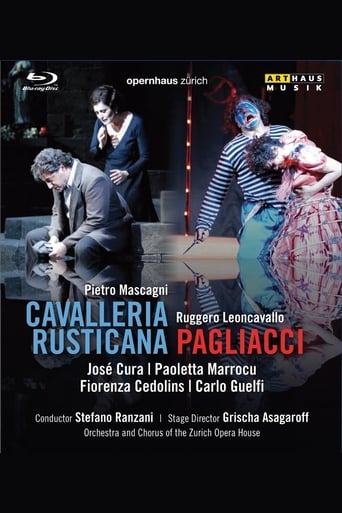
Pietro Mascagni's opera recorded in 2009. Conductor Stefano Ranzani leads the orchestra and chorus of the Zurich Opera House, with performances by Argentinian tenor Jose Cura and soprano Pauletta Marrocu.
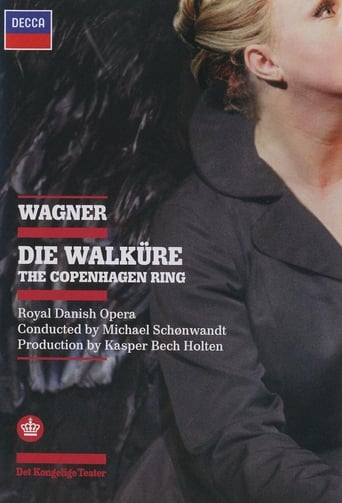
Die Walküre (The Valkyrie), WWV 86B, is an opera in three acts by Richard Wagner with a German libretto by the composer. It is the second of the four operas that form Wagner's cycle Der Ring des Nibelungen (The Ring of the Nibelung). The story of the opera is based on the Norse mythology told in the Volsunga Saga and the Poetic Edda.[1][2] In Norse mythology, a valkyrie is one in a group of female figures who decide which soldiers die in battle and which live. Die Walküre's best-known excerpt is the "Ride of the Valkyries". DVD release June 2009.

With his affinity for the 16th-century sculptor Benvenuto Cellini's advocacy of artistic and personal freedom, Hector Berlioz went straight for the grand gesture with his first completed opera. Returning to it years after initial production debacles, Berlioz stated that he would 'never again find such verve and Cellinian impetuosity, nor such a variety of ideas.' The plot revolves around Cellini's wooing of Teresa, a match frustrated at every opportunity by his rival, the cowardly Fieramosca. Benvenuto Cellini is a pithy work combining romance, excitement, violence, comedy and spectacle; the perfect stage for Terry Gilliam's stylishly colorful and larger than life directing.
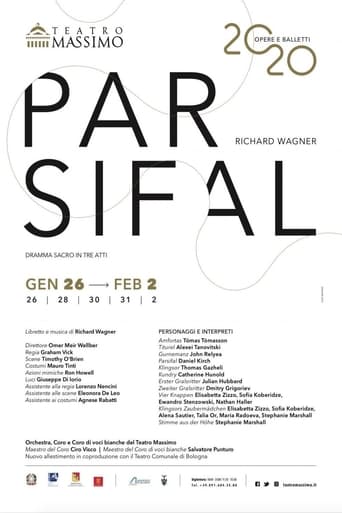
Richard Wagner's Parsifal, staged at the Teatro Massimo in Palermo in 2020, opened the opera season on January 26. The production, directed by Graham Vick and conducted by Omer Meir Wellber, featured staging with references to the imagery of war.
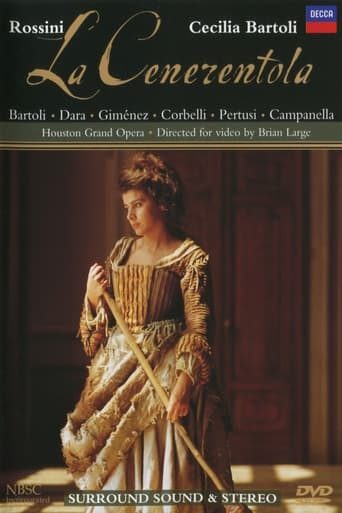
La Cenerentola, ossia La bontà in trionfo (Cinderella, or Goodness Triumphant) is an operatic dramma giocoso in two acts by Gioachino Rossini. The libretto was written by Jacopo Ferretti, based on the fairy tale Cendrillon by Charles Perrault. The opera was first performed in Rome's Teatro Valle on 25 January 1817.---- IMDB id refers to Great Performances: Season 24, Episode 12 La Cenerentola (3 Apr. 1996) from Houston Grand Opera so release date is misleading.

Strauss's opera adapted to the screen by Gotz Friedrich.
Based on a revolutionary play supposedly written by the Eternal President of the Democratic People's Republic, Kim Il-sung, and rumored to have been co-directed by Kim Jong-il. This revolutionary work is also popular among the Chinese, especially those who lived through the Cultural Revolution, and have fond memories of revolutionary antics.
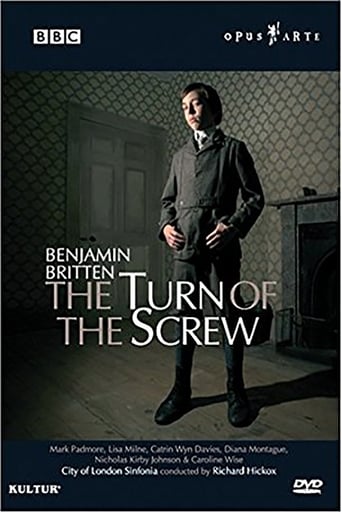
The operatic version of the famous story about a governess who fears her two charges are possessed.

The great Georg Solti conducts a spectacular studio production of this masterpiece of 20th century opera. Two internationally celebrated Hungarian opera stars perform Bartók's darkly psychological parable with searing dramatic intensity.
A version of Benjamin Britten's opera based on the Melville story. Will the virtuous young sailor Billy Budd be hanged for murder?
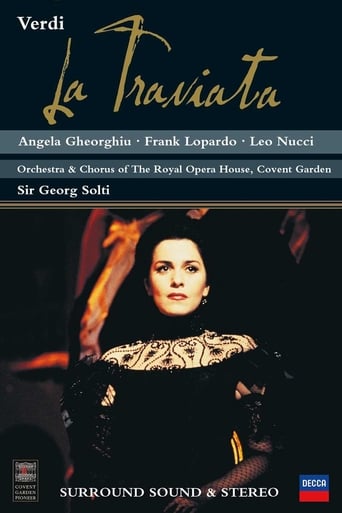
La traviata (Italian: [la traˈviaːta], "The Fallen Woman"[1][2]) is an opera in three acts by Giuseppe Verdi set to an Italian libretto by Francesco Maria Piave. It is based on La dame aux Camélias (1852), a play adapted from the novel by Alexandre Dumas, fils. The opera was originally entitled Violetta, after the main character. It was first performed on 6 March 1853 at the La Fenice opera house in Venice. Piave and Verdi wanted to follow Dumas in giving the opera a contemporary setting, but the authorities at La Fenice insisted that it be set in the past, "c. 1700". It was not until the 1880s that the composer and librettist's original wishes were carried out and "realistic" productions were staged.[3]
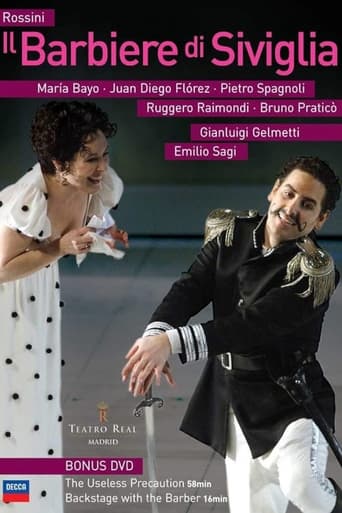
Stage director Emilio Sagi's production of the legendary Barber of Seville is enriched by a bright distribution. Maria Bayo returns to one of her signature role as Rosina, opposite Juan Diego Florez, the Rossini expert tenor. The title role is embodied by the Italian baritone Pietro Spagnoli, while Ruggero Raimondi and Bruno Pratico reconcile the audience with Don Basilio and Don Bartolo.