Thee Backslacpkping With Media
2009-04-01 · 203 min · Not rated
A self described "documediamentary" about the reactions to the release of the then final Star Wars film, "Revenge of the Sith".
Trailers are previews, not full movies.
No authorized playback source configured. Use the legal watch options below.
Production details
- Directors
- Peter A. Lopez
- Production companies
- Unavailable
- Countries
- United States of America
- Status
- Released
Top Cast
Cast unavailable.
Title information and images are supplied by TMDb. Explore our discovery guide for advice on comparing metadata and legal viewing options.
Where to watch
Availability provided by JustWatch via TMDb. Offers can change. Provider links are listed on TMDb; full playback requires a separately authorized source.
Availability not listed for this country.
Seasons & episodes
Recommendations
An inside look at the making of the movie Star Wars: Episode VII - The Force Awakens (2015), featuring footage and exclusive interviews with the actors and filmmakers.
The Captains is a feature-length documentary film written and directed by William Shatner. The film follows Shatner as he interviews the other actors who have portrayed starship captains in the Star Trek franchise.
From the earliest versions of the script to the blockbuster debuts, explore the creation of the Star Wars Trilogy.

Denise Crosby takes a first look at the huge fans of "Star Trek" from around America and how the series has affected and shaped their lives.

A documentary about ten very different lives connected by having appeared onscreen wearing masks or helmets in Star Wars.

David Prowse is an eighty years old actor, who has lived behind Darth Vader's mask during three decades. A group of Star Wars fans find out why he has been apparently forgotten by Lucasfilm during thirty years, and decide to give him back the glory he never had. This is their last opportunity.
The story of the insane scandals related to the remake of “Island of Dr. Moreau” —originally a novel by H. G. Wells—, which was brought to the big screen in 1996. How director Richard Stanley spent four years developing the project just to find an abrupt end to his work while leading actor Marlon Brando pulled the strings in the shadows. Now for the first time, the living key players recount what really happened and why it all went so spectacularly wrong.

The film goes behind the scenes of the 1999 sci-fi movie The Matrix.

The story lives forever in this feature-length documentary that charts the making of Star Wars: The Rise of Skywalker.

The special focuses on how Star Wars is relevant today and the history that inspired it, and also makes various connections to Greek mythology. It consists of several interviews with well-known politicians, journalists, and critics, along with historical content and clips from all six of the Star Wars movies.

A backstage and on-stage look at Justin Bieber during his rise to super stardom.
An experimental documentary that explores Saudi Arabia's relationship with the U.S. and the role this has played in the war in Afghanistan.
The film profiles eight former members of the Church of Scientology, shining a light on how they attract true believers and the things they do in the name of religion.

A documentary that explores the downloading revolution; the kids that created it, the bands and the businesses that were affected by it, and its impact on the world at large.

A visual montage portrait of our contemporary world dominated by globalized technology and violence.
A subjective documentary that explores various theories about hidden meanings in Stanley Kubrick's classic film The Shining. Five very different points of view are illuminated through voice over, film clips, animation and dramatic reenactments.

A documentary on the expletive's origin, why it offends some people so deeply, and what can be gained from its use.
Takes us to locations all around the US and shows us the heavy toll that modern technology is having on humans and the earth. The visual tone poem contains neither dialogue nor a vocalized narration: its tone is set by the juxtaposition of images and the exceptional music by Philip Glass.

Explores the meaning of fame and influence in the digital age through an innovative social experiment. Following three Los Angeles-based people with relatively small followings, the film explores the attempts made to turn them into famous influencers by purchasing fake followers and bots to “engage” with their social media accounts.
An intimate documentary delving into Rian Johnson's process as he comes in as a director new to the Star Wars universe.
Similar titles

"This tape is an exploration of my latent heterosexuality with porn star / performance artist Annie Sprinkle as instructor and sage. After assuaging my fears that I can have sex with a woman & still maintain my gay identity, Annie warms me up with some playful, sensual wrestling. She then instructs in the use of a tampon while relating men's need to make war with their inability to menstruate. For the rest of the tape, she guides me through the specifics of sexual exploration, positions of coital congress as well as post- coital ritual."

Investigating autumn, temporal alterations, and their effect on movement
An experimental and poetic portrait of a woman.

Originality in a time of poorly made copies, a filmic inventory of a strange time, a kaleidoscope of images, in a constant game of ruptures and continuities. All this from 365 videos published on an Instagram page in 2018, added to an original soundtrack and a text adapted from Dürrenmatt's play Dialogue of a Vile Man, a text that synthesizes our time well.

The rare short film presents a curious dialogue between filmmaker Julio Bressane and actor Grande Otelo, where, in a mixture of decorated and improvised text, we discover a little manifesto to the Brazilian experimental cinema. Also called "Belair's last film," Chinese Viola reveals the first partnership between photographer Walter Carvalho and Bressane.
The Greek island of Syros is visited by a series of unexpected guests. Immutable forms, outside of time, aloof observants to human conditions.
Combining high definition and Super 8 footage, Lampedusa is composed of interwoven narratives based on a series of real events. In 1831, a volcanic island suddenly erupted from the sea a few kilometers off the southern coast of Sicily. An international dispute ensued, as a number of European powers laid claim to this newfound “land”. The island receded below sea level six months later, leaving only a rocky ledge under the sea…
Journalist Dermi Azevedo has never stopped fighting for human rights and now, three decades after the end of the military dictatorship in Brazil, he's witnessing the return of those same practices.
"Ryuta is 5 years old. Even though he is my son, I sometimes wonder what this small person is to me. Even though I see his joys and sadnesses and know the feel of his warmth on my skin when I hold him, there are moments when my feelings for him become vague and blank." - Takashi Ito
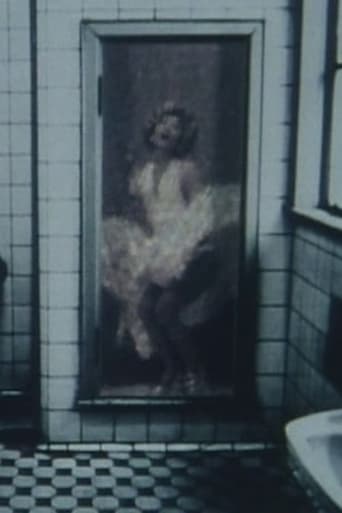
A work produced for the Morimura Yasumasa Exhibition at the Yokohama Museum of Art, (April 6 to June, 1996). It was shown in an old-style theater constructed within the exhibit space that featured photographs of Morimura playing famous foreign and Japanese actresses.

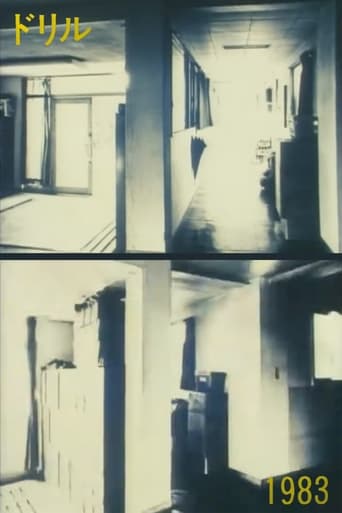
"The filming of the entrance to the company dormitory in which the film-maker was living. Centering the film on one pillar, he warps the spaces to the left and right and creates an unstable space similar to painting that employs anamorphosis. Made as were SPACY and BOX with a large number of photographs, the film ends with a violent movement, but is poetic for this." - Takashi Nakajima
"The majority of my 8-mm works were made for the three-minute "Personal Focus" film special put on in Fukuoka. This film is an animation of photographs I had taken on a regular basis as a sort of diary, and was made to have a rough feel to it." - Takashi Ito
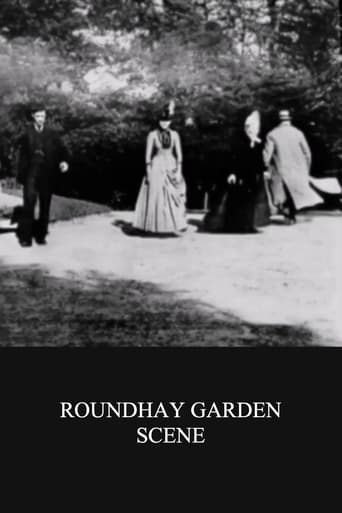
The earliest surviving motion-picture film, and believed to be one of the very first moving images ever created, was shot by Louis Aimé Augustin Le Prince using the LPCCP Type-1 MkII single-lens camera. It was taken on paper-based photographic film in the garden of Oakwood Grange, the Whitley family house in Roundhay, Leeds, West Riding of Yorkshire (UK), on 14 October 1888. The film shows Adolphe Le Prince (Le Prince’s son), Mrs. Sarah Whitley (Le Prince’s mother-in-law), Joseph Whitley, and Miss Harriet Hartley walking around in circles, laughing to themselves, and staying within the area framed by the camera. Roundhay Garden Scene is often associated with a recording speed of around 12 frames per second and runs for about 2 to 3 seconds.
Found footage sequences from various obscure campy Austrian films assembled together with a very dark disturbing soundtrack.
A young woman and man are riding bikes through nature, having a good time. When she speeds up, he loses her, and after a while he stumbles across her bike without any trace of her. He stumbles through the forest looking for her, imagining how she kisses him. No dialogue, just "audio credits" instead of titles, saying the name of the film, actors and director.
At various points in its history, tiny St. John's Island was where Singapore's colonial founder Sir Stamford Raffles docked his ship upon arrival, a quarantine centre for immigrants and pilgrims returning from Mecca, a penal colony for political detainees and secret society leaders, and a sleepy holiday resort. Unlike its neighbouring islands, however, St. John's was never fully developed. It occupies an in-between space, the vestiges of its history scattered around the land. Its indeterminacy stands in sharp contrast to Singapore, where land use is meticulously planned to fulfil economic and social functions. In this film, St. John's Island - otherwise known as 'Bukit Orang Salah', a nickname coined by the people who were quarantined there - becomes a site of and for reflection, prompting questions about our history, heritage and identity.
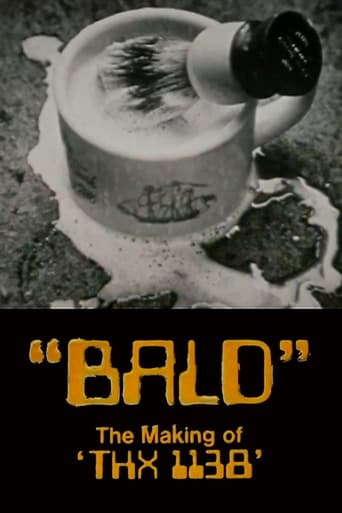
The film features a conversation between Lucas and Francis Ford Coppola, producer of THX 1138. They discuss Lucas' vision for the film, including his ideas about science fiction in general and in particular his concept of the "used future" which would famously feature in his film Star Wars. Intercut with this discussion is footage shot prior to the start of production of THX 1138 showing several of its actors having their heads shaved, a requirement for appearing in the film. In several cases the actors are shown being shaved in a public location. For example, Maggie McOmie is shaved outside the Palace of Fine Arts in San Francisco, while Robert Duvall watches a sporting event as his hair is cut off. Another actor, Marshall Efron, who would later play an insane man in the film, cut off his own hair and was filmed doing so in a bathtub.
Mostly dark, rejecting images which are repeated. A stone wall, the chamber of a revolver which is, at first not recognizable, a close-up of a cactus. The duration of the takes emphasises the photographic character of the pictures, simultaneously with a crackling, brutal sound. (Hans Scheugl)