De Bevrijding van Den Haag
2010-01-01 · Runtime unavailable · Not rated
Trailers are previews, not full movies.
No authorized playback source configured. Use the legal watch options below.
Production details
- Directors
- Unavailable
- Production companies
- Unavailable
- Countries
- Netherlands
- Status
- Released
Top Cast
Cast unavailable.
Title information and images are supplied by TMDb. Explore our discovery guide for advice on comparing metadata and legal viewing options.
Where to watch
Availability provided by JustWatch via TMDb. Offers can change. Provider links are listed on TMDb; full playback requires a separately authorized source.
Availability not listed for this country.
Seasons & episodes
Recommendations

Prelude to War was the first film of Frank Capra's Why We Fight propaganda film series, commissioned by the Pentagon and George C. Marshall. It was made to convince American troops of the necessity of combating the Axis Powers during World War II. This film examines the differences between democratic and fascist states.
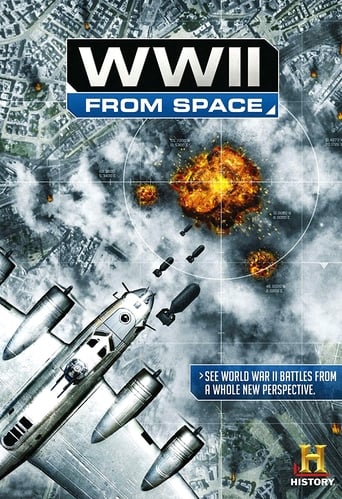
WWII from Space delivers World War II in a way you've never experienced it before. This HISTORY special uses an all-seeing CGI eye that offers a satellite view of the conflict, allowing you to experience it in a way that puts key events and tipping points in a global perspective. By re-creating groundbreaking moments that could never have been captured on camera, and by illustrating the importance of simultaneity and the hidden effects of crucial incidents, HISTORY presents the war's monumental moments in a never-before-seen context. And with new information brought to the forefront, you'll better understand how a nation ranked 19th in the world's militaries in 1939 emerged six years later as the planet's only atomic superpower.
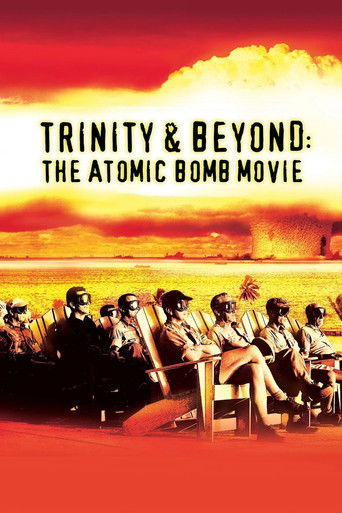
"Trinity and Beyond" is an unsettling yet visually fascinating documentary presenting the history of nuclear weapons development and testing between 1945-1963. Narrated by William Shatner and featuring an original score performed by the Moscow Symphony Orchestra, this award-winning documentary reveals previously unreleased and classified government footage from several countries.
During the chaotic final weeks of the Vietnam War, the North Vietnamese Army closes in on Saigon as the panicked South Vietnamese people desperately attempt to escape. On the ground, American soldiers and diplomats confront a moral quandary: whether to obey White House orders to evacuate only U.S. citizens.

The history of cinematic sound, told by legendary sound designers and visionary filmmakers.
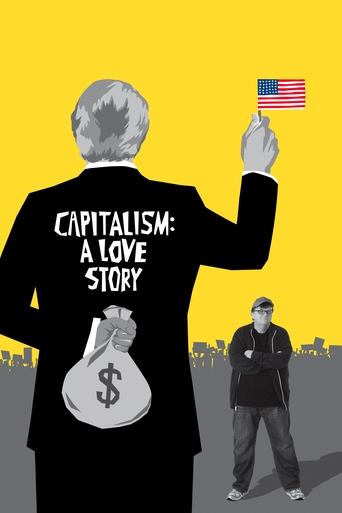
Michael Moore comes home to the issue he's been examining throughout his career: the disastrous impact of corporate dominance on the everyday lives of Americans (and by default, the rest of the world).

A documentary highlighting the Soviet Union's legendary and enigmatic hockey training culture and world-dominating team through the eyes of the team's Captain Slava Fetisov, following his shift from hockey star and celebrated national hero to political enemy.
Oliver Stone charts the history of the United States from the Second World War to the present.

Marcel Ophuls' riveting film details the heinous legacy of the Gestapo head dubbed "The Butcher of Lyon." Responsible for over 4,000 deaths in occupied France during World War II, Barbie would escape—with U.S. help—to South America in 1951, where he lived until a global manhunt led to his 1983 arrest and subsequent trial.

An unprecedented and intimate look at the life, work and enduring legacy of British actress Audrey Hepburn (1929-1993).
For the 20th anniversary of "Titanic," James Cameron reopens the file on the disaster.
National Geographic's riveting effort recounts all 12 crewed missions using only archival footage, photos and audio.

An investigative and powerfully emotional documentary about the epidemic of rape of soldiers within the US military, the institutions that perpetuate and cover up its existence, and its profound personal and social consequences.
The extraordinary story of how Hollywood changed World War II – and how World War II changed Hollywood, through the interwoven experiences of five legendary filmmakers who went to war to serve their country and bring the truth to the American people: John Ford, William Wyler, John Huston, Frank Capra, and George Stevens. Based on Mark Harris’ best-selling book, “Five Came Back: A Story of Hollywood and the Second World War.”

Filmed over 14 months with unprecedented access into the inner circle of the man and the sport, this is the first official and fully authorised film of one of the most celebrated figures in football. For the first time ever, the world gets vividly candid and un-paralleled, behind-closed-doors access to the footballer, father, family-man and friend in this moving & fascinating documentary. Through in-depth conversations, state of the art football footage and never before seen archival footage, the film gives an astonishing insight into the sporting and personal life of triple Ballon D'Or winner Cristiano Ronaldo at the peak of his career. From the makers of ‘Senna’ and ‘Amy’, Ronaldo takes audiences on an intimate and revealing journey of what it’s like to live as an iconic athlete in the eye of the storm.

In a tiny Alabama town with the curious name of Muscle Shoals, something miraculous sprang from the mud of the Tennessee River. A group of unassuming, yet incredibly talented, locals came together and spawned some of the greatest music of all time: “Mustang Sally,” “I Never Loved a Man,” “Wild Horses,” and many more. During the most incendiary periods of racial hostility, white folks and black folks came together to create music that would last for generations and gave birth to the incomparable “Muscle Shoals sound.”

Five broken cameras – and each one has a powerful tale to tell. Embedded in the bullet-ridden remains of digital technology is the story of Emad Burnat, a farmer from the Palestinian village of Bil’in, which famously chose nonviolent resistance when the Israeli army encroached upon its land to make room for Jewish colonists. Emad buys his first camera in 2005 to document the birth of his fourth son, Gibreel. Over the course of the film, he becomes the peaceful archivist of an escalating struggle as olive trees are bulldozed, lives are lost, and a wall is built to segregate burgeoning Israeli settlements.
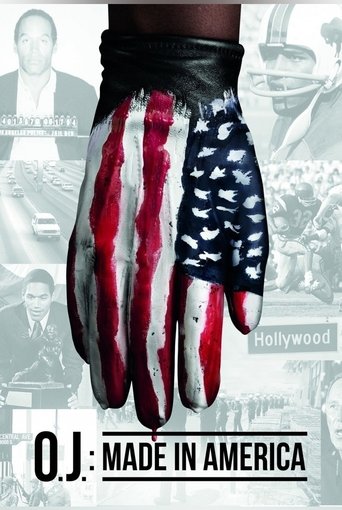
A chronicle of the rise and fall of O.J. Simpson, whose high-profile murder trial exposed the extent of American racial tensions, revealing a fractured and divided nation.

The epic life story of Alice Guy-Blaché (1873–1968), a French screenwriter, director and producer, true pioneer of cinema, the first person who made a narrative fiction film; author of hundreds of movies, but banished from history books. Ignored and forgotten. At last remembered.
Archival material from the original NASA film footage – much of it seen for the first time – plus interviews with the surviving astronauts, including Jim Lovell, Dave Scott, John Young, Gene Cernan, Mike Collins, Buzz Aldrin, Alan Bean, Edgar Mitchell, Charlie Duke and Harrison Schmitt.
Similar titles

The youngest protagonist of the documentary is Wartburg, an automobile over 50 years of age. The car is still on the road, driven by Bogdan, a 70-year-old who is taking his mother to visit the German factory where she was forced to work during WWII. In this road movie which takes place between Majdanpek and Germany, the trip becomes a journey into the past, retracing memories from the war and revealing a unique relationship between an old son and his elderly mother.
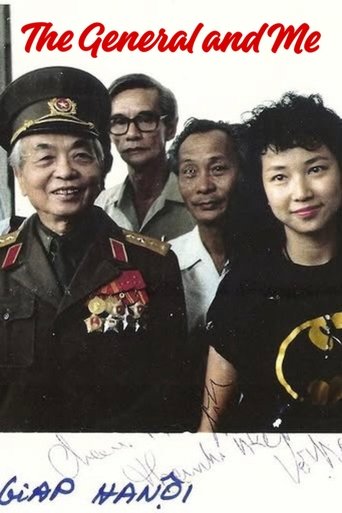
Over the period of 25 years the director met General Võ Nguyên Giáp, a legendary hero of Vietnam’s independence wars, a number of times. She was the first American who entered the home of the “Red Napoleon”. The fruit of this friendship is a film, personal and politically involved at the same time. Travelling across the country and talking to important figures as well as ordinary people, the director finds out more about her roots and offers the audience a unique perspective on Vietnam’s present and past.
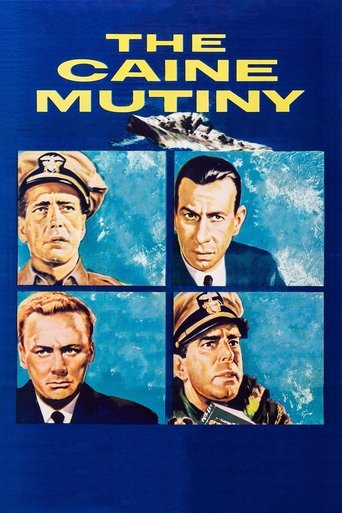
When a US Naval captain shows signs of mental instability that jeopardize his ship, the first officer relieves him of command and faces court martial for mutiny.

In the first day of liberation, partisan Meke enters the palace where the king used to live.

The movie tells the story of Franz, a Waffen-SS soldier who deserts, and Polina, a Belarusian woman whose village is razed and people massacred.
During World War II, spy Wu Lai-sheung is instructed by her superior Fan Yeung-shan to murder spy number 13 Cheung Chi-ping. While Wu establishes a relationship with Sakei, the assistant general of the Japanese army, she also gets acquainted with Cheung. Cheung and Wu fall in love. Wu recommends Cheung to become Sakei's driver. Cheung pretends to court the Japanese spy Siu-kuen, but Siu-kuen arranges to kill the spies contacting with him. Cheung has seen through Kuen's identity for long. When Kuen is going to kill Wu, Cheung kills Kuen, Fan compels Wu to kill Cheung. Wu follows the instruction to murder Cheung. After the murder, Wu disappears. After the war, Fan discovers Wu ends up in asylum. When he visits Wu, he tells her of Cheung's innocence. This breaks Wu's heart. Cheung turns out to have seen through Wu's identity for a long time and pretended to have been killed to cover up his identity and facilitate his work. With the truth known and the war ended, Cheung and Wu married.
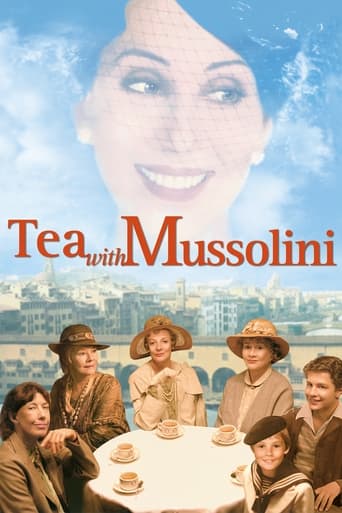
In 1930s fascist Italy, adolescent Luca just lost his mother. His father, a callous businessman, sends him to be taken care of by British expatriate Mary Wallace. Mary and her cultured friends - including artist Arabella, young widow Elsa, and archaeologist Georgie - keep a watchful eye over the boy. But the women's cultivated lives take a dramatic turn when Allied forces declare war on Mussolini.

In an attempt to assassinate Hitler, four American soldiers pretend to be Nazi's and sneak into enemy territory.

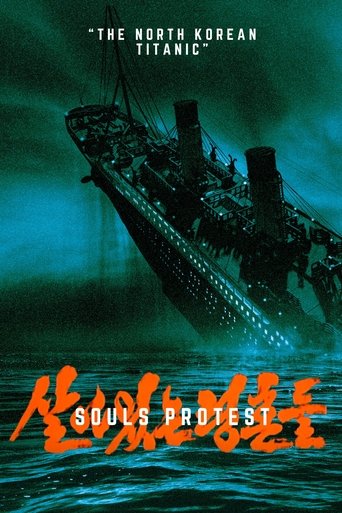
Billed as a North Korean "Titanic". On August 15, 1945, Japanese Imperialists were defeated and there echoed in Japan, too, shouts of victory of thousands of Korean people who had been drafted to Japan. They formed a repatriation autonomy to return to their dear homeland. The Japs plot to blow up their ship on the way which is overloaded with thousands of Koreans who requested repatriation; whose number in fact is twice as many as the ship's fixed capacity. Cha Myong Jin and other Koreans who are ignorant of this fact set out with great joy and hope, talking and laughing. Cha Myong Jin meets his fiance on the ship and whispers their future life. But they dream breaks out. The Japs turn the ship to the Maizuru Port under the pretext of refilling the drinking water and drive the Koreans below deck while preparing to blow up the ship.

Just after midnight on 10 March 1945, the US launched an air-based attack on eastern Tokyo; continuing until morning, the raid left more than 100,000 people dead and a quarter of the city eradicated. Unlike their loved ones, Hiroshi Hoshino, Michiko Kiyooka and Minoru Tsukiyama managed to emerge from the bombings. Now in their twilight years, they wish for nothing more than recognition and reparations for those who, like them, had been indelibly harmed by the war – but the Japanese government and even their fellow citizens seem disinclined to acknowledge the past.
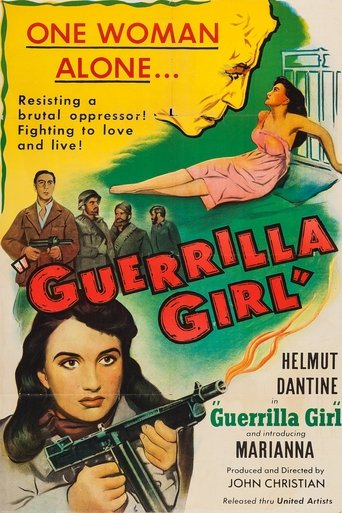
During World War II, Helmut Dantine specialized in playing villainous Nazis in Hollywood melodramas. He offers a compelling performance in a variation of these earlier roles in this suspense filled and politically loaded tale of intrigue. The story opens in German-occupied Athens during the darkest hours of the war. Civilians are not allowed on the streets after dark.
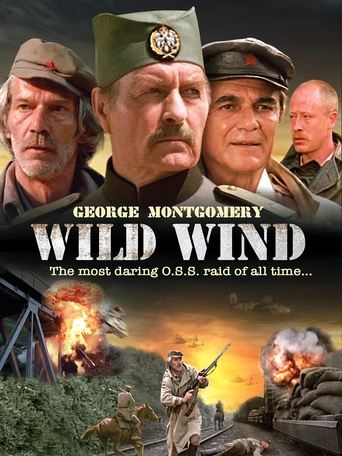
August 1943, Europe. The tentacles of the German octopus have begun to recoil. As the Nazis retreat, their concern focuses on the supply of oil from the refineries of Romania. Without the flow of "black gold", Germany's doom is sealed. Armadas of American bombers from bases in North Africa have begun to assault Pioesti - and there is another threat from the Partisans across the border of Yugoslavia. Against the tableau of spectacular events, the dramatic story of WILD WIND unfolds.

A WWII military pilot makes a valiant effort to be certified insane in order to be excused from flying missions. But there's a catch.

How the Soviet Union was able to copy the Boeing B-29 Superfortress bomber, and the influence of the resulting Tupolev TU-4 on the Cold War.


Shpresa goes to the house of fascist collaborators to commit an assassination. After that, dressed as a bride, she becomes an illegal.
World War II is raging, and an American general has been captured and is being held hostage in the Schloss Adler, a Bavarian castle that's nearly impossible to breach. It's up to a group of skilled Allied soldiers to liberate the general before it's too late.