

Dysfunction No. 3
1983-01-01 · 8 min · Not rated
Taiwan's Martial Law provisions included laws clearly suppressing assembly, demonstrations, and forming of organizations. Nonetheless, one afternoon on a holiday in 1983, five youths appeared on Ximending Street dressed in white khaki pants and wearing cotton bags over their heads. A document of dissident action during this period.
Trailers are previews, not full movies.
No authorized playback source configured. Use the legal watch options below.
Production details
- Directors
- Chen Chieh-jen
- Production companies
- Unavailable
- Countries
- Unavailable
- Status
- Released
Top Cast
Cast unavailable.
Title information and images are supplied by TMDb. Explore our discovery guide for advice on comparing metadata and legal viewing options.
Where to watch
Availability provided by JustWatch via TMDb. Offers can change. Provider links are listed on TMDb; full playback requires a separately authorized source.
Availability not listed for this country.
Seasons & episodes
Recommendations
During the 1976 Soweto uprising, a white school teacher's life and values are threatened when he asks questions about the death of a young black boy who died in police custody.
High-school students start a vigilante group in their neighbourhood but, as their power increases, they become more abusive and dangerous.
An unlikely friendship evolves over one wild night in LA between a struggling journalist and actor Hervé Villechaize, the world's most famous gun-toting dwarf, resulting in life-changing consequences for both.

At a gathering of mystery and true crime fans, Aurora Teagarden’s nephew, Phillip, is accused of murder when an unplanned onstage blackout during the play in which he is performing ends, revealing Phillip holding the bloody knife that has just killed one of the other performers. 12th installment in Aurora Teagarden Mysteries
An improv group deals with several crises, including the loss of their lease and one member hitting the big time.
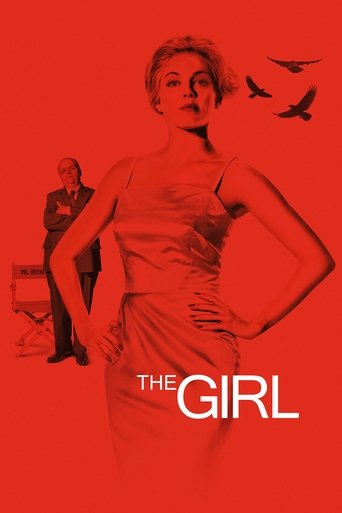
Director Alfred Hitchcock is revered as one of the greatest creative minds in the history of cinema. Known for his psychological thrillers, Hitchcock’s leading ladies were cool, beautiful and preferably blonde. One such actress was Tippi Hedren, an unknown fashion model given her big break when Hitchcock’s wife saw her on a TV commercial. Brought to Universal Studios, Hedren was shocked when the director, at the peak of his career, quickly cast her to star in his next feature, 1963’s The Birds. Little did Hedren know that as ambitious and terrifying as the production would be to shoot, the most daunting aspect of the film ended up coming from behind the camera.
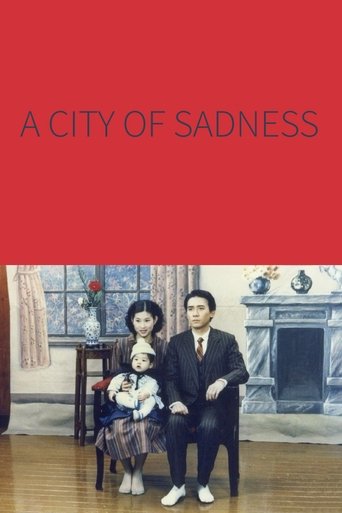
The story of a family embroiled in the "White Terror," the Kuomintang government's anti-communist political repression that was wrought on the Taiwanese people from 1947-1987.

A woman is released from prison after serving a sentence for a violent crime and re-enters a society that refuses to forgive her past.

After completing military service, Walter Gulick takes a job as a sparring partner at a gym, the owner of which sees potential in Walter as a professional fighter—and takes him under his wing.
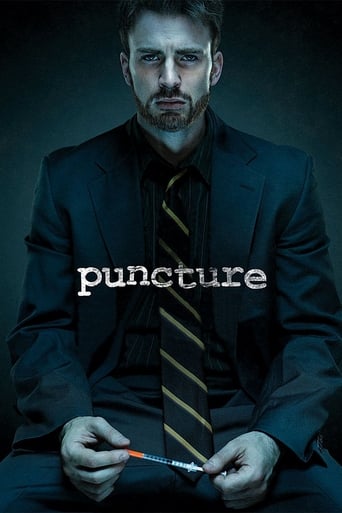
Based on a true story. Mike Weiss (Chris Evans) is a brilliant but self-destructive Houston attorney whose drug addiction threatens to destroy his career. When he and his law partner Paul Danziger (Mark Kassen) take on a case involving a nurse injured by a contaminated needle, they uncover a $130 billion medical supply monopoly that has been blocking a life-saving safety

A highly trained and exceptionally deadly swordsman looks for revenge after being caught in the middle of a power struggle that results in the assassination of an innocent woman's family.
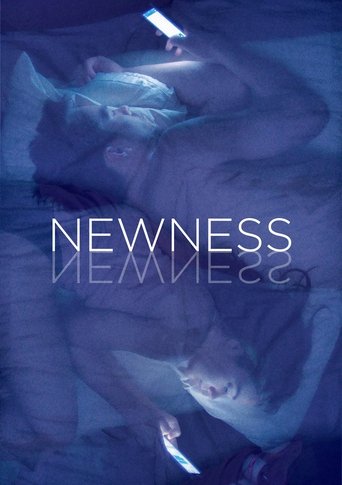
In contemporary Los Angeles, two millennials navigating a social media–driven hookup culture begin a relationship that pushes both emotional and physical boundaries.

The Qing emperor releases all detained Shaolin disciples, but the vindictive White Lotus clan decides to exterminate all the disciples. One martial artist survives the onslaught, and constantly trains while in hiding for revenge.

Film telling the untold story of John Lennon's 1971 album Imagine, exploring the creative collaboration between Lennon and Yoko Ono and featuring interviews and never-seen-before footage.
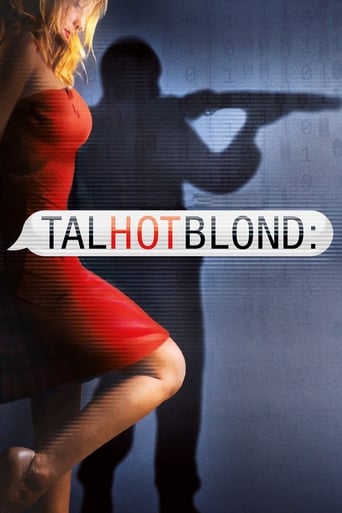
Thomas Montgomery, a married father of two young daughters, gets seduced by the world of online gambling and chat rooms where a virtual romance and sexual obsession ultimately leads to the murder of an innocent man.

Remi and Barnes, two very different teenagers, meet by chance in the winter of their senior year, then spend four days together over the course of a year that will change their lives forever.
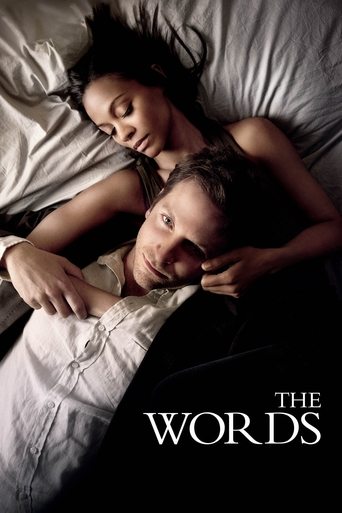
The Words follows young writer Rory Jansen who finally achieves long sought after literary success after publishing the next great American novel. There's only one catch - he didn't write it. As the past comes back to haunt him and his literary star continues to rise, Jansen is forced to confront the steep price that must be paid for stealing another man's work, and for placing ambition and success above life's most fundamental three words.

A psychotherapist helps a law student cope with schizophrenia in one of five interconnected tales dealing with mental illness.

Musician and performance artist Laurie Anderson reflects on the deaths of her husband Lou Reed, her mother and her beloved dog.

Ip Man’s promising career as a Policeman is ruined after he is framed for murder and targeted by a mob boss’s daughter.
Similar titles
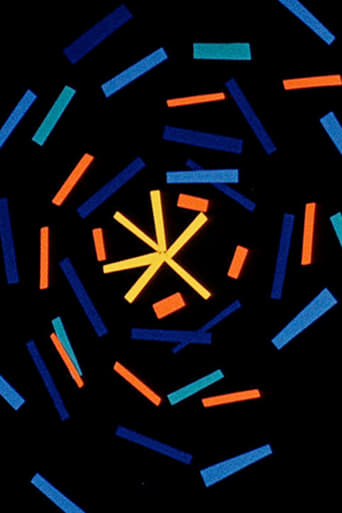
This newly rediscovered short was created in Jim's home studio in Bethesda, MD around 1961. It is one of several experimental shorts inspired by the music of jazz great Chico Hamilton. At the end, in footage probably shot by Jerry Juhl, Jim demonstrates his working method.
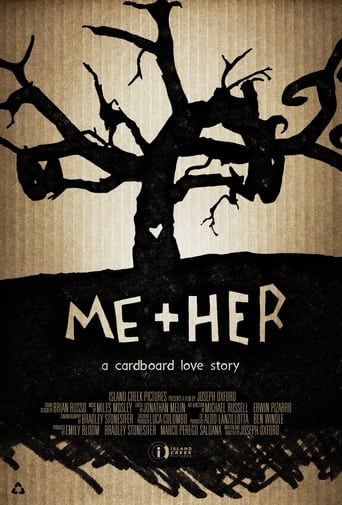
Creating a universe between two small pieces of Cardboard. When Jack and Jill of Cardboard City are separated by Jill's torrid illness, Jack must think outside the box to assure they will be together again.

Video art piece by Michigan artist Gio Orlando.

In Flesh Flows we see a balance of Beckett’s keen drawing ability, in the probing erotic forms, and his technical acuity, which transforms the carnal images into a compelling, transcendent experience. Preserved by the Academy Film Archive in partnership with iotaCenter and National Film Preservation Foundation in 2007.
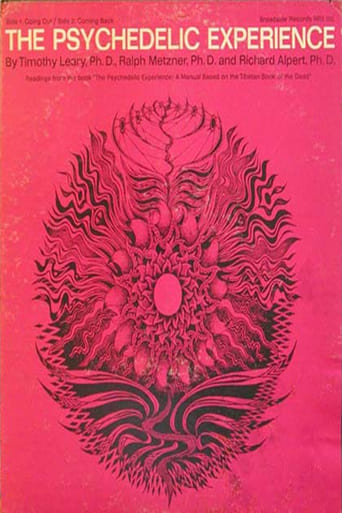
Experimental movie, where a man comes home and experiences LSD. His kaleidoscopic visions follow, with readings inspired by the Tibethan Book of the Dead.

It is said that if a man is fading away, he sees his life running quickly in front of his eyes. What does a hundred-year old film strip see before it gives way to digital vehicles? Does it see broken frames, scratched film stock or something else? This is a film about time and its ephemeral nature.

In 2007, a teen girl from a posh L.A. suburb must deal with the grizzly murder of her family while trapped in the company of their killers.

The film choreographically covers the distance between two women and their mirroring selves, under Laurie Spiegel's soundscape and with the ambiance of VHS video. Their bodies, sometimes two and others four, are always connected with a rope, influenced by white noise retro interference, sound scratches and pauses. They approach each other until they connect and then finally completely disappear, nullifying the distance between them. The reverse movement of these similar bodies-idols aims to compose a dance of the two and the one, our close and more distant self and to reach to the void in between them.

Following the disappearance of a man in Scotland, his daughter recalls words chanted before nightfall.
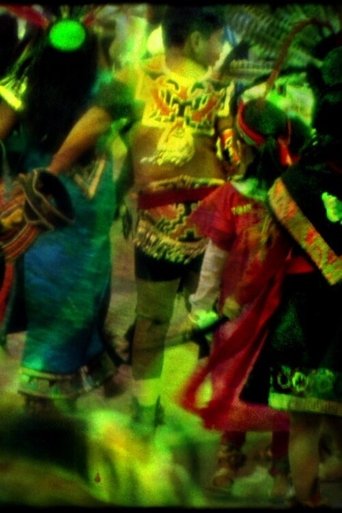
These are the dancing bodies in an agitated rapture: prelude to trance, invocation of the gods, consecration of intermittence. Here our point of view sparkles under the spell and trance of things gathered, fallen, yielding, pluvial, Mesoamerican wind, goddess breath, breeze of sticks. percussive woods. Here the audiovisual diagram that guides us, the kinetic breath that inspires us, the serpentine spear that snatches us away, the agitated plumes that trembles at us are the sound and rumbble of Teponaztli, a Mesoamerican percussive instrument: serpentine, dancing, bouncing sticks, trunks, branches and wood. Kinetic and audiovisual serialism from the embers of the Earth. This is the Earth in a Trance.

Models are seen licking brightly colored candy on a sheet of glass. The video illustrates the moment where clarity becomes abstraction and beauty commingles with the grotesque.
This work is a representation of the deterioration of the first love of Nakano Eiji. He uses a psychedelic effect to represent the deterioration.

What appears at first glance to be a patterned floor of traditional Islamic tiles is in fact an intricate installation of hand dyed sand. In a light-filled room in an abandoned house, the artist steps into frame to sweep it away, breaking the illusion and destroying the image of traditional heritage.
Polish avant-garde animation in which a periodic series of aggressive starbursts interrupt the melodic dancing of fluid shapes, one raid even freezing the image for a moment.

Direct animation on 35mm.
Like at the New Year’s Eve, showers of colourful light cut through the darkness. While fireworks dissolve into nothing after a thunderous sound, shattered glass leaves material artifact. Sharp pieces then become a reminder of the real track that fireworks leave in the sky.

Seoungho Cho's I Left My Silent House begins in a meditative mood, with black and white images of people in the subway, and then transforms itself into a colorful journey across dramatic open spaces, before returning once again to the city. The video's driving electronic soundtrack and dramatic image processing give it an intense yet somber quality. Cho creates a visceral yet lyrical investigation of the tensions and pleasures of travel, movement, and, ultimately, metamorphosis. New York/Winter2007

Folia is a double bass solo piece written in 1995 by Finnish composer Kaija Saarihao. The film tries to render an account of a personnal vision of the piece through the interpretation of a double bass player and the view of the two filmmakers. 16mm print with optical sound.
Its production seems like a game: throwing a Super 8 camera, turned on and recording, from what was, at that time, the tallest building in Caracas. The film films the shots of its own accelerated fall, a succession of chromatic shots that cannot be identified either in terms of what is “recorded” in each one (windows, columns, walls, sky or floor) or in its own formal configuration as an image (color, composition, shapes or figures). What is perceived and apprehended is the impotence of vision – of perception – to distinguish this extreme and exhausting mobility, this vertigo of “free fall.”
Seven actors are brought to an isolated house where they must stay in character for three days under constant surveillance.