What Belongs to Inuit
2009-01-01 · 49 min · Not rated
A group of Nunavut elders travel to five museums in North America to see and identify artifacts, tools and clothing collected from their Inuit ancestors. Directed by Zacharias Kunuk and Bernadette Dean.
Trailers are previews, not full movies.
No authorized playback source configured. Use the legal watch options below.
Production details
- Directors
- Zacharias Kunuk, Bernadette Dean
- Production companies
- Unavailable
- Countries
- Canada
- Status
- Released
Top Cast
Cast unavailable.
Title information and images are supplied by TMDb. Explore our discovery guide for advice on comparing metadata and legal viewing options.
Where to watch
Availability provided by JustWatch via TMDb. Offers can change. Provider links are listed on TMDb; full playback requires a separately authorized source.
Availability not listed for this country.
Seasons & episodes
Recommendations

Through deeply personal interviews with her siblings and an examination of the photographs, letters, and belongings left behind, Mariska assembles a new portrait of her mother Jayne Mansfield, an extraordinary and complex woman.

In an intimate and joyful story of love in the face of loss, celebrated poets Andrea Gibson and Megan Falley find strength—and unexpected hilarity—in what might be their final year together.

An inside look at one of the most anticipated movie sequels ever with James Cameron and cast.

Just two years away from turning 30, participants in Michael Apted's documentary series are facing serious questions of identity and purpose, wondering whether they've found their place in the world.

Retrospective documentary about the making of the horror cult classic "The Return of the Living Dead."

A documentary on the expletive's origin, why it offends some people so deeply, and what can be gained from its use.

A string of threatening emails escalates into a revenge plot involving a newly married US marshal and his ex-girlfriend.

A visual montage portrait of our contemporary world dominated by globalized technology and violence.

In the Realms of the Unreal is a documentary about the reclusive Chicago-based artist Henry Darger. Henry Darger was so reclusive that when he died his neighbors were surprised to find a 15,145-page manuscript along with hundreds of paintings depicting The Story of the Vivian Girls, in What is Known as the Realms of the Unreal, of the Glodeco-Angelinnian War Storm, Cased by the Child Slave Rebellion.

A detailing of the rise to prominence and global sporting superstardom of six supremely talented young Manchester United football players (David Beckham, Nicky Butt, Ryan Giggs, Paul Scholes, Phil and Gary Neville). The film covers the period 1992-1999, culminating in Manchester United's European Cup triumph.

A documentary about how a dominant cultural and demographic institution both sustains their traditional activities and adapts to the digital revolution.
The true history of a collection of some 500 films dating from 1910s to 1920s, which were lost for over 50 years until being discovered buried in a sub-arctic swimming pool deep in the Yukon Territory, in Dawson City, located about 350 miles south of the Arctic Circle.

Over 35 years after Bob Lazar's revelations, this documentary exposes secrets of a facility the government still denies. Featuring Lazar's testimony, recreations, and new evidence, it reopens a case that continues to spark global curiosity

A documentary about the making of season five of the acclaimed AMC series Breaking Bad.
A documentary about the making of David Fincher's 2008 film THE CURIOUS CASE OF BENJAMIN BUTTON. Virtually every element in the evolution of the Fincher's film is documented here, from the project's attachment to numerous other directors during the 1990s, to its shoot in 2006 and 2007 in New Orleans, to its complex, CGI-intensive postproduction process.

A 1993 documentary film about Bruce Lee. The film includes interviews from some of his fellow students and opponents who worked alongside him in his movies.
A tribute to Chadwick Boseman, celebrating his life and legacy.

A documentary chronicling Queen and Lambert's incredible journey since they first shared the stage together on "American Idol" in 2009.
A real-life undercover thriller about two ordinary men who embark on an outrageously dangerous ten-year mission to penetrate the world's most secretive and brutal dictatorship: North Korea.
Documentarian Ross McElwee originally set out to make a travelogue of sorts tracing General William T. Sherman's infamous scorched-earth march through the Confederacy in the latter stages of the Civil War. Instead, haunted by a recent breakup with a girlfriend, McElwee ends up documenting his progress -- or lack thereof -- in starting a new relationship. His journey then becomes one of self-reflection and self-discovery rather than a historical/sociological exploration.
Similar titles
This pioneering documentary film depicts the lives of the indigenous Inuit people of Canada's northern Quebec region. Although the production contains some fictional elements, it vividly shows how its resourceful subjects survive in such a harsh climate, revealing how they construct their igloo homes and find food by hunting and fishing. The film also captures the beautiful, if unforgiving, frozen landscape of the Great White North, far removed from conventional civilization.
In the early 1960s the Canadian government conducted an experiment in social engineering. Three young Inuit boys were separated from their families in the Arctic and were sent to Ottawa, the nation's capital, to live with white families and to be educated in white schools. The consequences the experiment would have on the boys, their identity and culture was brushed aside. The bureaucrats did not anticipate the outcome. The three grow up to be political activists and leaders - often at odds with the government that brought them south. They establish aboriginal rights in Canada and are instrumental in the creation of Nunavut, the world's largest self-governed aboriginal territory. But it all comes at a tremendous personal cost. Peter Ittinuar, Zebedee Nungak, and Eric Tagoona recount their stories, achievements and challenges in this film about an attempt at assimilation, empowerment, and the triumph of the human spirit.
In this short film, artist Jobie Weetaluktuk turns his gaze on his family and the power of ritual through the story of a young woman and her unplanned child. In Inukjuak, an Inuit community in the Eastern Arctic, a baby boy has come into the world and they call him Timuti, a name that recurs across generations of his people, evoking other Timutis, alive and dead, who will nourish his spirit and shape his destiny.

Inuit traditional face tattoos have been forbidden for a century, and almost forgotten. Director Alethea Arnaquq-Baril, together with long-time friend and activist Aaju Peter, is determined to uncover the mystery and meaning behind this beautiful ancient tradition. Together they embark on an adventure through Arctic communities, speaking with elders and recording the stories of a once popularized female artform. Central to the film is Arnaquq-Baril’s personal debate over whether or not to get tattood herself. With candour and humour, she welcomes us into her world, to experience firsthand the complex emotions that accompany her struggle. Past meets present in this intimate account of one woman’s journey towards self-empowerment and cultural understanding.
Inuit artist Asinnajaq plunges us into a sublime imaginary universe—14 minutes of luminescent, archive-inspired cinema that recast the present, past and future of her people in a radiant new light. Diving into the NFB’s vast archive, she parses the complicated cinematic representation of the Inuit, harvesting fleeting truths and fortuitous accidents from a range of sources—newsreels, propaganda, ethnographic docs, and work by Indigenous filmmakers. Embedding historic footage into original animation, she conjures up a vision of hope and beautiful possibility.
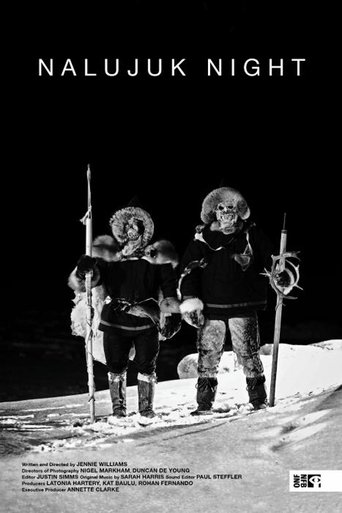
Nalujuk Night is an up close look at an exhilarating, and sometimes terrifying, Labrador Inuit tradition. Every January 6th from the dark of the Nunatsiavut night, the Nalujuit appear on the sea ice. They walk on two legs, yet their faces are animalistic, skeletal, and otherworldly. Snow crunches underfoot as they approach their destination: the Inuit community of Nain. Despite the frights, Nalujuk Night is a beloved annual event, showing that sometimes it can be fun to be scared. Rarely witnessed outside of Nunatsiavut, this annual event is an exciting chance for Inuit, young and old, to prove their courage and come together as a community to celebrate culture and tradition. Inuk filmmaker Jennie Williams brings audiences directly into the action in this bone-chilling black and white short documentary about a winter night like no other.
An intimate portrait of teenagers trying to understand their world and their possibilities. The film weaves together video shot by teens and by the filmmaker, as they work together to make a film and create expressive outlets for youth in the community. They organize dances and community events and paint a mural. At the same time, with humor and pathos, these young people raise issues around violence, feeling misunderstood by adults and lacking respect in their community. Set in the small town of Sitka, Alaska, home to a large Alaska Native population, the video chronicles their creativity, concerns and dreams.
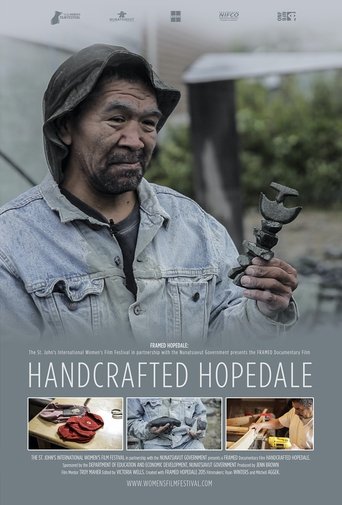
If you want to find world-class artisans, the small northern Labrador community of Hopedale offers you some of the best. Created through the St. John's International Women's Film Festival's FRAMED film education series, in partnership with the Nunatsiavut government, this film focuses on three prominent local craftspeople- two carvers and one traditional sewist.
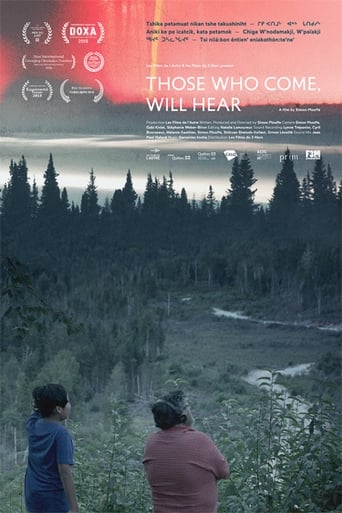
The documentary proposes a unique meeting with the speakers of several indigenous and inuit languages of Quebec – all threatened with extinction. The film starts with the discovery of these unsung tongues through listening to the daily life of those who still speak them today. Buttressed by an exploration and creation of archives, the film allows us to better understand the musicality of these languages and reveals the cultural and human importance of these venerable oral traditions by nourishing a collective reflection on the consequences of their disappearance.
One day in the lives of an average Greenlandic family, which happens to be of great importance for 8-year old Kali - he's about to catch his first prey with the harpoon. The whole family is looking forward for the huge step in boy's maturation.
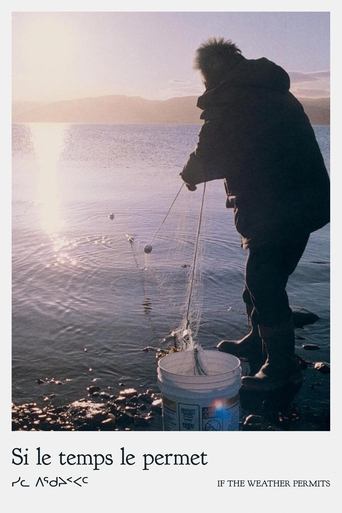
This short documentary studies life in the village of Kangirsujuaq, Nunavik. In this community on the edge of the Arctic Ocean, children’s laughter fills the streets while the old people ponder the passage of time. They are nomads of the wide-open spaces who are trying to get used to the strange feeling of staying put. While the teenagers lap up Southern culture and play golf on the tundra to kill time, the Elders are slowly dying, as their entire culture seems to fade away. Elisapie Isaac, a filmmaker born in Nunavik, decides to return to her roots on this breathtaking land. To bridge the growing gap between the young and the old, she speaks to her grandfather, now deceased, and confides in him her hopes and fears. Grappling with isolation, family relationships, resource extraction, land-based knowledges, the influence of Southern culture and the ongoing impacts of colonialism on Inuit ways of life, Elisapie Isaac offers a nuanced portrait of the North.
Documentary that follows a lone Inuit as he hunts, fishes and constructs an igloo, a way of life threatened by climate change.
In the mid-1950s, lured by false promises of a better life, Inuit families were displaced by the Canadian government and left to their own devices in the Far North. In this icy desert realm, Martha Flaherty and her family lived through one of Canadian history’s most sombre and little-known episodes.

Set on an island 600 kilometers north of the Arctic Circle, this intimate vérité portrait follows two young Inuit coming of age. Created in close collaboration with a local children’s home and filmed in the Greenlandic language, the story traces identity, tradition, loss, and resilience. Living alongside its protagonists, the film observes a fragile passage between deep cultural roots and an uncertain, rapidly changing world.
Every winter for decades, the Northwest Territories, in the Canadian Far North, changes its face. While the landscape is covered with snow and lakes of a thick layer of ice, blocking land transport, ice roads are converted to frozen expanses as far as the eye can see.
Red Fever is a witty and entertaining feature documentary about the profound -- yet hidden -- Indigenous influence on Western culture and identity. The film follows Cree co-director Neil Diamond as he asks, “Why do they love us so much?!” and sets out on a journey to find out why the world is so fascinated with the stereotypical imagery of Native people that is all over pop culture. Why have Indigenous cultures been revered, romanticized, and appropriated for so long, and to this day? Red Fever uncovers the surprising truths behind the imagery -- so buried in history that even most Native people don't know about them.
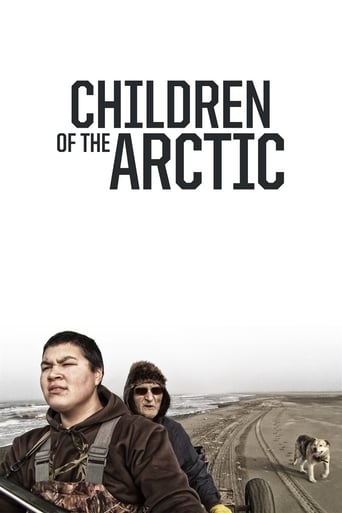
Children of the Arctic is a portrait of five Native Alaskan teenagers growing up in Barrow - the northernmost community in the United States. As their climate and culture undergo profound changes, they strive to balance being modern American kids and the inheritors of an endangered way of life.
Qallunajatut (Urban Inuk) follows the lives of three Inuit in Montreal over the course of one hot and humid summer.Only two generations ago Inuit lived in small, nomadic hunting camps scattered across the vast Arctic landscape. Since the 1950s, this traditional lifestyle has undergone an astonishing transition from Stone Age to Information Age, as Inuit first relocated (often by force) to government-run settlements, and, more recently, beyond the settlement into southern cities.
Zacharias Kunuk tackles the subject of the High Arctic Relocation from an Inuit point of view in the documentary Exile. In 1953, Inuit families were forcibly relocated to the uninhabited and inhospitable high arctic, 1500 kilometres north of their traditional homeland of Nunavik, in northern Québec. The goal of the move was to extend Canadian claims of sovereignty to Ellesmere Island. As a result, Inuit people were forced to endure the pain of families torn apart and many years of hardship. With devastating first-person accounts of survival, the trail of broken promises and shameful practices of the government and the RCMP, this powerful documentary captures the long-standing effects of these events from the perspectives of the people who were forced to endure them.
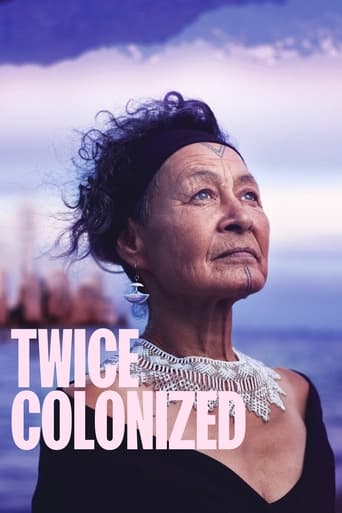
Renowned Inuit lawyer Aaju Peter has long fought for the rights of her people. When her son suddenly dies, Aaju embarks on a journey to reclaim her language and culture after a lifetime of whitewashing and forced assimilation. But can she both change the world and mend her own wounds?