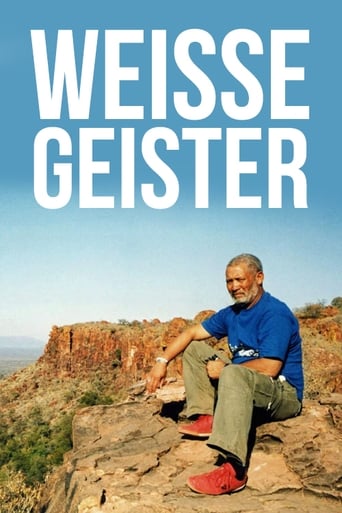
White Ghosts
2004-07-27 · 72 min · ★ 7.5
This documentary questions the consequences of the German colonial war at the beginning of the 20th Century in South West Africa, and explores how the relationships between the descendants of colonists and colonial rulers and the descendants of the colonised and exploited people are shaped today.
Trailers are previews, not full movies.
No authorized playback source configured. Use the legal watch options below.
Production details
- Directors
- Martin Baer
- Production companies
- Unavailable
- Countries
- Germany
- Status
- Released
Top Cast
Title information and images are supplied by TMDb. Explore our discovery guide for advice on comparing metadata and legal viewing options.
Where to watch
Availability provided by JustWatch via TMDb. Offers can change. Provider links are listed on TMDb; full playback requires a separately authorized source.
Availability not listed for this country.
Seasons & episodes
Recommendations

A documentary on the expletive's origin, why it offends some people so deeply, and what can be gained from its use.

In an intimate and joyful story of love in the face of loss, celebrated poets Andrea Gibson and Megan Falley find strength—and unexpected hilarity—in what might be their final year together.

An inside look at one of the most anticipated movie sequels ever with James Cameron and cast.

A detailing of the rise to prominence and global sporting superstardom of six supremely talented young Manchester United football players (David Beckham, Nicky Butt, Ryan Giggs, Paul Scholes, Phil and Gary Neville). The film covers the period 1992-1999, culminating in Manchester United's European Cup triumph.
A depiction of the Wrangelkiez neighbourhood in Berlin. The people portrayed tell their life stories. One woman came to the neighbourhood a decade ago to work in Berlin’s still unfinished Brandenburger Airport, one man reminisces his childhood on a Tobacco farm in Kentucky, another speaks of an exceptional day in an otherwise monotonous workplace. These portraits are interwoven with the story of Elpi, a Greek woman who is waiting for the long overdue visit of an old important friend. The outcome of this mixture is a film which captures the lives and perspectives of some of Wrangelkiez’s most commanding citizens, while at the same time evoking the loss that change and time passing means for places and for people.

A documentary about the life and films of director John Ford.

Through deeply personal interviews with her siblings and an examination of the photographs, letters, and belongings left behind, Mariska assembles a new portrait of her mother Jayne Mansfield, an extraordinary and complex woman.

A visual montage portrait of our contemporary world dominated by globalized technology and violence.
Exploring the company founding and the implosion of the business by outside investors who took over the company, left it bankrupt and under investigation.

A documentary about how a dominant cultural and demographic institution both sustains their traditional activities and adapts to the digital revolution.

Alexander McQueen's rags-to-riches story is a modern-day fairy tale, laced with the gothic. Mirroring the savage beauty, boldness and vivacity of his design, this documentary is an intimate revelation of McQueen's own world, both tortured and inspired, which celebrates a radical and mesmerizing genius of profound influence.

A string of threatening emails escalates into a revenge plot involving a newly married US marshal and his ex-girlfriend.
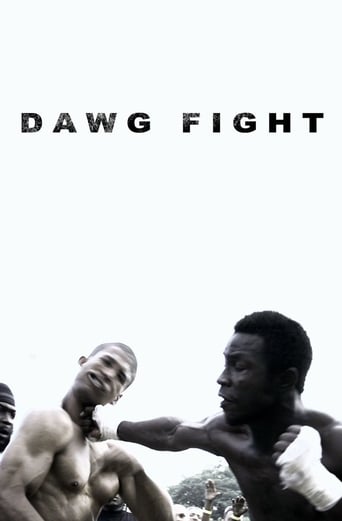
In a crime-plagued neighborhood near Miami, brutal, bare-knuckled backyard fights give young men a chance to earn money -- and self-respect.

From the heights of her modeling fame to her tragic death, this documentary reveals Anna Nicole Smith through the eyes of the people closest to her.

A compilation of over 30 years of private home movie footage shot by Lithuanian-American avant-garde director Jonas Mekas, assembled by Mekas "purely by chance", without concern for chronological order.

Film adaptation of French economist Thomas Piketty's ground-breaking global bestseller of the same name: an eye-opening journey through wealth and power.
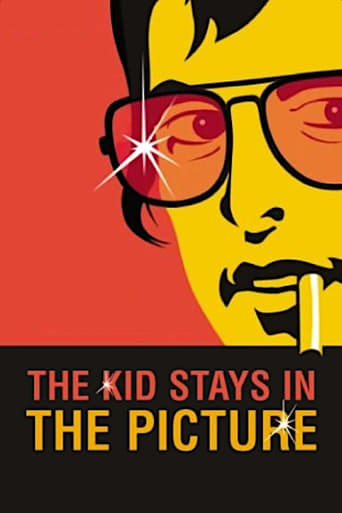
Documentary about legendary Paramount producer Robert Evans, based on his famous 1994 autobiography.

Over 35 years after Bob Lazar's revelations, this documentary exposes secrets of a facility the government still denies. Featuring Lazar's testimony, recreations, and new evidence, it reopens a case that continues to spark global curiosity

A purely observational non-fiction film that takes viewers into the ethically murky world of end-of-life decision making in a public hospital.

This revealing documentary honors the legendary Sidney Poitier—iconic actor, filmmaker, and civil rights activist. Featuring interviews with Denzel Washington, Spike Lee, Halle Berry, and more.
Similar titles
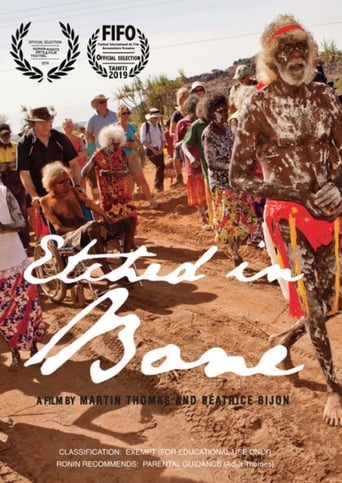
Drawing on original footage from National Geographic, Etched in Bone explores the impact of one notorious bone theft by a member of the 1948 American-Australian Scientific Expedition to Arnhem Land. Hundred of bones were stolen and deposited in the Smithsonian Institution in Washington DC, until it became known to Arnhem elders in the late 1990s. The return of the sacred artefacts was called for, resulting in a tense standoff between indigenous tribespeople and the Department of Anthropology at the Smithsonian.
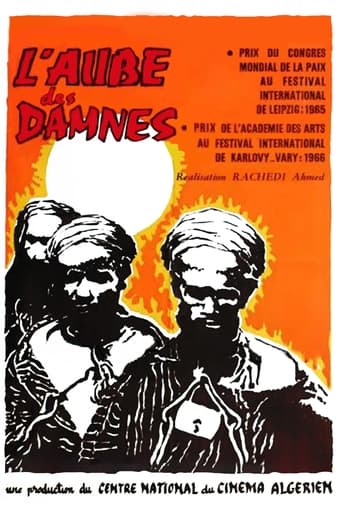
This excellent feature-length documentary - the story of the imperialist colonization of Africa - is a film about death. Its most shocking sequences derive from the captured French film archives in Algeria containing - unbelievably - masses of French-shot documentary footage of their tortures, massacres and executions of Algerians. The real death of children, passers-by, resistance fighters, one after the other, becomes unbearable. Rather than be blatant propaganda, the film convinces entirely by its visual evidence, constituting an object lesson for revolutionary cinema.

The ruthless dictator Teodoro Obiang has ruled Equatorial Guinea with an iron hand since 1979. Juan Tomás Ávila Laurel is the most translated Equatoguinean writer, but he had to flee the country in 2011, after starting a hunger strike denouncing the crimes of the dictatorship. Since then, he has lived in Spain, feeling that, despite the risks, he must return and fight the monster with words.
A polemic against Werner Herzog and the making of "Fitzcarraldo", exploring the question of the filmmaker's ethical and moral responsibility.

Three centuries of Venezuela's history as a Spanish colony are considered from economic, political and social standpoints; evocations of the past are compared to the present. Based on the ideas and research of Federico Brito Figueroa, Alfredo A. Alfonso, Miguel A. Saignes, Josefina Jordan, and Thaelman Urgelles among others.
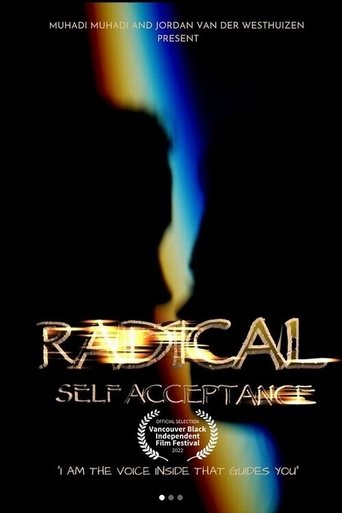
We are living in the time of a heteronormative society that antagonizes Queer people for their Being-ness. In Africa, it is believed that we are un-African to Proudly be Our LGBTQIA+ selves. In this short documentary, we share with you researched origins of modern homophobia and queerphobia, while exposing hidden truths about the English bible. The short is a testament to the harmful effects of colonialism and the dangers of religious indoctrination. This film offers audiences the opportunity to question what we have been told to believe is true about queer people.
"Gerboise bleue", the first French atomic test carried out on February 13, 1960 in the Algerian Sahara, is the starting point of France's nuclear power. These are powerful radioactive aerial shots carried out in areas belonging to the French army. Underground tests will follow, even after the independence of Algeria. From 1960 to 1978, 30,000 people were exposed in the Sahara. The French army was recognized recognized nine irradiations. No complaint against the army or the Atomic Energy Commission has resulted. Three requests for a commission of inquiry were rejected by the National Defense Commission. For the first time, the last survivors bear witness to their fight for the recognition of their illnesses, and revealed to themselves in what conditions the shootings took place. The director goes to the zero point of "Gerboise Bleue", forbidden access for 47 years by the Algerian authorities
A former lawyer leaves everything behind to embark on the quest for a dinosaur-like animal supposedly living in Africa's unexplored forests.
Hacking at Leaves documents artist and hazmat-suit aficionado Johannes Grenzfurthner as he attempts to come to terms with the United States' colonial past, Navajo tribal history, and the hacker movement. The story hones in on a small tinker space in Durango, Colorado, that made significant contributions to worldwide COVID relief efforts. But things go awry when Uncle Sam interferes with the film's production.
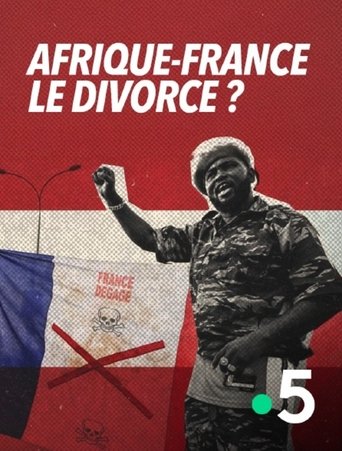
At a time when French flags are being burned and French embassies targeted, this documentary delves into the growing disaffection between French-speaking Africa and the former colonial power. Through the voices of African leaders, pan-African activists, and committed young people, the film questions the persistence of a relationship marked by the aftermath of colonization, the opaque agreements of "Françafrique," and a military presence deemed paternalistic.

This film travels over open books, looted objects and postcards to look for the imperial foundations of the world in which we live. Within this wide landscape the film focuses on the destruction of the Jewish Muslim world that existed in North Africa, making it imaginable and inhabitable again. Narrated in the first person, by an Algerian Jew and a Palestinian Jew, the film refuses imperial histories of those places. Objects held captive in museums and archives outside of the places from where they were looted are only the visible tip of the iceberg of the mass colonial plunder of Africa. The film explores the substantial wealth accumulated through the extraction of raw materials, labour, knowledge and skills, including the “visual wealth” attained by putting people in front of the colonisers’ cameras.
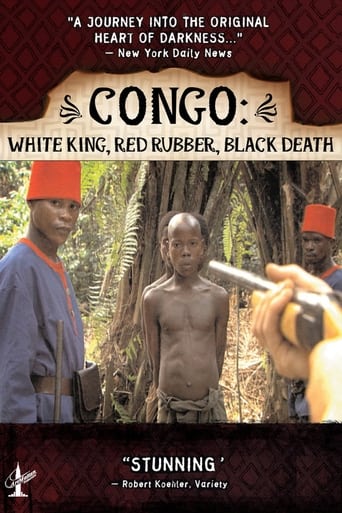
This true, astonishing story describes how King Leopold II of Belgium turned Congo into its private colony between 1885 and 1908. Under his control, Congo became a gulag labor camp of shocking brutality. Leopold posed as the protector of Africans fleeing Arab slave-traders but, in reality, he carved out an empire based on terror to harvest rubber.
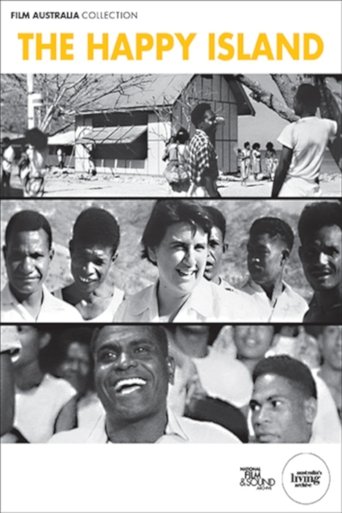
The Happy Island looks at the work of the London Missionary Society on Gemo (now Hanudamua) Island in Port Moresby harbour, Papua New Guinea, which from 1937-1974 treated people who suffered from infectious diseases, mainly leprosy and tuberculosis. The film offers insight into the attitudes and practices of Christian missionaries of that time. Despite the colonial paternalism that underpins the Missionary Society’s model of care, the film tells the story of a happy, active community, as it follows the lives of the patients, their families and the dedicated staff, all of whom live, work and socialise on the island together.
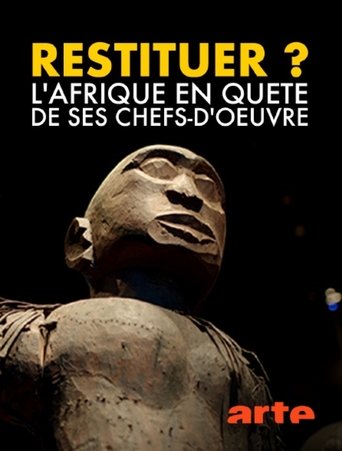
There is an interlinking history of violent European colonialism and the cultural legacy of ethnographic collections in institutions. This documentary traces the progression of colonial history from the Berlin Conference of 1884-85 to the systematic elimination of cultural traditions, religions and lifeways which would occur sporadically through genocides and warfare until the early 20th century throughout the African continent—surveying the inquiries and movements for historical justice, the relationships between European institutions and colonial violence and following enduring struggles against these organisations to regain what was taken.
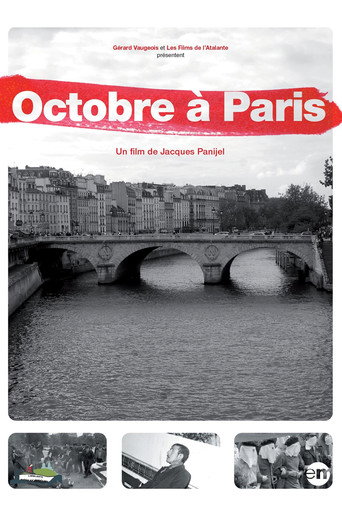
On October 17, 1961, 30,000 Algerians demonstrated peacefully in Paris to protest the discriminatory curfew imposed upon them and to demand Algerian independence. Under the authority of the then Prefect of Police, Maurice Papon, the demonstration was brutally repressed, resulting in the deaths of dozens of Algerians. Historians cite eleven thousand arrests, dozens of murders, demonstrators thrown into the Seine, hundreds of expulsions, and just as many complaints that went unanswered; all for a night that would become a blind spot in the national narrative. No investigation, no trial, and certainly no commemoration. The day after the demonstration, Jacques Panijel began filming *October in Paris* to alert the public to the massacre that had just taken place in the streets of Paris. The film was banned by the French authorities. It obtained a distribution license in 1973. It was first shown in theaters in October 2011.
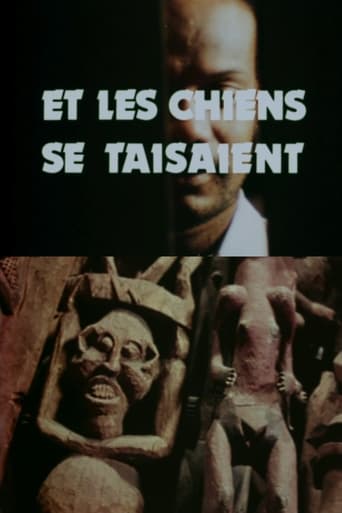
For 'Et les chiens se taisaient' Maldoror adapted a piece of theatre by the poet and politician Aimé Césaire (1913–2008), about a rebel who becomes profoundly aware of his otherness when condemned to death. His existential dialogue with his mother reverberates around the African sculptures on display at the Musée de l'Homme, a Parisian museum full of colonial plunder whose director was the Surrealist anthropologist Michel Leiris.

Else, a half-breed child from the secretive harem of the German colonial elite, is the daughter of the governor's deputy Jesko von Puttkammer, who disappeared to faraway Germany. Else became an old woman who had suffered all her life from remaining fatherless. The film finally confronts Else's only half-sister from German nobility with the mulatto sister-in-law from Africa.
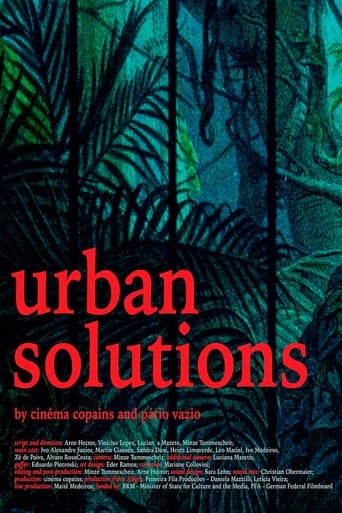
An european artist writes about his experience in portraying life in Brazil during the colonial period. Aporteiro – concierge and security guard in one – watches the surveillance cameras in a residential building, while reflecting on his profession and the relationship with his employers. Between the exotic idyll of front yards and deterrent technology, his task is to establish security and normality. Brazil’s troubled past and complicated present come together in this highly charged film.