

Die Mächtigste Bombe der Welt
2011-10-15 · Runtime unavailable · Not rated
Trailers are previews, not full movies.
No authorized playback source configured. Use the legal watch options below.
Production details
- Directors
- Andy Webb
- Production companies
- Unavailable
- Countries
- Unavailable
- Status
- Released
Top Cast
Cast unavailable.
Title information and images are supplied by TMDb. Explore our discovery guide for advice on comparing metadata and legal viewing options.
Where to watch
Availability provided by JustWatch via TMDb. Offers can change. Provider links are listed on TMDb; full playback requires a separately authorized source.
Availability not listed for this country.
Seasons & episodes
Recommendations

An inside look at one of the most anticipated movie sequels ever with James Cameron and cast.

When Allied forces liberated the Nazi concentration camps in 1944-45, their terrible discoveries were recorded by army and newsreel cameramen, revealing for the first time the full horror of what had happened. Making use of British, Soviet and American footage, the Ministry of Information’s Sidney Bernstein (later founder of Granada Television) aimed to create a documentary that would provide lasting, undeniable evidence of the Nazis’ unspeakable crimes. He commissioned a wealth of British talent, including editor Stewart McAllister, writer and future cabinet minister Richard Crossman – and, as treatment advisor, his friend Alfred Hitchcock. Yet, despite initial support from the British and US Governments, the film was shelved, and only now, 70 years on, has it been restored and completed by Imperial War Museums under its original title "German Concentration Camps Factual Survey".

In an intimate and joyful story of love in the face of loss, celebrated poets Andrea Gibson and Megan Falley find strength—and unexpected hilarity—in what might be their final year together.

Through deeply personal interviews with her siblings and an examination of the photographs, letters, and belongings left behind, Mariska assembles a new portrait of her mother Jayne Mansfield, an extraordinary and complex woman.

Thirty-six years after the Chernobyl nuclear reactor exploded in Soviet Ukraine, newly uncovered archival footage and recorded interviews with those who were present paint an emotional and gripping portrait of the extent and gravity of the disaster and the lengths to which the Soviet government went to cover up the incident, including the soldiers sent in to “liquidate” the damage. Chernobyl: The Lost Tapes is the full, unvarnished true story of what happened in one of the least understood tragedies of the twentieth century.

Over 35 years after Bob Lazar's revelations, this documentary exposes secrets of a facility the government still denies. Featuring Lazar's testimony, recreations, and new evidence, it reopens a case that continues to spark global curiosity

A string of threatening emails escalates into a revenge plot involving a newly married US marshal and his ex-girlfriend.

A real-life undercover thriller about two ordinary men who embark on an outrageously dangerous ten-year mission to penetrate the world's most secretive and brutal dictatorship: North Korea.

Marcel Ophuls' riveting film details the heinous legacy of the Gestapo head dubbed "The Butcher of Lyon." Responsible for over 4,000 deaths in occupied France during World War II, Barbie would escape—with U.S. help—to South America in 1951, where he lived until a global manhunt led to his 1983 arrest and subsequent trial.
A presentation of a case for a needed transition out of the current socioeconomic monetary paradigm which governs the entire world society. This subject matter will transcend the issues of cultural relativism and traditional ideology and move to relate the core, empirical 'life ground' attributes of human and social survival, extrapolating those immutable natural laws into a new sustainable social paradigm called a 'Resource-Based Economy'.
A tribute to Chadwick Boseman, celebrating his life and legacy.

This revealing documentary honors the legendary Sidney Poitier—iconic actor, filmmaker, and civil rights activist. Featuring interviews with Denzel Washington, Spike Lee, Halle Berry, and more.
Documentarian Ross McElwee originally set out to make a travelogue of sorts tracing General William T. Sherman's infamous scorched-earth march through the Confederacy in the latter stages of the Civil War. Instead, haunted by a recent breakup with a girlfriend, McElwee ends up documenting his progress -- or lack thereof -- in starting a new relationship. His journey then becomes one of self-reflection and self-discovery rather than a historical/sociological exploration.
Alex Gibney explores the phenomenon of Stuxnet, a self-replicating computer virus discovered in 2010 by international IT experts. Evidently commissioned by the US and Israeli governments, this malware was designed to specifically sabotage Iran’s nuclear programme. However, the complex computer worm ended up not only infecting its intended target but also spreading uncontrollably.

A 1993 documentary film about Bruce Lee. The film includes interviews from some of his fellow students and opponents who worked alongside him in his movies.

Al Pacino's deeply-felt rumination on Shakespeare's significance and relevance to the modern world through interviews and an in-depth analysis of "Richard III."

A documentary about how a dominant cultural and demographic institution both sustains their traditional activities and adapts to the digital revolution.

The life and career of an actor, artist, and icon. His own journey through his own camera.

A documentary about the making of season five of the acclaimed AMC series Breaking Bad.

The life and career of one of comedy's most inimitable modern voices, Mr. Gilbert Gottfried.
Similar titles
In August 1962, director Leslie Woodhead made a two-minute film in Liverpool's Cavern Club with a raw and unrecorded group of rockers called the Beatles. He arranged their first live TV appearances on a local show in Manchester and watched as the Fab Four phenomenon swept the world. Twenty-five years later while making films in Russia, Woodhead became aware of how, even though they were never able to play in the Soviet Union, the Beatles' legend had soaked into the lives of a generation of kids. This film meets the Soviet Beatles generation and hears their stories about how the Fab Four changed their lives, including Putin's deputy premier Sergei Ivanov, who explains how the Beatles helped him learn English and showed him another life. (Storyville)
This documentary by ABC News commemorates the 30th anniversary of the 1962 Cuban Missile Crisis. It provides a behind-the-scenes look at how close the U.S. and Soviet Union actually came to catastrophe.

The riveting biography of 102-year-old CIA spymaster Peter Sichel, who unpacks the obscured roots of conflicts that plague today’s world and the toll espionage took on his personal life.
A disturbing collection of 1940s and 1950s United States government-issued propaganda films designed to reassure Americans that the atomic bomb was not a threat to their safety.
Anders Østergaard’s film is an investigative look at the year the Berlin Wall fell, documenting the events that took place in Hungary as a prelude to the dramatic changes in November 1989. The director recreates the events and leads the audiences deep into the politicians’ secret meeting rooms by using a mix of interviews, archive material and reconstructed scenes and dialogues.
This short shows how the city of Reading, Pennsylvania would implement civil defense procedures to help residents survive a nuclear attack. Through a network of volunteers, makeshift hospitals would be set up, auxiliary police officers would maintain order, and other elements of the civil defense program would be put in place.
Witnesses, survivors and front-line heroes recall the first days of the Chernobyl disaster of April 1986. Featuring rare archive footage of the world's worst ever nuclear accident.
The Polygon shines a light on the village of Sarzhal in East Kazakhstan, situated only 18kms from the perimeter of the former Semipalatinsk Test Site, that was home to over 600 nuclear detonations. Between 1949 and 1991 the Soviet Union detonated 116 above ground bombs, whose massive radioactive mushroom clouds were witnessed by thousands of innocent and unsuspecting Kazakh villagers. They gazed openmouthed at the spectacle, completely unaware that nuclear fallout was raining down on them, their children, livestock and homes. 20 years after the closure of The Polygon they are still suffering high rates of cancer, cancer related diseases and mental illness. The Polygon takes us on a journey from the twisted Cold War experiments to those victims who remain today, still suffering despite the emergence of Kazakhstan as a major economic player on the global stage.
These 2 one-hour specials will take a look back at Ronald Reagan from his ups and downs as a Hollywood movie star to a legendary force in American politics. HOLLYWOOD YEARS: will take a look at the actor as he goes from local sports broadcaster to respected leading an using film clips, interviews and rare footage. This one a kind documentary traces the ups and downs of his on-screen career, his marriages to Hane Wyman and Nancy Davis and his role as a "friendly witness" during the McCarthy hearings. PRESIDENTIAL YEARS: documents Ronald Reagan's extraordinary transformation from a Hollywood movie star to a legendary force in American politics. From political spokesman to Governor of California, Reagan's rapid rise in leadership carried him all the way to the White House where he would inscribe an indelible legacy into the pages of world history.
A 3 year trade war has created corporate casualties in both US and China. In China, a dual circulation model is now underway to mitigate the effects of US protectionism. In the US, a Biden administration mulls new economic measures against China, even as industry groups lobby for tariffs to be lifted. Both countries also brace for what used to be unthinkable- the possibility of a financial war.
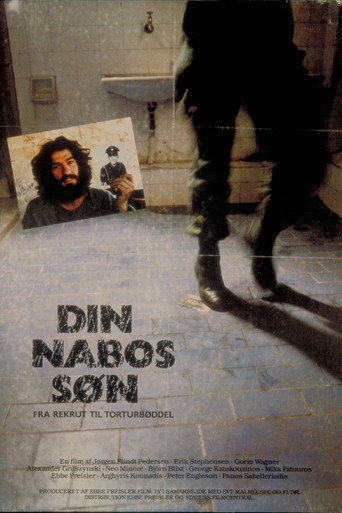
The film documents the conversion of young Greek Military Police (ESA) recruits into torturers and touches on the subject of the power of the institution to compel otherwise moral human beings to torture. The documentary examines the processes and methods of the military junta that ruled Greece from 1967 to 1974.
This third part of the series focuses on Canada's participation in NORAD and the events leading up to Canada's becoming a "nuclear no-man's land." In the late 1980s we are confronted with important choices about our role on the international scene, and host Gwynne Dyer offers intriguing predictions and possibilities about how our decisions could have global impact.
2019 marks the 30th year since the fall of the Berlin Wall and the end of the Cold War. Rich Hall examines the relationship between the West and the USSR in his inimitable fashion.
Contrasting radical mobs, anarchy, and 1960s counterculture with footage of American manufacturing and innovation, this film celebrates the concept of American exceptionalism and argues that anti-Vietnam War protesters were influenced by communism, atheism, and immorality. Set mostly in a university library, this political debate between a medical student, his 1770s ancestor, and a history professor is a sequel to the 1972 National Education Program film, Brink of Disaster! Two additional characters appear in this drama: a 19th-century steamboat captain, and the student’s grandfather - an early 20th-century automobile worker. The National Education Program at Harding College in Searcy, Arkansas created a variety of widely-distributed anti-communism films from the mid-1940s to the early 1970s.
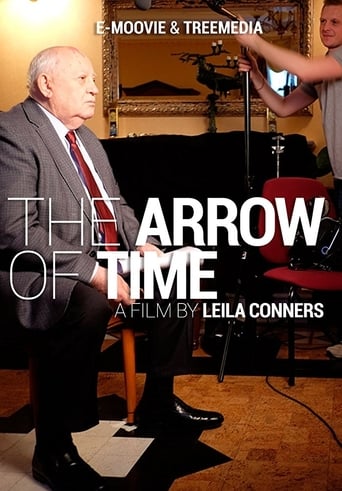
President Mikhail Gorbachev recounts the end of the Cold War and the reduction of nuclear arms.
U.S. nuclear tests in space, and the development of the military intercontinental ballistic missile (ICBM).
A shocking political exposé, and an intimate ethnographic portrait of Pacific Islanders struggling for survival, dignity, and justice after decades of top-secret human radiation experiments conducted on them by the U.S. government.
Rock and roll's part in bringing down the Berlin Wall and smashing the Iron Curtain is told from the perspective of rockers who played at the time, on both sides of the Wall, and from survivors of the communist regimes who recall the lifeline that rock music provided them.
THE AMERICAN EXPERIENCE presents Nixon’s China Game, the story of an operation so secret that it managed to elude the international press, the members of Nixon’s cabinet, and even the US State Department. The documentary features never-before-seen footage of Kissinger’s secret mission to China, newly released transcripts of the negotiations, private diaries, Nixon’s own handwritten notes, and interviews with American and Chinese officials -- including those who were in on the covert plan, and those who were kept in the dark.