
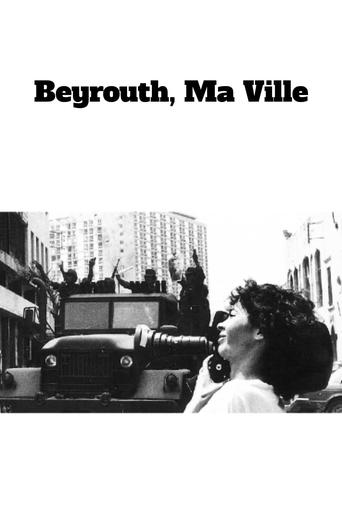
Beirut, My City
1983-01-01 · 38 min · ★ 6.9
In July 1982, the Israeli army besieged Beirut. Four days earlier, Jocelyne Saab sees her house burn and 150 years of family existence go up in smoke. She then takes refuge in questioning: when did this all begin? How did the Beirut people live the siege? Each place will then become a story and each name a memory.
Trailers are previews, not full movies.
No authorized playback source configured. Use the legal watch options below.
Production details
- Directors
- Jocelyne Saab
- Production companies
- Aleph Production
- Countries
- France, Lebanon
- Status
- Released
Top Cast
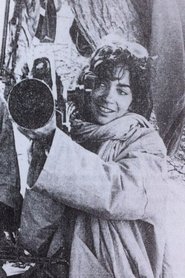 Jocelyne SaabSelf
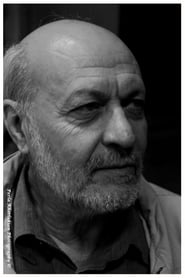 Roger AssafSelf - Narrator (voice)
Title information and images are supplied by TMDb. Explore our discovery guide for advice on comparing metadata and legal viewing options.
Where to watch
Availability provided by JustWatch via TMDb. Offers can change. Provider links are listed on TMDb; full playback requires a separately authorized source.
Availability not listed for this country.
Seasons & episodes
Recommendations

A love letter from a young mother to her daughter, the film tells the story of Waad al-Kateab’s life through five years of the uprising in Aleppo, Syria as she falls in love, gets married and gives birth to Sama, all while cataclysmic conflict rises around her. Her camera captures incredible stories of loss, laughter and survival as Waad wrestles with an impossible choice– whether or not to flee the city to protect her daughter’s life, when leaving means abandoning the struggle for freedom for which she has already sacrificed so much.

When Allied forces liberated the Nazi concentration camps in 1944-45, their terrible discoveries were recorded by army and newsreel cameramen, revealing for the first time the full horror of what had happened. Making use of British, Soviet and American footage, the Ministry of Information’s Sidney Bernstein (later founder of Granada Television) aimed to create a documentary that would provide lasting, undeniable evidence of the Nazis’ unspeakable crimes. He commissioned a wealth of British talent, including editor Stewart McAllister, writer and future cabinet minister Richard Crossman – and, as treatment advisor, his friend Alfred Hitchcock. Yet, despite initial support from the British and US Governments, the film was shelved, and only now, 70 years on, has it been restored and completed by Imperial War Museums under its original title "German Concentration Camps Factual Survey".
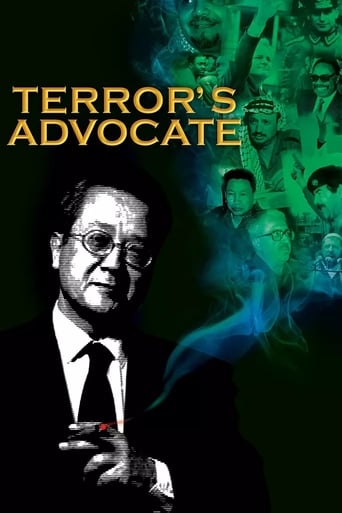
A documentary on Jacques Vergès, the controversial lawyer and former Free French Forces guerrilla, exploring how Vergès assisted, from the 1960s onwards, anti-imperialist terrorist cells operating in Africa, Europe, and the Middle East. Participants interviewed include Algerian nationalists Yacef Saadi, Zohra Drif, Djamila Bouhired and Abderrahmane Benhamida, Khmer Rouge members Nuon Chea and Khieu Samphan, once far-left activists Hans-Joachim Klein and Magdalena Kopp, terrorist Carlos the Jackal, lawyer Isabelle Coutant-Peyre, neo-Nazi Ahmed Huber, Palestinian politician Bassam Abu Sharif, Lebanese politician Karim Pakradouni, political cartoonist Siné, former spy Claude Moniquet, novelist and ghostwriter Lionel Duroy, and investigative journalist Oliver Schröm.
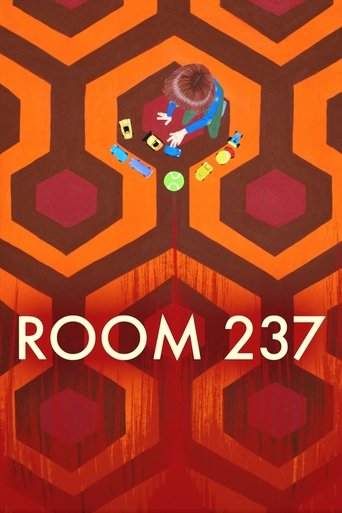
A subjective documentary that explores various theories about hidden meanings in Stanley Kubrick's classic film The Shining. Five very different points of view are illuminated through voice over, film clips, animation and dramatic reenactments.
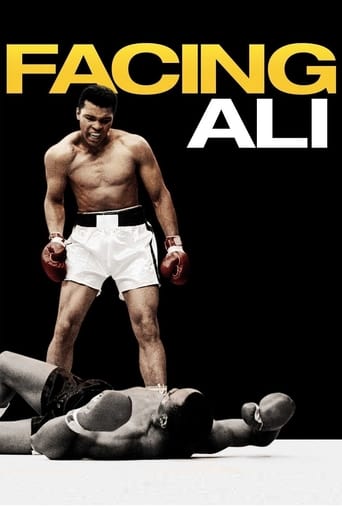
Ten of Muhammad Ali's former rivals pay tribute to the three-time world heavyweight champion.
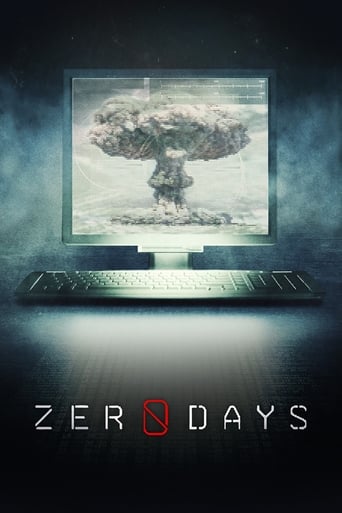
Alex Gibney explores the phenomenon of Stuxnet, a self-replicating computer virus discovered in 2010 by international IT experts. Evidently commissioned by the US and Israeli governments, this malware was designed to specifically sabotage Iran’s nuclear programme. However, the complex computer worm ended up not only infecting its intended target but also spreading uncontrollably.
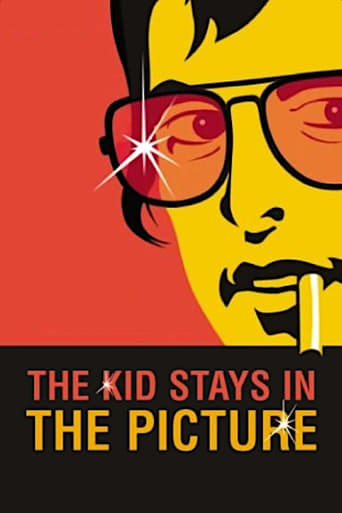
Documentary about legendary Paramount producer Robert Evans, based on his famous 1994 autobiography.
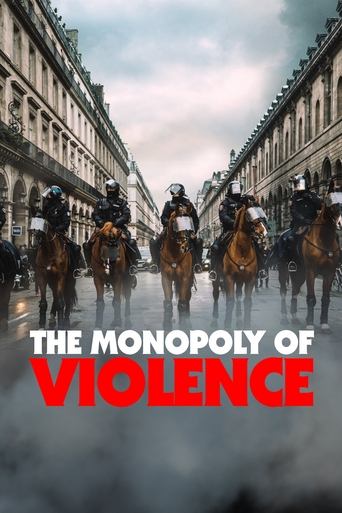
As anger and resentment grow in the face of social inequalities, many citizens-led protests are being repressed with an ever-increasing violence. In this documentary, David Dufresne gathers a panel of citizens to question, exchange and confront their views on the social order and the legitimacy of the use of force by the State.
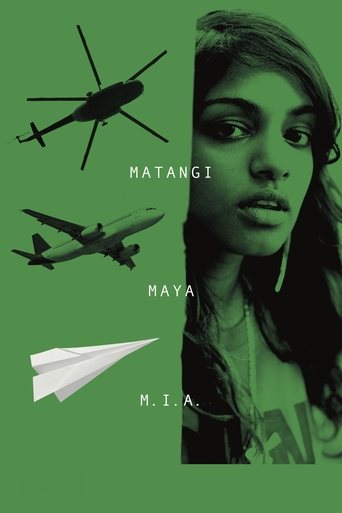
Drawn from a never before seen cache of personal footage spanning decades, this is an intimate portrait of the Sri Lankan artist and musician who continues to shatter conventions.
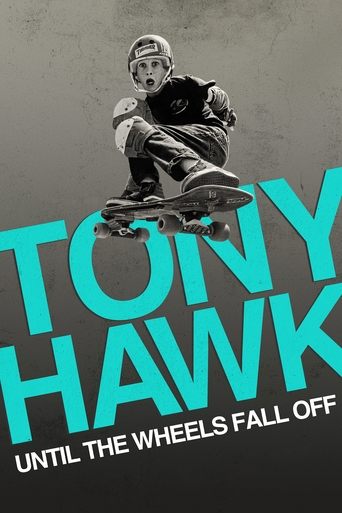
A wide-ranging, definitive look at Hawk’s life and iconic career, and his relationship with the sport with which he’s been synonymous for decades, featuring unprecedented access, never-before-seen footage, and interviews with Hawk and prominent figures in the sport including Stacy Peralta, Rodney Mullen, Mike McGill, Lance Mountain, Steve Caballero, Neil Blender, Andy MacDonald, Duane Peters, Sean Mortimer, and Christian Hosoi.
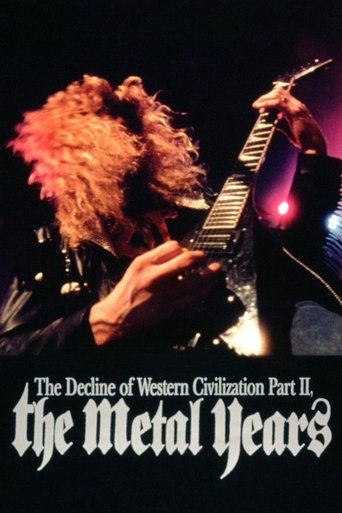
An exploration of the heavy metal scene in Los Angeles, with particular emphasis on glam metal. It features concert footage and interviews of legendary heavy metal and hard rock bands and artists such as Aerosmith, Alice Cooper, Kiss, Megadeth, Motörhead, Ozzy Osbourne and W.A.S.P..
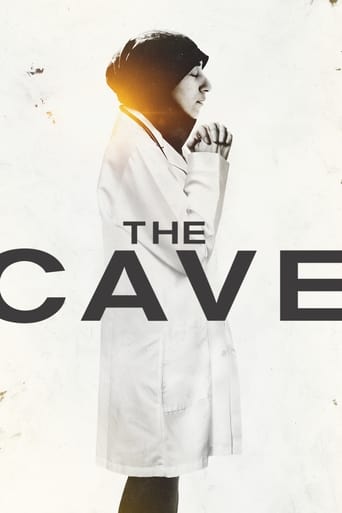
Deep beneath the surface in the Syrian province of Ghouta, a group of female doctors have established an underground field hospital. Under the supervision of paediatrician Dr. Amani and her staff of doctors and nurses, hope is restored for some of the thousands of children and civilian victims of the ruthless Syrian civil war.
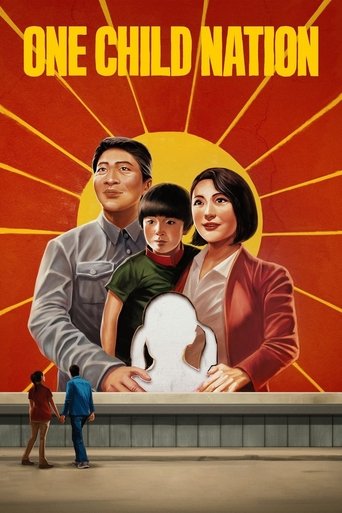
Through interviews with both victims and instigators, Nanfu Wang, a first-time mother, breaks open decades of silence on a vast, unprecedented social experiment that shaped — and destroyed — countless lives in China.
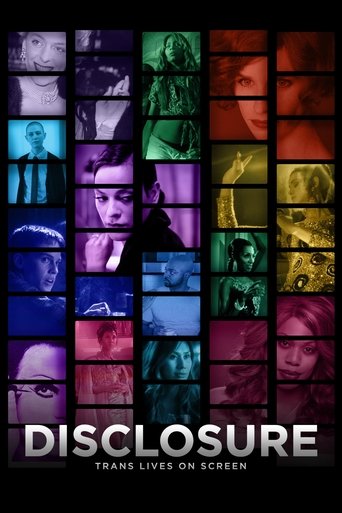
An investigation of how Hollywood's fabled stories have deeply influenced how Americans feel about transgender people, and how transgender people have been taught to feel about themselves.
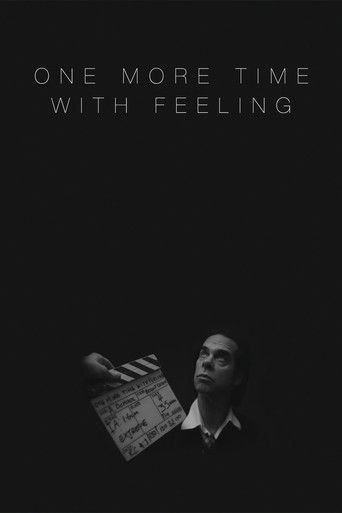
Andrew Dominik's One More Time With Feeling is a remarkable black and white documentary which chronicles the creation of Nick Cave & The Bad Seeds' album Skeleton Tree. Originally a performance based concept, the film evolved into something much more significant as Dominik delved into the tragic backdrop of the writing and recording of the album. The result is stark, fragile and raw, and a true testament to an artist trying to find his way through the darkness. It documents the writing, recording and performing of Nick Cave & the Bad Seeds’ sixteenth studio album, Skeleton Tree.
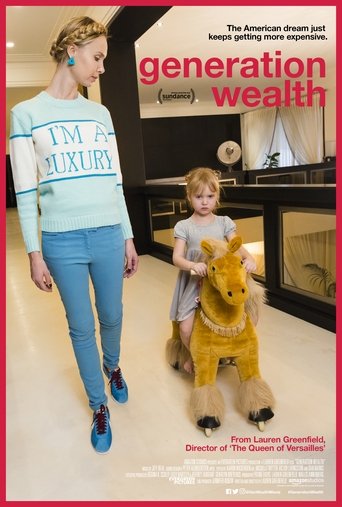
Over the past 25 years, Lauren Greenfield's documentary photography and film projects have explored youth culture, gender, body image, and affluence. Underscoring the ever-increasing gap between the haves and the have-nots, portraits reveal a focus on cultivating image over substance, where subjects unable to attain actual wealth instead settle for its trappings, no matter their ability to pay for it.
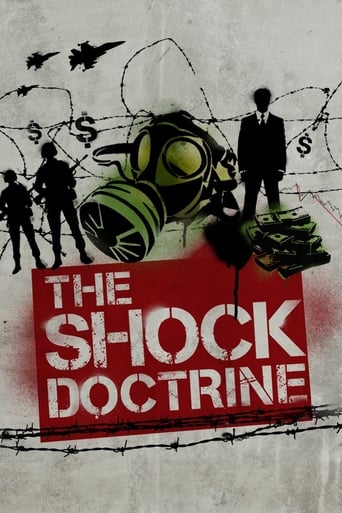
An investigation of "disaster capitalism", based on Naomi Klein's proposition that neo-liberal capitalism feeds on natural disasters, war and terror to establish its dominance.
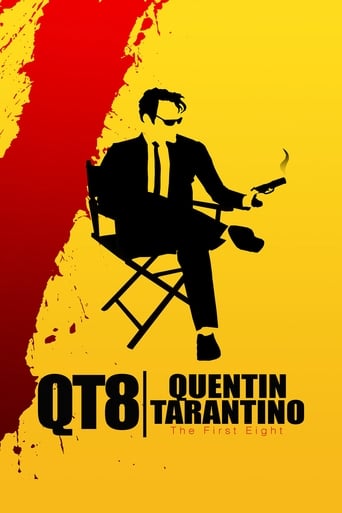
A detailed account of the life and artistic career of legendary filmmaker Quentin Tarantino, from his early days as a video club manager to the scandalous fall in disgrace of producer Harvey Weinstein. A story about how to shoot eight great movies and become an icon of modern pop culture.
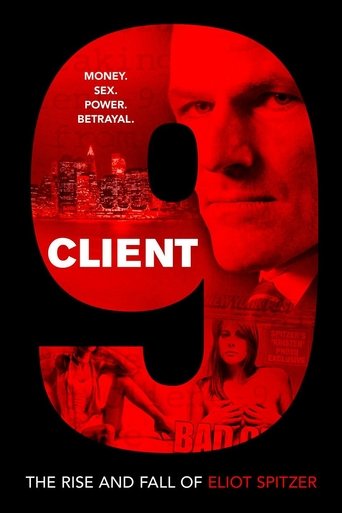
An in-depth look at the rapid rise and dramatic fall of New York Governor Eliot Spitzer.
A documentary on the Z Channel, one of the first pay cable stations in the US, and its programming chief, Jerry Harvey. Debuting in 1974, the LA-based channel's eclectic slate of movies became a prime example of the untapped power of cable television.
Similar titles
War Generation - Beirut explores the lives, dreams and fears of three generations of young people living in the heart of the civil war in Lebanon. This seminal work from Jean Chamoun and Mai Masri remains one of the most powerful anti-war documents of the period.
"When this last war broke out, I was faraway in Paris. I had but one idea: to return to Beirut as quickly as possible and to begin shooting a film, for historical moments were taking place. This film became indispensible: to film so that history would cease repeating itself and to build up a picture library for future generations. I never understood why so few films were made during the Lebanese Civil War. Apart from the odd film, nothing remains from that time. The war surely merited more attention." (Waël Noureddine)
Inhabitants of Beirut talk about their love for the singer Fairuz.
1976 marks the beginning of Beirut’s calvary. With a child’s eyes the filmmaker follows for six months the daily destruction of the city’s walls. Every morning, between 6 and 10am she roams around Beirut while the militia from both sides rest from their night of fighting.
A few months after the incident of April 13, 1975, during which Palestinian civilians were machine-gunned by Phalangist militiamen, the toll is most tragic: six thousand dead, twenty thousand wounded, incessant kidnappings, a semi-destroyed capital. This film traces the origins of the Lebanese conflict, the perception of a society that goes to war while singing. A unique document on the Lebanese civil war. Beyond the religious war, the painting of a social and political reality that has not changed much, more than four decades later.
Documentary tracing Hezbollah’s emergence in southern Lebanon after years of Israeli occupation, focusing on its social base, resistance activities, and the return of displaced villagers.
WINE and WAR is a documentary about one of the the oldest winemaking regions on earth and the resilience of the Lebanese entrepreneurial spirit seen through the lens of war and instability.
Architecture in Beirut was the second greatest victim of the civil war, with pages of ancient and modern history erased by the end of the conflict. This documentary interviews citizens calling for a reconstruction plan that would preserve Beirut’s spirit of culture and openness.
“Al Makhtufun” won the 1998 Best Short Documentary Film Award at the Mediterranean Film Festival for highlighting the issue of abducted Lebanese. The film raises two major issues: The abductee’s physical absence and his spiritual presence among his family members, and the parents silently wishing his return. The documentary looks at documents kept by Wadad, a mother who decides to step outside her comfort zone and share her papers and forms when other parents would not.
Jocelyne Saab toured the city of Beirut devastated by Israeli bombings. She assesses the number of victims and the extent of the destruction.
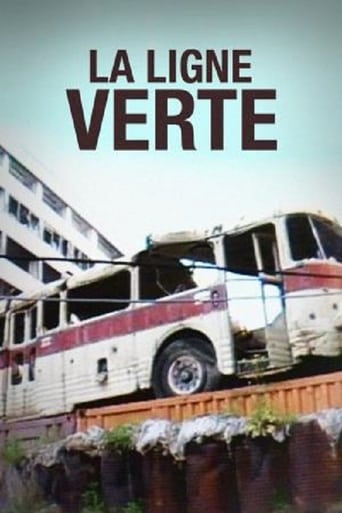
Bahij Hojeij’s documentary studies the infamous Green Line between east and west Beirut during the civil war.
‘Objects of War’ is a series of testimonials on the Lebanese war. Each person chooses an object, ordinary or unusual, which serves as a starting point for his / her story. These testimonials while helping to create a collective memory, also show the impossibility of telling a single History of this war. Only fragments of this History are recounted here, held as truth by those expressing them. In ‘Objects of War’, the aim is not to reveal a truth but rather to gather and confront many diverse versions and discourses on the subject. ‘Objects of War’ started in 1999 assembling the testimonials of eleven persons. It was first shown in 2000 . It continued in 2003 with ‘Objects of War n°2’, recording seven additional testimonials. This time however, and since then, the recorded material is left unedited, shown in its integrity. The work of collecting and assembling these stories continued with ‘Objects of War n°3 & n°4’ in 2006 and ‘n°5 & 6’ in 2014.

Oum Karim, a 60-year-old Beiruti lady, is used to preparing Lahm Bi Ajin (Lebanese ham pie) once per week.
Samar, a child of the war, finds relief from the chaos around her through Egyptian movies she watches on television. Karim, an artist in retreat from life, remains in his apartment in war-torn West Beirut, confident that he is safe in his familiar neighborhood. An unlikely bond is formed between the two as they face the devastating civil war.

Perched in a tower high above Beirut where they monitor the world below through their sniper lenses, two soldiers in the Lebanese civil war find love in their watchful seclusion. The film sketches a humanistic portrayal of two men in love at war and the fragile and violent circumstances that allow them to stay together.

In 1975, the long slog of civil war has recently begun in Beirut. Two friends, Tarek and Omar, suffer during the Lebanese civil war. Conflicts arise when they decide to cross from West to East, crossing the Muslim-Christian line that divides Beirut.
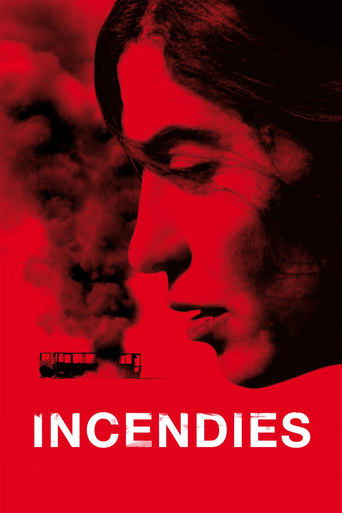
A mother's last wishes send twins Jeanne and Simon on a journey to Middle East in search of their tangled roots. Adapted from Wajdi Mouawad's acclaimed play, Incendies tells the powerful and moving tale of two young adults' voyage to the core of deep-rooted hatred, never-ending wars and enduring love.

As Ariel Sharon looks set to become Israel’s new PM, this strong feature revisits the 1982 Shatila massacre and looks at the region’s future under a man with so much blood on his hands. Eyewitnesses and survivors speak publicly of the massacre for the first time, and there is new testimony about the role of Israeli forces under Sharon’s command. As Defense Minister in 1982, Sharon turned a 72-hour operation to remove Palestinian guerrillas from south Lebanon into a three-month invasion. It claimed 20,000 Arab lives and climaxed with the massacre of unarmed Palestinian civilians in the Sabra and Shatila camps.

When the collection of short stories by I.E.Babel "Konarmiya" was published, S.M. Budyonny became one of its first readers. The "horse army" infuriated him. Budyonny called the essays slanderous speculation and threatened to personally hack Babel with a saber. Defending the writer, Gorky wrote: "He showed the fighters of the First Cavalry better, more truthfully than Gogol — Zaporozhtsev." The writer was saved that time. But on May 16, 1939, no one could help Babel anymore. The writer was arrested. He ended up in the most terrible NKVD prison, Sukhanovskaya. Few people managed to get out alive.…

Fernanda Ocaña, a 60-year-old drag artist from Seville, left her hometown at 14 to build a life in Barcelona. Taken in by the iconic Spanish artist José Pérez Ocaña, she immersed herself in the world of show business. Today, she continues to shine as the host of the Bar Ocaña in Plaza Real, welcoming guests with her unmistakable charm.