
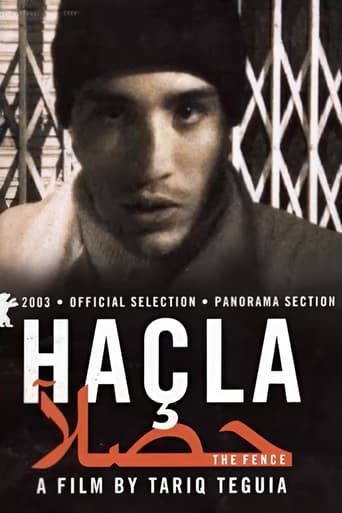
The Fence
2003-10-03 · 24 min · ★ 7.9
The Fence is a cry! In the aftermath of the civil war which bloodied Algeria, Tariq Teguia interviews the young people of Bab El Oued who express their anger. In the fixed shots in which they testify, Tariq Teguia alternates wanderings in a car which extend those of Ferrailles d’anticipations. And it is the violence of confinement that dominates, coupled with the desire for something impossible elsewhere.
Trailers are previews, not full movies.
No authorized playback source configured. Use the legal watch options below.
Production details
- Directors
- Tariq Teguia
- Production companies
- Mandala Productions
- Countries
- France, Algeria
- Status
- Released
Top Cast
Cast unavailable.
Title information and images are supplied by TMDb. Explore our discovery guide for advice on comparing metadata and legal viewing options.
Where to watch
Availability provided by JustWatch via TMDb. Offers can change. Provider links are listed on TMDb; full playback requires a separately authorized source.
Availability not listed for this country.
Seasons & episodes
Recommendations

In an intimate and joyful story of love in the face of loss, celebrated poets Andrea Gibson and Megan Falley find strength—and unexpected hilarity—in what might be their final year together.

A documentary on the expletive's origin, why it offends some people so deeply, and what can be gained from its use.

Ranjit, a farmer in India, takes on the fight of his life when he demands justice for his 13-year-old daughter, the victim of a brutal gang rape. His decision to support his daughter is virtually unheard of, and his journey unprecedented.

This revealing documentary honors the legendary Sidney Poitier—iconic actor, filmmaker, and civil rights activist. Featuring interviews with Denzel Washington, Spike Lee, Halle Berry, and more.

A documentary about the life and films of director John Ford.
With a first-person look at the notorious Crips and Bloods, this film examines the conditions that have lead to decades of devastating gang violence among young African Americans growing up in South Los Angeles.

A compilation of over 30 years of private home movie footage shot by Lithuanian-American avant-garde director Jonas Mekas, assembled by Mekas "purely by chance", without concern for chronological order.

Through deeply personal interviews with her siblings and an examination of the photographs, letters, and belongings left behind, Mariska assembles a new portrait of her mother Jayne Mansfield, an extraordinary and complex woman.

Alexander McQueen's rags-to-riches story is a modern-day fairy tale, laced with the gothic. Mirroring the savage beauty, boldness and vivacity of his design, this documentary is an intimate revelation of McQueen's own world, both tortured and inspired, which celebrates a radical and mesmerizing genius of profound influence.

Just two years away from turning 30, participants in Michael Apted's documentary series are facing serious questions of identity and purpose, wondering whether they've found their place in the world.
A chronicle of the rise and fall of O.J. Simpson, whose high-profile murder trial exposed the extent of American racial tensions, revealing a fractured and divided nation.

Daniel Craig candidly reflects on his 15 year adventure as James Bond. Including never-before-seen archival footage from Casino Royale to the upcoming 25th film No Time To Die, Craig shares his personal memories in conversation with 007 producers, Michael G Wilson and Barbara Broccoli.

Director Michael Apted revisits the same group of British-born adults after a 7 year wait. The subjects are interviewed as to the changes that have occurred in their lives during the last seven years.
An intimate portrait of Hollywood royalty featuring Debbie Reynolds, Todd Fisher, and Carrie Fisher.
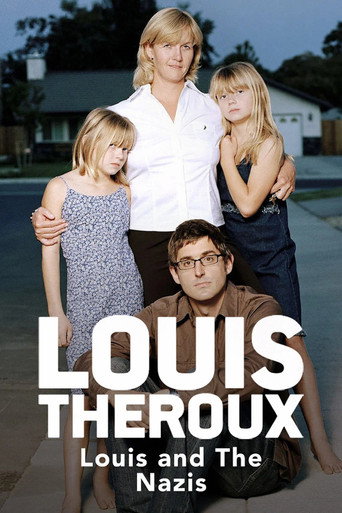
Louis Theroux travels to California to meet the man dubbed "the most dangerous racist in America"; Tom Metzger. Louis meets him, his family and his publicity manager as well as following him to skinhead rallies and on a visit to Mexico.

An inside look at one of the most anticipated movie sequels ever with James Cameron and cast.

Director Michael Apted revisits the same group of British-born adults after a 7 year wait. The subjects are interviewed as to the changes that have occurred in their lives during the last seven years.

From the heights of her modeling fame to her tragic death, this documentary reveals Anna Nicole Smith through the eyes of the people closest to her.
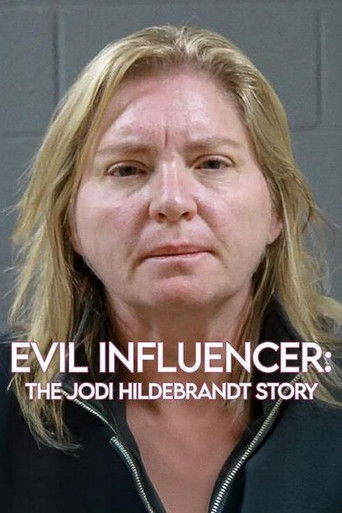
Unravel the case of Utah therapist Jodi Hildebrandt, whose child abuse arrest with parenting YouTuber Ruby Franke exposed a twisted tale of manipulation.
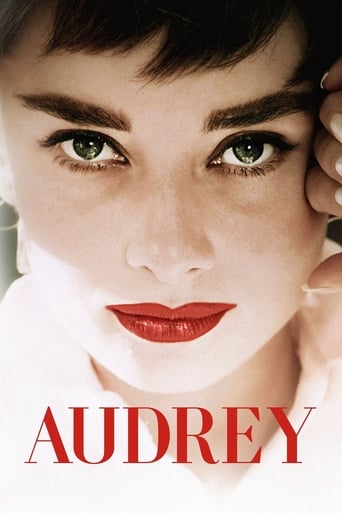
An unprecedented and intimate look at the life, work and enduring legacy of British actress Audrey Hepburn (1929-1993).
Similar titles
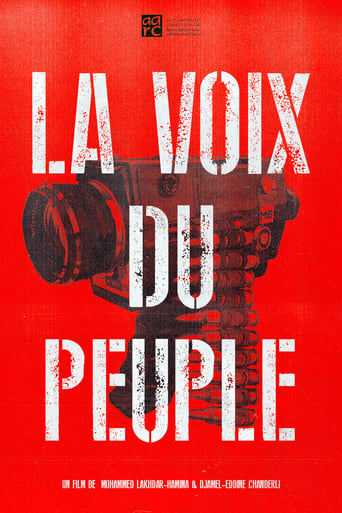
“La Voix du Peuple,” composed of archival photographs by René Vauthier and others, exposes the root causes of the armed conflict of the Algerian resistance. Participating in a war of real images against French colonial propaganda, these images aimed to show the images that the occupier had censored or distorted, by showing the extortions of the French occupation army: torture, arrests and arbitrary executions, napalm bombings, roundabout fires, erasing entire villages from the map, etc. This is what the French media described as a “pacification campaign”.
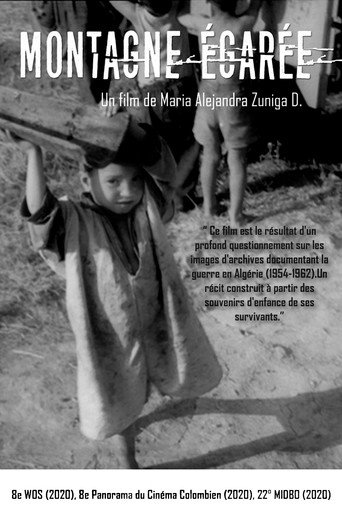
On November 1, 1954, the National Liberation Front of Algeria announced the war for the country's independence. France, colonizer since 1830, hastened to reinforce its military contingent in the four corners of the country and to prevent the advance of the rebels. A little Chaoui, born in a mountainous region of the country, sees his placid childhood collapse in the middle of a crossfire that he does not understand. The story, inspired by real testimonies, is constructed with images from the archives of the French army. From this apparently dissociated dialogue between image and word arises a sensitive homage to the memory that rests in the archives and to the ignored voice of its protagonists.
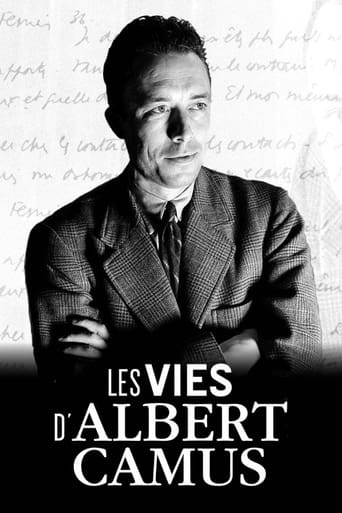
Albert Camus died at 46 years old on January 4, 1960, two years after his Nobel Prize in literature. Author of “L'Etranger”, one of the most widely read novels in the world, philosopher of the absurd and of revolt, resistant, journalist, playwright, Albert Camus had an extraordinary destiny. Child of the poor districts of Algiers, tuberculosis patient, orphan of father, son of an illiterate and deaf mother, he tore himself away from his condition thanks to his teacher. French from Algeria, he never ceased to fight for equality with the Arabs and the Kabyle, while fearing the Independence of the FLN. Founded on restored and colorized archives, and first-hand accounts, this documentary attempts to paint the portrait of Camus as he was.
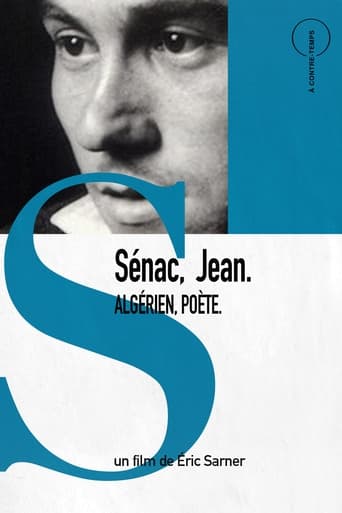
Jean Sénac, born in Béni Saf in Algeria in 1926 and died in Algiers in 1973, is today considered one of the great French writers and poets and the only one of his reputation to have accompanied the Algerian revolution before November 1954. part of all the debates and got involved, very early and with immense enthusiasm, in a work of commitment which ended badly. His poetry, his sexual preferences and his political lyricism work against him: rejected as much by the Pieds Noirs as by the FLN activists then by the power in place in Algiers, Jean Sénac was assassinated in 1973 at his home in Algiers, in circumstances never clarified.
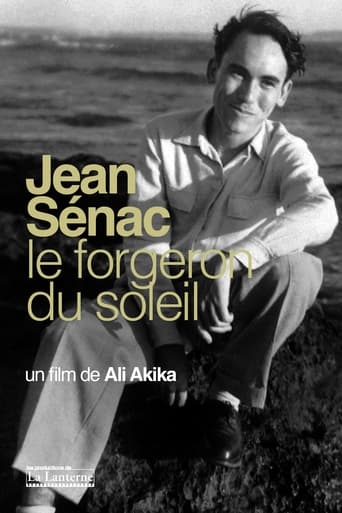
By ending the life of Jean Senac on August 30, 1973 in Algiers, his assassins believed they would silence him forever. They were wrong since his voice is a little louder every day. Witnesses to these craze: the publication of the complete works of this great poet, the countless conferences and radio broadcasts devoted to him and finally the production of films such as "Jean Sénac, the blacksmith of the sun". The moving and overwhelming testimonies of those who knew him, the unpublished film archives, the generous voice of the poet on the radio, the discovery of his travels in the territories of poetry and politics make this film a precious document on the life of Jean Senac.
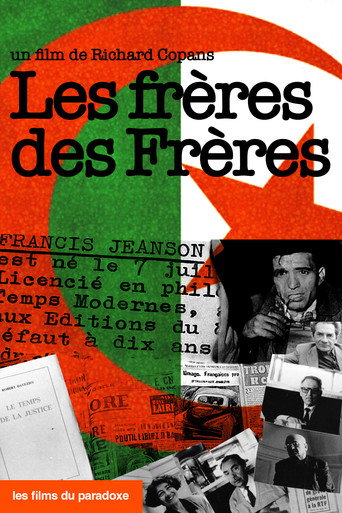
From 1954 to 1962, during the Algerian War, French citizens provided concrete assistance to the FLN in France: sheltering refugees, forging documents, facilitating border crossings, and transporting funds. Whether committed to the ideals of the Republic or driven by Third Worldist revolutionaries, they sought to build a bridge of friendship between nations. They paid for their commitment with imprisonment and exile. Four veterans of the Jeanson network recall this period. Today, they are no longer seen as traitors or heroes, but as witnesses recounting "their" war... Silent for 30 years, the "Jeanson network" now bears witness to this history.
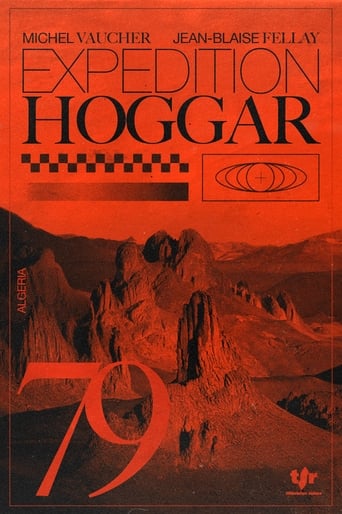
TSR documentary on the 1979 expedition to Algeria in the Atakor massif (Hoggar desert), organized by Geneva mountaineer Michel Vaucher and Jean-Blaise Fellay. The climbers make a dozen ascents including the famous summit of Adaouda (which means "finger" in Tamasheq, the Tuareg dialect), by several routes. Then a new route on the peaks of the southern Tezoulegs. They discover the volcanic geological characteristics of the Atakor massif and meet the nomadic inhabitants of the region, the Tuaregs, who are increasingly settling in the town of Tamanrasset.

The Algerian Sahara is the most exceptional deserts. He densifies everything he hosts, men and nature, and invites you to pay attention to the world. Jean-Louis and Odette Bernezat were born at the foot of the Alps, but it was in the Sahara that they found their way, and devoted almost forty years to the discovery of this environment and have extraordinary knowledge to share. Director Maryse Bergonzat accompanies them, in a meha, in the Hoggar in Algeria, with their Tuareg friends. A privileged place to appreciate the desert, its landscapes, its inhabitants, its laws and its stories, in the company of exceptional guides.
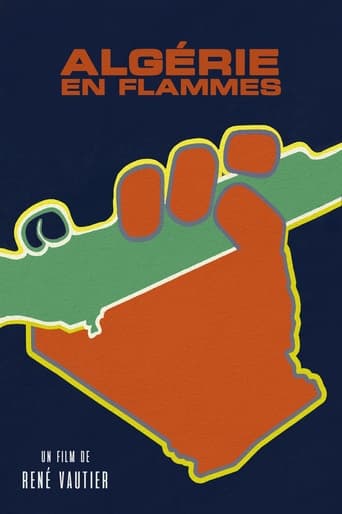
These are the first images shot in the ALN maquis, camera in hand, at the end of 1956 and in 1957. These war images taken in the Aurès-Nementchas are intended to be the basis of a dialogue between French and Algerians for peace in Algeria, by demonstrating the existence of an armed organization close to the people. Three versions of Algeria in Flames are produced: French, German and Arabic. From the end of the editing, the film circulates without any cuts throughout the world, except in France where the first screening takes place in the occupied Sorbonne in 1968. Certain images of the film have circulated and are found in films, in particular Algerian films. Because of the excitement caused by this film, he was forced to go into hiding for 25 months. After the declaration of independence, he founded the first Algerian Audiovisual Center.
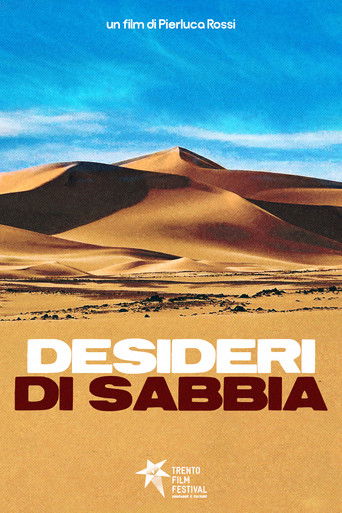
This documentary film by Pierluca Rossi recounts a journey to the southern Algerian Sahara, near Amguid, a small Tuareg village renowned for its unusual nearby crater. In the Tefedest massif, with its mythical summit, Garet el Djenoun, on the slopes of a vast sand dune rising to over 400 meters, one can practice an unusual sport: sandboarding, a new technique to try. Surprising speeds can be reached, and participants can familiarize themselves with the equipment of this new sport, perhaps paving the way for new practices.
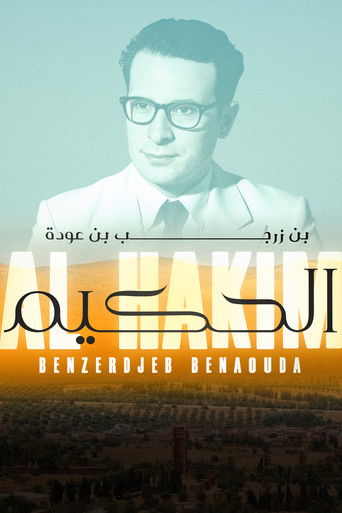
An investigative documentary tracing the life of Dr. Benaouda Benzerdjeb from his studies in Europe to his revolutionary medical work in Algeria, while challenging the colonial narrative surrounding his arrest and martyrdom.
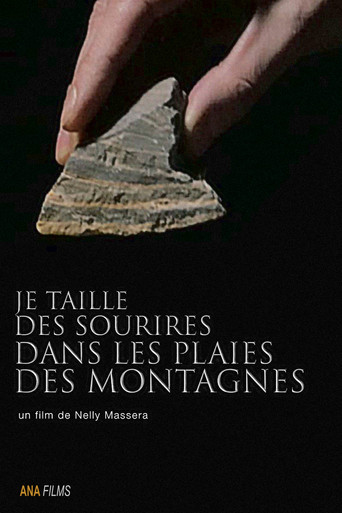
Achour is thirty. Night and day, he walks. Rebellious soul, he crisscrosses Alger and its neighborhoods, stays at friends' houses and often leaves the city to meet the nearby montain in Kabylia, his alter-ego. In this environment his resistance continues, mobile and ascending. Algerian hardcore-punk musician, Achour once screamed his anger against the country's regime and sang "Anarchytecture". But the movement died down, friends went their separate ways. His Facebook wall became his notebook, his window open to the world. It represents a scream aimed towards the echo of the mountains, between virtual wall, infinite facades of large complexes and the strata of mineral cliffs. A scream comes back at us.
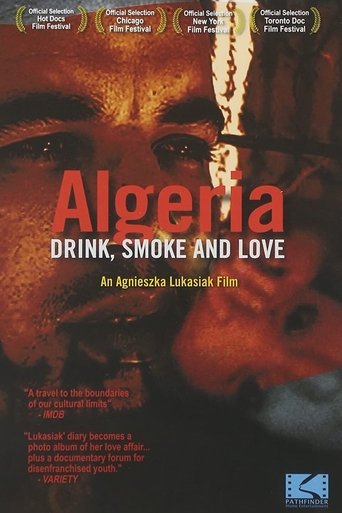
Agnieszka Lukasiak travels to Algeria to capture it's conflict on camera. When she arrives, she's immediately sidetracked by romance with her host, Habib. She turns the camera on herself as she falls in love with him. the atmosphere quickly diminishes when Habib's family steps in and kicks her out. Not to be deterred, on her second visite to Algeria to seek Habib's love, she begins her real journey to expose the underside of the country.
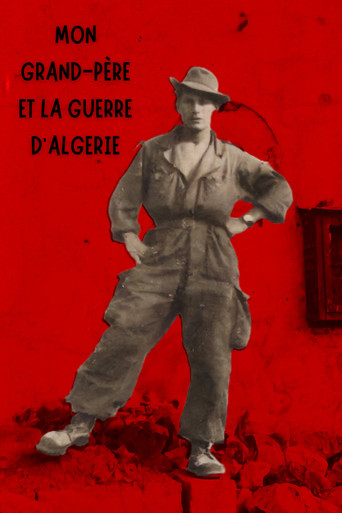
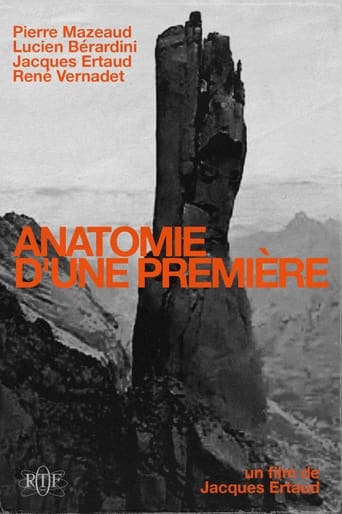
In February 1966, Pierre Mazeaud and Lucien Berardini traveled to the Atakor massif, in the Hoggar mountain range of the Sahara in southern Algeria. There, they attempted a challenging first ascent: the Takouba spur, one of the peaks adjacent to Garet El Djenoun, a legendary mountain in the Hoggar massif, first climbed by Roger Frison-Roche and Raymond Coche in 1935. The documentary, superbly filmed by Jacques Ertaud, won the Grand Prize at the Trento International Mountain Film Festival in 1966.
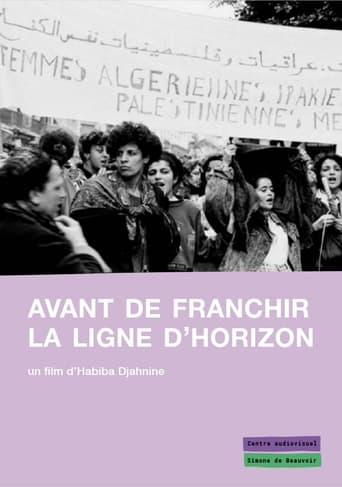
Habiba Djahnine went to meet activists who continue to take action. To meet them, to capture them in the spaces where they live, work or fight. They inscribe a few words of our tormented history. Memory, memory gaps, background noise, demonstrations... The film bears witness to 20 years of political mobilization/repression in Algeria.
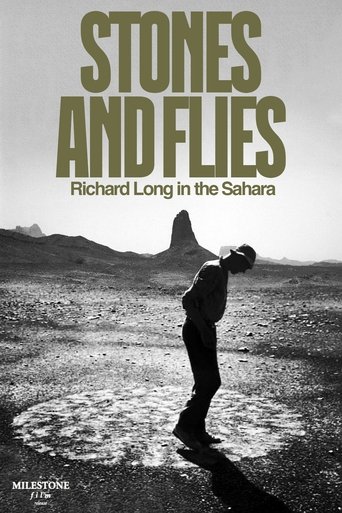
In the fall of 1987, Philippe Haas accompanied the sculptor Richard Long to the Algerian Sahara and filmed him tracing with his feet, or constructing with desert stones, simple geometric figures (straight lines, circles, spirals). In counterpoint to the images, Richard Long explains his approach. Since 1967, Richard Long (1945, Bristol), who belongs to the land art movement, has traveled the world on foot and installed, in places often inaccessible to the public, stones, sticks and driftwood found in situ. His ephemeral works are reproduced through photography. He thus made walking an art, and land art an aspiration of modern man for solitude in nature.
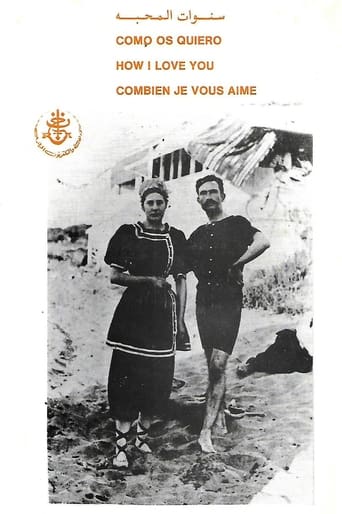
Beginning with a promotional reel encouraging farming investments in Algeria and ending with the secret 1950s nuclear tests that France conducted using Algerian prisoners, How Much I Love You appropriates archival footage produced by the French colonial powers in Algeria. Meddour’s approach is disarmingly simple and yet awe-inspiring—his caustic undoing of colonial discourse is underscored by a liberating release of humor.
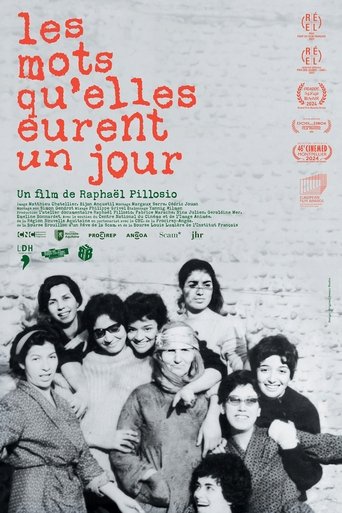
1962, at the end of the Algerian War, Algerian independence activists are released from Rennes prison. For one night, filmmaker Yann Le Masson films them. They tell him their vision for the future of Algeria and the place women must occupy in the new society to be built. Fifty years later, with the soundtrack missing, Raphaël Pillosio sets out to find these women. Two deaf people set about lip-reading the women filmed by Yann Le Masson, revealing snatches of sentences, words cut short by the camera's shifts. An investigative film in which the few activists still alive discover their old testimonies and tell us their silent story. The reconstruction of the lost soundtrack will remain in suspense; no happy ending will come to absorb the absence, to cancel the ferocious operation of time. An essay film about cinema that depicts their disappearance, and forever keeps them alive.
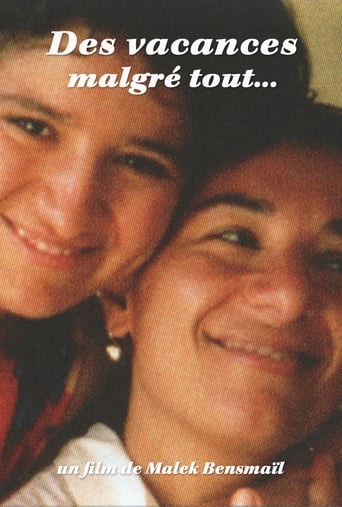
Immigrated to the Paris region since 1964, Kader decides to spend the summer holidays with his family in his native village, not far from Algiers. These few weeks, so eagerly awaited by both sides, constitute a special moment full of strong emotions. The camera follows the family in their meetings, their reunions, their difficulties, their visions of the country and its region, the celebrations, the weddings, their return to France… This film raises many questions. Within this family itself, between those who stayed in the country and those who emigrated to France, how do we perceive the situation in Algeria? What hopes do each of them have for their country? What about the Franco-Algerian relationship? Contemporary immigration? The desire for exile of Algerians today? Different discourses on both sides of the Mediterranean? The desires of each of them…