

And Man Created the Cow
2016-11-19 · Runtime unavailable · ★ 6.5
10,000 years ago, the European forests were inhabited by huge cattle with protruding horns: the aurochs. Then man began to domesticate them and created the cow. By crossing species, he adapted the animals over time so that they increasingly met his needs and desires. Industrial livestock farming was born. From then on, beef cattle and dairy cows such as the Holstein cow were bred. Milk production tripled within a few decades. Today, the cow of the future is produced by artificial insemination. By selecting a few breeding bulls that are considered to be top bulls, rapid genetic progress is ensured.
Trailers are previews, not full movies.
No authorized playback source configured. Use the legal watch options below.
Production details
- Directors
- Jean-Christophe Ribot
- Production companies
- Bonobo Productions, ARTE, Pictanovo
- Countries
- France
- Status
- Released
Top Cast
Title information and images are supplied by TMDb. Explore our discovery guide for advice on comparing metadata and legal viewing options.
Where to watch
Availability provided by JustWatch via TMDb. Offers can change. Provider links are listed on TMDb; full playback requires a separately authorized source.
Availability not listed for this country.
Seasons & episodes
Recommendations

An inside look at one of the most anticipated movie sequels ever with James Cameron and cast.

An intimate portrait of the small shops and shopkeepers of the Rue Daguerre in Paris, a picturesque street that has been the filmmaker’s home for more than 50 years.
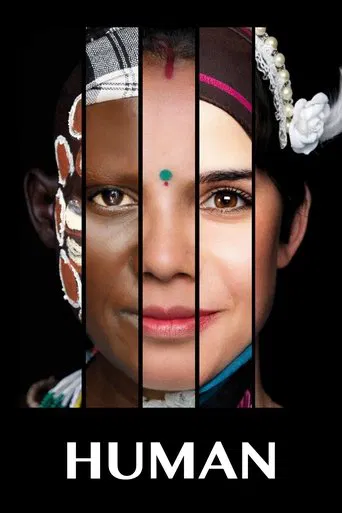
A collection of stories about and images of our world, offering an immersion to the core of what it means to be human. Through these stories full of love and happiness, as well as hatred and violence, it brings us face to face with the Other, making us reflect on our lives. From stories of everyday experiences to accounts of the most unbelievable lives, these poignant encounters share a rare sincerity and underline who we are – our darker side, but also what is most noble in us, and what is universal. Our Earth is shown at its most sublime through never-before-seen aerial images accompanied by soaring music, resulting in an ode to the beauty of the world, providing a moment to draw breath and for introspection. This film is a politically engaged work which allows us to embrace the human condition and to reflect on the meaning of our existence.
Join the likes of Jeremy Renner, Hailee Steinfeld, Florence Pugh, and Vincent D’Onofrio as they reveal how Marvel Studios’ “Hawkeye” was conceived and created. Witness firsthand what it took to pull off the show’s pulse-pounding action set pieces, and discover how iconic characters from the pages of Marvel Comics such as Kate Bishop were adapted and brought to life for the six-episode series.

The film follows adventurer Jeff Johnson as he retraces the epic 1968 journey of his heroes Yvon Chouinard and Doug Tompkins to Patagonia.
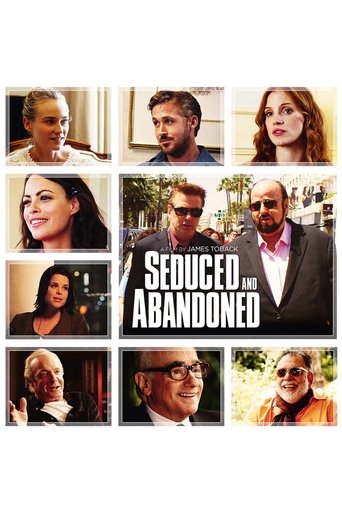
SEDUCED AND ABANDONED combines acting legend Alec Baldwin with director James Toback as they lead us on a troublesome and often hilarious journey of raising financing for their next feature film. Moving from director to financier to star actor, the two players provide us with a unique look behind the curtain at the world's biggest and most glamourous film festival, shining a light on the bitter-sweet relationship filmmakers have with Cannes and the film business. Featuring insights from directors Martin Scorsese, 'Bernando Bertolucci' and Roman Polanski; actors Ryan Gosling and Jessica Chastain and a host of film distribution luminaries.
A documentary special that explores the power of identity behind the iconic superheroes we know and love today. These legendary Marvel creations and stories have not only reflected the world outside our window – they have become a reflection of our own identities and who we truly are.
This special explores the return of Obi-Wan Kenobi and Anakin Skywalker to the screen, as well as Ewan McGregor and Hayden Christensen to their classic roles. Director Deborah Chow leads the cast and crew as they create new heroes and villains that live alongside new incarnations of beloved Star Wars characters, and an epic story that dramatically bridges the saga films.

A documentary about how a dominant cultural and demographic institution both sustains their traditional activities and adapts to the digital revolution.

Go behind the scenes and witness how the "Squid Game"-inspired reality show transformed from a scripted drama to a cutthroat, nail-biting competition.

Al Pacino's deeply-felt rumination on Shakespeare's significance and relevance to the modern world through interviews and an in-depth analysis of "Richard III."

A documentary about ten very different lives connected by having appeared onscreen wearing masks or helmets in Star Wars.

This revealing documentary honors the legendary Sidney Poitier—iconic actor, filmmaker, and civil rights activist. Featuring interviews with Denzel Washington, Spike Lee, Halle Berry, and more.
An astonishing journey revealing the awesome power of the natural world. Over the course of one single day, we track the sun from the highest mountains to the remotest islands to exotic jungles.

A backstage and on-stage look at Justin Bieber during his rise to super stardom.

A detailing of the rise to prominence and global sporting superstardom of six supremely talented young Manchester United football players (David Beckham, Nicky Butt, Ryan Giggs, Paul Scholes, Phil and Gary Neville). The film covers the period 1992-1999, culminating in Manchester United's European Cup triumph.

The life and career of an actor, artist, and icon. His own journey through his own camera.

A purely observational non-fiction film that takes viewers into the ethically murky world of end-of-life decision making in a public hospital.
Explore the evolution of Buzz Lightyear from toy to human in the making of Pixar’s Lightyear. Dive into the origin and cultural impact of everyone’s favorite Space Ranger, the art of designing a new “human Buzz,” and the challenges faced by the Lightyear crew along the way.
Unprecedented access to Muhammad Ali's personal archive of "audio journals" as well as interviews and testimonials from his inner circle of family and friends are used to tell the legend's life story.
Similar titles

The documentary tells two very different human fates in the 1920s Soviet Union. Nikolai Vavilov was a botanical genius, Trofim Lyssenko was an agronomist who made great promises and fake inventions. Each of them tried to solve the country's nutritional problem, but only one succeeded.
Documentary about living with an addict and grappling with the genetic propensity of becoming one.
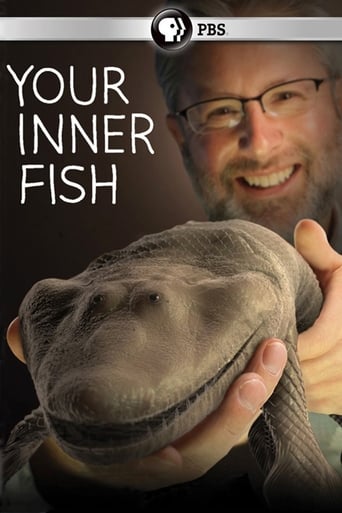
How did your body become the complicated, quirky, amazing machine it is today? Anatomist Neil Shubin uncovers the answers in this 3-part science series that looks at human evolution. Using fossils, embryos and genes, he reveals how our bodies are the legacy of ancient fish, reptiles and primates — the ancestors you never knew were in your family tree.
Twitch follows 18-year-old Kristen Powers as she undergoes genetic testing for the disease that killed her mother. Huntington’s Disease (HD), a neurodegenerative brain disorder, destroys an individual’s ability to walk, talk, think, and reason, eventually leading to death. The film will chronicle the emotional, social and medical journey through this important test, as well as the impact it has on an individual’s future. Twitch explores the science with major Huntington’s Disease experts and activists who will provide deeper insight into the complexities and hopes buried in the disease. Huntington’s has great stigma surrounding it; solving its mystery could potentially lead to the cures of not only HD but also several other neurological illnesses such as Parkinson’s, Alzheimers and ALS. This documentary will highlight the pressures people, especially young adults, face when given the chance to be handed their medical fate.
The film tells a very personal story from two perspectives: our protagonist is both doctor and patient. As a patient, he has struggled with recurring depression for years, and as a doctor he wants to find out why. The search for the origins of his illness leads him into the realm of his own genes and casts light on the fundamental changes facing modern society as a result of the tremendous progress being made in the field of genetic sequencing. Along the way, he meets a host of people – researchers, artists, visionaries – who have developed their own very individual approach to genetic coding and are drawing attention to the social significance of genetic technology. The film does not restrict itself to a scientific view of the subject but also makes use of artistic visions and more playful approaches to genetic blueprints.
Is our life predetermined from birth? Does our genes determine our personality and behavior? Is there a criminal gene? This documentary follows the well-known Danish journalist, author, and neurobiologist Lone Frank, who explores her own self with the help of her genetic map and her family history.
Spared by cancer, diabetes and possibly Alzheimer’s, men and women of small stature are intriguing scientists that are trying to postpone age-related illnesses. What mechanisms protect these small Ecuadorian from certain illnesses? From Quito to Los Angeles, via Tel-Aviv, the film follows the revolutionary research, step-by-step, that is attempting to understand and prevent diseases such as cancer. And outlines ways to live in good health… for as long as possible.
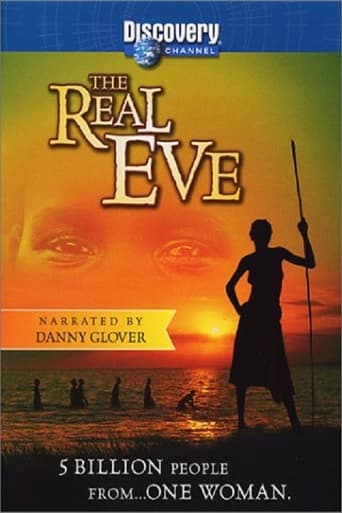
The made-for-cable documentary film The Real Eve is predicated on the theory that the human race can be traced to a common ancestor. The mitochondrial DNA of one prehistoric woman, who lived in Africa, has according to this theory been passed down from generation to generation over a span of 150,000 years, supplying the "chemical energy" to all humankind.
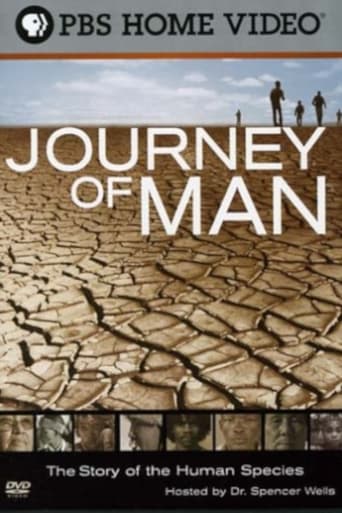
Many geneticists and archaeologists have long surmised that human life began in Africa. Dr. Spencer Wells, one of a group of scientists studying the origin of human life, offers evidence and theories to support such a thesis in this PBS special. He claims that Africa was populated by only a few thousand people that some deserted their homeland in a conquest that has resulted in global domination.
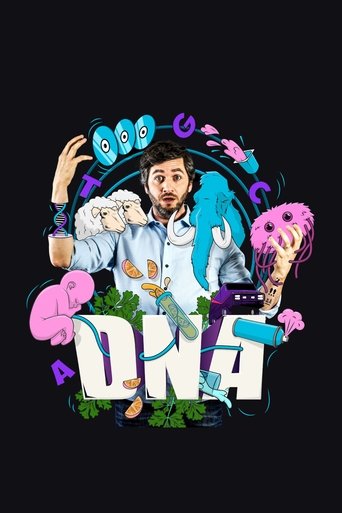
Human genetics is one of the most exciting fields in science at the moment. Not only does it advance exponentially fast, it is also a field of study that will very soon affect our daily lives. We will all have to deal with the possibilities and technologies that human genetics have to offer, today and in the coming years. Quite a few questions and dilemmas still have to be answered by us. Do I want to know everything that can be found out from my DNA? And who is allowed to use and read my genetic code? My doctor? The police? The chef of my favourite restaurant? Also, what genetic technologies do I want to use? Do I want to clone my dog, choose my children’s eye colour, or genetically modify them to give them extra talents? Do I want others in society to be allowed to do that? The current and future possibilities of human genetics are simply overwhelming. They are both promising and frightening, chilling and delightful.
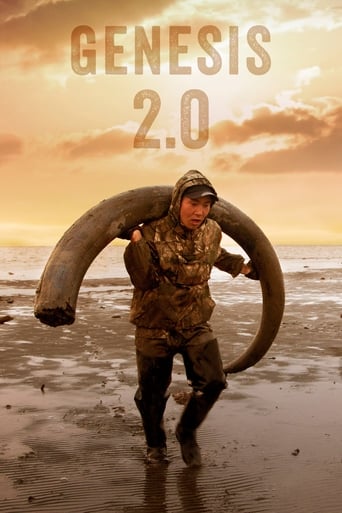
A well-preserved mammoth carcass is found in the remote New Siberian Islands in the Arctic Ocean, opening up the possibility of a world-changing “Jurassic Park” moment in genetics.
Can science help us understand these crimes?
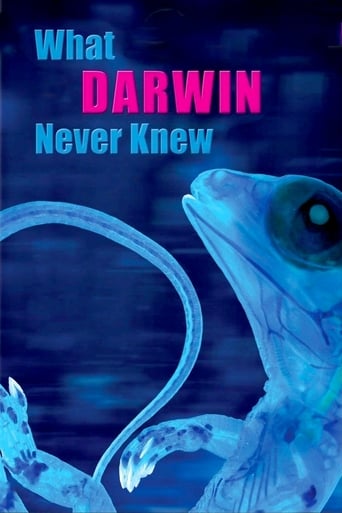
Earth teems with a staggering variety of animals, including 9,000 kinds of birds, 28,000 types of fish, and more than 350,000 species of beetles. What explains this explosion of living creatures—1.4 million different species discovered so far, with perhaps another 50 million to go? The source of life's endless forms was a profound mystery until Charles Darwin brought forth his revolutionary idea of natural selection. But Darwin's radical insights raised as many questions as they answered. What actually drives evolution and turns one species into another? To what degree do different animals rely on the same genetic toolkit? And how did we evolve?
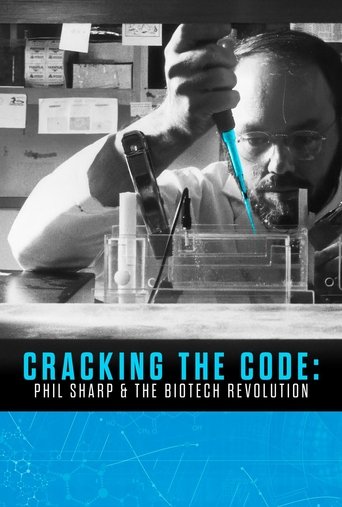
The 1977 discovery of RNA splicing by Dr. Phillip A. Sharp, Kentucky farm boy turned Nobel-prize winning scientist, set the stage for a revolution in molecular biology, enabling research into a new class of medicines predicated on recombinant DNA techniques ranging from the development of synthetic insulin and human growth hormone to the COVID-19 vaccine.
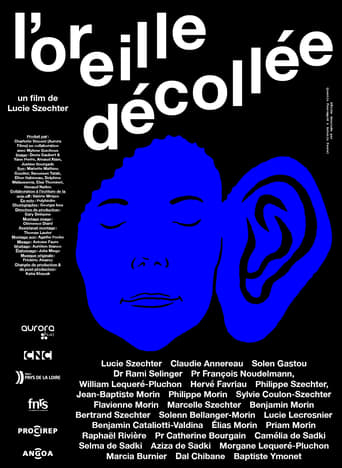
Lucie was born with a protruding ear that she got from her mother. In this documentary she tries to find answers in her fathers' features.
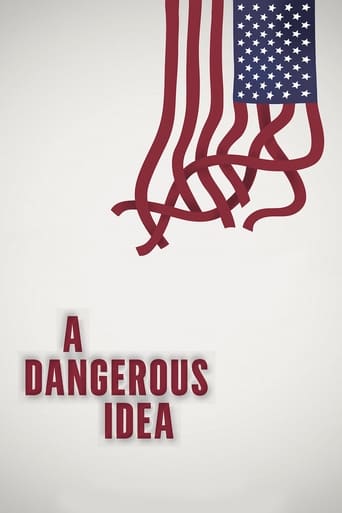
A dangerous idea has threatened the American Dream from the beginning - the belief that some groups and individuals are inherently superior to others and more deserving of fundamental rights. Such biological determinism provided an excuse for some of America's most shameful history. And now it's back. This documentary reveals how biologically determined politics has disenfranchised women and people of color, provided a rationale for state sanctioned crimes committed against America's most vulnerable citizens, and now gains new traction under the Trump administration.
The documentary depicts the birth of eugenics - a pseudo-science created in the 19th century that propounded the theory of perfecting the human race. According to the views of eugenicists, only healthy and creative individuals should reproduce. The film shows how these controversial ideas influenced the intellectual and political elite of the West in the 20th century, including the dictator of the Third Reich, Adolf Hitler. Eugenics is a pseudoscience created in the 19th century and treating the improvement of the human race. According to eugenicists, only healthy and creative individuals could procreate, and the procreation of the sick or disabled and racially unworthy (prostitutes, the poor, beggars) should be forbidden. The author of the film posits that modern genetics, the killing of unborn children and euthanasia have their roots in this infamous pseudoscience.
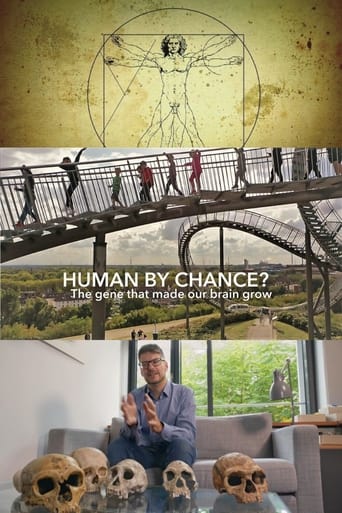
If we compare ourselves with our genetically closest living relatives, the chimpanzees, we have few physical advantages. We are far weaker, cannot move nearly as fast, and do not have the same climbing capabilities. Instead, humans excel in areas such as architecture, religion, science, language, writing, art, culture, and ideas. These achievements are due to our larger brain that contain billions of neurons. It was the rapid growth of our brain, originating about 2 million years ago, that allowed us to be the predominant species of the world. What caused this rapid growth of our cerebral cortex? Researchers worldwide have asked this question for many years, but now there finally seems to be an answer.