
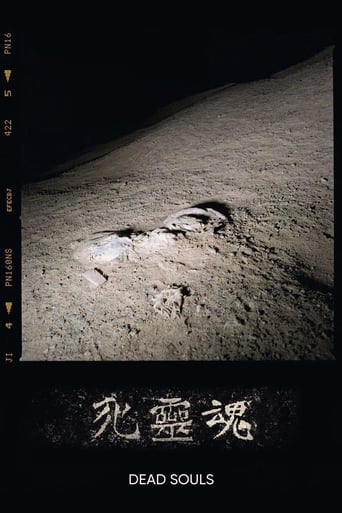
Dead Souls
2018-10-24 · 497 min · ★ 7.4
In Gansu Province, northwest China, lie the remains of countless prisoners abandoned in the Gobi Desert sixty years ago. Designated as ultra-rightists in the Communist Party’s Anti-Rightist campaign of 1957, they starved to death in the reeducation camps. The film invites us to meet the survivors of the camps to find out firsthand who these persons were, the hardships they were forced to endure and what became their destiny.
Trailers are previews, not full movies.
No authorized playback source configured. Use the legal watch options below.
Production details
- Directors
- Wang Bing
- Production companies
- Les Films d'Ici, IDFA Bertha Fund, Adok Films, ARTE France Cinéma
- Countries
- China
- Status
- Released
Top Cast
Cast unavailable.
Title information and images are supplied by TMDb. Explore our discovery guide for advice on comparing metadata and legal viewing options.
Where to watch
Availability provided by JustWatch via TMDb. Offers can change. Provider links are listed on TMDb; full playback requires a separately authorized source.
Seasons & episodes
Recommendations

A documentary about how a dominant cultural and demographic institution both sustains their traditional activities and adapts to the digital revolution.

A compilation of over 30 years of private home movie footage shot by Lithuanian-American avant-garde director Jonas Mekas, assembled by Mekas "purely by chance", without concern for chronological order.
A documentary about the making of David Fincher's 2008 film THE CURIOUS CASE OF BENJAMIN BUTTON. Virtually every element in the evolution of the Fincher's film is documented here, from the project's attachment to numerous other directors during the 1990s, to its shoot in 2006 and 2007 in New Orleans, to its complex, CGI-intensive postproduction process.

The definitive 3½-hour documentary about the troubled creation and enduring legacy of the science fiction classic 'Blade Runner', culled from 80 interviews and hours of never-before-seen outtakes and lost footage.

Taking inspiration from Peter M. Bracke's definitive book of the same name, this seven-hour documentary dives into the making of all twelve Friday the 13th films, with all-new interviews from the cast and the crew.
Live Aid was held on 13 July 1985, simultaneously in Wembley Stadium in London, England, and the John F. Kennedy Stadium in Philadelphia, United States. It was one of the largest scale satellite link-ups and television broadcasts of all time: watched live by an estimated global audience of 1.9 billion, across 150 nations. "It's twelve noon in London, seven AM in Philadelphia, and around the world it's time for Live Aid...!"
Thirty-four days before she's sent to prison, notorious Silicon Valley founder Elizabeth Holmes invites a skeptical film crew to document her every move. What begins as an intimate portrait of an enigmatic felon becomes a mind-bending three-year journey into the abyss.

Marcel Ophuls' riveting film details the heinous legacy of the Gestapo head dubbed "The Butcher of Lyon." Responsible for over 4,000 deaths in occupied France during World War II, Barbie would escape—with U.S. help—to South America in 1951, where he lived until a global manhunt led to his 1983 arrest and subsequent trial.
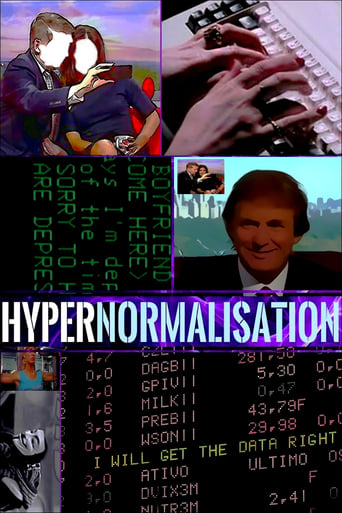
We live in a world where the powerful deceive us. We know they lie. They know we know they lie. They do not care. We say we care, but we do nothing, and nothing ever changes. It is normal. Welcome to the post-truth world. How we got to where we are now…
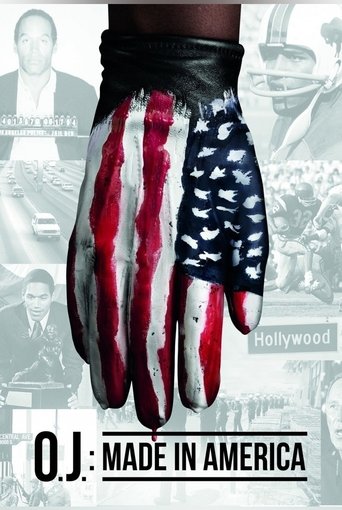
A chronicle of the rise and fall of O.J. Simpson, whose high-profile murder trial exposed the extent of American racial tensions, revealing a fractured and divided nation.
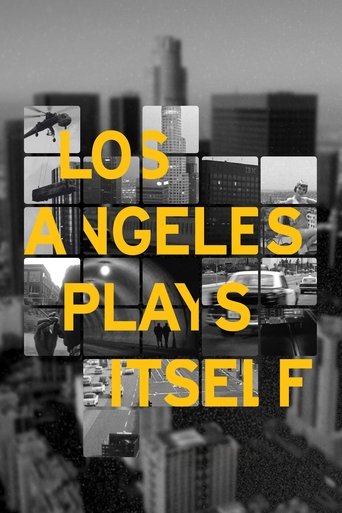
From its distinctive neighborhoods to its architectural homes, Los Angeles has been the backdrop to countless movies. In this dazzling work, Andersen takes viewers on a whirlwind tour through the metropolis' real and cinematic history, investigating the myriad stories and legends that have come to define it, and meticulously, judiciously revealing the real city that lives beneath.
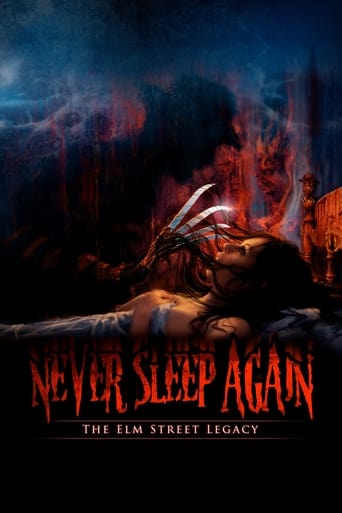
For decades, Freddy Krueger has slashed his way through the dreams of countless youngsters, scaring up over half a billion dollars at the box office across eight terrifying, spectacular films.
An intense portrait of the iconic filmmaker, writer, actor, comedian and musician Woody Allen: his life, family and friends; his writing and directing habits, and his relationship with performers.
Oliver Stone charts the history of the United States from the Second World War to the present.
An intimate look at the Woodstock Music & Art Festival held in Bethel, NY in 1969, from preparation through cleanup, with historic access to insiders, blistering concert footage, and portraits of the concertgoers; negative and positive aspects are shown, from drug use by performers to naked fans sliding in the mud, from the collapse of the fences by the unexpected hordes to the surreal arrival of National Guard helicopters with food and medical assistance for the impromptu city of 500,000.
A chronicle of Bob Dylan's strange evolution between 1961 and 1966 from folk singer to protest singer to "voice of a generation" to rock star.
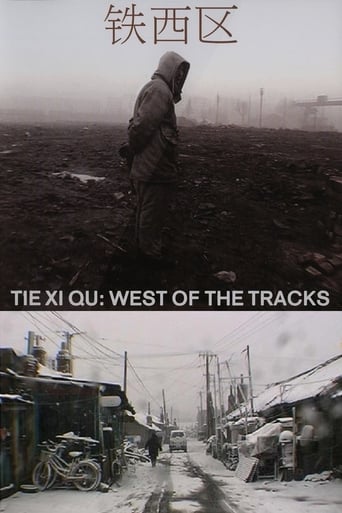
A detailed look at the gradual decline of Shenyang’s industrial Tiexi district, an area that was once a vibrant example of China’s socialist economy. But industry is changing, and the factories of Tiexi are closing. Director Wang Bing introduces us to some of the workers affected by the closures, and to their families.
A film about the noted American linguist/political dissident and his warning about corporate media's role in modern propaganda.
A live concert in tribute to Freddie Mercury, former lead singer of Queen. Mercury died of AIDS and so some of the proceeds of this concert went to AIDS research. Features performers such as Metallica, Def Leppard, Elton John, Axl Rose, Extreme, George Michael, and many others. Performers alternate between doing their own hits, covering Queen songs, or jamming with the surviving members of Queen.
Every school day, African-American teenagers William Gates and Arthur Agee travel 90 minutes each way from inner-city Chicago to St. Joseph High School in Westchester, Illinois, a predominately white suburban school well-known for the excellence of its basketball program. Gates and Agee dream of NBA stardom, and with the support of their close-knit families, they battle the social and physical obstacles that stand in their way. This acclaimed documentary was shot over the course of five years.
Similar titles
Life begins with a dream. When it is fulfilled, there is some hope in the end. In between there is seldom anything more important than love. This is a documentary about the German-Chinese photographer and filmmaker Eva Siao (*1911) who grew up in a Jewish family in Wroclaw and later married the Chinese revolutionary poet Emi Siao. Her life story reflects the moving history of the 20th century. Her work gives an undisguised, direct impression of China before and during the Cultural Revolution.

Born underground, on the heels of the Civil Rights Movement and the Stonewall Riots, disco’s nascent popularity saw the spectacular takeover of the dancefloor, the airwaves and burgeoning fashion trends that reflected the joy and freedom inherent to the genre. Co-opted and exploited through references like John Travolta’s strut and shiny Swedish tracksuits, disco eventually reaches the mainstream, losing its original flair and purpose rooted in radical politics and social change.
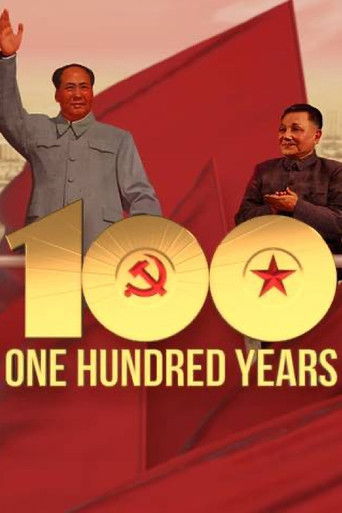
As the Communist Party of China celebrates its 100th anniversary, this documentary looks back at the party’s history, from the 1920’s, to the Civil War, the Great Leap Forward, the Great Famine, the Cultural Revolution and the reforms by Mao Zedong and Deng Xiaoping. Did the Great Famine cost more than 15 million lives? How does the Cultural Revolution continue to shape Chinese politics today? What was capitalism like after Mao’s death? Through rare and never-before-seen historical footage, expert interviews and eyewitness accounts of the Great Famine, Tiananmen incident, and the Cultural Revolution, get to know how one party has so profoundly shaped China.
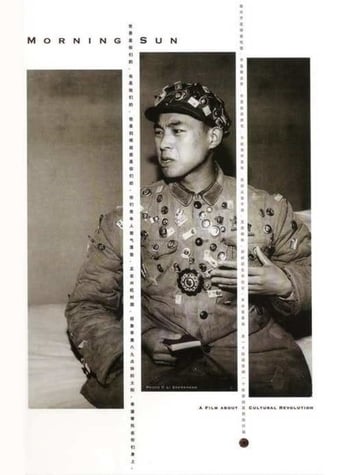
The film Morning Sun attempts in the space of a two-hour documentary film to create an inner history of the Great Proletarian Cultural Revolution (c.1964-1976). It provides a multi-perspective view of a tumultuous period as seen through the eyes—and reflected in the hearts and minds—of members of the high-school generation that was born around the time of the founding of the People’s Republic of China in 1949, and that came of age in the 1960s. Others join them in creating in the film’s conversation about the period and the psycho-emotional topography of high-Maoist China, as well as the enduring legacy of that period.
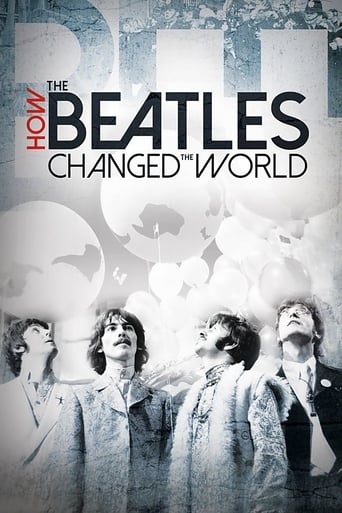
The fascinating story of the cultural, social, spiritual, and musical revolution ignited by the coming of the Beatles. Tracing the impact that these four band members had, first in their native Britain and soon after worldwide, it reappraises the band and follows their path from young subversives to countercultural heroes. Featuring fresh, revealing interviews with key collaborators as well as a wealth of rarely-seen archival footage, this is a bold new take on the most significant band in the history of music and their enduring impact on popular culture.
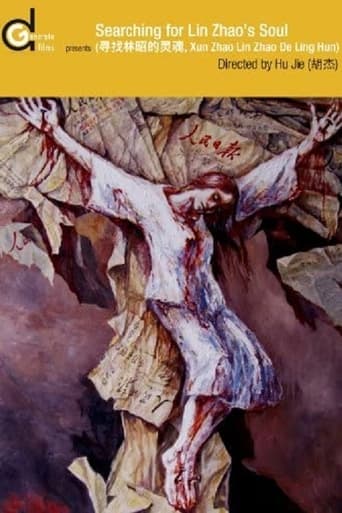
This landmark documentary reveals the tragic life of a gifted young woman who was executed for speaking out during the height of Chairman Mao’s rule.


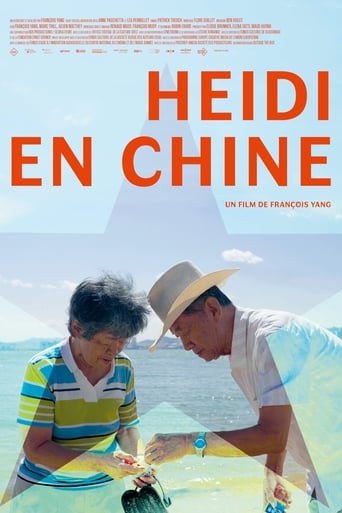
In 1946, Heidi is entrusted to a Swiss family by her father. He will never come back for her. Today, François Yang questions his mother about her past. What follows is a journey to China, a quest to reconstruct memory. Through contact with her brothers and sister, Heidi measures the extent of the drama experienced by her family that remained in China, persecuted by the Communist Party.
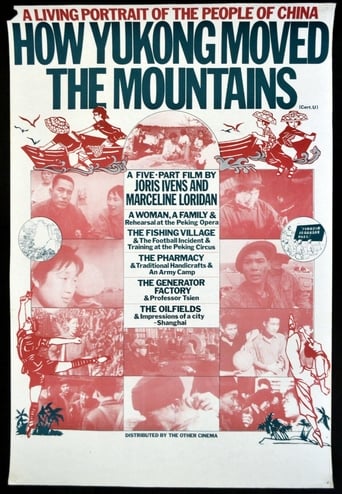
From 1972 until 1974, Joris Ivens and Marceline Loridan, along with a Chinese film crew, documented the last days of the Cultural Revolution, marking the end of an era. The vast amount of footage they shot was edited into 14 films of varying lengths. Focusing on ordinary people spread over a wide geographic area—many of whom were living and working in collectives—the filmmakers recorded a unique moment in history, and also captured some of the more enduring aspects of Chinese culture.

The Journey of a young man who is making a documentary about forgotten narratives around an old piano, takes him through an unknown path towards restoring history, culture and identity of his homeland, Iran, in dusty and abandoned objects.

Chinese-Australian artist Jiawei Shen's plans to create an epic work depicting his homeland's tumultuous recent history.

In April 2013, a lecturer at the University of New Hampshire submitted a paper to the Annals of Mathematics. Within weeks word spread: a little-known mathematician, with no permanent job, working in complete isolation, had made an important breakthrough toward solving the Twin Prime Conjecture. Yitang Zhang's techniques for bounding the gaps between primes soon led to rapid progress by the Polymath Group, and a further innovation by James Maynard.
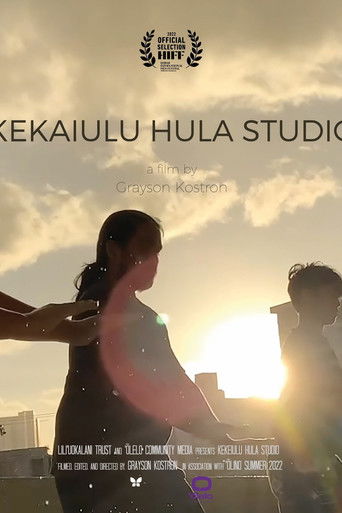
Kekaiulu Hula Studio follows the Proclaimed Hula Halau of the same name, showcasing their twist on what the real reason for hula is and what life as a dancer in the halau is really like. Something previously unseen in the public eye.
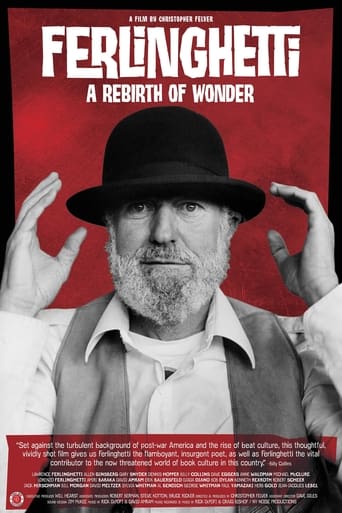
The poet and painter, Lawrence Ferlinghetti, is among the world's living monuments to arts and letters. For well over a half century, Ferlinghetti helped shape the currents of poetry and literature with his forceful engagement with society and an ideological position that often found him at odds with the political currents of his day. Ferlinghetti's quiet, behind the scenes demeanor and disarming mien may have assuaged, or even fooled, certain opponents, while in reality he was a literary mercenary, a rebel at the forefront of our own cultural revolution.
Three faded photographs lead the filmmaker Tian Macleod Ji and his great uncle to China’s countryside, on a journey to explore both the tender bonds and the painful memories of the nation’s Maoist past.

This documentary film recounts Dr. Sun Lizhe's remarkable experience as a barefoot doctor in rural China and offers a glimpse of China's healthcare condition during and shortly after the Cultural Revolution (1966-1976). Described as "Chinese Dr. Zhivago" in the film, Sun's distinguished life began from his decision to become a "barefoot doctor" when he was an 18-year-old educated youth from Beijing sent down to the countryside. He had since saved numerous lives by performing difficult surgery when emergency situations arose. For example, he once manually removed a placenta from a peasant women's uterus during her placental dystocia. In villages where medical resources were extremely limited, Sun devoted himself to the healthcare of peasants, performing more than 3000 operations in the cave dwellings of Shaanxi province. In 1974 he was selected by Chairman Mao as one of China's five model "educated youths."
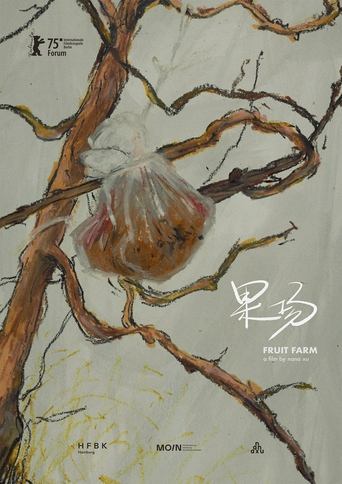
Nana Xu travels to the place built by her father as a prisoner during the Cultural Revolution: first a work camp, later a prison, fruit farm and treatment centre. Conversations with last remaining witnesses, where home is still shaped by a repressed past.

The history of the irreverent "The Smothers Brothers Comedy Hour" and the content battles it fought with its television network.