
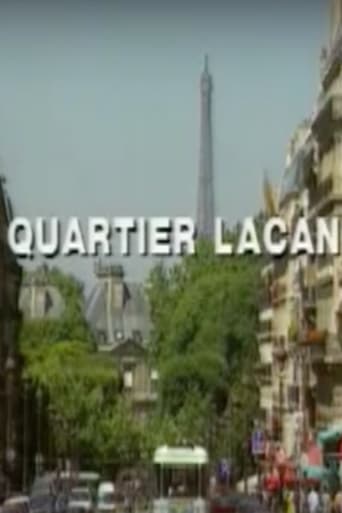
Quartier Lacan
2001-11-28 · 118 min · ★ 8.0
A documentary about Jacques Lacan and his influence on the main tendencies of modern psychoanalysis. It begins with a series of interviews with psychoanalysts who knew Lacan, and then presents an overview of Lacanian theory and practice that explores what actually happens in psychoanalysis.
Trailers are previews, not full movies.
No authorized playback source configured. Use the legal watch options below.
Production details
- Directors
- Emil Weiss
- Production companies
- Centre Georges Pompidou, Michkan World Productions
- Countries
- France
- Status
- Released
Top Cast
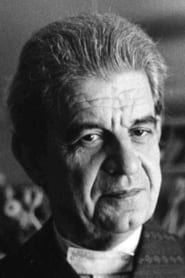 Jacques LacanSelf (archive footage)
Title information and images are supplied by TMDb. Explore our discovery guide for advice on comparing metadata and legal viewing options.
Where to watch
Availability provided by JustWatch via TMDb. Offers can change. Provider links are listed on TMDb; full playback requires a separately authorized source.
Availability not listed for this country.
Seasons & episodes
Recommendations

In an intimate and joyful story of love in the face of loss, celebrated poets Andrea Gibson and Megan Falley find strength—and unexpected hilarity—in what might be their final year together.

Through deeply personal interviews with her siblings and an examination of the photographs, letters, and belongings left behind, Mariska assembles a new portrait of her mother Jayne Mansfield, an extraordinary and complex woman.

The life and career of an actor, artist, and icon. His own journey through his own camera.

Director Michael Apted revisits the same group of British-born adults after a 7 year wait. The subjects are interviewed as to the changes that have occurred in their lives during the last seven years.

A compilation of over 30 years of private home movie footage shot by Lithuanian-American avant-garde director Jonas Mekas, assembled by Mekas "purely by chance", without concern for chronological order.

Director Michael Apted revisits the same group of British-born adults after a 7 year wait. The subjects are interviewed as to the changes that have occurred in their lives during the last seven years.

A documentary about the life and films of director John Ford.

A documentary about how a dominant cultural and demographic institution both sustains their traditional activities and adapts to the digital revolution.
The film is based on interviews with 2,000 women from 50 countries, and covers the status of women all over the world. The topics covered include forced marriages, sexual assault, female genital mutilation, acid attacks, motherhood, sexuality, menstruation, education and the professional success of women.

From the heights of her modeling fame to her tragic death, this documentary reveals Anna Nicole Smith through the eyes of the people closest to her.
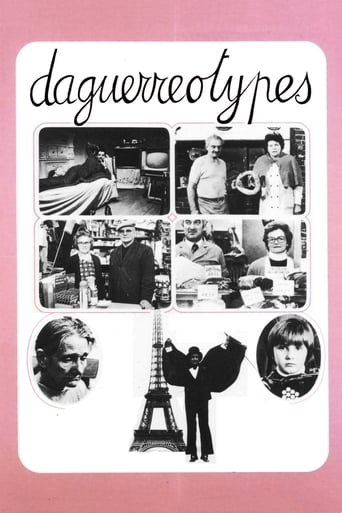
An intimate portrait of the small shops and shopkeepers of the Rue Daguerre in Paris, a picturesque street that has been the filmmaker’s home for more than 50 years.

Al Pacino's deeply-felt rumination on Shakespeare's significance and relevance to the modern world through interviews and an in-depth analysis of "Richard III."
Director Jean-Luc Godard reflects in this movie about his place in film history, the interaction of film industry and film as art, as well as the act of creating art.
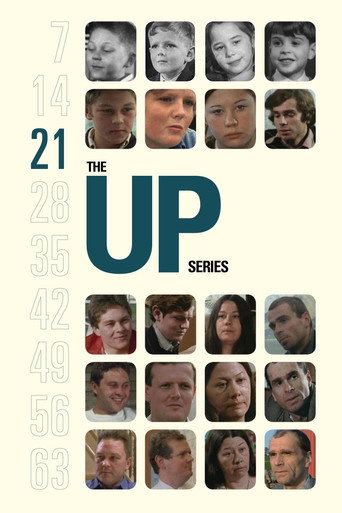
After another 7 year wait, director Michael Apted revisits the same group of British-born children from Seven Up! and 7 Plus Seven. The subjects are interviewed as to the changes that have occurred in their lives during the last seven years.

Alexander McQueen's rags-to-riches story is a modern-day fairy tale, laced with the gothic. Mirroring the savage beauty, boldness and vivacity of his design, this documentary is an intimate revelation of McQueen's own world, both tortured and inspired, which celebrates a radical and mesmerizing genius of profound influence.
A comedic, brutally honest documentary following self-destructive TV writer Dan Harmon as he takes his live podcast on a national tour.
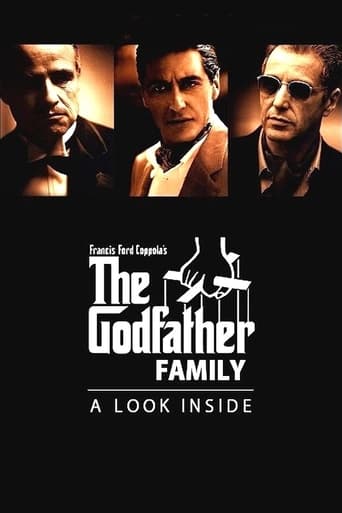
A documentary on the making of the three Godfather films, with interviews and recollections from the film makers and cast. This feature also includes the original screen tests of some of the actors for "The Godfather" film, and some candid moments on the set of "The Godfather: Part III."

A documentary about the making of season five of the acclaimed AMC series Breaking Bad.

This revealing documentary honors the legendary Sidney Poitier—iconic actor, filmmaker, and civil rights activist. Featuring interviews with Denzel Washington, Spike Lee, Halle Berry, and more.
Artists in LA discover the work of forgotten Polish sculptor Stanislav Szukalski, a mad genius whose true story unfolds chapter by astounding chapter.
Similar titles
In "psychanalyse", a two part documentary, the psychoanalyst Jacques Lacan answers to questions submitted by his son-in-law Jacques-Alain Miller under the direction of Benoit Jacquot. The Office de Radiodiffusion Television Francaise (ORTF, the french public TV) broadcast this program. This documentary and its text became famous because this is the only televisual experience practiced by Lacan. A fair amount is made of the fact that Lacan was renowned for his powers of seduction and what effect this had on transference in the clinical setting. According to some of the interviewees, he could be irresistibly seductive, so much so that some thought him "monster".
Acclaimed author Gary Lachman looks at renowned psychoanalyst C.G. Jung's work from an esoteric viewpoint, drawing parallells to the disciplines of mysticism and occultism.
A documentary about the legendary Japanese filmmaker.
This compelling film represents a rare record of an original genius. In Jung on Film, the pioneering psychologist tells us about his collaboration with Sigmund Freud, about the insights he gained from listening to his patients' dreams, and about the fascinating turns his own life has taken. Dr. Richard I. Evans, a Presidential Medal of Freedom nominee, interviews Jung, giving us a unique understanding of Jung's many complex theories, while depicting Jung as a sensitive and highly personable human being.
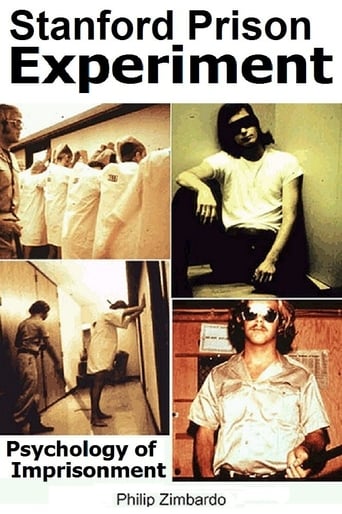
The Stanford prison experiment was a landmark psychological study of the human response to captivity, in particular, to the real world circumstances of prison life, and the effects of imposed social roles on behaviour. It was conducted in 1971 by a team of researchers led by Philip Zimbardo of Stanford University.

Carl Gustav Jung interviewed on the subject of 'Sigmund Freud': how Jung met him, how he was influenced by him and where he disagreed with him. Jung talks about word association, Freudian slips, the unconscious, the Oedipus complex, the ego, archetypes, falling in love and more.
A film about the noted American linguist/political dissident and his warning about corporate media's role in modern propaganda.
Psychoanalysis in El Barrio shows the experience of Latino psychoanalysts in the United States bringing psychoanalysis to Latino communities. It features interviews with ten Latino analysts (whose heritage is from a variety of Latino cultures) as well as students. It uniquely shows some of those communities in Philadelphia, New York City, and Texas and Interviews Latinos in the street on their thoughts about therapy. And it discusses issues of culture, bias, language and transference that occur for Latino analysts and their patients. The video challenges psychoanalysts to understand the culture and economic circumstances of Latinos in the United States and to bring psychoanalytically informed therapy to them. It Is a consequence of conferences held by the Institute for Psychoanalytic Training and Research (IPTAR) and the Clinical Psychology Department of The New School.

Made for Italian national television, Ellis Donda’s Il Corpo Rubato (The Stolen Body) is an experimental documentary on psychoanalisis in 70s/80s Italy, its analytical practices and forms of suggestion.
BLIND TRUST celebrates the life and work of Nobel Peace Prize nominee Vamik Volkanis, a psychiatrist and psychoanalyst who has spent a lifetime bringing enemy groups together for dialogue in traumatized regions of the globe. The film recounts Volkan's journey in unofficial diplomacy working in the Middle East, Estonia, the former Yugoslavia and the Republic of Georgia. The story dramatizes the new vocabulary he created for understanding large group psychology.
Epigenetics and psychogenealogy through a VERY personal experience.
A hilarious introduction, using as examples some of the best films ever made, to some of Slovenian philosopher and psychoanalyst Slavoj Žižek's most exciting ideas on personal subjectivity, fantasy and reality, desire and sexuality.
A film by Spetsnaz, narrated through a first person perspective, documenting his journey and the journeys of countless other men. "A Documentary Told in Four Chapters. Featuring many favorite content creators & some of the videos that impacted me the most in my journey. This Feature does not take a historical approach but is rather an expression of my experience discovering men going their own way content & the impact it had on my development. It is told from a personal individual perspective. I wanted to make this video to have closure on that chapter in my life & to leave a record of what was & what continues to evolve. The insights & shared experiences of men are more important now than ever. They certainly helped me."
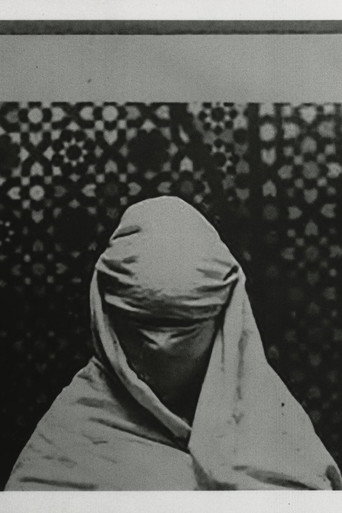
A visual and psychological investigation of the French psychiatrist and photographer Gaëtan Gatian de Clérambault (1872–1934), who took thousands of images in Morocco of veiled Islamic women, and sometimes men, through which he sought to explore his psychoanalytic ideas about covering and fantasy. Through a digital re-imagining of his death — a suicide in front of a mirror —, followed by assessments of clinicians and academics, The Fold explores de Clérambault’s significance as a historical figure while also looking more broadly at the way we understand images. The interviews are filmed within a setting inspired by the house of mirrors in Orson Welles’s The Lady from Shanghai (1947) and draw on the aesthetic of film noir, a style of cinema that commonly features a crime-centred narrative and morally ambiguous male protagonists.
Crownsville Hospital: From Lunacy to Legacy is a feature-length documentary film highlighting the history of the Crownsville State Mental Hospital in Crownsville, MD.

In 1950 Jerome Hill went to Zurich with the intention of making a film about Dr. Carl G. Jung. The project was abandoned when Hill decided that Jung was not a good subject. After Hill's death, Jonas Mekas edited the film which focuses on Dr. Jung as a person.
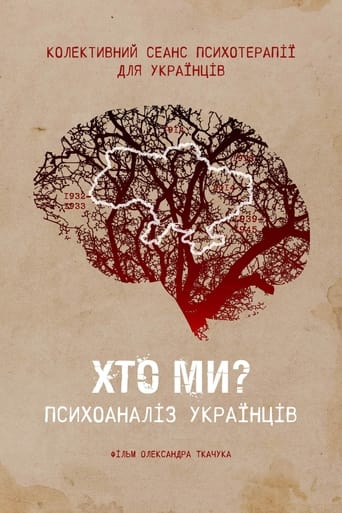
A film about the collective psychological traumas of Ukrainians.
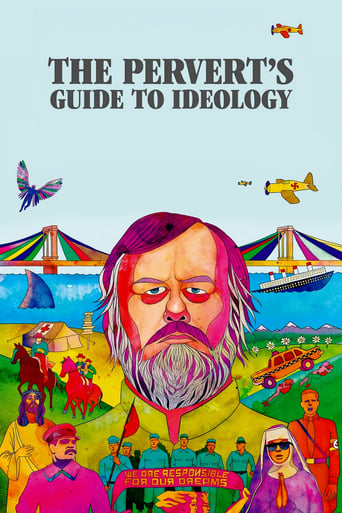
A journey into the labyrinthine heart of ideology, which shapes and justifies both collective and personal beliefs and practices: with an infectious zeal and voracious appetite for popular culture, Slovenian philosopher and psychoanalyst Slavoj Žižek analyzes several of the most important films in the history of cinema to explain how cinematic narrative helps to reinforce prevailing ethics and political ideas.
An hour long interview with Slovenian philosopher Slavoj Žižek made by Russia Today for his 70th birthday. In this documentary Žižek answers questions from the public in regards to politics and ideology, gender and sex, philosophy and psychoanalysis, hardcore pornography and sexual liberation in the West, in his usual style of polemics and comedy.
The film consists mainly of interviews with readers of Freud in Brazil and several places in Europe, and touches on topics such as history, translation, culture, language and, especially, Freud himself.