
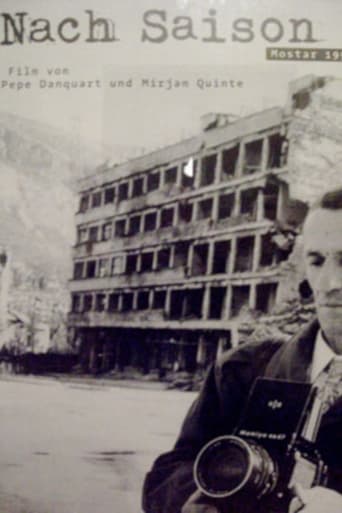
Off Season
1997-02-16 · 125 min · ★ 8.0
Summer 1994, Mostar, Bosnia and Herzegovina. Two civil wars in only three years has torn the city apart and destroyed it. The town is split into a Croatian majority in the west and a Muslim majority locked in the east. An invisible wall divides the two areas. The EU appoints German social democrat Hans Koschnick as municipal administrator of the town in the hope of rekindling a sense of community there.
Trailers are previews, not full movies.
No authorized playback source configured. Use the legal watch options below.
Production details
- Directors
- Pepe Danquart, Mirjam Quinte
- Production companies
- ARTE, Quinte Film GmbH, Blueberry Films, Goethe-Institut
- Countries
- Bosnia and Herzegovina, Germany
- Status
- Released
Top Cast
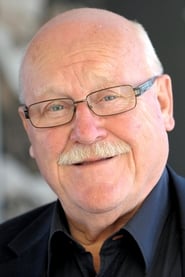 Hans TeuscherNarrator
Title information and images are supplied by TMDb. Explore our discovery guide for advice on comparing metadata and legal viewing options.
Where to watch
Availability provided by JustWatch via TMDb. Offers can change. Provider links are listed on TMDb; full playback requires a separately authorized source.
Availability not listed for this country.
Seasons & episodes
Recommendations

Director Michael Apted revisits the same group of British-born adults after a 7 year wait. The subjects are interviewed as to the changes that have occurred in their lives during the last seven years.

Through deeply personal interviews with her siblings and an examination of the photographs, letters, and belongings left behind, Mariska assembles a new portrait of her mother Jayne Mansfield, an extraordinary and complex woman.

Amid the failing counteroffensive, a journalist follows a Ukrainian platoon on their mission to traverse one mile of heavily fortified forest and liberate a strategic village from Russian occupation. But the farther they advance through their destroyed homeland, the more they realize that this war may never end.

A string of threatening emails escalates into a revenge plot involving a newly married US marshal and his ex-girlfriend.

A documentary about how a dominant cultural and demographic institution both sustains their traditional activities and adapts to the digital revolution.

Al Pacino's deeply-felt rumination on Shakespeare's significance and relevance to the modern world through interviews and an in-depth analysis of "Richard III."
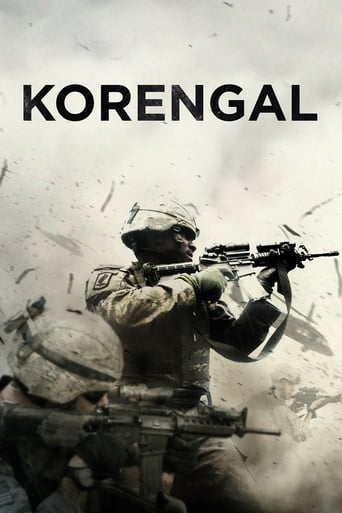
Korengal picks up where Restrepo left off; the same men, the same valley, the same commanders, but a very different look at the experience of war.

In an intimate and joyful story of love in the face of loss, celebrated poets Andrea Gibson and Megan Falley find strength—and unexpected hilarity—in what might be their final year together.
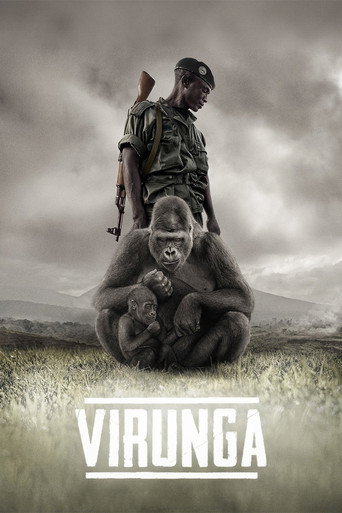
Virunga in the Democratic Republic of the Congo is Africa's oldest national park, a UNESCO world heritage site, and a contested ground among insurgencies seeking to topple the government that see untold profits in the land. Among this ongoing power struggle, Virunga also happens to be the last natural habitat for the critically endangered mountain gorilla. The only thing standing in the way of the forces closing in around the gorillas: a handful of passionate park rangers and journalists fighting to secure the park's borders and expose the corruption of its enemies. Filled with shocking footage, and anchored by the surprisingly deep and gentle characters of the gorillas themselves, Virunga is a galvanizing call to action around an ongoing political and environmental crisis in the Congo.

A documentary about the making of season five of the acclaimed AMC series Breaking Bad.

Director Michael Apted revisits the same group of British-born adults after a 7 year wait. The subjects are interviewed as to the changes that have occurred in their lives during the last seven years.

A 1993 documentary film about Bruce Lee. The film includes interviews from some of his fellow students and opponents who worked alongside him in his movies.
Go behind the scenes with stars, puppeteers and creators as they bring Jim Henson's magical world of Thra back to life in a sweeping fantasy series.

Ranjit, a farmer in India, takes on the fight of his life when he demands justice for his 13-year-old daughter, the victim of a brutal gang rape. His decision to support his daughter is virtually unheard of, and his journey unprecedented.

A love letter from a young mother to her daughter, the film tells the story of Waad al-Kateab’s life through five years of the uprising in Aleppo, Syria as she falls in love, gets married and gives birth to Sama, all while cataclysmic conflict rises around her. Her camera captures incredible stories of loss, laughter and survival as Waad wrestles with an impossible choice– whether or not to flee the city to protect her daughter’s life, when leaving means abandoning the struggle for freedom for which she has already sacrificed so much.

Prelude to War was the first film of Frank Capra's Why We Fight propaganda film series, commissioned by the Pentagon and George C. Marshall. It was made to convince American troops of the necessity of combating the Axis Powers during World War II. This film examines the differences between democratic and fascist states.
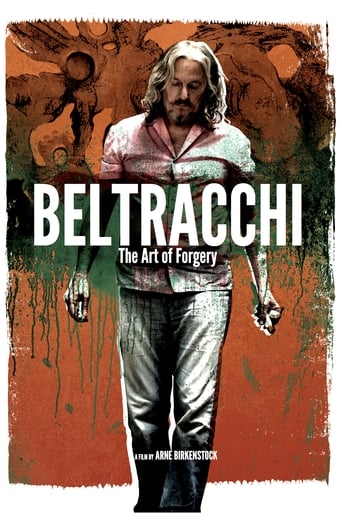
Wolfgang Beltracchi got away with forging art masterpieces for over 40 years. He may be egotistical and nihilistic, but his genius in undeniable. He managed to fool gallery owners, historians and investors with the stroke of a brush. This documentary follows his last days as a free man.

Over 35 years after Bob Lazar's revelations, this documentary exposes secrets of a facility the government still denies. Featuring Lazar's testimony, recreations, and new evidence, it reopens a case that continues to spark global curiosity

Daniel Craig candidly reflects on his 15 year adventure as James Bond. Including never-before-seen archival footage from Casino Royale to the upcoming 25th film No Time To Die, Craig shares his personal memories in conversation with 007 producers, Michael G Wilson and Barbara Broccoli.
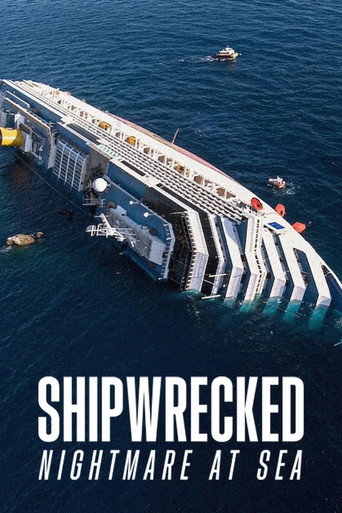
Never-before-seen footage and survivor accounts trace the 2012 shipwreck of a luxury cruise and the disaster that ensued, in this immersive documentary.
Similar titles
A collection of material shot before and during WW2 in the director’s hometown of Banja Luka, where its quiet life was disrupted by the enemy.
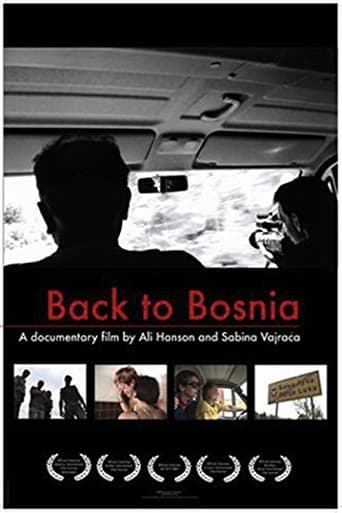
Filmmaker Sabina Vajraca documents her Bosnian Muslim family's return to their home of Banja Luka, Bosnia, to recover their stolen belongings many years after being forced to flee to the United States. In Bosnia, they witness the devastation of the city, visit war crimes sites, and confront the family that has been living in their former apartment -- with all their furnishings -- for a decade.
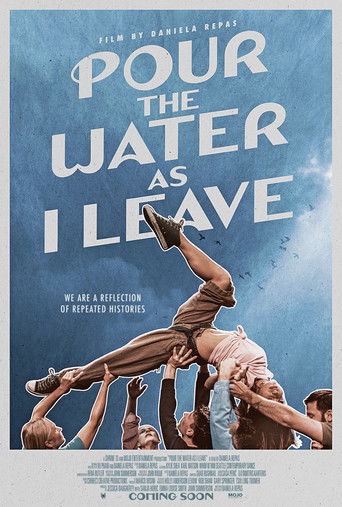
A surreal exploration of the war in Bosnia told through the unbreakable spirit of seven of her people whose strength to leave was as powerful as the fight to stay. Through the lens of diaspora, the film captures not just the weight of displacement, but the defiant act of survival and the unwavering pursuit of home, no matter where the journey leads.
A young boy plays an accordion in a shopping mall. Béla Tarr picks up the camera one more time to shoot his very last scene. It is his anger about how refugees are treated in Europe, and especially in Hungary, that drove him to make a statement.
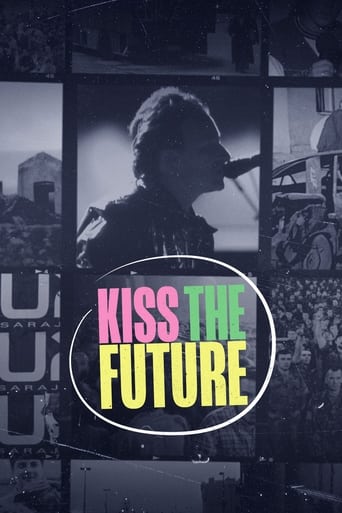
An exploration of the perils of nationalism and art’s role as a weapon of resistance and activism throughout the 1990s Siege of Sarajevo during the Bosnian War. Explore how art and music sustained hope, thanks in part to humanitarians and the band U2.
Documentary about the massacre of Bosniak army committed over soldiers of Republika Srpska during 1990s Bosnian wars.
The docu-drama takes place during the war in the former Yugoslavia. A young journalist arrives in destroyed Sarajevo and finds out how people live in the middle of war. He encounters everyday problems that an individual, especially young people, has to deal with.
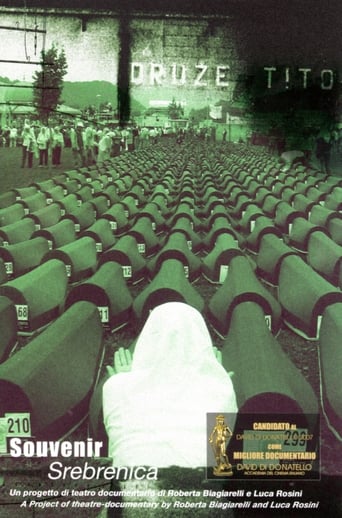
In July 1995, Srebrenica falls into the hands of Bosnian Serb forces led by General Ratko Mladić. Within a few days, thousands of Bosniak men and boys are separated from their families, killed, and buried in mass graves. Through Roberta Biagiarelli’s theatrical monologue, survivors’ testimonies, archival footage, and documents from the International Criminal Tribunal for the former Yugoslavia, the film reconstructs the story of the siege and the Srebrenica genocide. Shot in 2005 at the sites of the massacre, including the battery factory in Potočari, the film brings together memory, testimony, and historical documentation.
The carnage in Sarajevo provides the focus of this French documentary which seeks to call attention to the terrible conflict in the hopes of finally ending it. The film is divided into five parts. Each part covers a time frame ranging from April 4, 1992, the beginning of the war, to the present. The major issues that occur are three-fold. It depicts the systematic genocide of Bosnians, the silence of Western countries, and the determination of the Bosnians to resist. They refuse to be seen as victims, even though the filmmakers portray them so. Also included are the origins and political aspects of the war. It offers interviews with participants. It also reveals how the U.S. State Department censored reports about Serbian death camps.
The extraordinary story of Sanja and Zoran, a couple who in 1993 fled and survived the siege of Sarajevo, the longest war in 20th century history, to find refuge in Italy, in Turin. In their life experience, past and present come together to give voice to friendship and hope, reflecting on war, prejudice, tolerance and acceptance.
I went to Bosnia after war ended, in 1996, when the Danton Peace Accord was being implemented. Bosnia had been divided in two entities, which separated the two main opposing forces of the conflict; the Serb Bosnians and the Muslim Bosnians. Two years later, in 1998, I returned to Bosnia... This movie is a diary of the two voyages, in which I deal with the memories of the war, the death and destruction and with the victim’s struggle who don’t know how to return home.
Jabir, Usama and Uzeir are three young brothers in a Sunni family of shepherds. Since childhood, their father Ibrahim has rigidly trained them in the principles of the Quran and has filled their minds with stories of the Bosnian War.
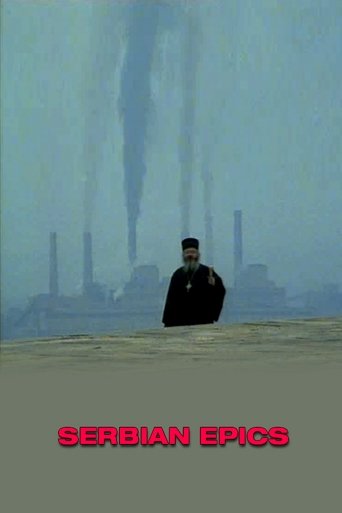
Paul Pawlikowski's award-winning documentary on life behind Serbian lines in Bosnia. The film observes the roots of the extreme nationalism which has torn apart a country and provides a chilling examination of the dangerous power of ancient nationalist myths.
A hotel in the centre of town is a war-time home and refuge for many of Sarajevo's homeless people. Every morning they leave the hotel and wander around the destroyed city gathering again at the defunct hotel in the afternoon. This film follows their separate fates through the bitter comparing of images of the bums with those of dogs abandoned by their owners and now left et the mercy of the war ravaged streets of Sarajevo.
A small bar in Sarajevo is a safe space for queer people.
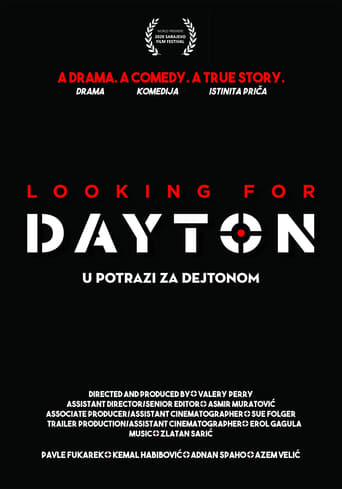
This film follows 3 friends who were in Sarajevo during the war as they go to the US for the 20th anniversary of the Dayton Agreement, where they ask questions and consider the impact of the agreement 25 years later, having fun on the way.
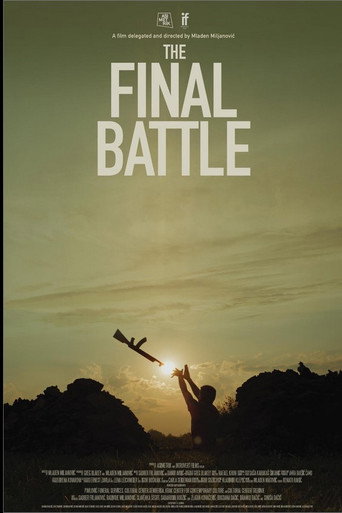
This film documents four delegated performances/castings, featuring participants who are both directly and indirectly actors of war: veterans, civilian victims, disabled individuals, or those traumatised by conflict. Applicants that have been seduced to participate in four castings of imaginary movie altogether agreeing to be part not only of an experimental film, but also of a subversive cinematic social experiment. They signed up for battle in the movie, and got an unexpectedly brutal lesson about conflict. They certainly, but so do we who watch it.
The compelling stories of four young people as they struggle to survive a war that ended nearly 20 years ago. The physical conflict is over - but its psychological impact continues. Can they break the cycle of violence?
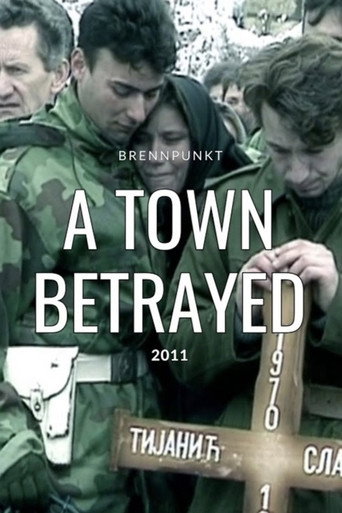
SARAJEVO RICOCHET - A TOWN BETRAYED This documentary exposes the callous betrayal of the massacred men of Srebrenica - how they were sacrificed by their own government for a political objective. The widows, mothers and sisters of the men and boys who died near Srebrenica will never let the world forget the events of July 1995. The Serbs pulled the trigger, but the reasons for their brutal action has not been investigated. Now Bosnian Muslims themselves expose what really happened before, during and after what is been called `the European genocide of our time`. The Bosnian Muslim government was negotiating with the Serbs to exchange territory - Srebrenica for the suburbs of Sarajevo.