143 Sahara Street
2021-06-16 · 90 min · ★ 7.0
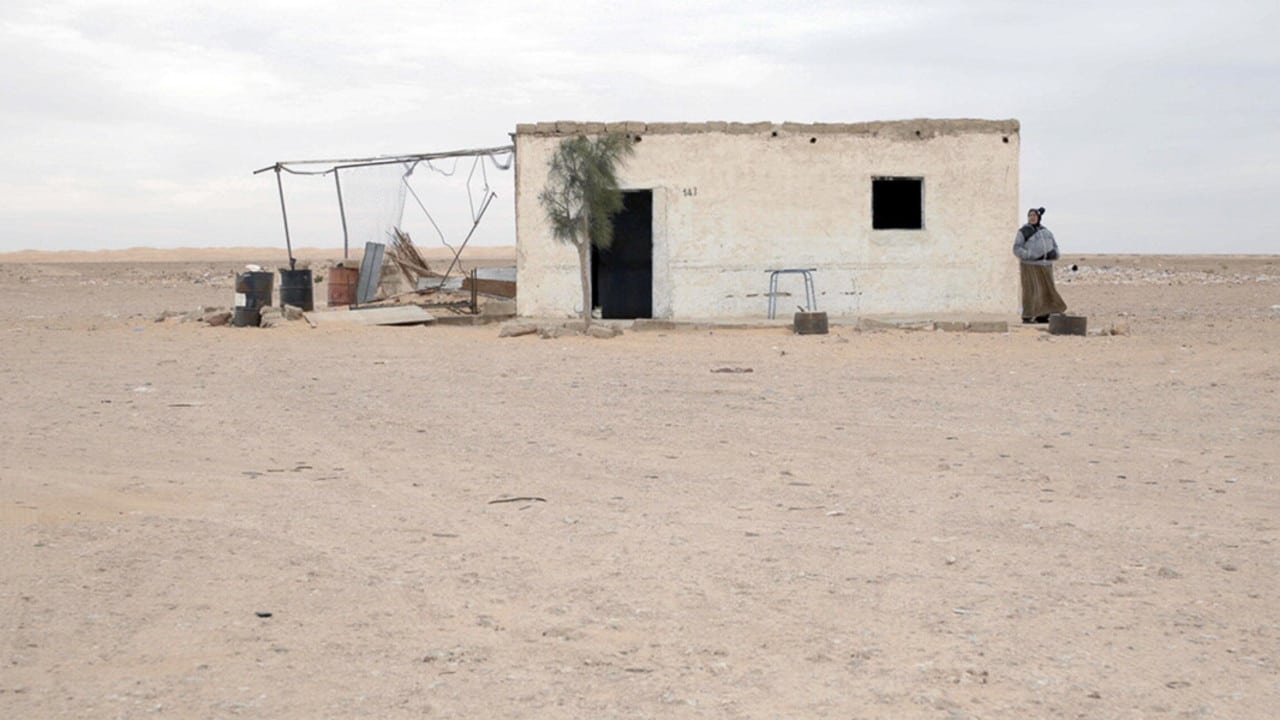
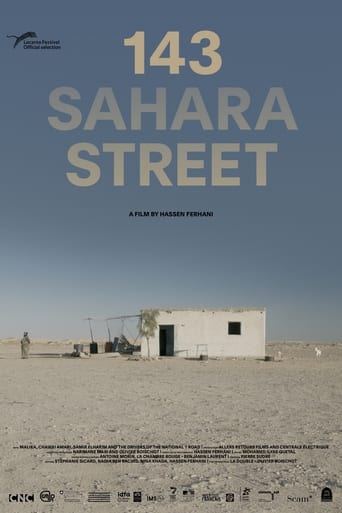
Alone in a small white house on the edge of national road 1, the Trans-Saharan road, which connects Algiers to Tamanrasset crossing the immensity of the desert, Malika, 74, one day opened her door to the director Hassen Ferhani, who came there to scout with his friend Chawki Amari, journalist at El Watan and author of the story Nationale 1 which relates his journey on this north-south axis of more than 2000 km. The Malika of Amari's novel, which Ferhani admits to having first perceived as a "literary fantasy", suddenly takes on an unsuspected human depth in this environment naturally hostile to man. She lends herself to the film project as she welcomes her clients, with an economy of gestures and words, an impression reinforced by the mystery that surrounds her and the rare elements of her biography which suggest that she is not from the region, that she left the fertile north of Algeria to settle in the desert where she lives with a dog and a cat.
Trailers are previews, not full movies.
No authorized playback source configured. Use the legal watch options below.
Production details
- Directors
- Hassen Ferhani
- Production companies
- Allers Retours Films, Centrale Électrique
- Countries
- Algeria, France, Qatar
- Status
- Released
Top Cast
 MalikaSelf
 Chawki AmariSelf
 Samir ElhakimSelf
Title information and images are supplied by TMDb. Explore our discovery guide for advice on comparing metadata and legal viewing options.
Where to watch
Availability provided by JustWatch via TMDb. Offers can change. Provider links are listed on TMDb; full playback requires a separately authorized source.
Availability not listed for this country.
Seasons & episodes
Recommendations

From the heights of her modeling fame to her tragic death, this documentary reveals Anna Nicole Smith through the eyes of the people closest to her.
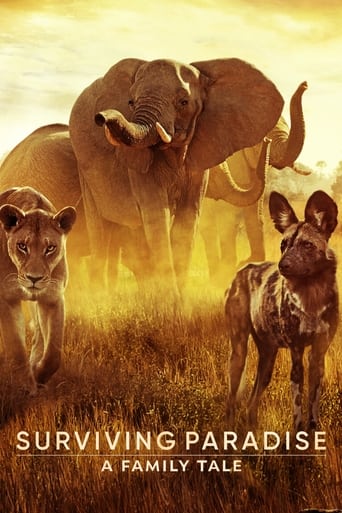
In this wildlife drama, a worsening dry season in the Kalahari Desert leaves prides, packs and herds to rely on the power of family to survive.
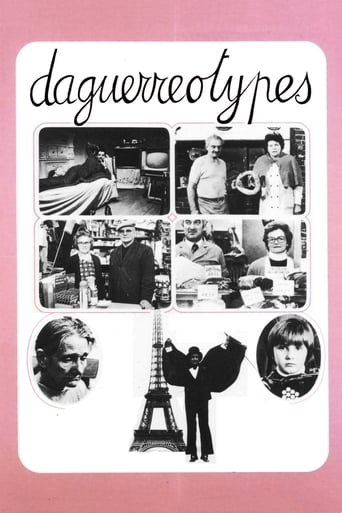
An intimate portrait of the small shops and shopkeepers of the Rue Daguerre in Paris, a picturesque street that has been the filmmaker’s home for more than 50 years.
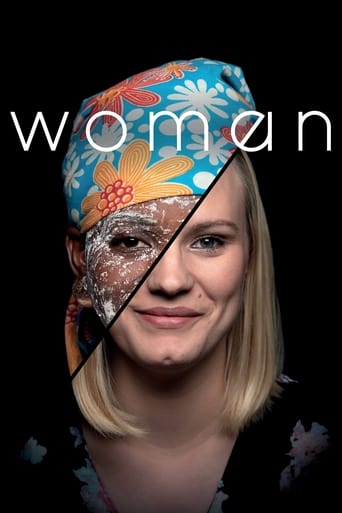
The film is based on interviews with 2,000 women from 50 countries, and covers the status of women all over the world. The topics covered include forced marriages, sexual assault, female genital mutilation, acid attacks, motherhood, sexuality, menstruation, education and the professional success of women.
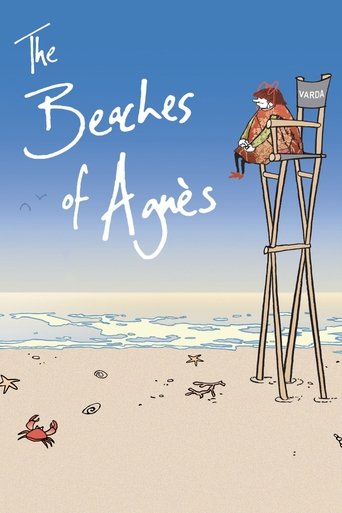
Filmmaking icon Agnès Varda, the award-winning director regarded by many as the grandmother of the French new wave, turns the camera on herself with this unique autobiographical documentary. Composed of film excerpts and elaborate dramatic re-creations, Varda's self-portrait recounts the highs and lows of her professional career, the many friendships that affected her life and her longtime marriage to cinematic giant Jacques Demy.
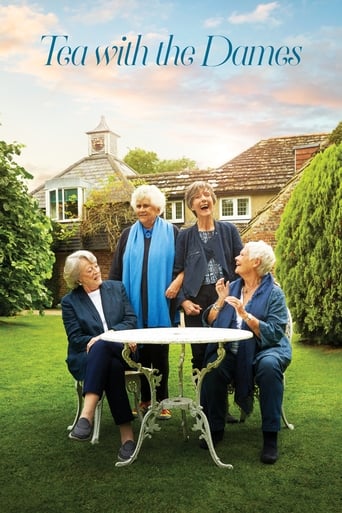
BBC Arena's documentary on the Dames of British Theatre and film featuring Maggie Smith, Eileen Atkins, Judi Dench and Joan Plowright on screen together for the first time as they reminisce over a long summer weekend in a house Joan once shared with Sir Laurence Olivier.

Through deeply personal interviews with her siblings and an examination of the photographs, letters, and belongings left behind, Mariska assembles a new portrait of her mother Jayne Mansfield, an extraordinary and complex woman.

A documentary about the life and films of director John Ford.

This revealing documentary honors the legendary Sidney Poitier—iconic actor, filmmaker, and civil rights activist. Featuring interviews with Denzel Washington, Spike Lee, Halle Berry, and more.

A documentary on the expletive's origin, why it offends some people so deeply, and what can be gained from its use.

A love letter from a young mother to her daughter, the film tells the story of Waad al-Kateab’s life through five years of the uprising in Aleppo, Syria as she falls in love, gets married and gives birth to Sama, all while cataclysmic conflict rises around her. Her camera captures incredible stories of loss, laughter and survival as Waad wrestles with an impossible choice– whether or not to flee the city to protect her daughter’s life, when leaving means abandoning the struggle for freedom for which she has already sacrificed so much.

Film adaptation of French economist Thomas Piketty's ground-breaking global bestseller of the same name: an eye-opening journey through wealth and power.

A detailing of the rise to prominence and global sporting superstardom of six supremely talented young Manchester United football players (David Beckham, Nicky Butt, Ryan Giggs, Paul Scholes, Phil and Gary Neville). The film covers the period 1992-1999, culminating in Manchester United's European Cup triumph.

Alexander McQueen's rags-to-riches story is a modern-day fairy tale, laced with the gothic. Mirroring the savage beauty, boldness and vivacity of his design, this documentary is an intimate revelation of McQueen's own world, both tortured and inspired, which celebrates a radical and mesmerizing genius of profound influence.

Ranjit, a farmer in India, takes on the fight of his life when he demands justice for his 13-year-old daughter, the victim of a brutal gang rape. His decision to support his daughter is virtually unheard of, and his journey unprecedented.

Musician and performance artist Laurie Anderson reflects on the deaths of her husband Lou Reed, her mother and her beloved dog.

Director Michael Apted revisits the same group of British-born adults after a 7 year wait. The subjects are interviewed as to the changes that have occurred in their lives during the last seven years.
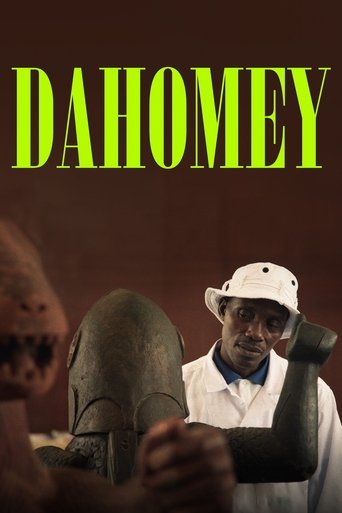
Thousands of royal artifacts of Dahomey, a West African kingdom, were taken by French colonists in the 19th century for collection and display in Paris. Centuries later, a fraction returned to their home in modern-day Benin. This dramatized documentary follows the journey of 26 of the treasures as told by cultural art historians, embattled university students, and one of the repatriated statues himself.
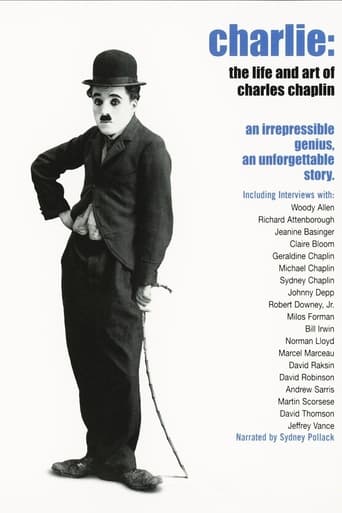
Brilliant, long in-the-works story of the life and art of the world's greatest comedian and the cinema's first genius, Charlie Chaplin. Produced, written and directed by renowned film critic Richard Schickel.
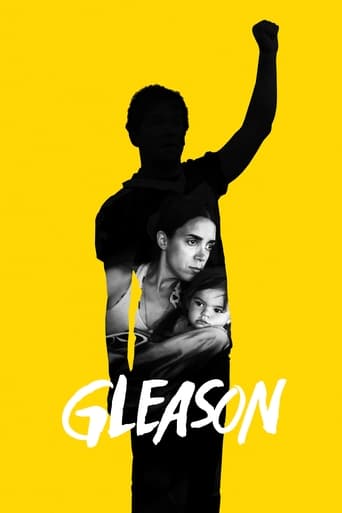
At the age of 34, former New Orleans Saints defensive back Steve Gleason was diagnosed with ALS and given a life expectancy of two to five years. Weeks later, Gleason found out his wife, Michel, was expecting their first child. A video journal that began as a gift for his unborn son expands to chronicle Steve’s determination to get his relationships in order, build a foundation to provide other ALS patients with purpose, and adapt to his declining physical condition—utilizing medical technologies that offer the means to live as fully as possible.
Similar titles
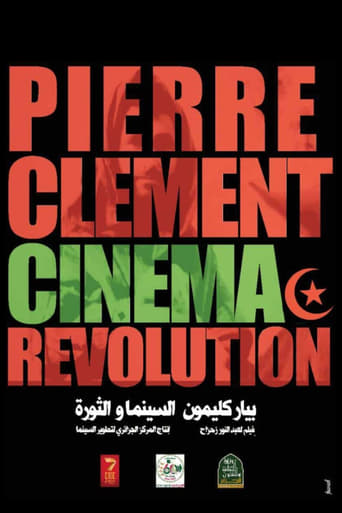
Pierre Clément, student and photographer of René Vauthier, first accompanied him to Tunisia to make a film on the country's independence in 1957. Destiny led him to Algeria and his presence in February 1958 at the Tunisian-Algerian border changed his life. . Forever. He took his camera and photographed the attacks on Sakia Sidi Youssef before committing himself body and soul to the Algerian cause. Shortly after, he directed the film “Algerian Refugees” before being arrested, tortured and imprisoned, while his third film, “The National Liberation Army in Almaki”, was not finished. Abdel Nour Zahzah, a director who commemorates Pierre Clément, the director who risked his life, the brother of the Algerian resistance, who disappeared in 2007.
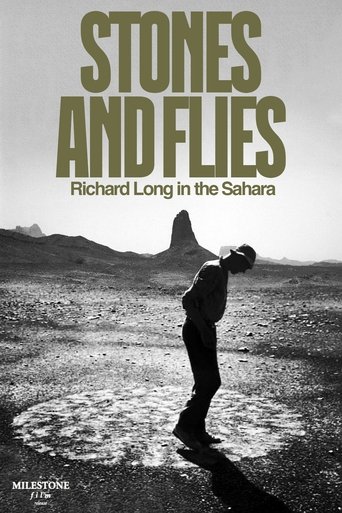
In the fall of 1987, Philippe Haas accompanied the sculptor Richard Long to the Algerian Sahara and filmed him tracing with his feet, or constructing with desert stones, simple geometric figures (straight lines, circles, spirals). In counterpoint to the images, Richard Long explains his approach. Since 1967, Richard Long (1945, Bristol), who belongs to the land art movement, has traveled the world on foot and installed, in places often inaccessible to the public, stones, sticks and driftwood found in situ. His ephemeral works are reproduced through photography. He thus made walking an art, and land art an aspiration of modern man for solitude in nature.
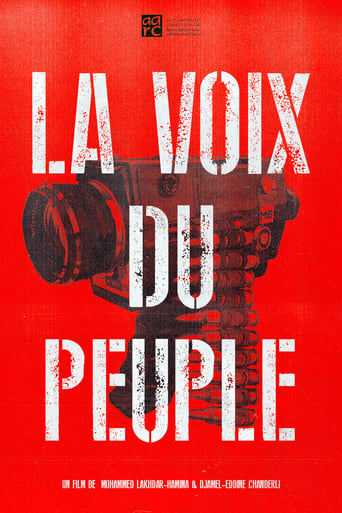
“La Voix du Peuple,” composed of archival photographs by René Vauthier and others, exposes the root causes of the armed conflict of the Algerian resistance. Participating in a war of real images against French colonial propaganda, these images aimed to show the images that the occupier had censored or distorted, by showing the extortions of the French occupation army: torture, arrests and arbitrary executions, napalm bombings, roundabout fires, erasing entire villages from the map, etc. This is what the French media described as a “pacification campaign”.
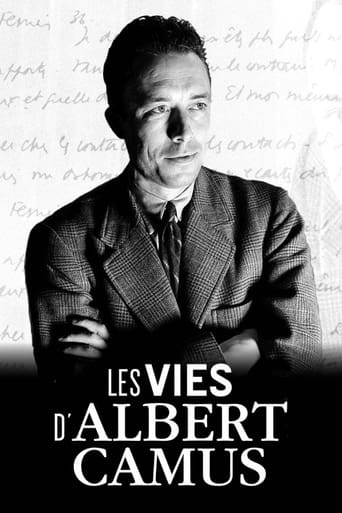
Albert Camus died at 46 years old on January 4, 1960, two years after his Nobel Prize in literature. Author of “L'Etranger”, one of the most widely read novels in the world, philosopher of the absurd and of revolt, resistant, journalist, playwright, Albert Camus had an extraordinary destiny. Child of the poor districts of Algiers, tuberculosis patient, orphan of father, son of an illiterate and deaf mother, he tore himself away from his condition thanks to his teacher. French from Algeria, he never ceased to fight for equality with the Arabs and the Kabyle, while fearing the Independence of the FLN. Founded on restored and colorized archives, and first-hand accounts, this documentary attempts to paint the portrait of Camus as he was.
It's the unforgivable story of the two hundred thousands harkis, the Arabs who fought alongside the French in the bitter Algerian war, from 1954 to 1962. Why did they make that choice? Why were they slaughtered after Algeria's independence? Why were they abandonned by the French government? Some fifty to sixty thousands were saved and transferred in France, often at pitiful conditions. This is for the first time, the story of this tragedy, told in the brilliant style of the authors of "Apocalypse".
In 1967, Visconti came to Algiers for the filming of The Stranger with Mastroianni and Anna Karina. Camus, during his lifetime, had always refused to allow one of his novels to be brought to the screen. His family made another decision. The filming of the film was experienced in Algiers, like a posthumous return of the writer to Algiers. During filming, a young filmmaker specializing in documentaries Gérard Patris attempts a report on the impact of the filming of The Stranger on the Algerians. Interspersed with sequences from the shooting of Visconti's film, he films Poncet, Maisonseul, Bénisti and Sénac, friends of Camus, in full discussions to situate Camus and his work in a sociological and historical context. “The idea is for us to show people, others, ourselves as if they could all be Meursault, or at least the witnesses concerned to his drama.”
Cheikh Djemaï looks back on the genesis of Gillo Pontecorvo’s feature film, The Battle of Algiers (1965). Through archive images, extracts from the film and interviews with personalities, the filmmaker retraces the journey of a major work - from the events of the Algiers Casbah (1956-1957) to the presentation of the Lion of 'Or causing the anger of the French delegation in Venice - which left its mark as much in the history of cinema as in that of Algeria.
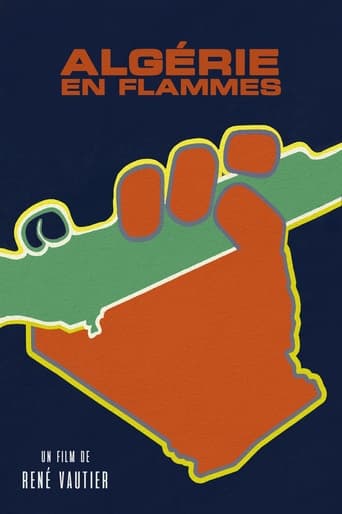
These are the first images shot in the ALN maquis, camera in hand, at the end of 1956 and in 1957. These war images taken in the Aurès-Nementchas are intended to be the basis of a dialogue between French and Algerians for peace in Algeria, by demonstrating the existence of an armed organization close to the people. Three versions of Algeria in Flames are produced: French, German and Arabic. From the end of the editing, the film circulates without any cuts throughout the world, except in France where the first screening takes place in the occupied Sorbonne in 1968. Certain images of the film have circulated and are found in films, in particular Algerian films. Because of the excitement caused by this film, he was forced to go into hiding for 25 months. After the declaration of independence, he founded the first Algerian Audiovisual Center.

The Algerian Sahara is the most exceptional deserts. He densifies everything he hosts, men and nature, and invites you to pay attention to the world. Jean-Louis and Odette Bernezat were born at the foot of the Alps, but it was in the Sahara that they found their way, and devoted almost forty years to the discovery of this environment and have extraordinary knowledge to share. Director Maryse Bergonzat accompanies them, in a meha, in the Hoggar in Algeria, with their Tuareg friends. A privileged place to appreciate the desert, its landscapes, its inhabitants, its laws and its stories, in the company of exceptional guides.
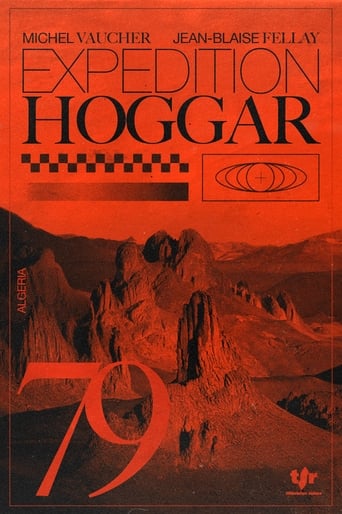
TSR documentary on the 1979 expedition to Algeria in the Atakor massif (Hoggar desert), organized by Geneva mountaineer Michel Vaucher and Jean-Blaise Fellay. The climbers make a dozen ascents including the famous summit of Adaouda (which means "finger" in Tamasheq, the Tuareg dialect), by several routes. Then a new route on the peaks of the southern Tezoulegs. They discover the volcanic geological characteristics of the Atakor massif and meet the nomadic inhabitants of the region, the Tuaregs, who are increasingly settling in the town of Tamanrasset.
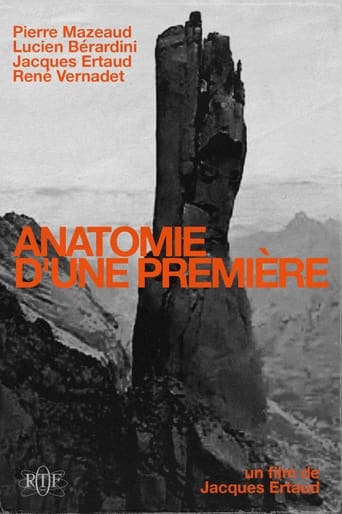
In February 1966, Pierre Mazeaud and Lucien Berardini traveled to the Atakor massif, in the Hoggar mountain range of the Sahara in southern Algeria. There, they attempted a challenging first ascent: the Takouba spur, one of the peaks adjacent to Garet El Djenoun, a legendary mountain in the Hoggar massif, first climbed by Roger Frison-Roche and Raymond Coche in 1935. The documentary, superbly filmed by Jacques Ertaud, won the Grand Prize at the Trento International Mountain Film Festival in 1966.
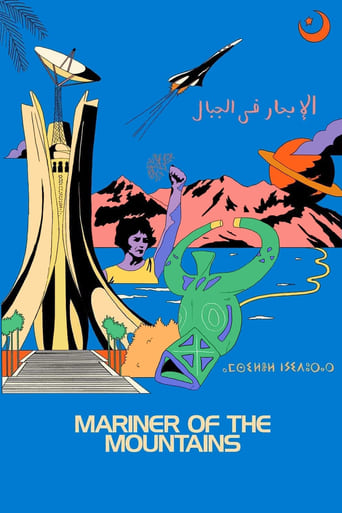
Filmmaker Karim Aïnouz decides to take a boat, cross the Mediterranean, and embark on his first journey to Algeria. Accompanied by the memory of his mother, Iracema, and his camera, Aïnouz gives a detailed account of the journey to his father’s homeland, interweaving present, past, and future.

This is the journal of an expedition that, starting from the oasis town of Djanet, embarked on a 12-day journey guided by a member of the Algerian Tourism Club to discover the rock paintings of Tassili n'Ajjer in southeastern Algeria. These paintings date back to prehistoric times (10,000 to 5,000 years ago) and are located on an uninhabited rocky plateau whose highest point reaches 2,158 meters. Considered one of the largest and oldest "open-air rock art museums" in the world, the Tassili n'Ajjer boasts a particularly rugged landscape: the vast rocky plains, which sometimes give way to "forests" of monoliths, are riddled with akbas (holes in the escarpments accessible only on foot or by camel) and numerous faults and canyons. The Tassili n’Ajjer National Park was inscribed on the UNESCO World Heritage List in 1982 and classified as a biosphere reserve in 1986.

A 1959 documentary about climbing in the Hoggar Mountains of Algeria. For the first time, a mountain expedition was organized for 60 young aspiring climbers, accompanied by renowned mountaineers such as Lionel Terray, Lucien Bérardini, Maurice Herzog, and Jean-Paul Gardinier. In two weeks, dozens of new routes, often extremely difficult, were established. Jacques Ertaud's camera followed the climbers through all the challenging sections of the first ascent of the south spur of Assekrem.
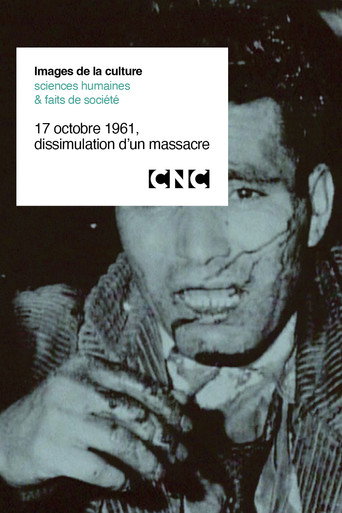
On October 17 and 18, 1961, during a non-violent demonstration against the imposed curfew, dozens of Algerians were murdered in Paris by police officers acting on orders from their superiors. For forty years, this crime has been concealed; yet these events, the deadliest on French soil since the Second World War, resemble, in some respects, the darkest hours of the collaboration. Why has this history been hidden? Under what conditions, and in the name of what reasons, did officials of a democratic state conceal the scale and gravity of such events?
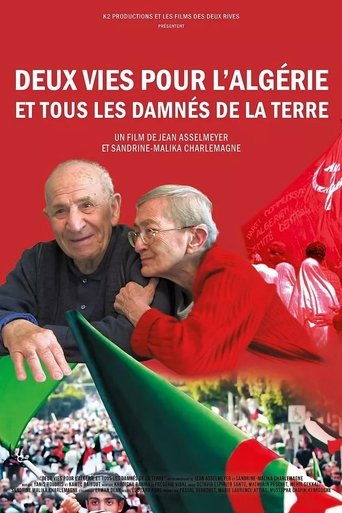
In 1994, at over seventy years old, Gilberte and William Sportisse, threatened by the FIS, arrived from Algeria. Of Jewish faith, he of Arabic mother tongue, they formed a fighting couple, started for the independence of Algeria, always with an unshakeable faith in humanity. They enjoy recounting the participation of Algerian Jews in the Second World War and the struggle for Algerian independence. They provide us with previously unpublished information on the public and clandestine struggles of the Algerian Communist Party before and after independence, and on the repression of activists who, like William and Gilberte Sportisse, were tortured and imprisoned after Colonel Boumédiène came to power. The film is an ode to understanding between people of different origins or cultures and a tribute to a couple whose youthful character and enthusiasm still astonish.
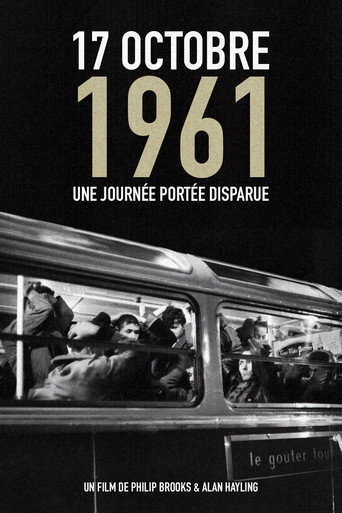
This documentary bears witness to the events that took place more than thirty years before the filming of this movie, on October 17, 1961, in Paris, during the Algerian War. It is a work not only about historical truth but also about memory. Constructed primarily from interviews conducted with those involved in the events, along with archival footage, photographs, and radio broadcasts from the time, our investigation proves that nearly 200 Algerians were killed (drowned, tortured) that night and in the days that followed by the French police. "A Missing Day" seeks to ask two key questions: how could such events have unfolded in the capital of a Western democracy barely thirty years ago? And why have they been silenced ever since?
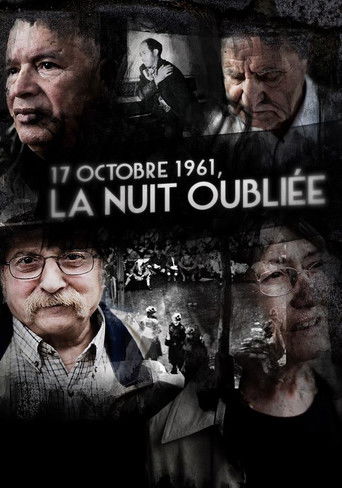
On October 17, 1961, in response to the curfew imposed on Muslim Algerians by Paris police prefect Maurice Papon, the FLN Federation of France organized a peaceful demonstration in the streets of the capital. The demonstration turned into a bloody crackdown: unprecedented violence, thousands of arrests, hundreds missing, and dozens dead. Today, much is known about the violence of that night: at least 200 Algerians were killed, beheaded, beaten, or thrown into the Seine; 11,500 others were arrested and often tortured. Hundreds were deported back to Algeria. Long silenced, the repression has been acknowledged thanks to the work of remembrance and eyewitness accounts.
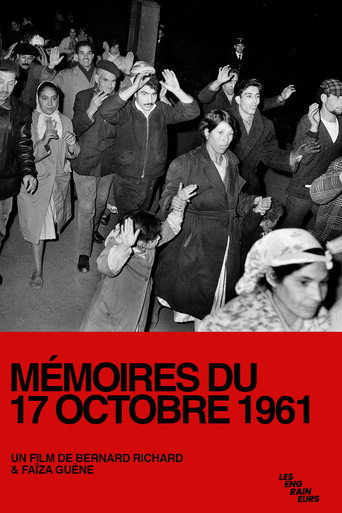
Three demonstrators from October 17, 1961, and a journalist recount the peaceful success of the demonstration and its brutal repression in the streets of Paris. Five months before the end of the Algerian War, the Gaullist government violently suppressed (40 to 300 deaths in a single evening, according to various sources) a peaceful demonstration by the entire Algerian civilian population of the Paris region, protesting the curfew imposed solely on this population (all participants held French citizenship). The government long denied this state crime; the official version: 3 deaths! In 1962, these events were granted amnesty by a simple decree (later enacted into law) issued by the same Gaullist government.