

Benito Mussolini: Anatomy of a Dictator
1962-01-20 · 96 min · ★ 6.5
Trailers are previews, not full movies.
No authorized playback source configured. Use the legal watch options below.
Production details
- Directors
- Mino Loy
- Production companies
- Zenith Cinematografica
- Countries
- Italy
- Status
- Released
Top Cast
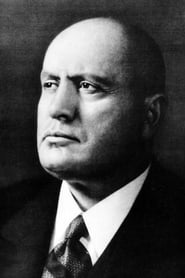 Benito MussoliniSelf (archive footage) (uncredited)
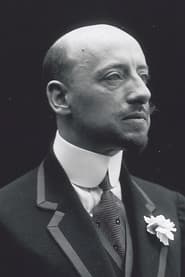 Gabriele D'AnnunzioSelf (archive footage) (uncredited)
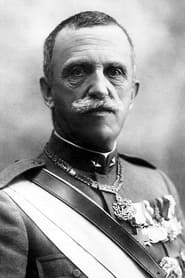 King Victor Emmanuel III of ItalySelf (archive footage) (uncredited)
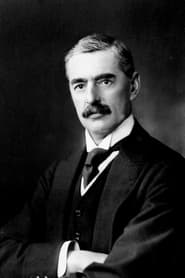 Neville ChamberlainSelf (archive footage) (uncredited)
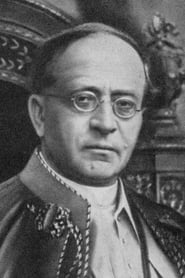 Pius XI.Self (archive footage) (uncredited)
 Paul von HindenburgSelf (archive footage) (uncredited)
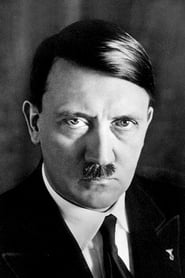 Adolf HitlerSelf (archive footage) (uncredited)
 Edda Ciano MussoliniSelf (archive footage) (uncredited)
 Rachele Guidi MussoliniSelf (archive footage) (uncredited)
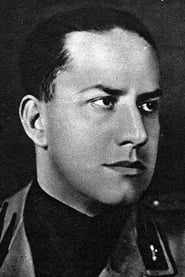 Galeazzo CianoSelf (archive footage) (uncredited)
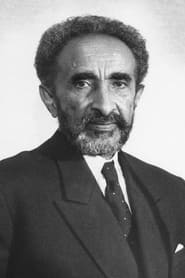 Emperor Haile Selassie I of EthiopiaSelf (archive footage) (uncredited)
Title information and images are supplied by TMDb. Explore our discovery guide for advice on comparing metadata and legal viewing options.
Where to watch
Availability provided by JustWatch via TMDb. Offers can change. Provider links are listed on TMDb; full playback requires a separately authorized source.
Availability not listed for this country.
Seasons & episodes
Recommendations

Marcel Ophuls' riveting film details the heinous legacy of the Gestapo head dubbed "The Butcher of Lyon." Responsible for over 4,000 deaths in occupied France during World War II, Barbie would escape—with U.S. help—to South America in 1951, where he lived until a global manhunt led to his 1983 arrest and subsequent trial.

“The Soviet Story” is a story of an Allied power, which helped the Nazis to fight Jews and which slaughtered its own people on an industrial scale. Assisted by the West, this power triumphed on May 9th, 1945. Its crimes were made taboo, and the complete story of Europe’s most murderous regime has never been told. Until now...

When Sgt. First Class Brian Eisch is critically wounded in Afghanistan, it sets him and his sons on a journey of love, loss, redemption and legacy.
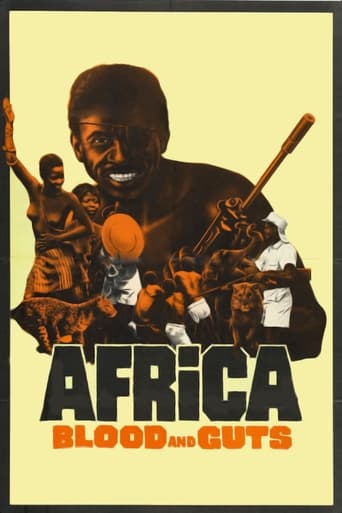
A chronicle of the violence that occurred in much of the African continent throughout the 1960s. As many African countries were transitioning from colonial rule to other forms of government, violent political upheavals were frequent. Revolutions in Zanzibar and Kenya in which thousands were killed are shown, the violence not only political; there is also extensive footage of hunters and poachers slaughtering different types of wild animals.
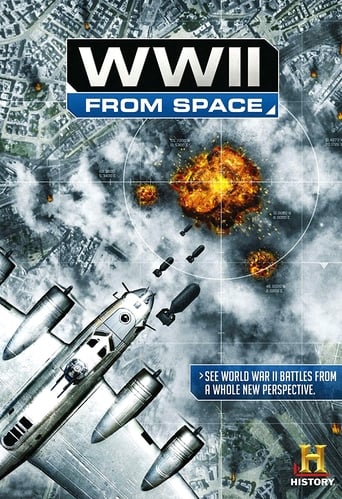
WWII from Space delivers World War II in a way you've never experienced it before. This HISTORY special uses an all-seeing CGI eye that offers a satellite view of the conflict, allowing you to experience it in a way that puts key events and tipping points in a global perspective. By re-creating groundbreaking moments that could never have been captured on camera, and by illustrating the importance of simultaneity and the hidden effects of crucial incidents, HISTORY presents the war's monumental moments in a never-before-seen context. And with new information brought to the forefront, you'll better understand how a nation ranked 19th in the world's militaries in 1939 emerged six years later as the planet's only atomic superpower.

Prelude to War was the first film of Frank Capra's Why We Fight propaganda film series, commissioned by the Pentagon and George C. Marshall. It was made to convince American troops of the necessity of combating the Axis Powers during World War II. This film examines the differences between democratic and fascist states.

Amid the failing counteroffensive, a journalist follows a Ukrainian platoon on their mission to traverse one mile of heavily fortified forest and liberate a strategic village from Russian occupation. But the farther they advance through their destroyed homeland, the more they realize that this war may never end.

A documentary about World War I with never-before-seen footage to commemorate the centennial of Armistice Day, and the end of the war.

This documentary movie is about the battle of San Pietro, a small village in Italy. Over 1,100 US soldiers were killed while trying to take this location, that blocked the way for the Allied forces from the Germans. Preserved by the Academy Film Archive in 2005.

Produced and presented as evidence at the Nuremberg war crimes trial of Hermann Göring and twenty other Nazi leaders, this film consists primarily of dead and surviving prisoners and of facilities used to kill and torture during the World War II.
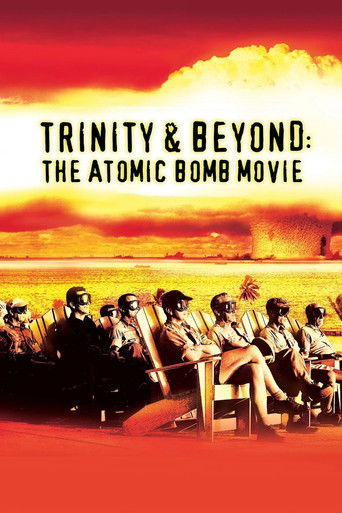
"Trinity and Beyond" is an unsettling yet visually fascinating documentary presenting the history of nuclear weapons development and testing between 1945-1963. Narrated by William Shatner and featuring an original score performed by the Moscow Symphony Orchestra, this award-winning documentary reveals previously unreleased and classified government footage from several countries.

Set both in Latin America and the United States, the film explores the historic and current relationship of Washington with countries such as Venezuela, Bolivia and Chile. Pilger says that the film "...tells a universal story... analysing and revealing, through vivid testimony, the story of great power behind its venerable myths. It allows us to understand the true nature of the so-called "war on terror". According to Pilger, the film’s message is that the greed and power of empire is not invincible and that people power is always the "seed beneath the snow".
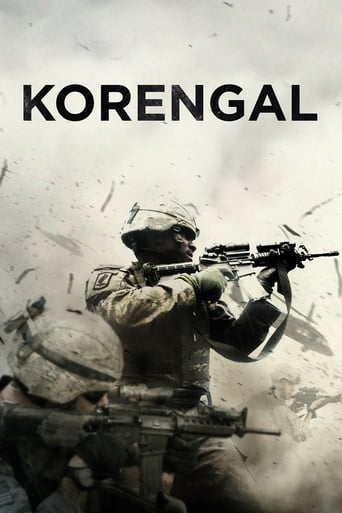
Korengal picks up where Restrepo left off; the same men, the same valley, the same commanders, but a very different look at the experience of war.
For the 20th anniversary of "Titanic," James Cameron reopens the file on the disaster.

Pete Postlethwaite stars as a man living alone in the devastated future world of 2055, looking at old footage from 2008 and asking: why didn’t we stop climate change when we had the chance?

Former United States Secretary of Defense Donald Rumsfeld discusses his career in Washington D.C. from his days as a congressman in the early 1960s to planning the invasion of Iraq in 2003.

Oliver Stone charts the history of the United States from the Second World War to the present.
The extraordinary story of how Hollywood changed World War II – and how World War II changed Hollywood, through the interwoven experiences of five legendary filmmakers who went to war to serve their country and bring the truth to the American people: John Ford, William Wyler, John Huston, Frank Capra, and George Stevens. Based on Mark Harris’ best-selling book, “Five Came Back: A Story of Hollywood and the Second World War.”

A love letter from a young mother to her daughter, the film tells the story of Waad al-Kateab’s life through five years of the uprising in Aleppo, Syria as she falls in love, gets married and gives birth to Sama, all while cataclysmic conflict rises around her. Her camera captures incredible stories of loss, laughter and survival as Waad wrestles with an impossible choice– whether or not to flee the city to protect her daughter’s life, when leaving means abandoning the struggle for freedom for which she has already sacrificed so much.
This Oscar-winning documentary recounts the harrowing stories of five Hungarian Jews who endured the horrors of the Holocaust and Hitler's reign.
Similar titles

The first feature film to represent the Holocaust from a Jewish perspective. Shot on location at Landsberg, the largest DP camp in U.S.-occupied Germany, and mixing neorealist and expressionist styles, the film follows a Polish Jew and his family from pre-war Warsaw through Auschwitz and the DP camps.
After World War II, a woman refuses to believe her husband, missing on the Russian front, is dead. Flashbacks reveal their brief courtship and marriage. Years later, she travels to Russia with his photo, determined to find him. What will she discover?
The dramatic story of the life of Slovak boatmen on the Danube during World War II is depicted through the eyes of a six-year-old boy who is forced by the events of the war to spend a dark time with his grandparents in the village. Despite the fairy-tale-sounding title, this film takes place at the end of the war in the Slovak countryside during World War II, and its child hero is the son of a Danube boatman who experiences incredible adventures. The Little Lifeguard's Lamp ranks among children's films that seek speciality in the realities of war. It explores both a children's world with a shifted lens of perception and the impact of battles interfering in the lives of the youngest.
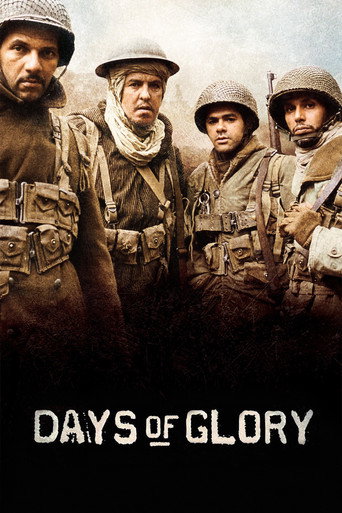
1943. They have never stepped foot on French soil but because France was at war, Said, Abdelkader, Messaoud and Yassir enlist in the French Army, along with 130,000 other “indigenous” soldiers, to liberate the “fatherland” from the Nazi enemy. Heroes that history has forgotten...
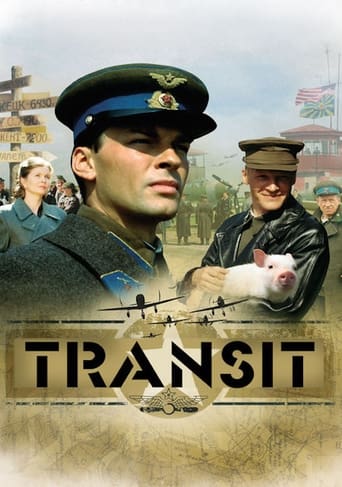
A group of American pilots from Alaska ferry Airacobra fighter planes across the ocean on Lend-lease. The orderly course of life is disrupted when it becomes clear that the American pilots are attractive and charming young women. The feelings of the Russian young men collide into barriers of culture and language resulting in a host of awkward, funny, and sometimes tragic situations.It is the story of Russians, Americans, and natives of the Far North. It is the story of man and woman in war. Love and death are squeezed between the hills as human fates are destroyed and born.
When the United States entered World War I, its Army Air Service lacked a combat-ready aircraft – a liability that prompted a search to find an aircraft suitable for production at home and combat operations abroad. This documentary from Bowling Green filmmakers tells the story behind the single-engine DH-4 plane dubbed The Liberty Plane.

In the years before World War II, a penniless Japanese child is torn from her family to work as a maid in a geisha house.

In an attempt to assassinate Hitler, four American soldiers pretend to be Nazi's and sneak into enemy territory.
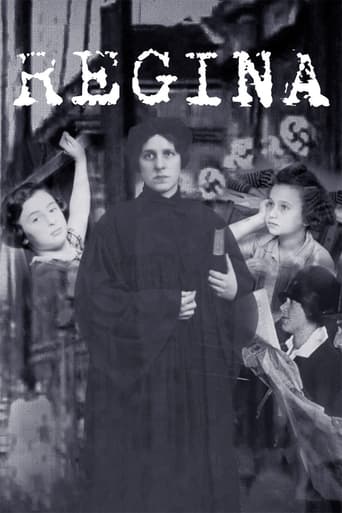
The first woman rabbi in the world, Regina Jonas, comes to light, courtesy of Rachel Weisz – who plays her – and her father George Weisz, who was the executive producer for this poetic and beautiful documentary. The daughter of an Orthodox Jewish peddler, Jonas was ordained in Berlin in 1935. During the Nazi era and the war, her sermons and her unparalleled devotion brought encouragement to the persecuted German Jews. Regina Jonas was murdered in Auschwitz in 1944. The only surviving photo of Jonas serves as a leitmotif for the film, showing a determined young woman gazing at the camera with self-confidence.

In 1943, as Hitler continues to wage war across Europe, a group of college students mount an underground resistance movement in Munich. Dedicated expressly to the downfall of the monolithic Third Reich war machine, they call themselves the White Rose. One of its few female members, Sophie Scholl is captured during a dangerous mission to distribute pamphlets on campus with her brother Hans. Unwavering in her convictions and loyalty to the White Rose, her cross-examination by the Gestapo quickly escalates into a searing test of wills as Scholl delivers a passionate call to freedom and personal responsibility.
Two 17-year-olds, Werner Holt and Gilbert Wolzow, are pulled out of school and into Hitler's army. Gilbert becomes a fanatical soldier; but at the front, Werner begins to understand the senselessness of war.
Wounded in Africa during World War II, Nazi Col. Claus von Stauffenberg returns to his native Germany and joins the Resistance in a daring plan to create a shadow government and assassinate Adolf Hitler. When events unfold so that he becomes a central player, he finds himself tasked with both leading the coup and personally killing the Führer.
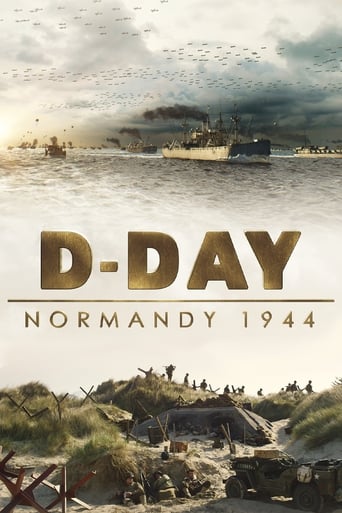
June 6, 1944: The largest Allied operation of World War II began in Normandy, France. Yet, few know in detail exactly why and how, from the end of 1943 through August 1944, this region became the most important location in the world. Blending multiple cinematographic techniques, including animation, CGI and stunning live-action images, “D-Day: Normandy 1944” brings this monumental event to the world’s largest screens for the first time ever. Audiences of all ages, including new generations, will discover from a new perspective how this landing changed the world. Exploring history, military strategy, science, technology and human values, the film will educate and appeal to all. Narrated by Tom Brokaw, “D-Day: Normandy 1944” pays tribute to those who gave their lives for our freedom… A duty of memory, a duty of gratitude.
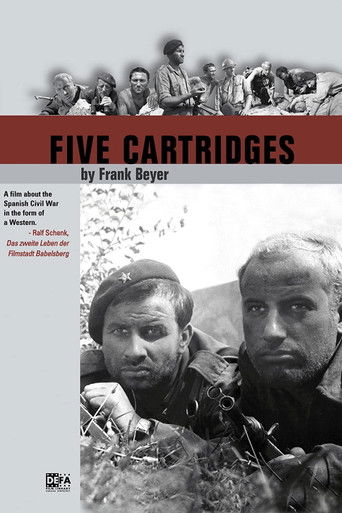
During the Spanish Civil War (1936-1939), five International Brigade soldiers of different nationalities are given a crucial assignment as their commander lies dying: they are to smuggle top-secret information across enemy lines.
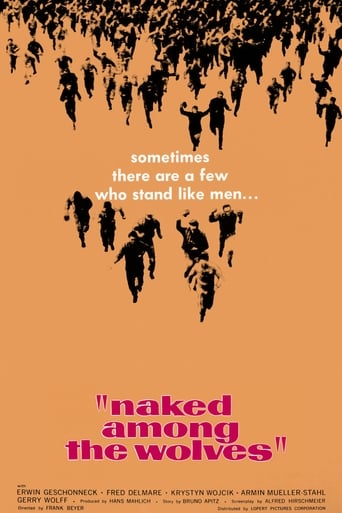
Based on a true story of inmates at KZ Buchenwald that risked their lives to hide a small Jewish boy shortly before the liberation of the camp.
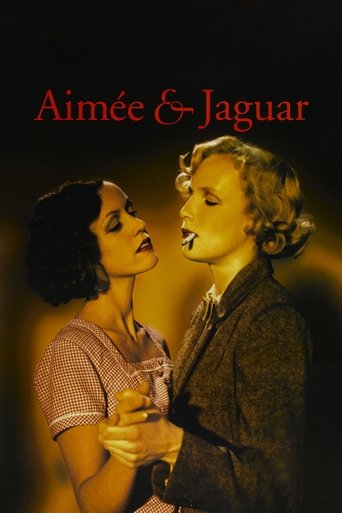
In 1943, while the Allies are bombing Berlin and the Gestapo is purging the capital of Jews, a dangerous love affair blossoms between two women – one a Jewish member of the underground, the other an exemplar of Nazi motherhood.
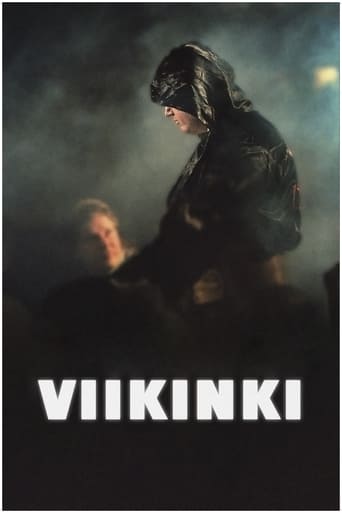
Documentary film about Tony Halme, masculinity and populism. The film follows how Tony Halme created a mythical, highly masculine freestyle wrestling character, The Viking, who gained fame both in the ring and in the public eye and eventually became captivated by it. With his brash speeches, Halme fired the starting shot for the rise of the Finns Party. The voice of a forgotten section of the population, a protest against the ruling elite, were the building blocks of Halme's popularity. Halme's great popularity has served as a good example of a populist figure, admired within the deep ranks of the nation, who comes from outside the political elite and changes the direction of politics. Also, despite - or perhaps because of - his openly racist statements, he was part of changing the political climate in Finland to a more acrimonious one.

Narrated by CBS Sports' Jim Nantz. The Seabees on Iwo Jima focuses on the United States Naval Construction Battalions in World War II, which built all the infrastructure for the Allies in Europe and the Pacific in WWII. The Seabees were construction workers by trade but had to fight at times. Their motto was "We Build, We Fight," and their biggest test came in the battle for Iwo Jima in 1945.