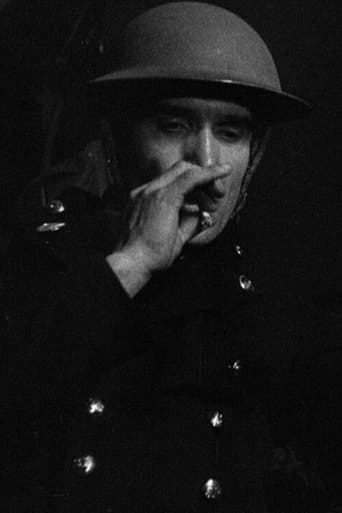
Newspaper Train
1942-11-15 · 6 min · ★ 5.0
The story of how newspapers were distributed during the Blitz, stressing the importance of an accurate and objective press on the home front.
Trailers are previews, not full movies.
No authorized playback source configured. Use the legal watch options below.
Production details
- Directors
- Len Lye
- Production companies
- BFI, Ministry of Information, Realist Film Unit
- Countries
- United Kingdom
- Status
- Released
Top Cast
Cast unavailable.
Title information and images are supplied by TMDb. Explore our discovery guide for advice on comparing metadata and legal viewing options.
Where to watch
Availability provided by JustWatch via TMDb. Offers can change. Provider links are listed on TMDb; full playback requires a separately authorized source.
Availability not listed for this country.
Seasons & episodes
Recommendations

This documentary movie is about the battle of San Pietro, a small village in Italy. Over 1,100 US soldiers were killed while trying to take this location, that blocked the way for the Allied forces from the Germans. Preserved by the Academy Film Archive in 2005.

A documentary about World War I with never-before-seen footage to commemorate the centennial of Armistice Day, and the end of the war.

Prelude to War was the first film of Frank Capra's Why We Fight propaganda film series, commissioned by the Pentagon and George C. Marshall. It was made to convince American troops of the necessity of combating the Axis Powers during World War II. This film examines the differences between democratic and fascist states.

When Sgt. First Class Brian Eisch is critically wounded in Afghanistan, it sets him and his sons on a journey of love, loss, redemption and legacy.

Amid the failing counteroffensive, a journalist follows a Ukrainian platoon on their mission to traverse one mile of heavily fortified forest and liberate a strategic village from Russian occupation. But the farther they advance through their destroyed homeland, the more they realize that this war may never end.
As the Russian invasion begins, a team of Ukrainian journalists trapped in the besieged city of Mariupol struggle to continue their work documenting the war's atrocities.

“The Soviet Story” is a story of an Allied power, which helped the Nazis to fight Jews and which slaughtered its own people on an industrial scale. Assisted by the West, this power triumphed on May 9th, 1945. Its crimes were made taboo, and the complete story of Europe’s most murderous regime has never been told. Until now...
A disturbing collection of 1940s and 1950s United States government-issued propaganda films designed to reassure Americans that the atomic bomb was not a threat to their safety.
Meet the real-life airmen who inspired Masters of the Air as they share the harrowing and transformative events of the 100th Bomb Group.
With unprecedented access, this documentary follows the extraordinary journey of “Raqqa is Being Slaughtered Silently”—a group of anonymous citizen journalists who banded together after their homeland was overtaken by ISIS—as they risk their lives to stand up against one of the greatest evils in the world today.
Directors Hetherington and Junger spend a year with the 2nd Battalion of the United States Army located in one of Afghanistan's most dangerous valleys. The documentary provides insight and empathy on how to win the battle through hard work, deadly gunfights and mutual friendships while the unit must push back the Taliban.
WWII from Space delivers World War II in a way you've never experienced it before. This HISTORY special uses an all-seeing CGI eye that offers a satellite view of the conflict, allowing you to experience it in a way that puts key events and tipping points in a global perspective. By re-creating groundbreaking moments that could never have been captured on camera, and by illustrating the importance of simultaneity and the hidden effects of crucial incidents, HISTORY presents the war's monumental moments in a never-before-seen context. And with new information brought to the forefront, you'll better understand how a nation ranked 19th in the world's militaries in 1939 emerged six years later as the planet's only atomic superpower.

When Allied forces liberated the Nazi concentration camps in 1944-45, their terrible discoveries were recorded by army and newsreel cameramen, revealing for the first time the full horror of what had happened. Making use of British, Soviet and American footage, the Ministry of Information’s Sidney Bernstein (later founder of Granada Television) aimed to create a documentary that would provide lasting, undeniable evidence of the Nazis’ unspeakable crimes. He commissioned a wealth of British talent, including editor Stewart McAllister, writer and future cabinet minister Richard Crossman – and, as treatment advisor, his friend Alfred Hitchcock. Yet, despite initial support from the British and US Governments, the film was shelved, and only now, 70 years on, has it been restored and completed by Imperial War Museums under its original title "German Concentration Camps Factual Survey".

An inside look at one of the most anticipated movie sequels ever with James Cameron and cast.

A love letter from a young mother to her daughter, the film tells the story of Waad al-Kateab’s life through five years of the uprising in Aleppo, Syria as she falls in love, gets married and gives birth to Sama, all while cataclysmic conflict rises around her. Her camera captures incredible stories of loss, laughter and survival as Waad wrestles with an impossible choice– whether or not to flee the city to protect her daughter’s life, when leaving means abandoning the struggle for freedom for which she has already sacrificed so much.
Over a period of two years, Mark Cowen and his crew travelled to thirty U.S. states and ten European cities, to interview the veterans of Easy Company. The stories told by the veterans themselves, create a history of the Second World War from the point of view of this heroic company of men, made famous in the mini-series Band of Brothers.
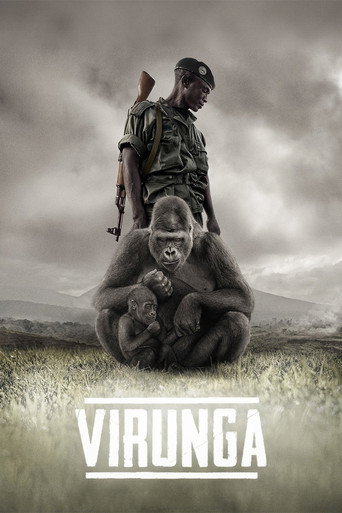
Virunga in the Democratic Republic of the Congo is Africa’s oldest national park, a UNESCO world heritage site, and a contested ground among insurgencies seeking to topple the government that see untold profits in the land. Among this ongoing power struggle, Virunga also happens to be the last natural habitat for the critically endangered mountain gorilla. The only thing standing in the way of the forces closing in around the gorillas: a handful of passionate park rangers and journalists fighting to secure the park’s borders and expose the corruption of its enemies. Filled with shocking footage, and anchored by the surprisingly deep and gentle characters of the gorillas themselves, Virunga is a galvanizing call to action around an ongoing political and environmental crisis in the Congo.
The final entry in a trilogy of films produced for the U.S. government by John Huston. Some returning combat veterans suffer scars that are more psychological than physical. This film follows patients and staff during their treatment. It deals with what would now be called PTSD, but at the time was categorised as psychoneurosis or shell-shock. Government officials deemed this 1946 film counterproductive to postwar efforts; it was not shown publicly until 1981.
The Japanese attack on Midway in June 1942, filmed as it happened. Preserved by the Academy Film Archive, in partnership with Twentieth Century Fox Film Corporation, in 2006.

Marcel Ophuls' riveting film details the heinous legacy of the Gestapo head dubbed "The Butcher of Lyon." Responsible for over 4,000 deaths in occupied France during World War II, Barbie would escape—with U.S. help—to South America in 1951, where he lived until a global manhunt led to his 1983 arrest and subsequent trial.
Similar titles
When a group of idealistic young men join the German Army during the Great War, they are assigned to the Western Front, where their patriotism is destroyed by the harsh realities of combat.
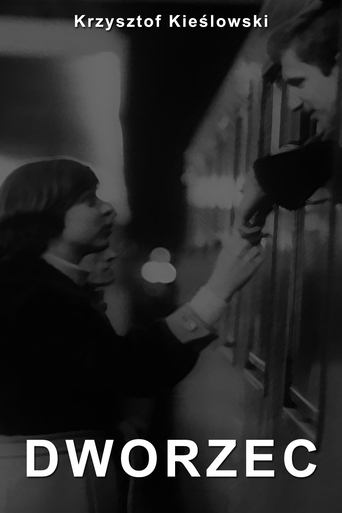
Warsaw's Central Railway Station. 'Someone has fallen asleep, someone's waiting for somebody else. Maybe they'll come, maybe they won't. The film is about people looking for something.
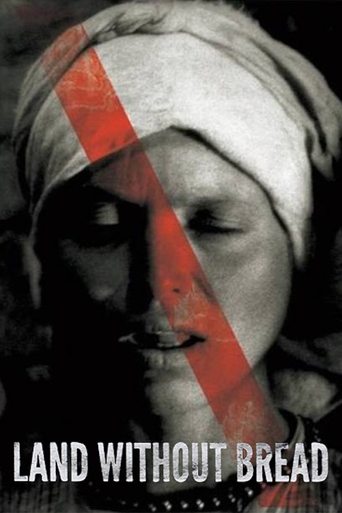
An exploration —manipulated and staged— of life in Las Hurdes, in the province of Cáceres, in Extremadura, Spain, as it was in 1932. Insalubrity, misery and lack of opportunities provoke the emigration of young people and the solitude of those who remain in the desolation of one of the poorest and least developed Spanish regions at that time.
Volume Two features trackside SEPTA electric action at Pennsylvania locations including Glenside, Elkins Park, Melrose Park, Fern Rock, Daylesford, Paoli, and Malvern. Many Silverliner IV MU's are seen along with former PRR Silverliner III, and former PRR and RDG Silverliner II equipment. The MU's have been painted into an attractive rainbow paint scheme recently adopted by SEPTA. In addition, SEPTA's AEM7 electric locomotives are seen pulling Bombardier push pull train sets as well as Amtrak Genesis diesels powering Keystone Service trains. Filmed and narrated by Tim Hosey in April 2001; edited by Nick Lipka
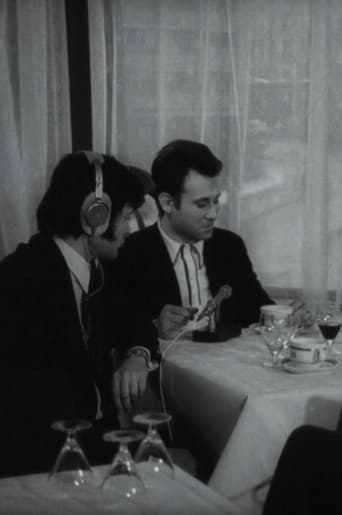
At the beginning of the 70s, Sahia Studio produced a number of social investigations commissioned by the Central Committee of the Romanian Communist Party, intended to expose the so-called "social parasitism". The decision was taken after the theses of July 1971, which provide that "one of the main objectives of political work, especially among the youth, is the firm fight against the tendencies of parasitism, of an easy life, without work, the cultivation of responsibility and the duty to work , in the service of the country, the people, the socialist society". The most famous films, made with the competition of the Ministry of the Interior and the Ministry of Justice, are Să treacă vara and Iarna unor pierde vară
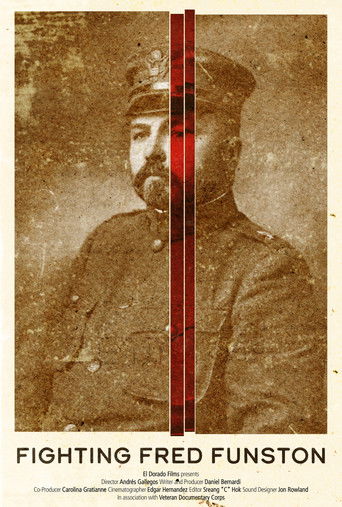
On April 18th, 1906, San Francisco witnessed its most devastating natural disaster – an earthquake that initiated a city-wide fire. The commanding officer of the U.S. Army base at the Presidio, Fred Funston, gathered citizens to fight the fire, patrol the streets, and rebuild the city – all without authorization.
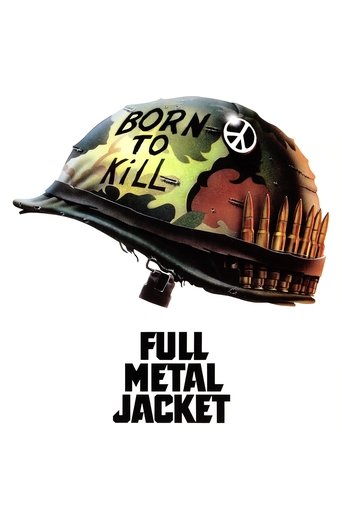
A pragmatic U.S. Marine observes the dehumanizing effects the U.S.-Vietnam War has on his fellow recruits from their brutal boot camp training to the bloody street fighting in Hue.

At the end of the Great War, a soldier burdened with informing a mother of her son's death, faces an impossible decision... Tell her a noble lie, or the horrible truth?
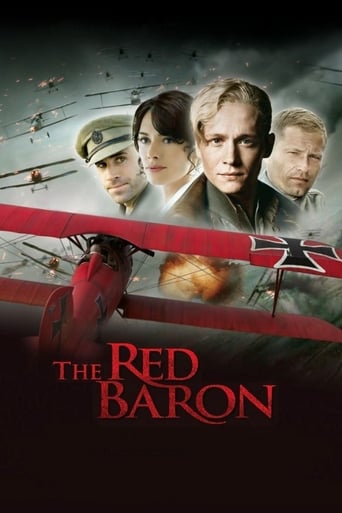
Richthofen goes off to war like thousands of other men. As fighter pilots, they become cult heroes for the soldiers on the battlefields. Marked by sportsmanlike conduct, technical exactitude and knightly propriety, they have their own code of honour. Before long he begins to understand that his hero status is deceptive. His love for Kate, a nurse, opens his eyes to the brutality of war.
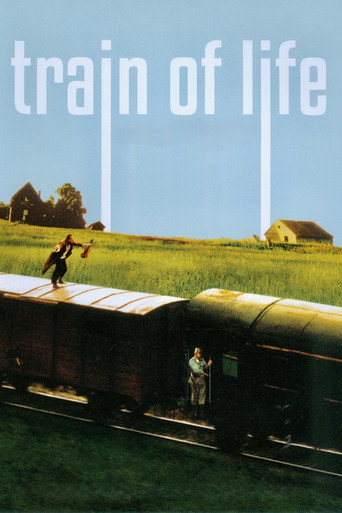
In 1941, the inhabitants of a small Jewish village in Central Europe organize a fake deportation train so that they can escape the Nazis and flee to Palestine.
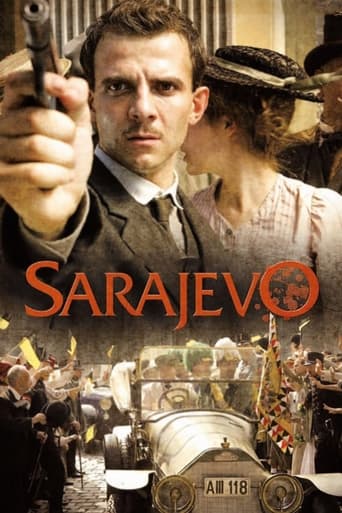
The events in Sarajevo in June 1914 are the backdrop for a thriller directed by Andreas Prochaska and written by Martin Ambrosch, focusing on the examining magistrate Dr. Leo Pfeffer (Florian Teichtmeister) investigating the assassination of Archduke Franz Ferdinand. Trying to do his job in a time of lawlessness and violence, intrigues and betrayal, Leo struggles to maintain his integrity and save his love, Marija, and her father, prominent Serbian merchant. But the events of Sarajevo have set into motion an inescapable course of events that will escalate to become … the Great War.

For 2-4 year old children, the Tomika Prarail friendly hiragana first time drill. Learn hiragana characters with the aid of Tomika Prarail trains and cars.
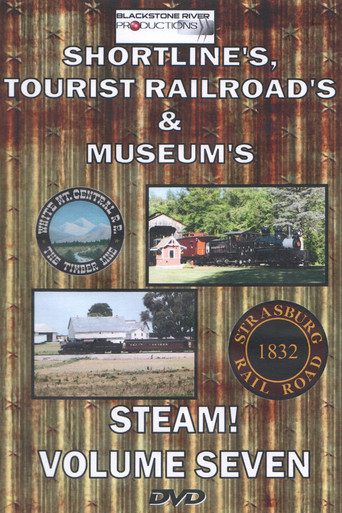
In this production, we take a ride on the Strasburg Railroad and check out the White Mountain Central Railroad's Railfan Days. We start off at Strasburg Railroad and a trip behind #475 for a trip from East Strasburg to Leaman Place in Paradise. We use our 180º camera and attach it on the rear of the car behind the #475 for the 4 1/2 mile trip to Paradise. Next, we travel to the White Mountain region of New Hampshire and the White Mountain Central Railroad at Clark's Trading Post. We check out Railfan Days in September to catch all the operating steam locomotives along with non-operable locos as well! We also capture the lone diesel locomotive in action. We capture all the action from both sides of the classic covered bridge and along the line!
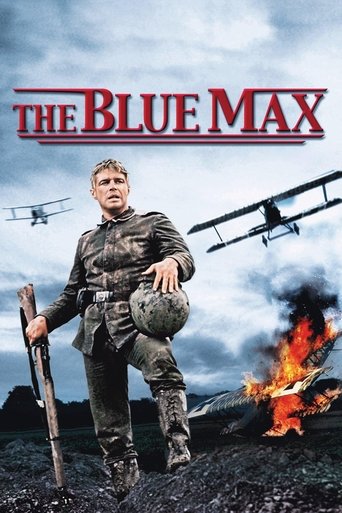
A young pilot in the German air force of 1918, disliked as lower-class and unchivalrous, tries ambitiously to earn the medal offered for 20 kills.
An educational film about power sources that’s rendered as a lyrical meditation on heat and vapor, The Four Elements is a poetic and avant-garde documentary Curtis Harrington made for the United States Information Agency.
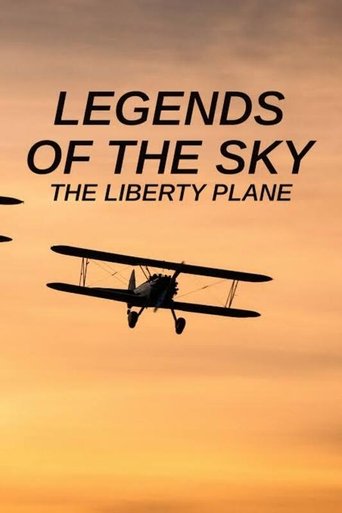
When the United States entered World War I, its Army Air Service lacked a combat-ready aircraft – a liability that prompted a search to find an aircraft suitable for production at home and combat operations abroad. This documentary from Bowling Green filmmakers tells the story behind the single-engine DH-4 plane dubbed The Liberty Plane.
During World War II, the propaganda engine of the U.S. government made a pivotal decision with unforeseeable results: they tapped John Huston to shoot war documentaries with an expressly patriotic spin. Few could guess the degree to which Huston's documentaries would depict the sheer brutality and horror of modern warfare - particularly his Let There Be Light and The Battle of San Pietro. The films served (by default) as cinematic protests, even as they graced new and brilliant heights within the scope of American documentary. (Indeed, Light was banned by the government for 35 years). Midge Mackenzie's 1998 documentary John Huston: War Stories explores this little known facet of Huston's career, intercutting clips from the various documentaries with a Huston interview shot just prior to his death.
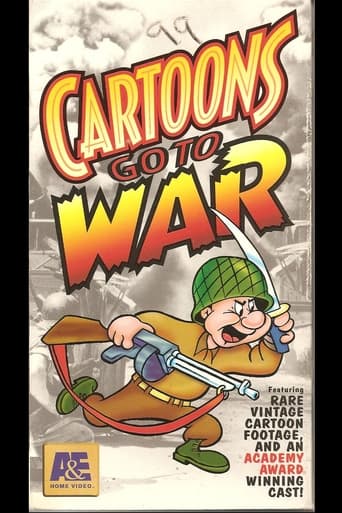
This remarkable documentary dedicates itself to an extraordinary chapter of the second World War – the psychological warfare of the USA. America’s trusted cartoon darlings from the studios of Warner Bros., Paramount, and the “big animals” of the Disney family were supposed to give courage to the people at the homefront, to educate them, but also to simultaneously entertain them. Out of this mixture grew a genre of its own kind – political cartoons. Insightful Interviews with the animators and producers from back then elucidate in an amusing and astonishing way under which bizarre circumstances these films partially came into existence.
A collection of television celebrities pitch United States Savings bonds.
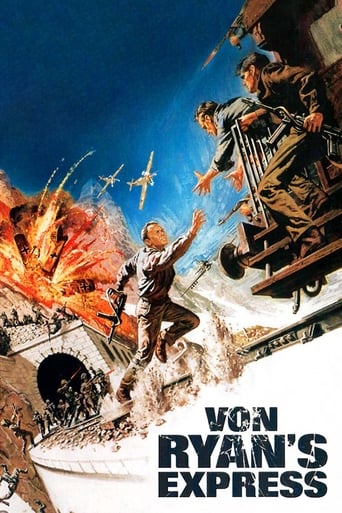
Von Ryan's Express stars Frank Sinatra as a POW colonel who leads a daring escape from WWII Italy by taking over a freight train, but he has to win over the British soldiers he finds himself commanding.